Showing posts with label skin. Show all posts

Saturday, April 25, 2026

Advancements in Skin Scarring Genetics


The highly complex process of wound healing requires the coordinated response of various cell types, as well as the proper delivery of nutrients and oxygen to repair the damaged tissue. While superficial wounds tend to heal within a matter of days, deeper and larger wounds tend to heal by leaving a scar. These scars can be painful, restrict mobility, or impair function.

A recent review calls attention to the need for improved techniques or developments to both treat and prevent scarring. Research could be improved with the use of population health approaches and experimental validation in animal models. In the past, a wide variety of animal models have been used to study scaring. It is possible to take these studies further with the performance of candidate gene validation. Overall, these strategies may uncover links between specific genetic loci and wound related phenotypes in humans. Future experimental work in animal models can then be used to validate these candidate genes and deepen insight into the biological mechanisms involved.


Source:
https://www.sciencedirect.com/science/article/pii/S1748681525006588#sec0030

Additional:

Sunday, November 26, 2023

The Power of Synthetic Melanin to Enhance Skin Healing

        The never ending fight against free radicals might come to an end. Scientists at Northwestern University successfully developed synthetic melanin that's applied in a cream. Headlines of a skin cream that can not only protect the skin from the sun but also accelerates wound healing. Sounds like a good investment. 

        The synthetic melanin is modified to have higher free radical scavenging capacity. In other words, aid effectiveness in neutralizing free radicals to protect cells and tissues from damage. In the context of melanin, this is crucial as many obstacles such as UV exposure can disrupt melanin production. Eventually pose risk for skin related issues such as skin cancer. 

        Equally important, the synthetic melanin acts as a super melanin. With amazing results shown for topical applications to injured skin and effects with the immune system. Not only healing and protecting the skin. But has the ability to allow the body to have a calming effect and lower rates of inflammation. As scientists call this super melanin, who is this powerful cream for? Clinical trial testing is currenting ongoing to test for efficacy of the synthetic melanin cream. However, this cream can act as a sunscreen, treatment for poison ivy, treatment for wound care and cancer patients. Synthetic melanin cream is versatile, offering a one-size-fits-all solution that caters to a broad spectrum of applications.


Monday, November 20, 2023

The Future of Hair: 3D-Bioprinting


The idea of combining hair follicles and 3D printing sounds like the start of a science fiction movie. The craziness of science fiction movies is well known. This experiment held by Rensselaer Polytechnic Institute showed an abundance of advantages to their remarkable innovation. By using 3D- bioprinting it offers to build upon the current knowledge obtained from skin grafting. 

Now, we are at the point where skin grafts can't fully mimic human skin without the production of hair. In order to understand why scientists are doing this, it's important to highlight the benefits of hair follicles. Hair follicles are most known for their supportive role. They provide benefits such as hair growth, thermoregulation, and protection with a much needed thank you to our stem cells that aid the skin to heal. 

It's already hard to believe that 3d-bioprinting can be successfully done at a cellular level. The printers can effectively produce skin tissue with working blood cells, which is amazing. It’s almost impossible to comprehend. However, we are still at the start of this sci-fi movie. Scientists are consistently working in order to achieve an even bigger goal. Not only are they working on skin grafts with hair follicles that strangely mimic our skin, they also would like to explore the unknown treatments, hair rejuvenation, tropical drug testing, and dermatological testing that can further expand our current knowledge of the skin.

 This sounds great, but we are nowhere near achieving these goals. it does make sense; the skin is the largest organ of the human body, providing an extra layer of complexity.  The main issue currently is the 3D printed hair follicle lifespan only lasting up to three weeks. Therefore, research on expanding the lifespan of hair follicles is necessary and a top priority. The main objective is to allow the hair shaft and soon enough hair follicles to mature. Once accomplished, it could be safe to say life is a true sci-fi movie. Moreover, it’s wonderful to envision the plethora of innovations that this technology could open the door for. 


Links: 

https://www.sciencedaily.com/releases/2023/11/231115113440.htm

https://www.ncbi.nlm.nih.gov/pmc/articles/PMC8283073/

https://www.youtube.com/watch?v=f7Y_gf6DD5E


Saturday, December 11, 2021

Spiny Mice Can Regenerate Damaged Tissue Without Subsequent Scarring

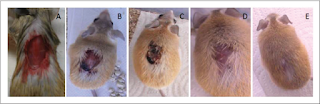
Progression of Regeneration of Skin Tissue

        In a recent study, it was found that African Spiny Mice (genus Acomys) could regenerate their kidneys after suffering damage to them. They could also regenerate their kidneys without having any dangerous or life-threatening scarring, as other animal species would.

        It has been known for quite some time that Spiny Mice could regenerate basic tissues, such as their skin, when there was damage or removal of the tissue. This regeneration happens because of the inactivity or absence of the p21 gene. The p21 gene is a cell cycle inhibitor gene, and for a long time, was considered a tumor suppressor gene. It inhibits cyclin-dependent kinase and acts to prevent protein retinoblastoma phosphorylation by the inhibition of cyclin E/cdk2 complexes that are required for Rb phosphorylation. 

        However, when scientists damaged their kidneys, simulating kidney disease in the mice, they were able to regenerate and heal their tissue completely. This shows that the p21 gene can regulate regeneration in mammals with complex tissues and organs as well.

Wednesday, November 24, 2021

Is Eczema Linked to Heredity?

The CARD11 gene carries the information to make a protein that is necessary for the proper functioning of lymphocytes which are immune cells that protect that body from infection. The mutation in this gene results in eczema due to a weakened immune system in which researchers have found to be 5 different types of mutations. 

Eczema is a condition in which results in skin irritation and inflammation that arise from an abundance of things such as a weakened immune system and environmental triggers such as moist air, smoking tobacco, and stress. The condition results in dry and itchy skin which can result in a clear fluid when scratched. Researchers think that eczema is heredity because of the genes that make proteins. Mutated genes of one or both of their parents will increase their chances of developing eczema. 

Other than the CARD11 gene, the KIF3A gene also affects the development of eczema. This gene codes for protein transport and cell signaling in which results from a weakened skin barrier and water loss. The FLG gene is also another gene that can develop atopic eczema and is one of the more common mutations in people with eczema. The severity depends on whether the individual has mutations in both copies or one copy.

Eczema is heredity and is not contagious because a person with eczema has the cracking of the skin in which results in vulnerability to infections. However, when a person with eczema is infected with a skin infection, those infections are then contagious. 

Wednesday, April 14, 2021

Predicting Heart Disease From the Skin


According to an article from Thomas Jefferson University, researchers are able to predict future heart diseases. Dr. Uitto says that, "this is predictive personalized medicine at its best." Specifically, Dr. Uitto's research team has been looking for mutations in families with genetic skin disorders such as epidermolysis bullosa or EB. This condition is so severe that even the slightest touch can cause painful blisters and poor healing wounds. This article by Standford Medicine highlights that there are several forms of EB that range from mild to severe. Researchers analyze DNA, isolated from blood samples, for sequence variants in a set of 21 genes known to harbor mutations that cause EB. In early infancy, these patients have had fragile skin, thickened skin on the palms of the hands and soles of the feet. If this condition is too severe, it can result in the patient needing a heart transplant. Easily diagnosis can help the patients and families with treatment. 

Sunday, November 20, 2016

Proving that You Are What You Eat

We often say, "you are what you eat," when it comes to a healthy diet. According to Samantha Heller, clinical nutritionist at NYU Medical Center, "everything you eat becomes a part of not only your inner being, but the outer fabric of your body as well." Healthier food promotes healthier skin and the opposite is true when you consume unhealthy foods. Eating junk food or unhealthy food can lead to sallow, dry and old skin overtime. In addition, other skin problems can occur such as acne, eczema, and psoriasis. However, scientists have found genetic evidence that proves "you are what you eat."


At the University of Oxford, researchers have proved that an organism's diet can affect the DNA sequences of their genes. By doing a study on two parasites, scientists have detected a difference in DNA sequences based on the organism's diet. Researchers hypothesized that the composition of an organism's diet can alter an organism's DNA.  The hypothesis was tested using two different groups of parasites: eukaryotic parasites (Kinetoplastida) and bacterial parasites (Mollicutes). According to Dr. Steven Kelly from Oxford's Department of Plant Sciences,  the parasites selected serves as an excellent model system because they share a common ancestor but have evolved to infect different hosts and eat very different foods.

Based on their results, researchers found that different levels of nitrogen in the parasites' diets contributed to the change in DNA sequences. Parasites that usually have a low nitrogen, high-sugar diet, had a different DNA comparison to parasites with nitrogen-rich, high-protein diets. Using mathematical models, researchers have been able to predict the diets of related organisms by analyzing the DNA sequence of the genes. 

While the hypothesis holds true for simple organisms, it is still unclear if the same will occur in complex organisms. While there are many factors that can affect the DNA structure of an organism, the study has proved that a high percentage of the differences in DNA sequences are due to diet composition. If results do end up proving to be true for complex organisms, it will be quite useful in encouraging public awareness for promoting a healthier lifestyle for everyone. It will serve essential in providing evidence how an individual's diet can certainly affect future generations and hopefully encourage everyone to maintain a healthy diet. 

Friday, December 4, 2015

Turtle and Human, Same Skin?

Considering a turtle has a hard shell back and humans, well obviously, don't, you would never guess they actually come from the same gene.  According to a study done by Leopold Eckhart from the University Department of Dermatology at MedUni Vienna, the Epidermal Differentiation Complex (EDC) gene's basic organization is similar in turtles and humans.  The shell of the turtle was formed as a result of mutations in EDC.


This study shows that "evolutionarily related genes have a protective function both in humans and turtles".  As a result of this study they hope to have a better understanding of protein interactions and potentially lead to medical applications, in improving treatments for skin problems (related to EDC gene mutations) such as psoriasis.

I think that this article / study is very interesting especially with the fact that this opens up doors into understanding skin diseases and issues relating to EDC, and in the future can help with treatments and health advancements, etc.

Original article 

Sunday, November 29, 2015

The European Natural Selection

Researchers have found the remains of Europeans who existed from 3,000 to 8,500 years ago. Each fossil suggests that many populations underwent changes in their genetic code, which researchers suggested as the European's "Natural Selection." With the use of 230 human fossils across that time frame, researchers found 12 spots of the human genome where this natural selection may have occurred. They believed that the inception of farming had much to do with these changes in the human genome.

The green circles are where the hunter gatherers were.
The blue circle is where the European farmers existed.
The red circle is where the Eurasian steppe population existed.
Northern Europeans have strong genetic linkage to nomadic Europeans who existed 4,500 years ago in the Eurasian steppe. Both of these groups have the trait of being very tall. In contrast, Southern Europeans were shorter, which was most likely because they started farming. Since they were required to remain in one place and handle sedentary work, the Southern Europeans would not have to pass down the genes that express the trait of being tall. They also developed lighter skin in order to efficiently absorb more sunlight from their work environment, and produce Vitamin D. The nomadic Europeans did not require light skin because the food that they hunted for provided all the Vitamin D that they required. Their newly developed genes enabled them to develop new enzymes that could metabolize fat and circulate Vitamin D. More research is being performed, but the present research brings much promise for understanding the ancestors of many Europeans.

Original Article

Second Article

Tuesday, September 22, 2015

New Study Finds Rosacea is Caused Half by Nature, Half by Lifestyle


More than 16 million people are affected by the chronic skin condition, rosacea, and researchers have found there are numerous causes. Environmentally, rosacea can be caused by sun exposure, obesity, alcohol, and heart disease, according to a new study. As far as heredity causing rosacea, "We now have strong evidence for the first time that there is clearly a genetic contribution."

Researchers conducted a study consisting of 233 identical twin pairs and 42 fraternal twin pairs, all between 18 and 80 years old. In addition to dermatological screening, the participants were required to complete surveys regarding their medical history and lifestyle,to determine their rosacea severity. "The investigators concluded that genetics appeared to contribute to 46 percent of rosacea risk." In essence, the cause of Rosacea is equally linked to genetics and environmental factors.

Although rosacea is not a terminal disease, it is important we learn how to prevent it because it diminishes the quality of a person's life. It can cause extreme self-esteem and self-confidence issues which affects all other areas of someone's well-being. If genetics are being studied more closely in family history to detect rosacea, there is a better chance of preventing it by avoiding the environmental factors that also play a role in this condition.


Friday, March 13, 2015

First Study to Identify Genetic Links to Rosacea

Researchers from Stanford University and 23andMe conducted a study on the incurable skin disorder known as rosacea.  The researchers hoped that the study would help them understand the genetics of rosacea better.  22,000 23andMe customers volunteered to participate in the first part of the study.  2,600 volunteers reported that they had been diagnosed with rosacea.  The remaining 19,400 volunteers who were not affected by the skin disorder were used as controls.  29,000 23andMe customers consented to take part in the second part of the study in which the researchers validated the findings from the first part of the study.  3,000 volunteers were affected by rosacea.  The remaining 26,000 volunteers were used as controls.
            The scientists were able to identify two genetic variants (single nucleotide polymorphisms) associated with the skin disorder.  After collecting skin biopsies from six of the volunteers affected by rosacea, the scientists discovered that the genetic variants found were in or near genes that are associated with diseases such as diabetes and celiac disease.

            I found this study fascinating.  I think this study was successful in helping scientists better understand the genetics of rosacea.  I think it opened possibilities for future studies in which scientists will make an effort to further understand the two genes that were found to be associated with rosacea, diabetes, and celiac disease.

Wednesday, November 27, 2013

Gene's Assocated with Eczema In Dogs


 To-date, despite many scientific efforts, little has been known about the genetics of the disease. In their study, researchers from Uppsala University, SLU and Broad Institute, compared DNA samples from a large group of German shepherd dogs affected by atopic dermatitis with DNA coming from healthy dogs to reveal the specific DNA segment associated with the disease.
"With the help of pet owners, we have managed to collect a unique set of DNA samples from sick and healthy dogs which allowed us to gain insight into atopic dermatitis genetics," said first author Katarina Tengvall, Uppsala University.A novel gene associated with canine atopic dermatitis has been identified by a team of researchers led by professors Kerstin Lindblad-Toh, Uppsala university and Åke Hedhammar, SLU, Sweden. The gene encodes a protein called plakophilin 2, which is crucial for the formation and proper functioning of the skin structure, suggesting an aberrant skin barrier as a potential risk factor for atopic dermatitis.These findings will not only lead to better understanding of the disease, which may lead to better treatment strategies long term. It also opens up the possibilities of development of a genetic test for the disease. The finding that certain variants of the PKP-2 gene may increase the risk of developing the disease opens new possibilities in understanding the disease mechanism leading to atopic dermatitis.

http://www.sciencedaily.com/releases/2013/05/130509184641.htm
http://www.evolutionsupply.com/blog/page/17/
 

Friday, April 26, 2013

Newly Discovered Wound Healing Genes in Drosophila

Medical News Today released an article that scientists at UC San Diego that have been identified in wound healing in Drosophia.  Eight genes that have never been suspected to play in that sort of role are found in the exoskeleton of the insect and also control processes in human skin.  With this discovery, researchers believe that new kinds of wound-healing drugs or compounds can be made to treat skin ailments.  By puncturing the cuticle and epidermis of the fruit fly, researchers examined 84 genes that are turned on and 78 that are turned off as the fruit fly responds to healing.  Of the 162 genes, eight were identified to activate only near the wounds of the fly.  The response of these genes were immediate and released antimicrobial peptides and other compounds that would protect it from fungi entry.  The next step is to see if these genes are comparable to the ones in humans.  The scientific paper can be found here.