Showing posts with label inflammation. Show all posts

Tuesday, December 14, 2021

People With Rheumatoid Arthritis May Have a Higher Chance of Developing COPD


Patients with rheumatoid arthritis have a 47% higher risk of developing chronic obstructive pulmonary disease, also known as COPD.  Rheumatoid arthritis affects 1% of the world and is an autoimmune disease affecting healthy tissue and joints in the body.  COPD affects 6.4% of the world and causes coughing and excessive amounts of mucus.  

A study suggests COPD is linked to inflammation in the body.

In a database in British Columbia, 25,396 people were randomly selected for a study and it was shown that there was a higher risk of hospitalization for COPD in those with rheumatoid arthritis, around 47%.  

Researchers suggest early intervention with COPD symptoms in those with rheumatoid arthritis before irreversible damage is done in the lungs.  

Wednesday, November 24, 2021

Is Eczema Linked to Heredity?

The CARD11 gene carries the information to make a protein that is necessary for the proper functioning of lymphocytes which are immune cells that protect that body from infection. The mutation in this gene results in eczema due to a weakened immune system in which researchers have found to be 5 different types of mutations. 

Eczema is a condition in which results in skin irritation and inflammation that arise from an abundance of things such as a weakened immune system and environmental triggers such as moist air, smoking tobacco, and stress. The condition results in dry and itchy skin which can result in a clear fluid when scratched. Researchers think that eczema is heredity because of the genes that make proteins. Mutated genes of one or both of their parents will increase their chances of developing eczema. 

Other than the CARD11 gene, the KIF3A gene also affects the development of eczema. This gene codes for protein transport and cell signaling in which results from a weakened skin barrier and water loss. The FLG gene is also another gene that can develop atopic eczema and is one of the more common mutations in people with eczema. The severity depends on whether the individual has mutations in both copies or one copy.

Eczema is heredity and is not contagious because a person with eczema has the cracking of the skin in which results in vulnerability to infections. However, when a person with eczema is infected with a skin infection, those infections are then contagious. 

Monday, November 28, 2016

Social Class Affects Health

Social class affects many people in many different ways, but did you ever think that your social class could be affecting your health too? Recent studies have shown that if you are in the lower social class ladder, than you are at a higher risk for heart disease, cancer, diabetes and other illnesses. This is not definite in human beings because a variety of factors can decline your health. Scientists, thus looked at female Rhesus Monkeys. 45 Rhesus Monkey's hierarchy placement had an affect on their immune system. Lower ranked monkeys had lower levels of disease-fighting cells. "The shift in immune system functioning was mediated by the turning on and off of immune cell genes." A monkey in the lower class, who is likely to be harassed by more dominant monkeys, was linked to genes responsible for immune cells that produced inflammation. Therefore, the lower the rank, more inflammation related genes were turned on. This study could possibly have a positive impact on human health. By only adjusting a person's social class, they potentially avoid horrid diseases.

Monday, October 10, 2016

Some Human Cancers Exhibit Low-grade Inflammation

Scientists from Hebrew University of Jerusalem were perplexed when they found that a specific research mouse model who had a mutation in the tumor suppressor gene p53, was oddly more cancer-prone post mutation. There was low-grade inflammation in the mouse's epithelial tissue (skin/blanket of cells covering the body with different shapes). Due to this inflammation, scientists treated it with non steroidal anti-inflammatories (NSAID), which as a result reduced its risk of cancer. For more in depth answers, Israeli researchers turned to University of California San Francisco's Dvir Aran, one of the contributors to the scientific paper,"Widespread parainflammation in human cancer". Aran and his colleagues worked alongside the researchers in Israel to piece the puzzle together.


With gene expression data collected, scientists found that four cancers had mutations of the p53 gene with higher parainflammation (PI) scores. These specific cancer types had poor prognoses meaning that PI could possibly speed up cancers.The new team found that there was an increased cellular response of 40 genes. This then led them to analyze data from about 800 human cancer cell lines, 6,500 tumor samples, and 18 different cancer types to see if any had this inflammatory response.

The NSAIDs were used to treat the mouse adenoidal organoids and two human cancer cell lines while expression of PI genes decreased by more than half, suggesting that this could help identify who could be treated with the NSAIDs, making scientists one step closer to finishing the puzzle.

http://www.the-scientist.com/?articles.view/articleNo/47100/title/Some-Human-Cancers-Exhibit-Low-grade-Inflammation/

Thursday, April 14, 2016

Development of Enzyme Inhibitor Leads to Potential Anti-Cancer Drug


Researchers have uncovered the potential for a new cancer drug that is capable of reducing the cancerous inflammation that results from Chemotherapy treatments. A study lead by Brian Capell at University of Pennsylvania demonstrates how inhibiting an enzyme that is responsible for epigenetic regulation can prevent the components of the  DNA damage response from activating. More specifically, the enzyme MLL1 regulates gene expression of the inflammatory compounds that are present in certain cancers and linked to tissue deterioration. This enzyme plays a critical role in DNA transcription by loosening the tension of histone proteins around the DNA so that the DNA can be easily read and translated into proteins. However, MLL1 is known for being prone to mutations in a number of human cancers. Therefore, researchers discovered that by inhibiting MLL1 results in the gene expression of inflammatory genes in cancer and aging cells to be blocked. Furthermore, they found that when MLL1 was inhibited the proliferation- promoting cell cycle genes were terminated along with the DNA damage response which in turn resulted in a decrease in inflammation. Brian Capell (2016) mentions how the "findings suggest that MLL1 inhibitors may be highly potent anti- cancer drugs through both direct epigenetic effects on proliferation- promoting genes, as well as through the inhibition of inflammation in the tumor microenvironment." Ideally, the findings through this study could potentially be applied to fighting cancer since inflammation within the cancerous tumors usually stimulate cancer growth. 


I think that through this discovery a new drug that acts as a MLL1 inhibitor could be created so that the inflammation caused by cancer and other Chemotherapy treatments can be decreased. Additionally, the findings from this study could also lead to future experiments that analyze the effects of MLL1 in other age- related diseases as well as different cancers. Since MLL1 plays a critical role in DNA transcription and translation, I wonder if there is any additional complications that occur when it is inhibited or if the inhibition causes other mechanisms involved in regulating gene expression to be effected. 


Tuesday, November 24, 2015

Susceptibility to Asthma:


Asthma is a chronic respiratory condition that inflames and narrows the airways making it difficult to breath; some individuals can be more susceptible than others. A large factor in increased suspibility is bronchial hyperresponsiveness, which is a heightened bronchoconstrictor response to a variety of stimuli. Bronchial hyper responsiveness is related to serum IgE levels and airway inflammation. The experiment done compared 303 children and grandchildren of 84 probands with asthma selected from a homogeneous population in the Netherlands and each participant's Ventilatory function, bronchial responsiveness to histamine, and serum total IgE were measured. The results showed that 
"a trait for an elevated level of serum total IgE is coinherited with a trait for bronchial hyperesponsiveness and that a gene governing bronchial hyperresponsiveness is located near a major locus that regulates serum IgE levels on chromosome 5q. These findings are consistent with the existence of one or more genes on chromosome 5q31-q33 causing susceptibility to asthma."
This study shows a correlation with asthma and serum IgE and that if an individual has high IgE levels, they have a high level of bronchial hyper responsiveness and in turn have asthma.

Sunday, November 2, 2014

Scientists Shed More Light on Ebola Virus Through Experimentation on Mice

          There is a laboratory located in Hamilton, MT which is said to be one of the safest in America. This is the location where Scientist are trying to dismantle the problem of Ebola. Through experimentation with Ebola-infected mice, it has been discovered that the host genes play an important role in deciding if the virus is fatal or not. What does this mean? In some people the virus could actually be restricted, saving the lives of who are infected.
                                          From: http://www.bbc.com/news/world-africa-28749615
       
           The Ebola virus deals immensely with the genetics behind the host it deals with, not necessarily due to the virus itself. Some of the infected people suffer from bleeding, shock, and some resist the virus entirely. After implementing the virus into the mice, the scientists found that 19% of them were not infected at all meaning there was no major sign of physical deterioration, they looked "normal". Less than half of the group of mice died, with 11% showing partial resistance. However, their was 70% that were severely infected. Many suffered from liver inflammation, loss of blood, swollen spleens, and many more symptoms.

         The conclusions the scientists came to were astonishing. The severity of Ebola infection was directly correlated to their specific gene patterns.The mice were a specific inbred of mice that had been developed to study influenza and were replicated in order to study the Ebola virus. I feel this experiment needs more studies done on it. Those mice could have built up an immunity from the previous side effects of the influenza virus. However, this experiment is definitely on the right track in solving this epidemic, which is adamant in Africa.
Article: http://www.medicalnewstoday.com/articles/284708.php
Related Article: http://jid.oxfordjournals.org/content/178/3/651.short

Friday, October 24, 2014

Soft Drinks May Be Linked to Accelerated DNA Aging

In a recent study conducted by researchers at the University of California, it was determined that  individuals who consumed one 12 oz bottle of soda each day showed DNA changes consistent with cells 4.6 years or older.  In this study, 5,309 adults between the ages of 20-65 were polled on their soft-drink consumption habit.  The researchers then analyzed DNA from each individual's white blood cells.  It is important to note that the consumption of sugary soft drinks is also linked to obesity, metabolic syndrome, and diabetes.

A 20 oz soft drink contains a whopping 16 tsp of sugar, so you might want to 
think twice before you decide to send all of that sugar rushing into your blood stream.


Researchers discovered that telomeres were shorter in individuals who continually drank sugary soft drinks.  Telomeres become shorter each time cells divide and are often indicators of human lifespan.  Shortened telomeres could be the result of sugar rushing into the bloodstream after the consumption of a soft drink, which is known to cause oxidative stress and inflammation.  Researchers call this, "the perfect storm for degrading telomeres."  It is believed that soft drinks may be a large contributor to why we have such a huge epidemic of obesity and early disease onset.  Dr. Elissa Epel stated, "regular consumption of sugar-sweetened sodas might influence disease development, not only by straining the body's metabolic control of sugars, but also through accelerated cellular aging of tissue."

Telomeres are the DNA caps on the ends of chromosomes and 
they are considered to be indicators of human life span.


This article grabbed by attention, as a have stayed away from the consumption of soft drinks for so long due to the myriad of negative side effects: increased risk of diabetes, carmel coloring (may be linked to cancer), tooth decay, and many others.  After reading this article, it appears another negative side effect can be added to the list.  I find it extremely fascinating that researchers have determined that individuals who regularly consume soft drinks have shorter telomeres.  This study could have a profound impact on the future of human health.    


Related Articles:
http://www.medicaldaily.com/drinking-soda-each-day-has-accelerating-effect-    cellular-aging-may-cut-46-years-life-307495
http://www.laweekly.com/squidink/2014/10/21/drinking-soda-may-accelerate-aging-as-much-as-smoking


Wednesday, October 15, 2014

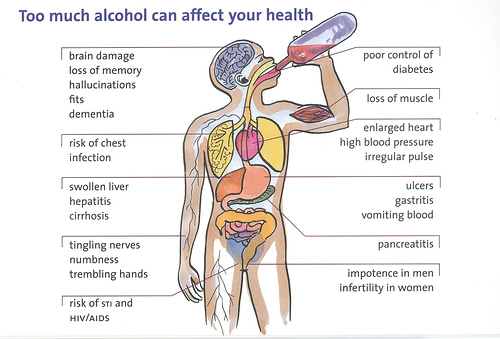
EPIGENETIC CHANGES CAUSED BY BINGE DRINKING LEAD TO INFLAMMATORY RESPONSE IN LIVER


Research from the University of Missouri school of Medicine found that epigenetic protein changes can lead to treatments for alcohol-related liver diseases when caused by binge drinking. High blood pressure, heart disease, stroke, cancer and digestive problems are also caused from binge drinking: five or more drinks for a man and four or more drinks for a woman in a two-hour period according to the National Institute of Alcohol Abuse and Alcoholism. This statistic shows how prevalent binge drinking is in the U.S. today. 


Shivendra Shukla explained that binge drinking causes epigenetic modifications in histone structures in the liver. Epigenetic modifications are the changes in genes that are not caused by changes in the DNA sequence or genetic code. Shukla further found that binge drinking will cause unnatural changes in histones, which are proteins that organize the DNA strands that surround them and they help the DNA function correctly. The changes in histones affect how the genetic code of an individual is interpreted and regulated. Shukla continued by saying how the negative affect binge drinking has on histones will initially cause inflammation and damage cells as they form, and cause cirrhosis and cancer. Shukla stressed that binge drinking does not only affect the liver and should not only be associated with the liver since the liver can send out damaging signals to other systems in the body. 


Binge drinking is an ever growing public health concern not only in the U.S., but globally. This problem is not going away and I believe that it is important to stress the many negative affects that result from alcohol abuse. Studies like the one Shuka performed can lead to future treatments for alcohol-liver damage; however, getting the word across that this is a very serious matter can help limit binge drinkers and alcohol abuse. 

Article: http://www.medicalnewstoday.com/releases/283683.php

Related Article: http://pubs.niaaa.nih.gov/publications/arcr343/293-305.htm