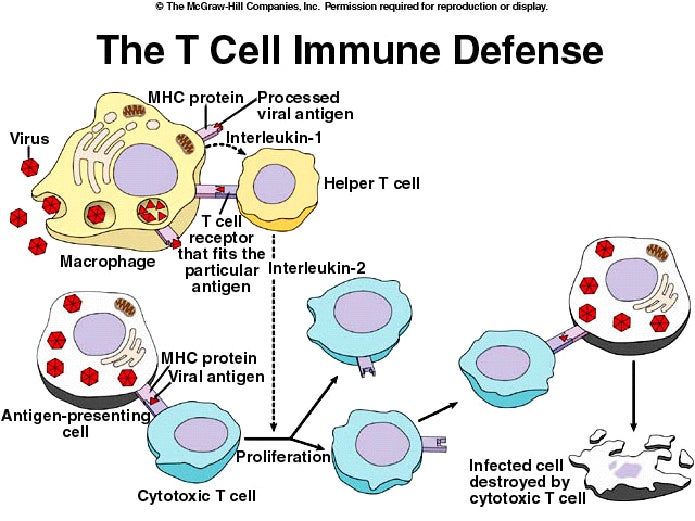
Showing posts with label immune cells. Show all posts

Tuesday, April 29, 2025

A New Cure For Cancer?

In a recent study done by MIT researchers, Senti Bio is engineering immune cells, to be able to distinguish the difference between healthy and cancerous cells. Since proteins that are found on cancer cells, are often also found on healthy ones too, Senti Bio has been developing immune cells to make detecting this protein easier. Former MIT faculty member, Tim Lu said, "Kill anything displaying the cancer target, but spare anything that has this healthy target". 

During the clinical trial, 2 of the 3 patients treated, experienced complete remission. Not even the bone marrow tests were able to detect any cancer cells. Senti Bio leaves hope for cancer patients, their lead clinical trial focused mainly on patients with relapsed or refractory blood cancers. However, they've been partnering with different companies, to perform more trials on patients with liver cancer.

As someone whose father has had two different forms of cancer already, learning about these new immune cells gives me hope. Nobody likes cancer, so knowing that there is a possibility of curing it, I think these new immune cells are an amazing idea. I believe that they're a huge step in the right direction.

Friday, April 5, 2024

Newfound immune cells are responsible for long-lasting allergies

Two studies discovered a specialized type of immune cell called type 2 memory B cells (MBC2s) that hold the memory of proteins that cause allergies. Those cells are important for long-lasting protection against infectious diseases but are primed to make the type of antibodies that lead to allergies. According to the article, Joshua Koenig and his colleagues examined over 90,000 memory B cells from 6 people with birch allergies, 4 people allergic to dust mites, and 5 people with no allergies. They also ran an experiment that determined why people have peanut allergies. Cecilia Berin, an allergist and immunologist, predicted that allergists may be able to examine aspects of these memory cells to forecast whether a patient's allergy is likely to last or disappear with time or treatment. Knowing which populations of cells preserve allergies in long-term memory may eventually help scientists identify other ways to starve to kill the allergy cells. 

I thought this article was interesting when the immunologists elaborated on their studies on how the memory of proteins causes allergies in an individual. Also, this article provides information to have a better understanding of why some people are allergic to peanuts, dust, or any type of allergy, and why others do not have it. 

Researchers discover new cell that remembers allergies

Sources: 

https://www.sciencenews.org/article/immune-cells-remember-allergies

https://www.nature.com/articles/s41577-019-0244-2

Thursday, April 15, 2021

Gamma-delta T Cells and it's Relationship With the Gut


In the article “Mysterious Immune Cells Change the Gut Lining to Accommodate Diet” scientists observe the mechanism in which epithelial cells keep pathogens out as it absorbs nutrients and minerals from the food we eat. Based on a study conducted with mice researchers saw that immune cells called gamma-delta T cells are responsible for epithelial cells of the gut being able to maximally absorb nutrients. Research has shown that animals have genetically adapted their intestines to their specialized diets; pandas, koalas and other animals. 

A study conducted on mice, consisted of having changed the normal diet to two specialized both with the same calorie intake but one was higher in protein while the other had a higher carbohydrate intake. The results of this study indicated that mice had a higher adaptability of absorbing the carbohydrate diet. Upon inspecting even further into the genetic changes that occur in the single cell RNA had indicated that the gut selectively expands. The study was conducted again without micro bacteria present in the gut and the same result occurs which further establishes that the accommodation which the gut undergoes is independent to whether or not bacteria is present. However when the experiment was repeated once again limiting the amount of lymphocytes present in the gut, gamma-delta T cells had indicated that they were responsible for the expansion and contraction of the gut and the potential of the absorption of nutrients. 

Gamma-delta T cells besides being the causes of mucus blocking the airways when contracting the flu, it may also be responsible for regulating tissue homeostasis. Not only is the immune cell versatile but it contributes to the guts ability to accommodate diets to extract the most nutrients from foods. Studies like these are important to make note of because many of the components of the body are still very much not understood when it comes to their functions and relations with other functioning systems to keep the body working. 


Thursday, February 1, 2018

Is Gene Therapy the New Treatment for Pancreatic Cancer?


In August of 2017, Dr. Stephan Grupp, who is the director of cancer immunotherapy, at the Children’s Hospital of Philadelphia, announced a new treatment under research for leukemia. This treatment is called Kymriah, and its goal is to give patients who have undergone a relapse of leukemia, specifically B-cell acute lymphoblastic leukemia, a second chance at survival. Instead of undergoing additional radiation, chemotheraphy, or other forms of treatment, Kymriah focuses on gene therapy. This form of treatment modifies a patient’s own immune cells; the cells get sent to a lab and are genetically modified using chimeric antigen receptor T cell therapy. CAR-T’s aim is to give a patient’s cells the ability to detect and kill cancer cells. This is incredibly interesting, because a patient's own genes are modified and have the capability to save their own lives. Of those involved in the clinical trial, those among children and teenagers had a very successful reaction to the form of treatment. Almost 90% of patients undergoing the use of Kymriah survived the following six months, and nearly 80% of those patients survived the following year. This set of treatment is currently seeking approval for July of 2018, and may revolutionize the treatment of blood cancer.

Monday, November 28, 2016

Social Class Affects Health

Social class affects many people in many different ways, but did you ever think that your social class could be affecting your health too? Recent studies have shown that if you are in the lower social class ladder, than you are at a higher risk for heart disease, cancer, diabetes and other illnesses. This is not definite in human beings because a variety of factors can decline your health. Scientists, thus looked at female Rhesus Monkeys. 45 Rhesus Monkey's hierarchy placement had an affect on their immune system. Lower ranked monkeys had lower levels of disease-fighting cells. "The shift in immune system functioning was mediated by the turning on and off of immune cell genes." A monkey in the lower class, who is likely to be harassed by more dominant monkeys, was linked to genes responsible for immune cells that produced inflammation. Therefore, the lower the rank, more inflammation related genes were turned on. This study could possibly have a positive impact on human health. By only adjusting a person's social class, they potentially avoid horrid diseases.

Sunday, December 6, 2015

New Gene Therapy for X-Linked SCID

A new gene therapy is showing promise in the treatment of X-Linked Severe Combined Immunodeficiency (X-Linked SCID). Because this is an X-linked disease, males are almost always the ones affected by the condition. People affected by this having recurring infections due to bacteria, viruses, and fungi that naturally occur in the body. In healthy individuals, these do not usually cause any problems, but due to a weakened immune system people with X-Linked SCID can't protect themselves from it.

X-Linked SCID is linked to a mutation in the IL2RG gene. This mutation prevents immune cells from developing and functioning correctly. The new gene therapy involves removing bone marrow from the affected patient and inserting a normal IL2RG gene. Then the bone marrow is inserted back into the patient where it hopefully makes new blood cells and improves immune function.
Three years later, one patient has had continuous improvements in immune function. Another patient died from damage to the lungs before treatment began. This stresses the importance of starting early for the treatment to work. Another 3 patients received treatment 3 to 6 months ago and are now beginning to see improvement.

There have been too few of studies in this to know for sure, but this gene therapy seems to be working so far as long as it is started early. There would need to be more studies done to find out when the optimal time for treatment would be. Hopefully if done early enough, the people affected by this disease could live much longer than usual.

Thursday, October 29, 2015

Immune Cells Use DNA Netting as Line of Defense Against Invaders

Normally, immune cells called neutrophils attack microbes (invaders) by releasing toxic chemicals and/or by "eating" (gobbling up) the microbes.  Sometimes, these mechanisms do not work to stop invaders from entering, so the next attack mechanism the immune cells use is spitting out a netting of DNA containing antimicrobial components to trap the invaders. DNA is very compact and coiled tightly.  When it is uncoiled, it becomes a big sticky net, which is a very good defense.  The netting can wrap itself around small blood vessels, allowing the immune cell to grip and kill the bacteria.  The netting itself is very useful in the blood stream because without this mechanism the immune cells would not be able to catch bacteria.  The use of DNA netting in the blood stream entangles the bacteria and they are killed.

This recently discovered mechanism of defense against invading microbial cells has been seen in the human body, specifically in the lungs of patients with Aspergillus fungal infections.  This fungi appears in the lungs of patients with weakened immune systems and/or lungs.   Neutrophils are not large enough to gobble up this fungi successfully, but the use of DNA netting delivers concentrated doses of toxins to destroy the fungi.  The downside to this mechanism of immune cells spewing out DNA netting to entrap microbe invaders, is that it can entrap cancer cells in the blood stream, spreading and implanting the cancer cells into nearby tissues.

Aspergillus fungi has been recently researched in mice. It has been observed that one strain of the Aspergillus repels the netting of the neutrophil DNA.  The rejection of the netting is due to a sugary coating on this particular strain of fungi.

Many people think DNA has one usage; to be a carrier of hereditary genes and sequencing.  This article articulates that DNA has a very important job in the body as a defense mechanism in immune cells.  This defense has a consequence of implanting cancer cells into tissue, but I think the good out-weighs the bad.  Also, in the fungal strain of Aspergillus that repels against the interaction of the DNA netting, it is possible that drugs can be developed in order to break down the sugary coat the blocks the interaction.  DNA in immune cells are essential to humans and helps minimize disease and attacks in the immune system.

Wednesday, April 29, 2015

Cell Therapy


A large study was completed at the Memorial Sloan Kettering Cancer Center on patients with advance leukemia. They found that 88% of patients went into remission with the use of genetically modified T cells (their own immune cells). Patients with adult B cell acute lymphoblastic leukemia, which is a type of blood cancer in B cells,  normally relapse without a successful bone marrow transplant. So sixteen patients were given genetically modified immune cells from their own body. The cells were modified so that they would recognize and destroy cancer cells that contained the protein CD19. The modified cells are called chimeric antigen receptor T cells. The results were better than the traditional method with salvage chemotherapy. The first patient to receive the treatment is still in remission three years later. This treatment basically uses the persons own immune system to attack and kill the cancer cells because traditionally, without the genetically modified cells, the body does not recognize cancer cells as something to fight off. This method was also successful for cancer treatment in 2013 when tested on five different advanced B-ALL patients. The only known side effects are severe flu-like symptoms (fever), cytokine release syndrome (trouble breathing), low blood pressure, and muscle pain.
I think that the modification of your own body cells is a great new technology to fight cancer. It may prove to have many less side effects than traditional chemotherapy. Using your own cells instead of something foreign and potentially hazardous is a great thing. Hopefully the side effects are manageable and this treatment can be offered more commonly to help more cancer patients reach remission.

Link
Link2

Friday, March 14, 2014

Gene Editing Repels HIV

Denise Grady published an article in The New York Times on March 6, 2014 about a study involving the altering of genes as a way to repel HIV. In a recent study, scientists removed a protein in the patient's immune cells by a process known as gene editing. This protein is needed for the HIV virus to invade the cells. The cells were removed, treated, and then injected back into the patient's blood. The study found that immune cells could be altered with no harm to the patient. Gene editing also hinted as a possible way to fight infection. The idea is if enough cells can be altered to repel HIV then antiviral drugs would not be needed. Scientists hope this could be a cure to HIV in the future. An article about the study was published in The New England Journal of Medicine. A small percent of people cannot get HIV because their immune cells lack the protein CCR5. Scientists would like to look more into this protein as a way to prevent HIV. Zinc-finger nucleases are enzymes that cut DNA. This would allow specific genes to be disabled so that people could resist HIV. A study was done in 2009 that concluded with promising results. HIV patients were injected with their own CD4T cells that had been edited to disable the CCR5 gene. Scientists are now working on a way to increase the levels of edited cells and keep them at high levels once in the patient's body in order to keep HIV levels from increasing.
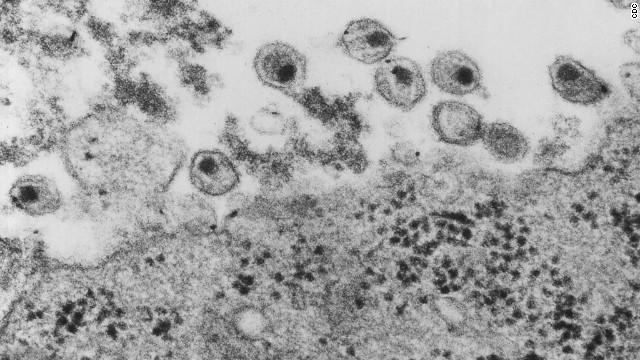
HIV seen using a microscope. 
Although the studies are preliminary it is exciting to see any advancement towards the cure of HIV. It is a horrible disease that affects the lives of so many people.  My friend was adopted from an orphanage in Romania by an amazing couple and given a chance at life. There are many articles about her amazing new family and their fight for HIV awareness.  It would be a blessing if she were able to someday say she is HIV-negative. Hopefully there will be a breakthrough in research during our lifetime.