Showing posts with label T cells. Show all posts

Wednesday, November 24, 2021

SNPs of PPARG, LEP, and LEPR in Response to Influenza Vaccine


In this study, the association of the leptin gene (LEP), leptin receptor gene (LEPR), and the peroxisome proliferator activated receptor gamma gene (PPARG) using 11 single nucleotide polymorphisms to understand the humoral immune response to the influenza vaccine. The most common influenza vaccine is the trivalent inactivated influenza virus split containing two strains of flu antigens, A and B. These antigens promote the immune system to create protective antibodies to defend against activated influenza viruses. LEP is a gene that produces the protein leptin and regulates energy metabolism and immune response. Leptin is a protein hormone secreted by adipocytes. LEPR is the receptor on the immune cells and binds with leptin, which then regulates the proliferation and reactivity of T cells. PPARG coordinates with leptin, which plays a role in adipocyte differentiation and inflammatory response in protein interaction network. PPARG promotes recovery from the infection of influenza virus. The SNPs for all these genes were genotyped and their response to inactivated antigens were traced. The genes LEP and LEPR were the targeted genes for observation in their response to the antigens; however, the SNPs and immune response had no significant results. The PPARG had the most significant genotypic distribution with immune response to the antigens of the flu vaccine. The PPARG had a low responsiveness to the vaccine and LEPR only had low responsiveness in males and this could possibly due to women having higher concentrations of leptin. There were three SNPs seen in PPARG correlates with baseline levels of immunomodulator and vitamin D and these receptors interact with each other for the response to the influenza vaccine. The concentrations of leptin and the way receptors utilize this protein in response to flu antigens is the main influence of how these genes handle recovery and defense against antigens.

https://www.frontiersin.org/articles/10.3389/fgene.2021.725538/full

https://www.hormone.org/your-health-and-hormones/glands-and-hormones-a-to-z/hormones/leptin

https://www.umassmed.edu/guertinlab/research/adipocytes/

Wednesday, July 3, 2019

T Cells and Asthma

The National Heart, Lung, and Blood Institute defines asthma as "a long-term condition that intermittently inflames and narrows the airway in the lungs". When the airways are inflamed, the swell and cause wheezing, coughing, shortness of breath, and chest pain. Asthmatics are commonly prone to more allergens, have higher mucus production, and are more susceptible to illnesses. If the disease is severe and constant, it can cause a decrease in quality of life.

Researchers at Karolinska Institute in Sweden began to use single-cell RNA sequencing to analyze active genes in individual T cells in mice. The mice were introduced to house dust, which is a common allergen in asthmatics and induces inflammation in the lungs that are similar to asthma. The researches monitored the gene expression prior to and after the exposure of the allergen.

They found that in mice lungs, the T cells have genes that are mainly linked to how the cell makes and breaks down fat. Using this knowledge, the researchers gave the mice a drug to block metabolism and noticed that the inflammation decreased. Another finding in this study is when T cells of the mice with asthma symptoms reach the lymph glands cytokines interleukins 5 and 13 switches on which causes respiratory inflammation, muscle contraction, and mucus production.

Another research team further analyzed the links between asthma and metabolism. They found that mitochondria of asthmatics rely less on glycolysis and exhibit "greater tricarboxylic acid cycle (TCA) activity". The researchers also discovered that ARG2 gene variants are located within an asthma linkage on chromosome 14q24. When alterations occur on the gene ARG2 it's linked to asthma and the severity of it. They discovered in mice with a deficient of ARG2 there were alterations in cellular metabolism and more severe inflammation.

As someone with severe asthma and allergies, I found both articles to be very interesting and hopeful. I had known that allergies and asthma go hand in hand with each other, but I wasn't aware that metabolism had an effect on the inflammation caused by asthma. To read that when they blocked the metabolism in mice the inflammation decreased to the levels of the control group and that the ARG2 gene had a strong linkage to asthma and the severity of it was amazing. It leads me to believe that soon there will be a drug for human use that can treat asthma better than medications used currently and almost, in a sense, "cure" the disease.


Saturday, May 4, 2019

Antibody Suppresses HIV

Discussed in this article by The Science Daily, an antibody has been discovered that suppresses HIV for up to four months. This study was conducted in Taiwan and led by Dr. Chang Yi Wang. Twenty-nine volunteers with well-controlled HIV discontinued their normal regimen of daily normal ART at the time of their first infusion. Fourteen of the participants received eight weekly infusions of UB-421 and fifteen of the participants received eight higher dose infusions. At the end of the treatment all the participants started up their regular ART regimen. One participant discontinued due to a skin rash side effect but all the other participants maintained HIV suppression during the study. UB-421 avoids the possibility of HIV mutation by blocking a stable human protein that HIV uses to infect the T cells. Resistance to UB-421 was not seen because the small study did not include a comparator group receiving a placebo infusion. Further studies are planned in Taiwan to evaluate the safety and efficacy  of UB-421 as a treatment for HIV. We are constantly looking for better treatments and this could potentially be another very successful treatment for many HIV patients worldwide.

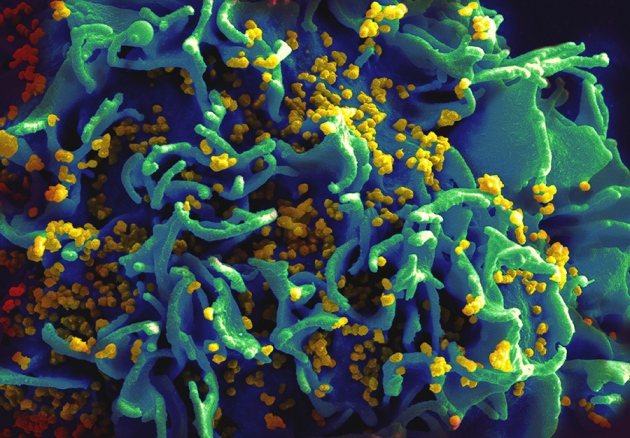
Microscopic image of an HIV infected T Cell

Tuesday, May 2, 2017

Gene editing strategy eliminates HIV-1 virus in live mammals

Scientists have made strides toward finding a cure for the HIV-1 virus by showing that it is possible to provide prophylactic treatment via CRISPR/Cas9.  Scientists used rats and mice that had HIV-1 DNA incorporated into their genome.  They utilized CRISPR to eliminate the viral DNA from their genome. This reduced the amount of RNA expression up to 95%.  The scientists in this study also studied mice that were infected with EcoHIV, which is the mouse equivalent of the human HIV-1 virus.  CRISPR was able to block viral replication and prevent further infection with an extremely high efficiency rate of 96%.

The results of this study suggest a cure for HIV is imminent.  Their strategy was efficient and they were able to demonstrate that they could treat acute infection and latent infection.  The next step is to test in primates and eventually begin human testing.
https://www.sciencedaily.com/releases/2017/05/170501112514.htm
http://www.sciencedirect.com/science/article/pii/S1525001617301107

Monday, April 17, 2017

Curing HIV

Researchers have focused on white blood cells called T cells while looking for a cure. T cells are a part of the immune system the virus uses as a host. Recently researchers have discovered that this virus can be found not only in T cells but also in large white blood cells found in different tissues in the body called macrophages. This is a big discovery because it shows that T cells are not the only cells the virus can infect. For a cure to be found, researchers now have to look for therapeutic interventions that target two different cells. I think this is a big deal because finding a cure is now going to take longer since researches have to target multiple types of cells.


https://www.sciencedaily.com/releases/2017/04/170417114806.htm

https://www.nature.com/nm/journal/vaop/ncurrent/full/nm.4319.html

Monday, April 11, 2016

HIV Defeats Gene Editing Attack By CRISPR

A scanning electron microscope image showing HIV attacking a T cell.

Researchers have conducted over a dozen studies to investigate the ability of CRISPR- Cas9 to conquer the human immunodeficiency virus. Scientists use CRISPR-Cas9  as a gene editing technique that targets a specific genetic sequence and edits the DNA at precise locations. Some researchers have used this technique in two different ways to tackle HIV. One way involves editing the genes made by T- cells so that HIV has no way of attacking the T cell. Another way involves modifying the genes of the T cells with gene- editing tools so they are able to wipe out HIV when it tries to attack them. Researchers at McGill University in Montreal decided to take the second approach and provided T cells with gene editing tools so they can demolish HIV. However, after a couple weeks the group of researchers found that the T cells were rapidly developing copies of the virus that escaped from the CRISPR attack. The researchers were able to identify through DNA sequencing that the virus had developed genetic mutations that were very similar sequences to the CRISPR- Cas9 enzyme. This result was no surprise to the team of researchers because HIV has evolved to a point where it is capable of resisting anti- viral drugs and is adaptable to genetic mutations. The virologist in charge of the team, Chen Liang, proposed that the cause of this genetic mutation happened when the Cas9 enzyme cut the viral DNA. Liang explains that when the DNA is cut, its host cell attempts to repair the break and while doing so a deletion or insertion in the DNA sequence occurs and the CRISPR usually inactivates the gene that was cut. Sometimes the CRISPR doesn't always work correctly and the insertion or deletion of bases made by the T cell machinery allows them to leave the genome of HIV with the capability of replicating and infecting other cells. The worst part about this situation is the fact that T cells machinery cannot detect virus because of the change in its genetic sequence which allows the virus to be resistant to future attacks. However, Liang and molecular biologist Atze Das believe that this issue can be fixed by either inactivating several HIV genes at once or use CRISPR with HIV attacking drugs.


With the help of other advanced gene editing technologies, I think that researchers will be able to eventually detect at least one or two specific mutations within HIV's genetic sequences and find or create a drug most suitable for that mutation. This of course would take years to work out since viral DNA is constantly evolving and able to adapt to genetic mutations very easily making it resistant to many drugs. If researchers can figure out a way to somehow alter  the machinery of T cells so that they are able to overcome invading HIV then treatment for HIV would be more effective for some individuals, maybe not all, but it would be a good start. 

Monday, November 16, 2015

A Cell Therapy Untested in Humans Saves a Baby With Cancer


This baby girl, Layla Richards of London, was diagnosed with cancer, acute lymphoblastic leukemia. She has been going through many procedures and chemotherapy to help destroy the cancer but nothing had worked. She also had low T cell count, the soldier cells of the immune system. Doctors could not extract more T cells from her otherwise she would have a harder time to fight the cancer. Then, with the permission of her parents, Layla was the first subject to try a cell therapy.

The cell therapy involved worked like genomic editing. They inject cellular material into the patient and the injected material gets included into the cells targeted, causing a beneficial mutation. This the first time scientists have tried this cell therapy on humans. Other cell therapies have been also proven successful. Layla had shown much improvement post-therapy and doctors are hopeful that she will be cured according to her progression. The only concerns doctors and scientists have with this type of cell therapy is that the donating T cells wont attack the patient's own T cells since they would be considered foreign.

Since Layla showed progression from the cell therapy, this could be a big break through for genetics. Genes in individual cells can be altered to fight the cancerous cells in the body, and hopefully destroying the cancer without any side effects. Hopefully, Layla fully recovers and the cell therapy will be available to more cancer patients.

Click Here for article.

Sunday, October 4, 2015

Seattle Children's Researchers Pioneer Gene Editing That Kills, Resists HIV.


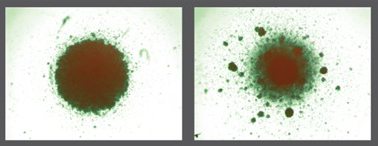
A team of researchers from the Center for Immunity and Immunotherapy at Seattle Children's Research Institute led by Dr. David Rawlings and Dr. Andrew Scharenberg have published their work in which they have discovered a means of creating T cells that could combat infected HIV T cells and B cell tumors while also being immune to HIV infection. The success rate of this new study is what makes it significantly ground breaking. The researchers have used gene editing to accomplish this experiment. In the picture above, the left is an image of a clump of HIV infected T cells, and to the right is an image of it after it was introduced to the edited T cells which are attacking the infected cells.

Within genetics, researchers often use techniques to find cures to diseases by editing a gene to cause certain behaviors in the cell or to block a gene that directly causes a disease. In HIV, T cells are attacked, which is why the immune system is so greatly compromised in such patients. Out of the 30,000 genes that code for T cells, Dr. Rawlings and Dr. Scharenberg pinpointed one particular gene that coded for a receptor called CCR5. In a very precise method, they cut out this particular gene, so the HIV virus would have nothing to latch onto, making them immune to infection. Then, researchers replaced this segment with a genome sequence that would give the T cells ability to fight infected cells and B cell tumors. Dr. Rawlings notes of how distinctive the research is among others of its kind because of the fact that it had a 60% success rate. In other words, 60% of the time, researchers were successfully able to cut out the CCR5 gene, replace it with an edited sequence and simultaneously give the edited cells both the ability to resist HIV infection and fight infected cells.

They are still working on how this method would work in infected individuals. They would propose to take an individual's own T cells, edit them and place them back into the individual where they can reproduce and keep the patient protected for a long time, hopefully. I find it incredible how these scientists can almost master the dexterity it takes to accomplish the genetic editing. It would be a very bright future for affected individuals who get the diagnosis and experience the stigma attached to it. It may affect how we view the infection as well from something that used to be so deadly, to now how it is now considered "manageable," and towards the future where it may be combated successfully. It is hard to wrap around the idea that researchers can make changes in the genetic on such a microscopic scale. The fact that they can do this, and now with a very high success rate, will pave the way for cures of other autoimmune diseases and viruses.

Original Link

Wednesday, April 29, 2015

Cell Therapy


A large study was completed at the Memorial Sloan Kettering Cancer Center on patients with advance leukemia. They found that 88% of patients went into remission with the use of genetically modified T cells (their own immune cells). Patients with adult B cell acute lymphoblastic leukemia, which is a type of blood cancer in B cells,  normally relapse without a successful bone marrow transplant. So sixteen patients were given genetically modified immune cells from their own body. The cells were modified so that they would recognize and destroy cancer cells that contained the protein CD19. The modified cells are called chimeric antigen receptor T cells. The results were better than the traditional method with salvage chemotherapy. The first patient to receive the treatment is still in remission three years later. This treatment basically uses the persons own immune system to attack and kill the cancer cells because traditionally, without the genetically modified cells, the body does not recognize cancer cells as something to fight off. This method was also successful for cancer treatment in 2013 when tested on five different advanced B-ALL patients. The only known side effects are severe flu-like symptoms (fever), cytokine release syndrome (trouble breathing), low blood pressure, and muscle pain.
I think that the modification of your own body cells is a great new technology to fight cancer. It may prove to have many less side effects than traditional chemotherapy. Using your own cells instead of something foreign and potentially hazardous is a great thing. Hopefully the side effects are manageable and this treatment can be offered more commonly to help more cancer patients reach remission.

Link
Link2

Tuesday, November 18, 2014

Using Genetic 'editing' stem cells to combat HIV/AIDS.

        Harvard Stem Cell Institute researchers are currently developing a new technique to try and fight HIV/AIDS. The technique is genetically editing a persons cells to block HIV from entering and destroying a persons immune system. This is the first group to publish a report using CRISPR Cas technology to "edit relevant genes out of cells collected directly from people. The people behind this research are Chad Cowan and Derrick Rossi associate professors in Harvard's Department of Stem Cell and Regenerative Biology.
       HIV targets T cells in the blood based immune system. It enters the system through a gene receptor called CCR5. Once the HIV has entered the system it kills and replicates all of the host cells. Leaving the immune system prey to a host of infectious virus and diseases. Cowan and Rossi are using the CRISPR gene-editing technology "Cowan and Rossi teams knocked the CCR5 receptor out of blood stem cells that they showed give rise to differentiated blood cells that did not have CCR5. In theory, such gene-edited stem cells could be introduced into HIV patients via bone marrow transplantation, the procedure used to transplant blood stem cells into leukemia patients, to give rise to HIV-resistant immune systems."
      The reason why this research has arrived is because it is relatively close to the technique that cured Timothy Ray Brown of HIV. Brown is considered to be the only person who has been cured from HIV. Brown got a bone marrow transplant from someone with a rare genetic defect that left the person free of the CCR5 receptor. After six years of these transplants he is considered to be cured of HIV. The technique that Cowan and Rossi are using is close to this technique except it uses the persons own cells, instead of trying to find a rare bone marrow donator who does not have the CCR5 receptor.
      Although the researchers think this technique could be used on humans in less then five years, they realize the battle they still face. They have listed three cautions of the research. The first the researchers realize they could run into unexpected complications. The also know that the HIV/AIDS community is flooded with "cures" that don't actually cure anything. The third the researchers know that there could be an issue trying to make this applicable in areas where the epidemic has hit the hardest. Overall, I think this technique could be the first step to eventually help fight or possibly cure HIV/AIDS.

Original Article
http://www.medicalnewstoday.com/releases/285077.php 
Related Article
http://news.sciencemag.org/health/2014/09/how-did-berlin-patient-rid-himself-hiv