Showing posts with label Blood Cancer. Show all posts
Wednesday, April 29, 2015
Cell Therapy
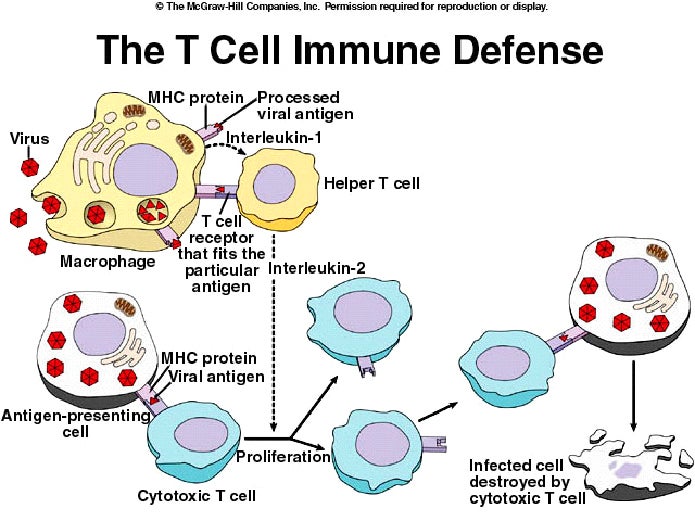
A large study was completed at the Memorial Sloan Kettering Cancer Center on patients with advance leukemia. They found that 88% of patients went into remission with the use of genetically modified T cells (their own immune cells). Patients with adult B cell acute lymphoblastic leukemia, which is a type of blood cancer in B cells, normally relapse without a successful bone marrow transplant. So sixteen patients were given genetically modified immune cells from their own body. The cells were modified so that they would recognize and destroy cancer cells that contained the protein CD19. The modified cells are called chimeric antigen receptor T cells. The results were better than the traditional method with salvage chemotherapy. The first patient to receive the treatment is still in remission three years later. This treatment basically uses the persons own immune system to attack and kill the cancer cells because traditionally, without the genetically modified cells, the body does not recognize cancer cells as something to fight off. This method was also successful for cancer treatment in 2013 when tested on five different advanced B-ALL patients. The only known side effects are severe flu-like symptoms (fever), cytokine release syndrome (trouble breathing), low blood pressure, and muscle pain.
I think that the modification of your own body cells is a great new technology to fight cancer. It may prove to have many less side effects than traditional chemotherapy. Using your own cells instead of something foreign and potentially hazardous is a great thing. Hopefully the side effects are manageable and this treatment can be offered more commonly to help more cancer patients reach remission.
Link
Link2
Labels:
Blood,
Blood Cancer,
defense,
Genetically Altered,
immune cells,
leukemia,
T cells
Tuesday, November 18, 2014
Loss of Y chromosome can explain shorter life expectancy in men.
A recent study at Uppsala University attempted to find any correlation from loss of the Y chromosome to a shorter life span and mortality from cancer. Seeing that it is apparent in many studies that men are more likely than women to die from almost any cancer or disease it would follow that any such correlation would most likely have a genetic link to it. Alterations of the DNA our body cells occur throughout our life which tends to lead to cancerous cell accumulating. The study analyzed the DNA of blood samples belonging to 1600 men. They found that most of the genetic alteration in men came from a loss of the Y chromosome in a portion of the men's white blood cells. The cells actually were missing a whole chromosome. The group of men were studied for several years and the study found that there was indeed a correlation between the loss of the y chromosome and the likely hood of developing cancer. In fact the men who had lost their chromosome had lower chances of survival irrespective of their cause of death. While the Y chromosome is only present in men, so far the only genes in the Y chromosome have been associated with sex determination and sperm production. Because the Y chromosome has also been linked to have a role in tumor suppression this maybe the most likely reason as to why men get cancers more often than women.
This article makes me wonder how mammals developed the xx and xy chromosomal gender linkage over millions of years. The mere fact that ones gender is dictated by a single chromosome just shows the toils of evolution. In some birds it is known that the males have the same chromsomes zz while the females have zw. Gender is a cruel joke evolution plays on genes.
Main article: http://www.sciencedaily.com/releases/2014/04/140428121205.htm
Related article: http://www.bbc.com/news/health-29703455
A recent study at Uppsala University attempted to find any correlation from loss of the Y chromosome to a shorter life span and mortality from cancer. Seeing that it is apparent in many studies that men are more likely than women to die from almost any cancer or disease it would follow that any such correlation would most likely have a genetic link to it. Alterations of the DNA our body cells occur throughout our life which tends to lead to cancerous cell accumulating. The study analyzed the DNA of blood samples belonging to 1600 men. They found that most of the genetic alteration in men came from a loss of the Y chromosome in a portion of the men's white blood cells. The cells actually were missing a whole chromosome. The group of men were studied for several years and the study found that there was indeed a correlation between the loss of the y chromosome and the likely hood of developing cancer. In fact the men who had lost their chromosome had lower chances of survival irrespective of their cause of death. While the Y chromosome is only present in men, so far the only genes in the Y chromosome have been associated with sex determination and sperm production. Because the Y chromosome has also been linked to have a role in tumor suppression this maybe the most likely reason as to why men get cancers more often than women.
This article makes me wonder how mammals developed the xx and xy chromosomal gender linkage over millions of years. The mere fact that ones gender is dictated by a single chromosome just shows the toils of evolution. In some birds it is known that the males have the same chromsomes zz while the females have zw. Gender is a cruel joke evolution plays on genes.
Main article: http://www.sciencedaily.com/releases/2014/04/140428121205.htm
Related article: http://www.bbc.com/news/health-29703455
Labels:
alteration of DNA,
Blood Cancer,
gender,
tumor,
Y Chromosome
Monday, November 10, 2014
New Discovery Revels Potential for Blood Cancer Treatment
Researchers working together from
the Centre for Immunology and Infection at York University as well as the Department
of Medicine at Stony Brook University have made a significant discovery that
may lead to the development of new treatments for specific blood cancers. The therapeutic
target discovered has potential to lead to improved therapies for a group of specific
haematological cancers, myeloproliferative neoplasms (MPNs).
These cancers are characterized
by increases in one or more blood cell types, specifically red blood cells. Red
blood cells carry oxygen around the body as well as prevent bleeding and
bruising from easily occurring. It is important for tight control of the number
of red blood cells in circulation in the body; however, in the bulk of patients
with MPN have a mutation in the JAK2 protein. The mutation in the protein causes
the patients’ blood cells to propagate too quickly.
The research team discovered that
the protein molecule Mpl is necessary for the occurrence of the mutation in the
JAK2 protein. Specifically, the team identified that turning off half the gene
in the Mpl receptor reduced the expression enough so that the mutation did not
occur in the JAK2 protein; therefore, the disease does not develop.
Dr. Ian Hitchcock, of the Centre
for Immunology and Infection at York University, stated, “This is potentially
important medically because it means we can target Mpl. If you can disrupt its
activity you have a completely novel treatment for the disease. We found that
it is unnecessary to get rid of the receptor entirely, you just need to reduce
its expression to have a significant effect on the development of MPN.”
This article was very interesting
because of the potential the research team’s discovery has. Despite the
significant improvements made in cancer research there still remains a lot to
be discovered. This research has the potential to completely change how specific
blood cancers are treated. I am curious to see the results of further research, in particular clinical trials that compare the outcomes of subjects/patients using
treatments based off of this discovery compared to subjects/patients who are
treated using current treatments.
Secondary Article: http://ghr.nlm.nih.gov/gene/JAK2
Labels:
Blood Cancer,
cell receptor,
future of medicine,
gene mutation,
JAK 2,
Mpl,
protein,
red blood cell
Sunday, May 5, 2013
Scientists Find Mutations That Cause AML
Researchers may have possibly found every gene mutation that is associated with the dangerous blood cancer acute myeloid leukemia, or AML. An article from HealthDay published in US News has reviewed the findings from a study found in the New England Journal of Medicine. In the study, the researchers took leukemia cells and normal cells from each of the 200 AML patients included in this study.

This allowed them to pick out mutations that were only found in the cancer cells and not in the normal cells. From the findings, the researchers hope that they can develop better treatments and diagnosis procedures for the disease. They now have an idea of how severe patients’ diseases are and what type of treatment method they should put them through. Hopefully, this information will be able to fight this disease that affects about 15000 Americans per year with only 5000 surviving.
Subscribe to:
Posts (Atom)
