Showing posts with label alteration of DNA. Show all posts

Saturday, January 28, 2017

How insects decide to grow up

          Image of a maggot (left); the steroid producing cells with the maggot brain (middle);
and an expanded image of the steroid producing cells (right). 
Like animals, insects go through a maturity phase. That maturity phase is called metamorphosis, an example would be when maggots turn into flies. A team of scientist from the University of California, Riverside, had solved the puzzle on metamorphosis in insects. They came to a conclusion that the cells that produce steroid hormones keep cloning their DNA without cell division making their nuclei immense. This lead to belief that the amount of DNA in steroid hormone-producing cells is key for juvenile development. These scientist stated that just like human puberty, metamorphosis is irreversible. Once cells start producing steroid hormones, there is no point of return. 
I believe this study will help not only in the short run, but also in the long run. It seems that studying such a small insect can have such a major impact on the world. It is said that manipulating their steroid pathways, they can control the agricultural pest. They could also be used for aiding other insects like bees. What I found interesting is that altering these hormones can lead to developing better ways to treat diseases. The impact of this may aide in breast cancer, prostate cancer, and menopause. I support these scientists study because it is not harming or a threat to any specie; there are only benefits to this research that will help improve not only humans, but insects as well. 

https://www.sciencedaily.com/releases/2017/01/170126132550.htm
https://www.sciencedaily.com/releases/2016/11/161102080123.htm



Monday, September 26, 2016


In Hawaii, there were several patients diagnosed with a strain of gonorrhea that is resistant to the only antibiotic treatment available today to the infected. The seven patients were cured, but there were issues and complications. It either took longer or didn't work as well and so the treatment and regiment was a little different when compared to the previous patients on the said regiment. 

It's the same idea behind any drug in the industry right now. You can administer the treatment but the entire population will not finish the treatment. Some stop early, which allows for the resistant strains to start to develop. Dr. Stephanie Taylor is currently working to better an experimental drug that cured patients.
"In a phase 2 trial, lead researcher Taylor and her colleagues treated patients with gonorrhea using ETX0914 alone at either 2g or 3g dosage levels. All patients treated at the higher dosage level and 98% at the lower dosage level were cured. Though a small number of patients reported side effects, they were mild and primarily gastrointestinal."
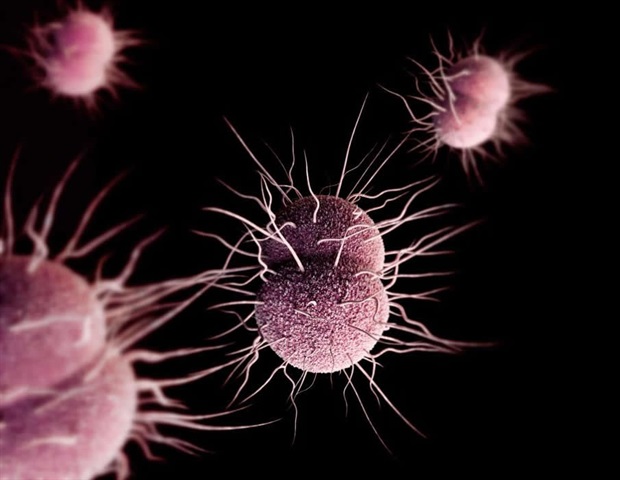
A Graphic of Gonorrhea

So what is the genetics connection to this idea of resistance within a bacterial population?
"Antibiotics kill or inhibit the growth of susceptible bacteria. Sometimes one of the bacteria survives because it has the ability to neutralize or escape the effect of the antibiotic; that one bacterium can then multiply and replace all the bacteria that were killed off. Exposure to antibiotics therefore provides selective pressure, which makes the surviving bacteria more likely to be resistant."
So, humans are basically accidentally selectively breeding the bacteria in order for them to become resistant to a certain medication. By not finishing your medicine, having taken the medicine too many times, or just abusing the medication in general can lead to selecting resistant bacteria to develop and replicate to eventually become the majority of the population.

I think that the simple fix to this problem is to educate the population before administering medicine to the general populous. There has to be some kind of verbal system explaining to a person how to use the medication properly. I know it is in place for certain drugs and treatments, but not all of them. Then, people assume that the idea of not finishing your entire dose of medicine doesn't apply to what they are currently taking just because it wasn't verbally presented. The general population would understand the accidental selective breeding of resistant strains of the infections if they were given the warning verbally in my opinion. Yes, it is partially the doctor's fault at times for not advertising to use the entire antibiotics (since I have personally experienced misinformation or lack there of in the doctor's office before), but it is the individuals fault as well for not self educating themselves about what they are taking. It's weird how a human behavior has a relation to the spread of the accidentally selected resistant strains of infections.
 

Thursday, November 19, 2015


Scientist in China have started to genetically alter man’s best friend. These dogs have not been altered to be more fluffy or smaller. The muscle mass have been increased to improve performance. These dogs have been given an athletic edge compared to normal dogs. As expected, the genetically altered dogs have greater running ability. These dogs can be used for both military and hunting purposes.

CRISPR-Cas9 is one of the most precise and efficient methods of gene editing today. “In this case, the scientists used CRISPR to snip out a gene called myostatin in beagles, the most commonly used dog in biomedical research.” Out of the 27 puppies only 2 received the genetic altered muscle mass. It’s visibly obvious that these two pups have more muscular phenotype. Dogs, like many other species, are able to undergo mutations without serious negative effects.

Dogs have close similarities to humans when it comes to anatomical characteristics. Therefore, most of these advances in genetics can be transferred to humans with some work. Instead of muscle mass, scientist can work on curing diseases. However, genetically altering human DNA is still a touchy subject. So, I’m excited to see these advancements, but I think there is still a long ways to go before we will see them used for humans.

Friday, April 24, 2015

Controversial Gene-Editing Approach Gains Ground


The field of genetics advances further as researchers are now brainstorming and taking steps to learn how we can replace or "fix" damaged DNA that leads to inherited diseases. As we know, mutations in DNA can lead to severe mental, physical, biological disorders, or even sometimes death. Scientists are now doing what's being called gene-editing, and are "snipping out" damaged mitochondrial DNA, removing the mutations, and replacing it.

Using this method, so far researchers have removed mutations in mitochondrial DNA mostly in mice and human cells. The science behind this technique is as follows: enzyme called TALENs (transcription activator-like effector nucleases), work in pairs to search for and cut away damaged mitochondrial DNA in maternal eggs, all while leaving other genetic material untouched. It sounds promising, and so far TALENs have also been tested in modifying genes in frogs, rats, pigs, and human stem cells. One major problem standing in the way is the whole idea of "genome editing" in human embryos because we do not know the long term effects on germ line cells. (Germ line modifications are, "changes that are made to the DNA found in the nucleus of a sperm or egg before fertilization...").

This technique appears to have worked when tested on two generations of mice, and the offspring have had low levels of inherited mitochondrial mutations, meaning future generations may have a very small chance of inheriting a genetic disease. A team of scientists are now beginning to test this in human embryos. They are hoping for this method to only change the unwanted DNA and not affect healthy material. If so, then it opens a lot of doors to "genome editing" science. For some, there are still worries about the ethics of this practice.

I think that this type of science could help significantly decrease genetic disorders and be beneficial to people who have a history of genetic disorders in their families who want children. Personally, I don't think this should be an ethical issue because it's not like "designer babies" where people are changing the (for example) eye color of their kids just because they want it. This is for an actual health reason. Even though the future effects are not yet known, I think any life is better than no life.


Friday, March 20, 2015

The Controversial Topic of Gene Editing


The concept of editing a persons DNA for the health benefits has been rapidly approaching for decades. Now, a decision must be made regarding this controversial issue. Previously, in 1975, scientist were asked to refrain from seeking methods to alter genes. Obviously, this agreement was broached. Hence, today there is knowledge of how to edit genes for the benefit of eliminating genes from the human gene pool. These methods have already been practiced on various animals and prove to be promising.

This cartoon imagine illustrates how DNA is primed to eliminate undesired sequences. 


Accordingly, there is the ethical issue arising.  Historically, many Christians have feared for this advancement in science, mainly for the fact it may develop into a pattern of altering superficial genes. Most would agree that if this is the solution to removing cancer and other harmful genetic mutations from our society, than biologist should be advancing, however, there is the issue of where to draw the line. Consequently, this article builds up to the need for an international meeting for the National Academy of Sciences to enforce restrictions regarding human gene editing.

In my opinion, it is too late to terminate this scientific practice. As a result, guidelines need to be set in an attempt to control this experiment. Where should the line be drawn? I think this process needs to be taken one gene at a time, because it is an experiment, thus the side effects on humans, including their proceeding generations, is entirely unknown. Furthermore, laws need to be set in place to eliminate unnecessary gene editing. Where do you stand? Should scientist have stopped back in 1975 or where exactly do we draw the line, if any, today?

Tuesday, November 18, 2014

Loss of Y chromosome can explain shorter life expectancy in men.

A recent study at Uppsala University attempted to find any correlation from loss of the Y chromosome to a shorter life span and mortality from cancer. Seeing that it is apparent in many studies that men are more likely than women to die from almost any cancer or disease it would follow that any such correlation would most likely have a genetic link to it. Alterations of the DNA our body cells occur throughout our life which tends to lead to cancerous cell accumulating. The study analyzed the DNA of blood samples belonging to 1600 men. They found that most of the genetic alteration in men came from a loss of the Y chromosome in a portion of the men's white blood cells. The cells actually were missing a whole chromosome. The group of men were studied for several years and the study found that there was indeed a correlation between the loss of the y chromosome and the likely hood of developing cancer. In fact the men who had lost their chromosome had lower chances of survival irrespective of their cause of death. While the Y chromosome is only present in men, so far the only genes in the Y chromosome have been associated with sex determination and sperm production. Because the Y chromosome has also been linked to have a role in tumor suppression this maybe the most likely reason as to why men get cancers more often than women.


This article makes me wonder how mammals developed the xx and xy chromosomal gender linkage over millions of years. The mere fact that ones gender is dictated by a single chromosome just shows the toils of evolution. In some birds it is known that the males have the same chromsomes zz while the females have zw. Gender is a cruel joke evolution plays on genes.

Main article: http://www.sciencedaily.com/releases/2014/04/140428121205.htm

Related article: http://www.bbc.com/news/health-29703455

Friday, November 14, 2014

Bacteria the Future of Hard Drives

Engineers at MIT have transformed the genome of E. coli into a storage device.  To make the E. coli bacteria into a storage device, they had to engineer the cells to produce a recombinase enzyme.  This would allow them to insert DNA (or a sequence of DNA), which would only activate during certain circumstances or input.  After the DNA is activated, the bacteria would pass the information down to each generation allowing for long term memory. 

Timothy Lu, electrical, computer science, and biological engineer, explained the engineered bacteria has the potential to advance medical and environmental sensors. It could potentially detect increased carbon dioxide in the ocean, or detect infections/disease in humans.  This type of information could then expedite medical help; instead of wasting type determining the problem, a doctor could go straight to medical procedures.


The idea of using bacteria as storage devices for information is not new.  In fact using bacteria to store information was attempt in 2001 and 2007 with no success.  In 2010, Chinese Biochemistry students developed a way to use bacteria as a way to store electronic data.  They estimated they could use bacteria as a sort of “bio-hard-disk” to store up 900000 gigabytes, or 450 two terabyte (2000 GB) hard drives.  And because they are bacteria, they can reproduce and ensure the data is store permanently.  This could easily advance biotechnology further than it already has been.


Several  traditional  data storage devices. The one with the largest storage capacity in this group ...

Figure 2 The largest storage device has a capacity of 320MG.  Bacteria has more than 2800 times that.


The fact we have come so far as to be able to use bacteria as storage devices, is nothing short of incredible.  I knew were advancing further and further with bioengineering and biotechnology, but to see and read about its fruition excites me.  The advances we could make in the fields of technology, environmental, and medical sciences is amazing.  The two articles (one for technology and one for medical/environmental) show the scientific community is constantly advancing and working to make a better world.

Wednesday, November 12, 2014

On the way to Controlling Genomes

Genome editing is the control of adding, deleting, activating, or suppressing specific genes on DNA sequences.  Researchers have recently developed a new technique for genome editing.  The technique involves a system known as CRISPR-Cas (or clustered regularly interspaced short palindromic repeats-Cas).  CRISPR is a system used by bacteria to defend against viruses and other invaders; it targets and cuts DNA in a sequence-dependent manner to turn off or on genes that could harm the bacteria.

CAS9 Genome Editing


            Researchers are now utilizing this system to better understand and develop new ways to manipulate genes.  In addition to understanding and manipulating genes, the CRISPR-Cas system allows for increased accuracy and precision when targeting DNA.  This research has the potential to change the world.  Crops could be specifically altered to reduce or even grant immunity to diseases.  This could eventually be developed to work on people: genetically tailored drugs for your specific genome or changing you genome to grant immunity/resistance to disease.  One scientist, George M. Church, even predicted the possibility of de-extinction, human enhancement (develop human bodies suited for space and other hostile environments). Of course as exciting as gaining control over the human genome is, it raises the questions is it safe, effective, and morally right?  We are going to have to answer these question soon.
                

            I have always found control over the human genome to be fascinating.  The potential it has to improve the world is astronomical, which is why I thoroughly enjoyed reading this article.  It showed we are constantly advancing our techniques and approaches to handling the control of genes on DNA sequences.  When we finally gain the control over genes, we will be able to help the world and expand in all fields.  


Tuesday, April 15, 2014

Scientists Reveal Potential Link Between Brain Development and Breast Cancer Gene

It has been known for awhile now that mutations in the BRCA1 gene cause breast and ovarian cancer in women, but recent studies have shown that the same gene may also effect brain development. This explains why  women who are genetically prone to breast cancer also suffer from brain seizures. The team from Salk's Laboratory of Genetics found that eliminating BRCA1 in the neural stem cells of mice had profound effects on the brain making it smaller and the cerebellum to be smooth, rather then filled with ridges. Also many of the neurons died rapidly after being formed resulting in interference in balance and motor function. This happens because the protein in which BRCA1 codes for packages DNA for replication and without this protein the DNA becomes fragile and is more likely to create errors in replication.
          This information is a tremendous step towards the treatment of cancer. With this new information, doctors can identify breast cancer susceptible patients predisposed to seizures and provide appropriate treatments. The faster cancer can be spotted and treated, the higher the chances of survival.

Wednesday, November 20, 2013

Genetics Breakthrough Enables Scientists to Edit Any Part of Human Genome

http://www.independent.co.uk/incoming/article8925362.ece/ALTERNATES/w620/web-genetics-graphic.jpg
 A new and precise engineering technique has been brought to light that holds the potential to act as a treatment for cancer, HIV, and inherited genetic disorders. The technique is called Crispr and it allows for detailed alterations to any of the 23 pairs of human chromosomes with minimal to practically no risk of unintended mutations. It works by using RNA guide molecules that are programmed with any unique DNA sequence wanted from the human genome. This piece of RNA is attached to a cutting enzyme that will cut into the DNA double helix, attached the RNA guide molecule, and the unwanted DNA is removed. Crispr isn't just for human gene therapy. It can also be used in agriculture and livestock, though most experts are more impressed with the potential Crispr has with human beings. For example, using this technique, it could be possible to eliminate Down syndrome.

This technique will undoubtedly be attacked by people who do not believe in modifying with the way nature intended. Most likely the arguments that will arise will be that if a person is born with some sort of genetic complication, that they were meant to have it. They will dismiss the fact that Crispr could make a potentially painful and short life into a painless long life. It is of this blogger's opinion that these people might not fully understand that nature is all about testing and changing. Sometimes those tests fail and end up being something that kills instead of aids, so what's the harm in making nature's failures go away? As long as we respect nature and don't go power crazy, Crispr has the potential for greatness.

Wednesday, April 11, 2012

Identical Twins Reveal Mechanisms Behind Aging

In an article in Science Daily, a recent study by researchers of Uppsala University compared DNA of monozygotic twins of different ages to discover that their DNA segments were changed and even lost in the older twin.  There results may explain why our immune system is impaired with age.  These changes in direction, duplication, or loss of the essential piece of DNA seem to correlate with age.  As many as 3.5 percent of healthy individuals older than 60 years carry such large genetic alterations. Out of the cell types in blood only white blood cells contain DNA. The researchers believe that the increased number of cells with DNA alterations among elderly can have a role in the effectiveness of the immune system. If the genetic alterations lead to an increased growth of the cells that have acquired them, these cells will increase in number in relation to other white blood cells. The consequence might be a reduced diversity among the white blood cells and thereby an impaired immune system.  

In society aging represents wisdom but also the deterioration of the physical body.  With age there seems to be a greater deterioration of DNA, if somehow we can prevent or decrease the rate of deterioration maybe an older individual may not have to be so physically frail.