Showing posts with label Antibiotics. Show all posts

Thursday, December 19, 2024

Viva La Resistance

Resisting Change

Evolution is something we grow up learning about, along side mutations. Of course the first thing that is made clear, is that these are not willed about by the organism, but rather occur due to chance. Well researchers have made a new discovery that sheds light on how these mutations might happen in bacterial DNA. 


Bacteria has been known to develop resistances to a great number of antibiotics, and become a great pain to deal with, but now we can make plans to counter that resistance. This new discovery has found that when a bacterial cell develops a resistance, is is stored in something called the integron system, where resistances are stored to be shared later after the DNA is edited by recombinases. Alongside that, the mechanism in which the DNA is copied and pasted has had some rules attached to it. The effectiveness of the resistance, as well as if it even sticks after being recombined, is determined by the binding strength of the complexes that join the protein and DNA. Those with the strongest binding are the fastest to gain resistances. This can be attributed to the fact that if  DNA is weak and has to be recombined repeatedly, it is going to take longer and be less effective compared to one that only has to form once. I believe this will lead us down a path of stripping these resistances to antibiotics away from the bacteria, making the treatment of bacterial diseases more manageable. This research should also give us and idea of how to better interact with bacterial cells to insert plasmids, among other things. I believe we will be hearing more from this lab in the coming years.


Links

https://www.niaid.nih.gov/research/antimicrobial-resistance
https://www.sciencedaily.com/releases/2024/12/241217130812.htm

Saturday, December 4, 2021

Antibiotic Resistance Predicted via Pathogen Pre-Resistance Genotypes


Antibiotic Resistance Predicted via Pathogen Pre-Resistance Genotypes


A study was done at the University College London [UCL] and Great Ormond Street Hospital [GOSH] on M. tuberculosis genomic signatures. The goal was to create the first evaluation of pre-resistant polymorphisms, two or more phenotypes. This allows scientists to predict drug resistance in pathogens coupled with targeted expanded therapy. This process could pave the way for drug resistance prevention in the future in many pathogens including M. tuberculosis. The results of the study concluded that M. tuberculosis linage 2 has a higher risk of developing resistance than linage 4. Linkage 2 had a higher hazard of rifampicin resistance following isoniazid mon-resistance.   

Monday, April 8, 2019

Antibiotics: Cause damage to bones


While diet and exercise helps regulate bone mass, antibiotics can impact the osteoimmunology and skeletal development of the body. It has been known that antibiotics disrupts the microbiota. It has been shown that it has affected the regulation of bone cells and the overall skeletal phenotype. To show how antibiotics truly affect the microbiome, Novince worked with team members at MUSC and treated mice with a cocktail of three antibiotics. The trabecular bone was affected, while the cortical bone had little impact from the antibiotic-induced changes. There was a raise in osteoclast from the result of a specific immune response to a change in the microbiota. In summary, Novince's group has shown that antibiotic disruption of the gut microbiota proceeds in the cutting out of communication between immune cells and bone cells. 

The study of antibiotics and its effect on our body continues to interest me. Since patients rely so much on antibiotics for their specific treatment, we can better understand how much our body can take for it to degrade and have negative impacts in the long run. By continuing research like these, we can find therapeutic ways in which we can prevent skeletal deterioration.

Tuesday, December 11, 2018

New Tests on Roundworms Using the Antibiotic Minocycline Found to have Increased the Lifespan by Inhibiting Protein Aggregation and Could Lead in to Help the Fight Against Multiple Neurodegenerative Diseases in Humans.

          Many progressive age-related brain disorders are due to impaired proteostasis. Proteostasis is the systematic process of the production of proteins and the disposal of them from the body. Impaired proteostasis could mean a couple different things might be faulty. A well functioning process of proteostasis means that there is a good balance between the production of proteins and the disposal of them. Neurodegenerative symptons begin when there is a disruptance in this balance. Either there is an over/underproduction of proteins or there is an increase/decrease in the disposal of the proteins. Gregory M Solis from the The Scripps Research Institute and colleagues from other research institutes ran tests on Caenorhabditis elegans, a species of roundworms, that are relatively old with deficiency in stress signaling pathways. Stress signaling pathways (SSPs) are the cells way of telling itself that their is stress on the cell. This can include intruding toxins, mechanical damage or extreme temperatures that inhibit reactions that occur in the cell. However, cells that become dependent on this have difficulties responding to stressors later in its life when they lose the ability to activate SSPs. Minocycline, an antiobiotic that is known to have neuroprotective and anti-imflammatory properties in mammals, was used on the worms to suppress cytoplasmic protein synthesis and the production of aggreation-prone proteins. By minimizing the production of these proteins it relieves the demand on the multiple pathways that induce protein synthesis, such as SSPs. Therefore reducing the effects aging has on cellular function.
          Minocycline is used by humans now for medicinal purposes however because of its multitude of side effects which include nausea, vertigo, and mild dizziness just to name a few. The risk for these symptoms has prevented the usage for minocycline for many different neurodegenerative diseases because the harmful effects will have major impacts on the patients who are typically of an older age group, who do not have strong enough metabolic pathways to prevent these symptons. This limits its use in humans right now to its anti-inflammatory effects. As of now Minocycline is a major product used in curing acne vulgaris and sexually transmitted diseases and is soley used for those reasons until methods of reducing the chances of the detrimental symptoms are discovered. 

Friday, November 16, 2018

Antibiotic that could Treat Tuberculosis Found in Dirt


Certain strains of tuberculosis are becoming resistant to the antibiotics that we have available, such as rifamycin. A research team from Rockefeller examined an antibiotic that is found in dirt to see if it could destroy the mutant bacteria strains. The researchers were looking for an alternative drug that acted like rifamycin and could bind to RNA polymerase, since any genetic changes in the bacteria prevent rifamycin from binding to it. They searched for molecules that were similar to rifamycin and could bind to mutated RNA polymerase in nature. They sequenced the genes of the microbes that they found in soil samples that were collected from different locations. The researchers discovered a group of antibiotics that share a large portion of their genes with rifamycin. These natural antibiotics are known as kanglemycins, which are able to deal with mutated strains that don’t respond to rifamycin. It was hypothesized that natural antibiotics are experiencing the same selective pressure as antibiotics in the medical field.

I thought that this discovery was important because it could lead to alternative forms of treatment for tuberculosis and similar illnesses. Kanglemycins could be useful in dealing with mutated tuberculosis strains. However, it’s possible that these mutated strains and other strains of tuberculosis could eventually become resistant to this new antibiotic, which could lead to another search for an alternative.


References

James Peek, Mirjana Lilic, Daniel Montiel, Aleksandr Milshteyn, Ian Woodworth, John B. Biggins, Melinda A. Ternei, Paula Y. Calle, Michael Danziger, Thulasi Warrier, Kohta Saito, Nathaniel Braffman, Allison Fay, Michael S. Glickman, Seth A. Darst, Elizabeth A. Campbell, Sean F. Brady. Rifamycin congeners kanglemycins are active against rifampicin-resistant bacteria via a distinct mechanism. Nature Communications, 2018; 9 (1) DOI: 10.1038/s41467-018-06587-2

Sunday, October 21, 2018

Antibiotic Resistance: Breakthrough Study Offers Solution


Resistance to antibiotics is one of the leading global health issue and in the United States alone, it is estimated that “antibiotic-resistant bacteria affect about two million people per year and account for 23,000 deaths.” Resistance to antibiotics occur when the small amount of bacteria that survive after the use of the antibiotic change in a way that allow them to resist or reduce the effectiveness of the drug. The bacteria eventually multiply, allowing its resistance to grow.

The possibility that antibiotics may go ineffective will be a big issue for “medical procedures such as joint replacement, cesarean delivery, bowel surgery, and chemotherapy as they could become too dangerous to perform.” However, a team at Case Western Reserve School of Medicine in Cleveland, Ohio has recently found a way to use specific small molecules that cause the bacteria to go ineffective instead of killing them. The molecule works in a way that prevents the bacteria from releasing toxins that will kill immune cells. The study was performed on mice and it was found that the mice that were treated with the small molecules all survived while 70 percent of the mice that were untreated had died.

 It’s extremely concerning to hear that tens of thousands of people die from resistance to antibiotics every year. As a drug that is supposed to help cure people from infections, it actually damages our bodies for future attacks. It’s great that scientist are actually aware of this issue and are working hard to find a possible cure. Instead of killing the bacteria which will allow for the growth and spread of resistant bacteria, it seems like this is an effective technique where the bacteria is made ineffective instead.

Saturday, November 25, 2017

Blocking antibiotic resistance

In the article titled, "Antibiotic resistance: researchers succeed to block genes of resistance," researchers explain that the plasmids bacteria carry may have coded for the resistance to antibiotics.  Researchers were able to discover the exact binding site for the molecules and insert a stronger molecular to bind instead.  By doing so the molecules for antibiotic resistance were not transferred with the plasmid.  The molecule being inhibited is known as TraE, being the gene known to produce an resistance to antibiotics.  This article was interesting because I know any time somebody has taken antibiotics the bottle always says to take all of the pills regardless to be sure all the harmful bacteria are killed, otherwise some will be left and will develop resistance.  Seeing that something is being discovered to hopefully slow down this process is a relief.

Monday, September 26, 2016


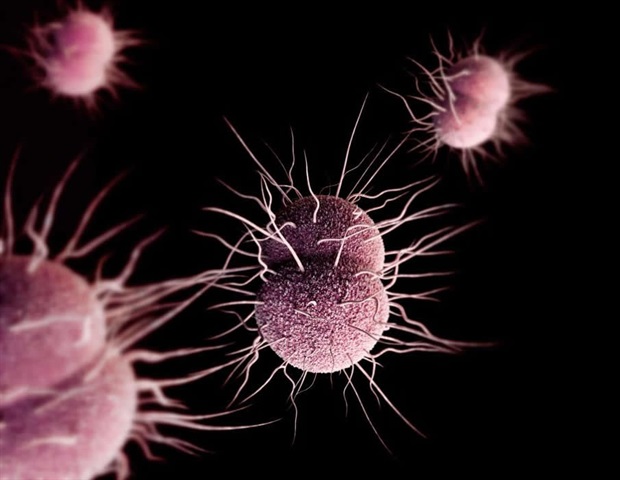
In Hawaii, there were several patients diagnosed with a strain of gonorrhea that is resistant to the only antibiotic treatment available today to the infected. The seven patients were cured, but there were issues and complications. It either took longer or didn't work as well and so the treatment and regiment was a little different when compared to the previous patients on the said regiment. 

It's the same idea behind any drug in the industry right now. You can administer the treatment but the entire population will not finish the treatment. Some stop early, which allows for the resistant strains to start to develop. Dr. Stephanie Taylor is currently working to better an experimental drug that cured patients.
"In a phase 2 trial, lead researcher Taylor and her colleagues treated patients with gonorrhea using ETX0914 alone at either 2g or 3g dosage levels. All patients treated at the higher dosage level and 98% at the lower dosage level were cured. Though a small number of patients reported side effects, they were mild and primarily gastrointestinal."
A Graphic of Gonorrhea

So what is the genetics connection to this idea of resistance within a bacterial population?
"Antibiotics kill or inhibit the growth of susceptible bacteria. Sometimes one of the bacteria survives because it has the ability to neutralize or escape the effect of the antibiotic; that one bacterium can then multiply and replace all the bacteria that were killed off. Exposure to antibiotics therefore provides selective pressure, which makes the surviving bacteria more likely to be resistant."
So, humans are basically accidentally selectively breeding the bacteria in order for them to become resistant to a certain medication. By not finishing your medicine, having taken the medicine too many times, or just abusing the medication in general can lead to selecting resistant bacteria to develop and replicate to eventually become the majority of the population.

I think that the simple fix to this problem is to educate the population before administering medicine to the general populous. There has to be some kind of verbal system explaining to a person how to use the medication properly. I know it is in place for certain drugs and treatments, but not all of them. Then, people assume that the idea of not finishing your entire dose of medicine doesn't apply to what they are currently taking just because it wasn't verbally presented. The general population would understand the accidental selective breeding of resistant strains of the infections if they were given the warning verbally in my opinion. Yes, it is partially the doctor's fault at times for not advertising to use the entire antibiotics (since I have personally experienced misinformation or lack there of in the doctor's office before), but it is the individuals fault as well for not self educating themselves about what they are taking. It's weird how a human behavior has a relation to the spread of the accidentally selected resistant strains of infections.
 

Friday, April 15, 2016


It has been known for a long time that bacteria develop resistance through gene swapping or conjugation. In addition, researchers believed that as antibiotic resistant bacteria form when antibiotics fail to kill the bacteria allowing them to mutate. However, new research done by Duke University student Lingchong You states that there is a possibility that the antibiotics were killing of the parental generation leaving the newly resistant strain to grow. Through 9 clinical tests, You's team was able to find out that the gene swapping occurred before antibiotics were introduced and continued. You them points out that there are very few proven examples where antibiotics induce resistance. This study thus proves that antibiotics do not promote the spread of resistance within bacteria. bacteria share resistances through conjugation and usually share the resistances whether antibiotics are present or not.
This study could be groundbreaking in terms of making new antibiotics. Researchers now knowing antibiotics do not normally induce resistance could possibly come up with new form of antibiotics that were previously declined based on previous data. I find this to be extremely helpful since bacteria are becoming more and more resistant while the number of antibiotics shortens almost constantly. I hope that this study can help researchers further our knowledge of how bacteria transfer DNA and create antibiotics that work for all people.


https://www.sciencedaily.com/releases/2016/04/160411124713.htm

http://www.nature.com/articles/nmicrobiol201644

Wednesday, November 4, 2015

Gene alteration makes an ordinary stomach bug a dangerous virus

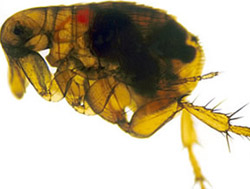
Tourists from the Yosemite National Park were diagnosed with a virus assumed to be the Black Plague. The plague, caused by the bacterium Yersinia pestis, has spread to multiple Western Americans through flea transmission. Recent findings suggest that the Y. pestis became lethal after altering the gene pla. The gene pla is originally responsible for preventing blood clots. Any bacterium with pla would be capable of preventing the body from forming clots during an injury and prevent further bleeding. The gene alteration made pla more virulent, so it could spread more easily with human contact or flea transmission. With the gene alteration in pla, Y. pestis can cause pneumonia at an alarming rate, and kill any person who hasn't receive proper antibiotics.

Oriental rat flea with Y. pestis in its intestinal tract
With findings in how the plague became more dangerous, scientists began to how the plague came to occur. They found that the plague existed for over 20 million years after finding an amber encased flea carrying an ancestor bacterium of Y. pestis. Other findings revealed that Y. pestis had an evolutionary precursor pathogen strain called Y. pseudotuberculosis, which at worst could cause slight diarrhea. After an experiment with the two pathogens, it was shown that the Y. pseudotuberculosis was poisonous to fleas, which made it impossible to carry to other organisms. On the other hand, the Y. pestis was not poisonous to fleas, so that could easily carried to other living organisms, such as humans. This made Y. pestis a more effective virus strain. Further research is being performed, but all that is known now is that Y. pestis has become a dangerous strain because of only one small gene alteration.

Original Article

Secondary Article

Wednesday, March 18, 2015

Genetically Modified Cattle Show Resistance to Tuberculosis.

Research performed at Northwest A&F University in China produced the first genetically modified (GM) cattle resistant to tuberculosis.  The cattle produced were more difficult to infect and were largely protected against the actual symptoms of the disease. Myobacterium bovis is the bacteria responsible for bovine TB, which is a close relative to the bacteria that causes TB in humans. Bovine TB affects several species worldwide other than cattle and currently, the only methods of controlling the disease are culling or placing the animals on antibiotics, which can both be extremely costly and/or devastating. When one cow shows up positive for a TB test, usually the entire herd is culled to prevent possible other positives, and human transmission. In undeveloped regions, there is no effective control of the disease, and it can spread to humans via drinking an infected cow's unpasteurized milk.


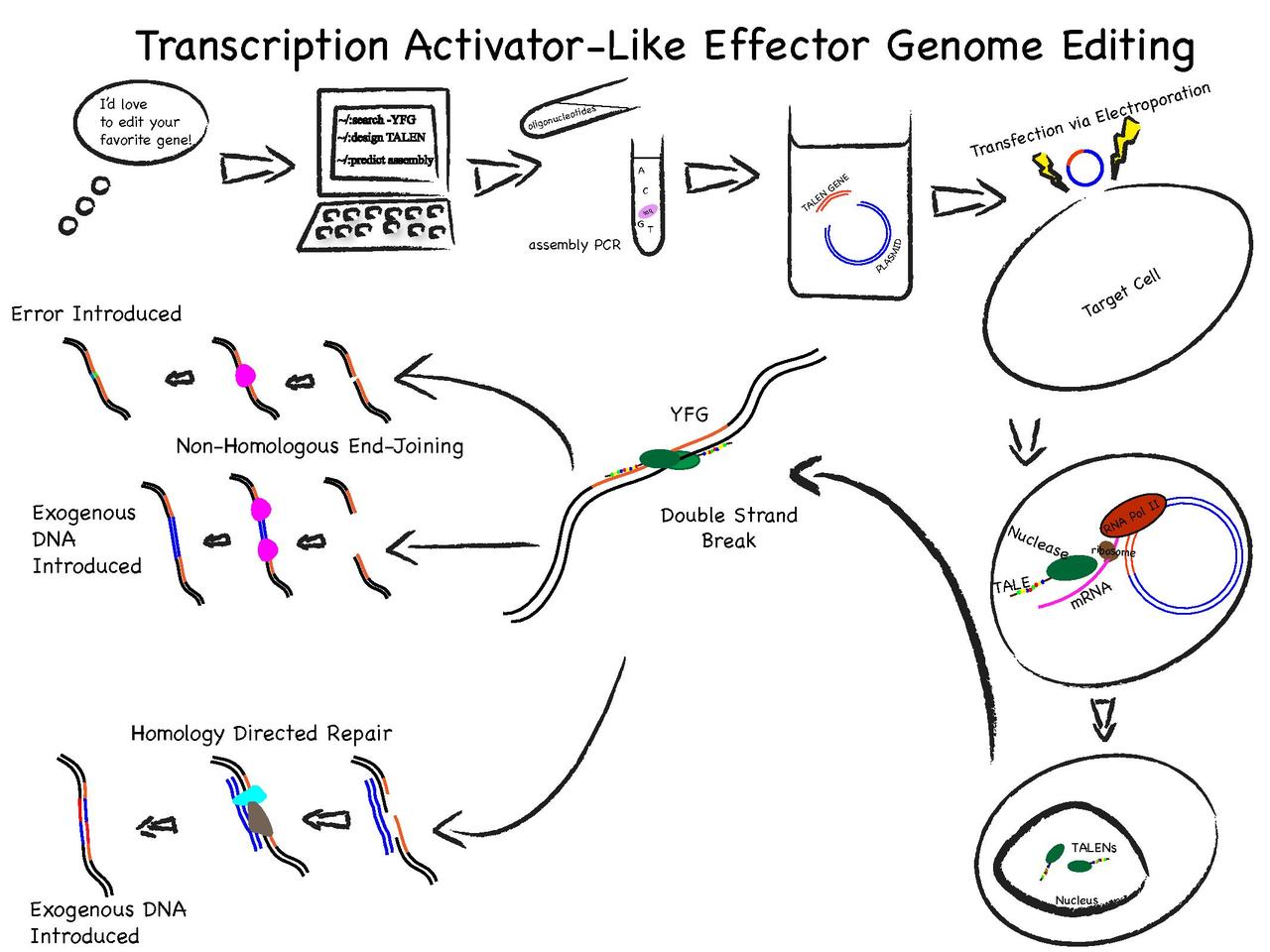
The researchers deleted naturally occurring genes and inserted mouse gene SP110 into Holstein-Fresian cattle DNA using a technique called TALEN. In mice, SP110 helped protect them against TB transmission. 23 GM calves were produced. 13 calves lived into adulthood, and when their cells were studied, they showed higher resistance to M. bovis than cattle that were not genetically modified. The next step of the study was to introduce M. bovis into the lungs of 3 of the 13 GM cattle and 3 control (non-GM) cattle. Out of the GM cattle, 1 showed no signs of TB and the other 2 had reduced lesions on their major organs from the disease after necropsy several weeks later. Next, 9 of the 13 GM cattle and 9 control cattle were housed together with animals infected with TB. 6 out of the 9 GM cattle were not infected and the remaining 3 showed very minimal symptoms. All 9 of the control cattle contracted TB and had extensive lung damage.


While this study did not prove complete resistance, researchers say it is a goal to develop disease-resistant livestock.

GMO, antibiotics, culling... all of these things are huge in the animal welfare and nutrition world. While I personally do not have any issues eating GMO's, I am skeptical as to how this affects the future generations of cattle that have the SP110 gene. Just because the cattle are resistant to TB does not mean they are resistant to other diseases and infectious organisms either.

This is a HUGE step in the right direction, even if some find it morally displeasing. I think we need better methods at controlling transmission other than one gene for one disease at a time. There are still "mad cow disease", west nile virus, and other pathogens that can wipe out an entire herd. In my opinion, the bigger feat here is controlling transmission possibly via sanitation and appropriate farming methods. I applaud the scientists that were able to accomplish this study with goals they had expected, and hope that this helps in the future of zoonotic disease control.

Original Article: TALE nickase-mediated SP110 knockin endows cattle with increased resistance to tuberculosis

Sunday, February 1, 2015

Superbugs

Poor sanitation and uncontrolled use of antibiotics in developing countries are hindering efforts to reduce death rates due to antibiotic-resistant infections.  The amount of these resistant infections is on the rise due to adaptations of the illnesses, resulting in bacteria known as “superbugs”.  Antibiotics have been used for the past seventy years to treat infectious diseases.  As a result of using these common drugs over a long period of time, the infectious organism that the antibiotics are designed to treat have adapted to the drug, causing it to have less of an effect

Despite this adaptation, researchers from Tel Aviv University have made a remarkable discovery that could positively influence efforts made by the medical community to solve the epidemic of the superbug.  Novel proteins were identified by sequencing the DNA of bacteria resistant to viral toxins, which have the ability to prevent growth in antibiotic-resistant bacteria.  Researchers located mutations in bacterial genes, leading them to identify a new small protein, growth inhibitor gene product 0.6.  This protein can inhibit the activity of a protein essential to the bacterial cells, destroying the protein that maintains the cell structure, resulting in the death of the cell.  Researchers at this university are continuing to study bacterial viruses, hoping this knowledge will eventually lead to breakthrough in the fight against the superbug.

According to the Center for Disease Control and Prevention “at least two million people become infected with bacteria that are resistant to antibiotics and at least 23,000 people die each year as a direct result of these infections” in the United States.  Personally, I think this is a shockingly large number for these infections.  This discovery and continuing research will benefit and hopefully greatly reduce this statistic.  I think this is a groundbreaking discovery that could lead to more advanced discoveries in the future of medicine.  


Original: http://www.sciencedaily.com/releases/2015/01/150128114100.htm

Additional: http://www.cdc.gov/drugresistance/

Saturday, December 6, 2014

How does Penicillin work?

Even though Penicillin has been the go to antibiotic for almost a century, scientists still don’t understand how the drug works. Resistance against penicillin has been emerging over the recent decades and new antibiotics need to be found. However, Thomas Bernhardt who is an associate professor of microbiology and immunobiology at Harvard Medical school have found out how penicillin attacks bacteria which can lead to new ways to prevent drug resistance. They found that penicillin not only block cell-wall assembly, but it sets in motion a toxic malfunctioning of the machinery to prevents the cell from producing a cell wall causing the cells to die because they don’t have the resources they need to survive.


In order to determine how penicillin and other similar drugs that are called beta-lactams that are naturally derived from antibiotics produced by fungi that evolved effective ways to kill bacteria, the researchers at Harvard used a specific derivative of penicillin that targets one enzyme in cell-wall assembly. They found that the cell was still killed by the penicillin that was targeting the nonessential enzyme. Therefore, the enzyme could be removed from the cells completely without harm, because if the enzymes were present, the cell would die. The enzyme that fights back against the beta-lactam is called beta-lactamases that slice the beta-lactam molecules and keep them from attaching to their targets to resist penicillin. Since this research has allowed the scientists to learn more about beta-lactams they will be able to find new ways to disrupt it in the future.

I found this article interesting because I am always getting sick and I have been on several antibiotics and I never understood how they worked. After reading this article, I see that scientists also didn’t know much about how they work either.