Showing posts with label cattle. Show all posts

Monday, July 27, 2020

A Bull Calf Designed to Produce More Male Offspring

Cosmo. (Alison Van Eenennaam/UC Davis)

A Bull Calf Designed to Produce More Male Offspring 

A group of researchers at the University of California, Davis, have been working on designing a bull calf that will produce more offspring. After almost 4 years of working on this project, the scientists have successfully produced a bull calf, Cosmo, who was genome edited as an embryo so that he can produce more male offspring. They were able to accomplish this by using a technology called CRISPR. With this technology, scientists are able to make cuts to the genome and add in useful genes. The scientists added a gene called SRY which is responsible for initiating male development. So even if the offspring don't have the Y chromosome, they can still grow and look like males if they inherit the SRY gene.

The main reason why scientists and researchers wanted to do this was because male cattle produce more meat. So they would have less cattle and still produce the same amount of meat as before. Researchers believe Cosmo will reach sexual maturity within the next year so they will really be able to tell whether or not the addition of the SRY gene was efficient and effective. It will be very interesting to read updates on Cosmo and the offspring that is produced.

Article: https://www.sciencedaily.com/releases/2020/07/200723115855.htm
Second Link: https://www.ucdavis.edu/news/meet-cosmo-bull-calf-designed-produce-75-male-offspring

Friday, April 6, 2018

Genetic Diversity in European Bovine Breed

In a European study from Munich, Busa cattle (an old European breed) was found to be far more genetically diverse than many of the more modern European breeds available today. The study tested 1828 different cattle representing 60 breeds, 350 of those individuals being Busa cattle. When genotyping for "single-nucleotide polymorphisms", Busa cattle were found to have 14 unique strains. Most of the genetic diversity (that being non-artificially selected diversity) of domesticated cattle can be traced back to or attributed to Busa cattle. Currently there is some push towards a conservation program for this breed to help maintain the functional diversity of cattle worldwide.
As most domesticated breeds of bovine have been bred not to survive but for meat/milk production, the survival of this breed (smaller and less productive but far hardier and healthier) is fascinating. Perhaps the introduction of some of the Busa cattle's' genetics into the more specialized breeds can help to lower their health issues.

Article Link- https://www.sciencedaily.com/releases/2018/03/180328143255.htm
Additional Info- https://onlinelibrary.wiley.com/doi/abs/10.1111/mec.14555

Thursday, March 30, 2017

Our Cattle's Diet is Imperative to a Sustainable Future

Researchers at Scotland's Rural College have made an incredible breakthrough in research regarding greenhouse gas emissions, and it's all about our cows' diet. When the words "global warming" are mentioned, the first thought that comes to mind is of the greenhouse gas, carbon dioxide. Though carbon dioxide makes up over 84% of greenhouse gas emissions in the United States, it is not the most effective heat-trapping greenhouse gas. Methane traps nearly 20 times more heat than carbon dioxide, and though it makes up only about 8% of US emissions, that number is expected to rise with the increase in one particular industry: cattle farming.

The cattle industry supplies the world with many desired products including milk, butter, and meat, and the consumption of these products is on the rise all over the world. What do cows have to do with global warming? It all comes down to the way cows digest their food. As cows eat, their four stomach compartments contain bacteria that promotes greenhouse gas formation (methane and carbon dioxide) through fermentation, which is then released by belching. This is key to preventing bloating in cows, but it is where the greenhouse gas emissions in cattle farming stem from. This process accounts for a total of 95% of all methane production in the US during 2004, as referenced from the EPA by this Penn State article, which also outlines the digestion process very well. To reiterate, 95% of the United States' methane emissions come from their cows.

Researchers at Scotland's Rural College (SCUC) have made an important discovery in reducing the amount of methane produced from cattle, and it lies in what the cows are eating. As it turns out, plants grown in warmer climates tend to be hardier, often evolving to endure the climate. These genetic adaptations in plants tend to make them more difficult to digest, and the food spends more time in the digestive track of livestock. This increased digestion time leads to an increase in the formation of methane, as the bacteria in the stomachs' of livestock spend more time breaking it down, and thus the cows emit more gas. It is, in a sense, a vicious cycle, as Dr Mark Lee is quoted calling it in the article. Feeding cattle difficult to digest plants leads to an increase in the production of methane, which in turn contributes to global warming, creating warmer climates, and causes plants to adapt to climate change.

An article by Scientific American talks about the result of plant adaptations from a genetic standpoint, and the difference in life span and ability to adapt accordingly. Plants with shorter life spans that grow faster and produce offspring in quick succession will adapt the fastest to the change in climate, and thus have a higher chance of surviving. This includes many of our crops and livestock feed. These adaptations could result in plants that are more difficult to digest, and may, ultimately, produce more methane from cattle. Therefore, it is important to look at what is being fed to cattle now, so as to limit the impact of climate change on their diet going forward. Constructing a diet of nutritious, easily digestible foods for our livestock is imperative in reducing greenhouse gas emissions from an industry that is only expected to expand over the next decade.

Wednesday, March 29, 2017

Don't play Russian roulette with your cattle genetics

http://outlawbuckers.com/breeding_program_bulls.html


Original Article

Further Information


This article discusses the challenges ranchers face with the purchase of a new stud bull. For years ranchers would rely on a simple eye evaluation of how well the bull will perform and the quality of the calves he will produce. In today's day and age this is very unreliable, but many stubborn ranchers refuse to acknowledge the science. A simple eye test can not give accurate knowledge of a bull’s prefrocme, mutations it may have, diseases it may carry, or other effects it may have on the herd. Today many bull breeders will provide a EPD, expected progeny difference, which is based on genetic tests and past performance during mating. The EPD test for fertility, and diseases such as bovine viral diarrhea. The EPD looks at past performance by studying birth weight of calves, sex ratios, weaning weight, and overall size of the cattle after 2 years. This being said, EPDs will change as the bull matures and proves himself as a valuable stud, it still allows the rancher a much needed idea of potential performance, back by genetics.


A simple eye up can not tell someone what a genetics test can so why do ranchers continue to do so, with each untested bull they gamble with the fate of their herd.


Tags: Bulls, Cows, Cow Breeding, Cattle Ranching

Tuesday, December 13, 2016

Study in Cows Shows why Cloning Mammals Fails


Dolly was able to be cloned successfully because the technique of "somatic cell transfer" was used. However, cloning cattle is becoming difficult and the success remains low (fewer than 10% survive to birth). The main reason the cattle don't survive is embryonic death. Cloning cattle is important because it can be used to study mammalian development. 

Harris Lewin, professor in the UC Davis Department of Evolution and Ecology, conducted a study using RNA sequencing to understand gene expression in cloned cows during implantation to discover why there is a high rate of failed pregnancy for cloned cows. The study combined the French's expertise in cloning and reproductive biology with the U.S.'s expertise in functional genomics. This collaboration lead to understanding the mechanisms that account for embryonic losses at implantation. The study also provided insight on how implantation events drive the progression of pregnancy and shape the phenotypes of the cattle after they are born. 

The researchers studied the tissue of cloned cow embryos at 18 and 34 days of development and the endometrial lining of the cows pregnant with the clones. They also studied cows that conceived by artificial insemination with non-cloned cows. The study resulted in the finding of multiple genes that are expressed abnormally. This could explain why there is a high rate of death for cloned embryos. The researchers found abnormalities in the expression of more than 5,000 genes on day 18. Results also suggest that that the surviving clones were able to successful implant in the uterus and form a placenta, indicating that the losses of clones is due to problems of critical development genes in the extra embryonic tissue. The study also revealed other factors that could be leading to the death of the clones including problems with hormone signaling between the pregnant cow and the developing embryo.

I found this article to be fascinating. I thought if scientists were able to clone a sheep it would only be a short jump to cloning cows too. I didn't think that cloning cows in the same way as Dolly would be so difficult. This article makes me ask the question if any animals can be cloned the same way or if each animal has to be cloned separately. This study could possibly provide further insight to cloning other mammals. 


Wednesday, April 20, 2016

China Set to Open Cloning Factory


Within the next seven months China plans to open the first cloning factory. There, they plan to clone cattle, pets, and eventually humans. They have also been working on ways to clone extinct or dead animals; for example the wooly mammoth is one such animal they have been developing methods for. The factory is opening with hopes to produce 1 million cows a year by 2020. They anticipate that the cloning of cattle and other such animals could help with world food supplies and specifically China's food crisis. Xu Xiaochun, the CEO behind the company hopes that helping aid the food crisis will shed a new light on the moral issues behind cloning, and people will see what good it can bring.

This article was chosen because of the moral issues it brings into question. While I do see the practicality of cloning animals for food, there still is just a uneasiness about it. I'm not entirely on board with the idea of eating cloned meat, even if it is FDA approved in the US (which it is). And while cloning humans might be something others are into, I personally get a little wierded out by the thought of there being an identical me. Overall I felt the story just showed how far we've come in genetics and what direction this is headed.

Wednesday, March 18, 2015

Genetically Modified Cattle Show Resistance to Tuberculosis.

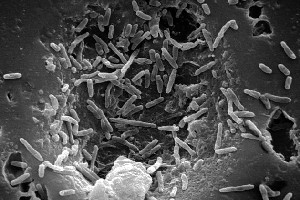
Research performed at Northwest A&F University in China produced the first genetically modified (GM) cattle resistant to tuberculosis.  The cattle produced were more difficult to infect and were largely protected against the actual symptoms of the disease. Myobacterium bovis is the bacteria responsible for bovine TB, which is a close relative to the bacteria that causes TB in humans. Bovine TB affects several species worldwide other than cattle and currently, the only methods of controlling the disease are culling or placing the animals on antibiotics, which can both be extremely costly and/or devastating. When one cow shows up positive for a TB test, usually the entire herd is culled to prevent possible other positives, and human transmission. In undeveloped regions, there is no effective control of the disease, and it can spread to humans via drinking an infected cow's unpasteurized milk.


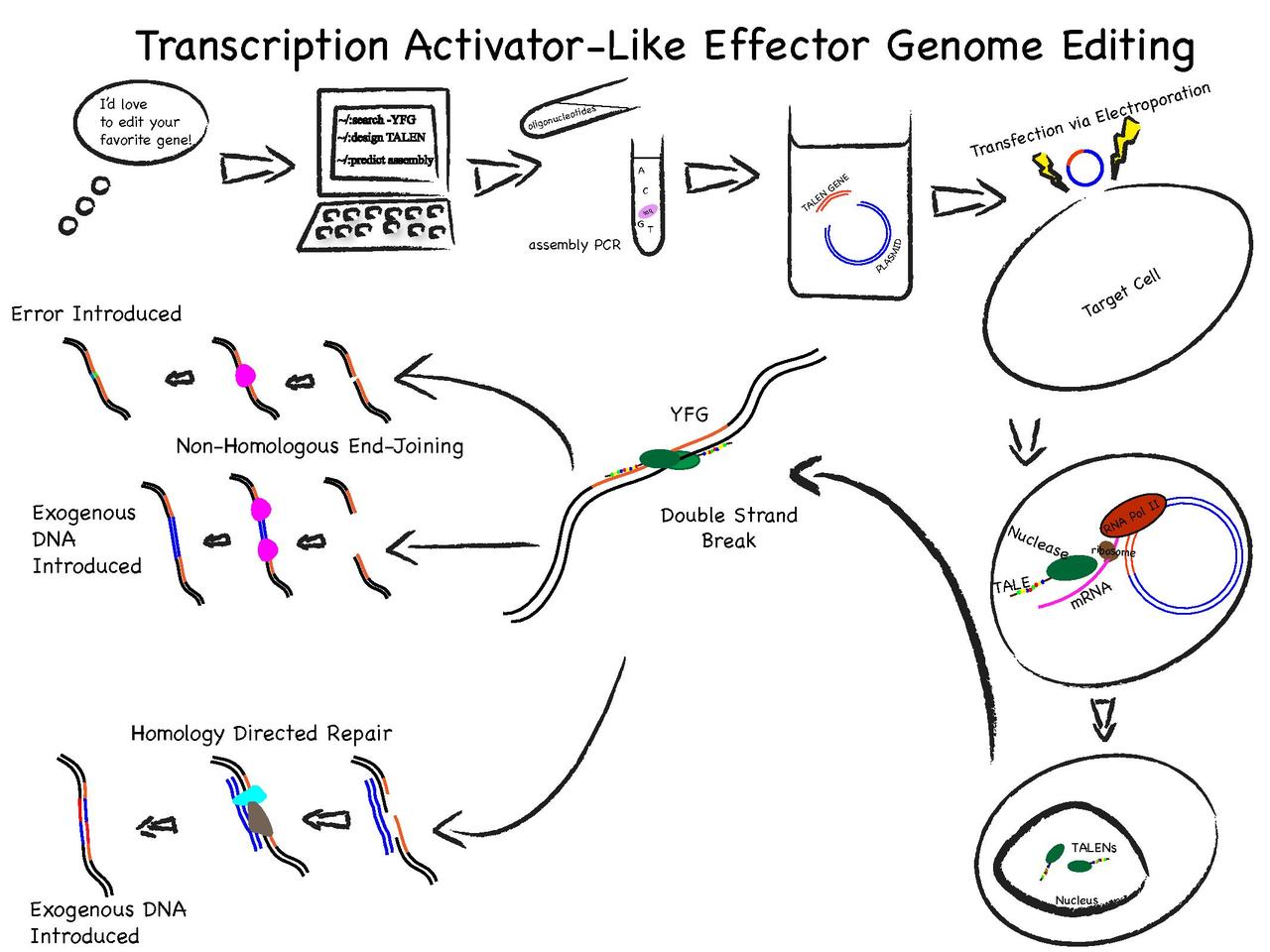
The researchers deleted naturally occurring genes and inserted mouse gene SP110 into Holstein-Fresian cattle DNA using a technique called TALEN. In mice, SP110 helped protect them against TB transmission. 23 GM calves were produced. 13 calves lived into adulthood, and when their cells were studied, they showed higher resistance to M. bovis than cattle that were not genetically modified. The next step of the study was to introduce M. bovis into the lungs of 3 of the 13 GM cattle and 3 control (non-GM) cattle. Out of the GM cattle, 1 showed no signs of TB and the other 2 had reduced lesions on their major organs from the disease after necropsy several weeks later. Next, 9 of the 13 GM cattle and 9 control cattle were housed together with animals infected with TB. 6 out of the 9 GM cattle were not infected and the remaining 3 showed very minimal symptoms. All 9 of the control cattle contracted TB and had extensive lung damage.


While this study did not prove complete resistance, researchers say it is a goal to develop disease-resistant livestock.

GMO, antibiotics, culling... all of these things are huge in the animal welfare and nutrition world. While I personally do not have any issues eating GMO's, I am skeptical as to how this affects the future generations of cattle that have the SP110 gene. Just because the cattle are resistant to TB does not mean they are resistant to other diseases and infectious organisms either.

This is a HUGE step in the right direction, even if some find it morally displeasing. I think we need better methods at controlling transmission other than one gene for one disease at a time. There are still "mad cow disease", west nile virus, and other pathogens that can wipe out an entire herd. In my opinion, the bigger feat here is controlling transmission possibly via sanitation and appropriate farming methods. I applaud the scientists that were able to accomplish this study with goals they had expected, and hope that this helps in the future of zoonotic disease control.

Original Article: TALE nickase-mediated SP110 knockin endows cattle with increased resistance to tuberculosis