Showing posts with label global warming. Show all posts

Friday, November 7, 2025

The Genetic Adaptations for Heat Survival of Arizona Honeysweet in Death Valley


The Genetic Adaptations for Heat Survival of Arizona Honeysweet in Death Valley

Benjamin Pruss
BIOL-2110-001 GENETICS
Professor Guy F. Barbato
November 7th, 2025


    Most plants don't survive very well in extreme heat, much less thrive. However, the Arizona honeysweet (Tidestromia oblongifolia) does just that— in Death Valley, no less. All because of a unique cellular ability it has.

    T. oblongifolia can change the shape of the chloroplasts within its cells, the organelles that convert light, water, and carbon dioxide into energy and oxygen. Chloroplasts are usually disc-shaped; however, the Arizona honeysweet plants' chloroplasts can change to a cup shape. Although not certain, scientists believe this shape helps the chloroplasts better trap carbon dioxide. This, combined with other plant responses to heat, such as smaller leaves, allows the plant to thrive in Death Valley's extreme heat. 

    In an experiment conducted by Karine Prado and her associates, Arizona honeysweet growth was measured at 31°C and 47°C, the usual summer temperature in Death Valley. Seeds grown under Death Valley conditions grew significantly larger than those grown at 31°C. This suggests that the plant actually grows better under such harsh conditions. "These plants wait [for] the hottest month just to grow fast," said Prado about the plants. Some scientists believe that this plant's special adaptations could help future crops survive global warming. 

Sources:

https://www.sciencenews.org/article/death-valley-shrub-survival-heat

https://www.sciencedirect.com/science/article/abs/pii/S0960982225013120

Friday, April 25, 2025

StCDF1 and the Greener Way to Grow Potatoes

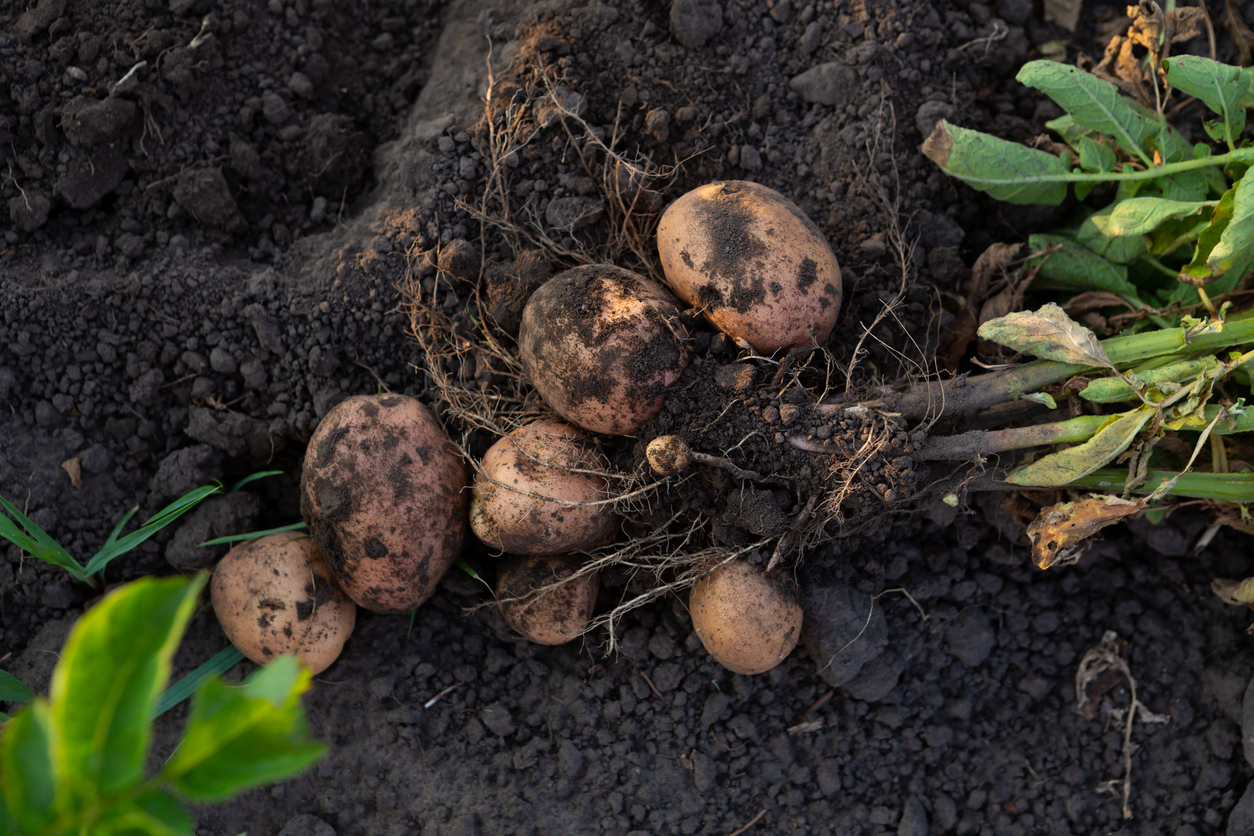
     Potatoes are one of the most popular starchy vegetables all over the world, but did you know to grow potatoes they use a lot of nitrogen fertilizer? Nitrogen fertilizer is harmful for the environment and is expensive for farmers to buy. Researchers recently discovered the StCDF1 gene in potatoes, this gene helps control when potatoes grow tubers. Tubers are the parts of the potato that we consume. The StCDF1 gene also affects how efficiently the plant is able to absorb nitrogen. What the StCDF1 gene does, is turns off the enzyme that helps the plant use nitrogen, knowing this now makes sense to why potatoes currently need so much fertilizer to grow. When colder places in Europe were growing potatoes, the StCDF1 gene became more active, which enabled the tubers to grow throughout the colder seasons but reduced nitrogen efficiency even more. Researchers were able to disable StCDF1 to test what would happen, it resulted in the plants growing lots of big leaves and roots with no tubers. This left them thinking that the older potato varieties probably used nitrogen more efficiently. In the future, scientists are going to try to modify the StCDF1 gene and crossbreed to create potatoes that will grow efficiently without using a ton of fertilizer. 


    This article really interested me because it demonstrates how one gene like StCDF1 can make a huge impact on how potatoes grow and how efficiently they use nitrogen. This study's finding can help farmers out a lot because they will be able to spend less on fertilizer while producing good quality potatoes. Not only will this help farmers out but it will also be helping our environment. Soil with excess nitrogen damages ecosystems, pollutes water, and adds to our global warming problem. This article puts into perspective how much genetics impacts real world situations. Applying genetics to industries like the agriculture industry makes it more interesting to learn about. 

Thursday, November 12, 2020

Bringing Back Mammoths


Scientists may be on the verge of cloning a woolly mammoth. Scientists have been making clones of animals so that they can study genes better. They only need a small amount of DNA to be able to replicate it and male a clone. Because the remains of mammoths are mostly found in permafrost, their remains consist of tusks, bones, flesh and even hair. Because these creatures are so well-preserved scientists are hoping to find living cells which they would need to clone a mammoth. Because the cloning mission is not going well, scientists are hoping to make a mammoth/elephant hybrid by splicing their genes together. Scientists are hoping that by bringing back the mammoth that they will graze on the artic tundra, exposing the cold ground underneath, therefore cooling down the earth. I think that this would be a very cool way to tackle the climate change problem. If bringing back a prehistoric animal would solve climate change it would help the environment and also provide the opportunity to study prehistoric animals.

https://www.history.com/news/wooly-mammoth-resurrection-cloning-genesis

https://www.nationalgeographic.org/encyclopedia/cloning/


Thursday, November 1, 2018

Using CRISPR to Save Coral Reefs


CRISPR is a gene-editing tool (CRISPR-Cas9) that allows researchers to tweak any gene in plants or animals and the coral reefs could be the next target for this practice. Researcher Phillip Cleves and team at Stanford University published a paper in Proceedings of the National Academy of Science, in which they used the CRISPR technique to edit three specific genes in corals growing in the Australia Great Barrier Reef.

Australia's Great Barrier Reef is a major concern for coral life.

The genes that the researchers manipulated in the coral's early life cycle, just after the fertilization of egg via sperm. While the coral was a single cell, the genes were manipulated to ensure that all the subsequent cells of the coral would contain the manipulated genes. Two of the manipulated genes were responsible for reef coloring (using red and green fluorescent proteins) and the other regulates growth of coral.

The manipulation of genes to coral is difficult however, due to the reproduction behaviors of coral. Basically, coral only spawn once or twice per year, so the researchers had a very limited window. Results of the CRISPR experiment allow researchers to take more coral genes and determine what they do. Through this research, they may be able to cause coral to become more resilient to bleaching due to environmental conditions. The researchers claim that they will not use the research to genetically engineer the coral at this point, but are using it to develop a database of information. 

Personally, I believe in global warming and climate change and seeing the effects of it on our environment are disheartening. I also believe that coral reefs are not seen as important as they are. They are responsible and a key species in ecosystems. In addition, they help to protect coastlines from wave actions and provide habitats for marine organisms. Bleaching of the coral causes them to become weak and more susceptible to disease. This minor change can kill coral and cause a disruption in the ecosystem. I am totally for genetic engineering when it is ethically correct, and in this case, the use of engineering is to protect marine ecosystems and help to suppress the effect of global warming on the ocean. Over the next few years, I will be happy to see more research done on coral and their genes to try to protect the different species.

Friday, July 13, 2018

The Sunscreen Gene


Unlike humans, plants are not mobile. This being said, a scorching hot summer day can be terrible for these immobile species.  Japanese researchers from RIKEN Center for Sustainable Resource Science have identified the gene that keeps the chloroplast membranes from destabilizing in high temperatures. They named the gene Heat Inducible Lipase (HIL1).  This newfound knowledge can help researchers develop plants that are more heat tolerant, which could be incredibly important in combating global warming.


Engineering plants to tolerate extreme heat conditions could allow agriculture to expand to regions where plants are usually unable to grow. With ever-changing temperature and precipitation levels, plants that are more tolerant in heat and stressful conditions would be extremely beneficial to our warming world.  


Friday, April 27, 2018

CRISPR Gene Editing Could Save the Coral Reefs

CRISPR gene editing has been used by scientists to make tweaks in practically any gene in plants and animals. A research study done at Stanford University was able to edit 3 genes in corals growing in The Great Barrier Reef in Australia. Phillip Cleves lead this experiment and he used CRISPR gene edition at the earliest stage of life in corals. Two of these genes used coded for the coloring in corals and the other gene coded for how new corals settle and grow in the reef. The results of this experiment has given scientists a stepping stone to discovering a way to edit the genes of corals to make them resistant to bleaching. Coral bleaching is caused from pollution and the warmer ocean temperatures. This has a major affect on the ocean and the world because bleaching causes the death of corals and all the organisms that depend on coral to live. The study conducted by Phillip Cleves has provided scientists with information to lead them in the direction to change the genes in corals to make them resistant to bleaching. This is a very important study that can hopefully change what pollution is doing to the earth. In my opinion, I think that more people should be aware about how climate change and pollution is affecting our planet. If scientists can figure out what genes are responsible for bleaching and if they are able to insert genes that code of bleaching resistant, a major change can be made in the ocean.

Article: http://time.com/5250927/crispr-gene-editing-coral-reefs/
Additional Article: https://oceanservice.noaa.gov/facts/coral_bleach.html

Tuesday, September 26, 2017

A super-algae to save our seas? Genetic engineering species to save corals


Coral reefs are being negatively impacted by the warming of our oceans, which will ultimately impact a plethora of organisms. Coral reefs have a symbiotic relationship with microalgae. The algae lives in the coral reef and supplies the coral reef with food through the process of photosynthesis. However, due to the warming of our oceans the algae part from the coral reef, causing the coral reef to starve. This  problem is referred to as coral bleaching. In spite of that, a type of algae called Symbiodinium contains more genetic variation than the other types of algae, which allows it to be more tolerant to the stress caused by the warming of the oceans. Scientists want to genetically engineer the Symbiodinium and transfer it to other coral reefs to save them or to genetically engineer other algae to be like the Symbiodinium. There are certain genes in the Symbiodinium that inhibit coral bleaching. Unfortunately, due to the genetic variation found in the Symbiodinium, the successful genetic variation strategies do not work for this type of species. More research and more tests has to be conducted in order to begin to place this heat-stress tolerant algae in other coral reefs.
I believe the discovery of this stress tolerant algae is an enormous step in recuperating coral reefs. Coral reefs are an important ecosystem, thus they provide homes for a plethora of marine organisms. They are also one of the most diverse ecosystem. They also protect coastlines. I think this discovery should not be given up on, no matter how hard it might be due to its genetic coding. If there is ultimately a solution to this problem, it should keep on being research and tested so a solution is found and coral reefs do not go extinct.
https://www.sciencedaily.com/releases/2017/07/170720095111.htm
https://interestingengineering.com/genetically-engineered-corals-could-help-save-the-coral-reefs

Thursday, March 30, 2017

Our Cattle's Diet is Imperative to a Sustainable Future

Researchers at Scotland's Rural College have made an incredible breakthrough in research regarding greenhouse gas emissions, and it's all about our cows' diet. When the words "global warming" are mentioned, the first thought that comes to mind is of the greenhouse gas, carbon dioxide. Though carbon dioxide makes up over 84% of greenhouse gas emissions in the United States, it is not the most effective heat-trapping greenhouse gas. Methane traps nearly 20 times more heat than carbon dioxide, and though it makes up only about 8% of US emissions, that number is expected to rise with the increase in one particular industry: cattle farming.

The cattle industry supplies the world with many desired products including milk, butter, and meat, and the consumption of these products is on the rise all over the world. What do cows have to do with global warming? It all comes down to the way cows digest their food. As cows eat, their four stomach compartments contain bacteria that promotes greenhouse gas formation (methane and carbon dioxide) through fermentation, which is then released by belching. This is key to preventing bloating in cows, but it is where the greenhouse gas emissions in cattle farming stem from. This process accounts for a total of 95% of all methane production in the US during 2004, as referenced from the EPA by this Penn State article, which also outlines the digestion process very well. To reiterate, 95% of the United States' methane emissions come from their cows.

Researchers at Scotland's Rural College (SCUC) have made an important discovery in reducing the amount of methane produced from cattle, and it lies in what the cows are eating. As it turns out, plants grown in warmer climates tend to be hardier, often evolving to endure the climate. These genetic adaptations in plants tend to make them more difficult to digest, and the food spends more time in the digestive track of livestock. This increased digestion time leads to an increase in the formation of methane, as the bacteria in the stomachs' of livestock spend more time breaking it down, and thus the cows emit more gas. It is, in a sense, a vicious cycle, as Dr Mark Lee is quoted calling it in the article. Feeding cattle difficult to digest plants leads to an increase in the production of methane, which in turn contributes to global warming, creating warmer climates, and causes plants to adapt to climate change.

An article by Scientific American talks about the result of plant adaptations from a genetic standpoint, and the difference in life span and ability to adapt accordingly. Plants with shorter life spans that grow faster and produce offspring in quick succession will adapt the fastest to the change in climate, and thus have a higher chance of surviving. This includes many of our crops and livestock feed. These adaptations could result in plants that are more difficult to digest, and may, ultimately, produce more methane from cattle. Therefore, it is important to look at what is being fed to cattle now, so as to limit the impact of climate change on their diet going forward. Constructing a diet of nutritious, easily digestible foods for our livestock is imperative in reducing greenhouse gas emissions from an industry that is only expected to expand over the next decade.

Tuesday, November 22, 2016

Caribbean Coral Reef Genetic Diversity may allow them to adapt to Climate Change

There are many species of corals in the Caribbean today, however this is probably only about half of what there used to be as half of all the coral species in the Caribbean went extinct between 1 and 2 million years ago and this was due to drastic environmental change in the conditions for which they are present. The Smithsonian Tropical Research Institute believes that one specific genus, Orbicella which was among the survivors of these environmental conditions will continue to adapt to climate change such as global warming. This is believed because this genus has high genetic diversity.


Fossils were collected from ancient coral reef systems and compared numbers of species at different time points. One of the best represented genus throughout time is Orbicella. In addition to looking at the fossil record, the researchers used genome sequencing to estimate past numbers of many species of Orbicella. This was done by taking one of two genetic material copies within an individual, sometimes one copy is different than the other and this is called a genetic variant. After sequencing the whole genome for a species currently found in Florida they were able to use this as a starting point and reconstruct genetic variation found in other individuals of past and present. With this information they were able to find the sizes of populations of different species throughout the past. This research showed Orbicella has been present in large quantities throughout time and has adapted to changes in its surrounding environment. This could be groundbreaking as many people believed coral reefs could be completely decimated in years to come with the effects of global warming. This study gives hope that maybe some can adapt to the more harsh conditions and allow for corals to be viewable by future generations.

Thursday, October 29, 2015

700-year-old Reindeer Poop Brings About Regeneration of Ancient Viruses


Ancient, cryogenically-preserved virus remnants were discovered in 700-year-old caribou feces found in an ice patch in the Yukon and Northern Territories in Canada. The low-density virus remnants were found to be degraded, but, through a study led by the University of California, San Francisco, the virus is being "resurrected" by a procedure known as "viral particle associated nucleic acid enrichment". Through their study, the research team was able to recreate a full coding of DNA sequence and and a partial RNA sequence. Furthermore, the team displayed the viruses' ability to reproduce when injected into a living plant. The regenerated viruses gave the team major evidence as to how modern viruses evolved from their viral ancestors. The newest question that critics have risen is whether global warming will bring about the emergence of ancient viruses that were cryogenically preserved for decades. Although the re-warming of other ancient virus DNA is a possibility, it is highly unlikely that any of the viruses would not be degraded enough to infect living species prior to genetic manipulation.
I think it is amazing how far science has advanced. Because of genetics, we are able to "resurrect" ancient viruses and learn more about the evolution of viral species. It is a bit of a scary concept to imagine ancient viruses returning to the current ecosystem. The ability of the virus to infect the plant also raises the question of whether the reindeer actually was infected from eating the plant, meaning that the virus could have been in a symbiotic relationship. Hopefully this type of genetics is well-maintained, controlled, and isolated to keep the public safe from possible unknown harms.

Thursday, March 19, 2015

Antarctica Used to be Too Cold for Penguins.

Emperor penguins are very unique birds. They can survive the frigid Antarctic winter when temperatures hit -60°C (-76°F), and become heat stressed when it's warmer than 0°C (32°F). They congregate on sea ice during the winter breeding seasons, and travel for months at a time at sea for food.  In a study published in Global Change Biology, the study of climate change has revealed that at one point in history, the Antarctic was too cold for emperor penguins. The study also revealed that due to climate change, the Antarctic may end up being too warm the for penguins, causing their populations to decline. 3 emperor penguin populations survived the last ice age. But how was this information attained?


Genetic diversity of ancient and modern emperor penguins was evaluated by collecting genetic samples of 8 breeding colonies. The population history was reconstructed using "mitochondrial DNA from extent colonies and radiocarbon-dated subfossils" and correlated with environmental conditions. The analysis revealed that 12,000 years ago when the ice age ended, emperor penguin numbers began to rise with the increase in temperature and decrease of sea ice. The conditions have to be just right for them. Too much sea ice means difficulty searching for food, and too little means difficulty breeding.


While I am glad that genetics can be used in a historical way, such as this, I am a little upset with the realization of global warming. We all hear about it and know about it, and it's even more upsetting that we can confirm the damaging effects using genetic analysis. Genetics has proven that these birds rely on certain climate requirements in order to thrive. It's just a shame that more cannot be done to help them proliferate.


Original Article: Too much of a good thing: sea ice extent may have forced emperor penguins into refugia during the last glacial maximum

Monday, September 22, 2014

Food of the Future


As global warming becomes more and more of a reality, scientists and researchers are seeing how food crops will hold up in future climate conditions in the upcoming decades. Pollutants and heat-trapping gases such as carbon dioxide are expected to rise, and this could seriously harm the food supply of the planet.


Some of the farming fields trying to mimic growing conditions are those just a few miles from the University of Illinois, where scientists are testing predicted future growing conditions on corn and have been for the past decade or so. Pipes spray extra carbon dioxide and ozone (which is harmful and corrosive on ground level) into the air. Other equipment tries to mimic droughts and heat waves. The results have been troublesome, as the data shows that compared to today’s crops, the crops grown under future climate conditions are extremely deficient in nutrients. Furthermore, even though plants would benefit from an increase in carbon dioxide, the stresses caused by other factors offsets this benefit significantly.

Negative impacts on the food supply in the future are anticipated, and therefore people are trying to work towards solutions. Some solutions suggested by the Intergovernmental Panel on Climate Change are changing farming practices and improving the genetic variety of crops. Another solution is reducing ozone, because this seems to have a bigger impact than realized, and would be an easy pollutant to control. Researchers are using modern genetics, agriculture and climate science to create a food supply that will be able to withstand the future climate conditions. 

I find it to be a very good thing that people are already taking steps to improve our future in the face of the global warming crisis, since many seem to want to sit back and wait until it’s too late to do anything. I hope that this problem can be addressed since the world is already undernourished. It seems like a daunting task to make plants undergo a great deal of genetic change in only a couple decades.

Sunday, October 21, 2012

Fruit Flies Reaching Their Boiling Point

This article detailed current research about how many species of fruit flies lack the ability to tolerate even a modest increase in temperature. This is so worrying due to the fact that it was found that such species are close, or already beyond their “temperature safety margin,” and even more so, how such species do not the genetic aptitude to adapt to climate change. The research, conducted by researchers from Monash University, then delves into identifying the risk of extinction at the basic genetics level. This research hopes to provide the species greatest at risk in climates of greater extremes, or greater variation of heat, cold, and aridness. The current findings of the research are not optimistic about how species which evolved in more moderate environments will fare in more extreme environments, and concluded that only a very few species of the fruit fly could withstand higher temperatures, all of which were related and evolved in a more extreme relative environment. Dr. Kellerman, of the Monash University Molecular Ecology Research Group, ummated that such research would suggest that most of these species lack the gene to increase their heat resistance, essentially being “constrained by an evolutionary straitjacket.”


I thought that this article was extremely interesting, especially noting how we use Drosophila melanogaster so frequently as a model organism within genetics and other scientific experiments, and yet this information about their intolerance for temperature change  was just noted. I was also quite worried by the warning of “evolutionary straitjackets” that the article presented. What is to say that with the coming global warming, that the environment will not be so radically different that all species will not be able to adapt accordingly due to genetic limitations? Hopefully a more environmentally-conscious global perspective in combination with additional research into such genetic limitations will moderate the effect upon vulnerable species.

Sunday, November 27, 2011

Genetically Modifying Plants to Solve World Hunger


According to  Professor Bones from the Research Council of Norway, rapid research about genetically modified plants needs to become a major concern of  the science community. Genetically modified organisms or GMOs are most commonly and currently used in crop plants to give plants the traits to resist insects and chemical weed killers, such as herbicides. This article describes how Professor Bones wants to take GMOs even further and look into the future of plants that feed the growing population and how global warming is going to effect crops. The majority of the population only depends on a few select crops for food production. Wheat, corn and rice account for a majority of those select crops, although Professor Bones predicts that if conditions affecting these plants made it hard for these plants to flourish then GMOs could be the answer. By genetically modifying a plant to thrive in severe weather conditions it could prevent severe consequences of world hunger caused by global warming. Here is another article by National Geographic that also expresses the same concerns that GMOs could help solve.

Monday, November 21, 2011

We should listen to our earth!


In a recent article, scientists have discovered that seagrass populations have been declining from changes in their genes from the extreme climate change due to global warming. Seagrass can be found all over the world and contributes a great deal to the ocean ecosystem. Seagrasses are habitats for many creatures of the sea like fish, microbes, and crustaceans. Scientists from the Kiel University, The University of Münster and the Leibniz Institute of Marine Sciences (IFM-GEOMAR) were tracking the recent heat waves effect on the genes of seagrass in southern and northern Europe.  The study was led by a man named, Dr. Thorsten Reusch who was interested in finding out how an increase in heat affected the seagrass’s gene production. The results showed that the southern European plants proved to me resilient but the northern European plants showed signs of irreversible protein damage that is critical for growth. Dr. Reusch and his team of graduate students found that these results raised more detrimental questions about sea creatures and humans. We must take action and change our habits because we will pay for them soon. The organisms are telling us that something is terribly wrong and we must listen to our earth and make a difference.