Showing posts with label Mammoth. Show all posts

Wednesday, August 4, 2021

Oldest Recovered DNA: Mammoth

 Story of Mammoth Survival Is in the Soil - Scientific American

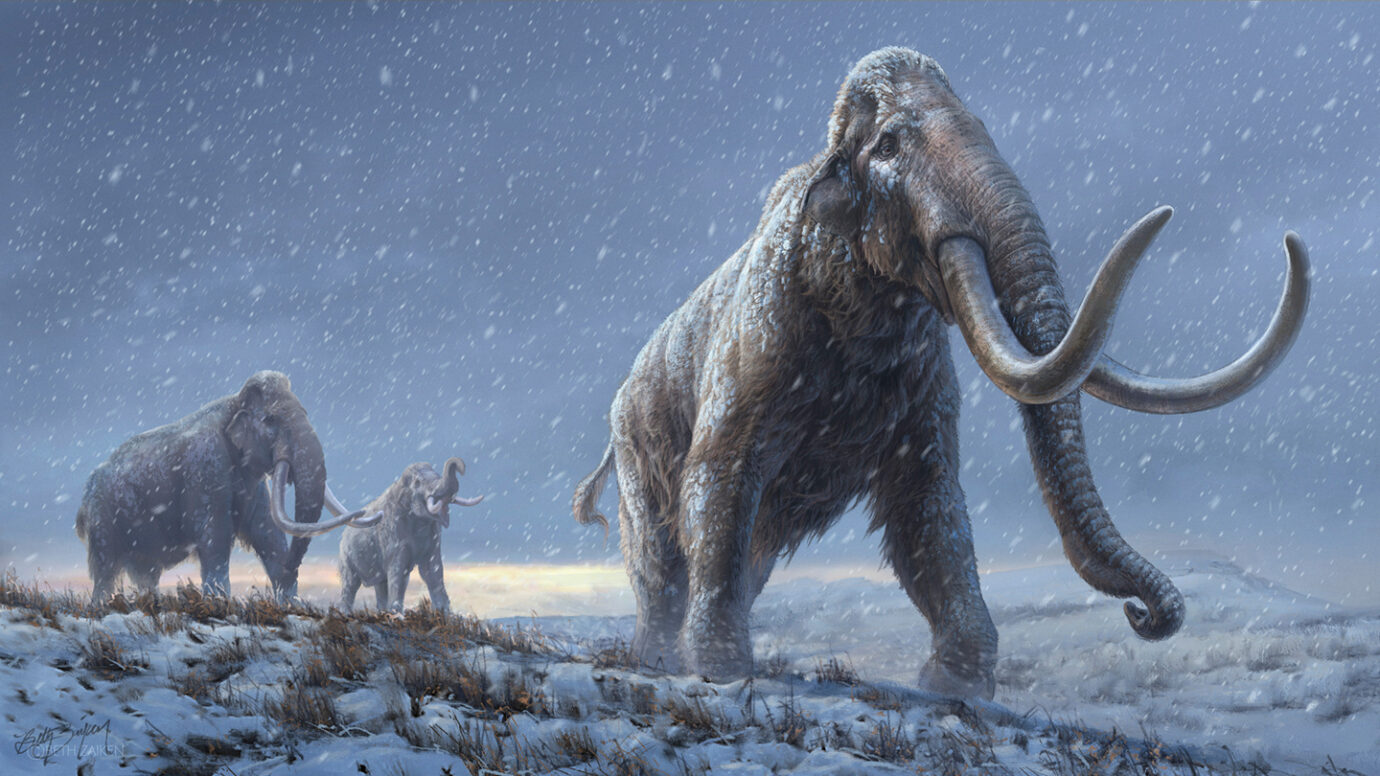
In this article, researchers discovered that genetic material from ancient mammoth molars found in Siberia beats the previous record of oldest DNA, set by a 700,000-year-old frozen, fossilized horse. It says that the genes suggest mammoths already had traits that allowed them to withstand cold ice temperatures before the ice ages. The data can help uncover evolutionary events in our history further.

The two oldest specimens, Krestovka and Adycha, lived around 1.2 million to 1 million years ago. The third, called Chukochya, dates back 800,000 to 500,000 years. Adding this new DNA found, it suggests that the first two mentioned belonged to two different mammoth species. Adycha was part of the steppe mammoth lineage that gave rise to woolly mammoths, the Krestovka mammoth may have diverged from its relatives more than 2 million years ago and could represent an unknown line of mammoths in Siberia. Once again this shows that a lot of the mutations which we think mammoths have like small ears, lots of fat, can withstand extreme cold temperatures, happened before the ice ages. Since the DNA is so old, there could easily be so much more to the history and evolution of mammoths that we unfortunately have not or will not discover.

Links:

https://www.sciencenews.org/article/oldest-animal-dna-ever-recovered-mammoth-evolution

https://www.nature.com/articles/s41586-021-03224-9

Monday, March 8, 2021

Mammoth Evolution

 In this article written by Erin Garcia de Jesus, she outlines how the oldest DNA ever recovered from an animal recovers details about mammoths' evolution. There was genetic material from ancient mammoth molars found in Siberia. This DNA was extracted from 3 molars found in the 1970's. DNA degrades into shorter strings of genetic material over time. Cold permafrost helps to protect genetic information from rapidly falling apart. Researchers previously thought that only one type of mammoth lived in Siberia 1 million years ago but this new information showed Krestovka and Adycha lived around 1.2 to 1 million years ago. The study shows that traits such a shaggy hair helped mammoths' handle the cold. It is hard to work with ancient DNA but it allows for so much new information to be found. 


This link provides more information about mammoths in general. 

Thursday, November 12, 2020

Bringing Back Mammoths


Scientists may be on the verge of cloning a woolly mammoth. Scientists have been making clones of animals so that they can study genes better. They only need a small amount of DNA to be able to replicate it and male a clone. Because the remains of mammoths are mostly found in permafrost, their remains consist of tusks, bones, flesh and even hair. Because these creatures are so well-preserved scientists are hoping to find living cells which they would need to clone a mammoth. Because the cloning mission is not going well, scientists are hoping to make a mammoth/elephant hybrid by splicing their genes together. Scientists are hoping that by bringing back the mammoth that they will graze on the artic tundra, exposing the cold ground underneath, therefore cooling down the earth. I think that this would be a very cool way to tackle the climate change problem. If bringing back a prehistoric animal would solve climate change it would help the environment and also provide the opportunity to study prehistoric animals.

https://www.history.com/news/wooly-mammoth-resurrection-cloning-genesis

https://www.nationalgeographic.org/encyclopedia/cloning/


Monday, March 5, 2018

Dead but Not Forgotten: Elephant Genomic History


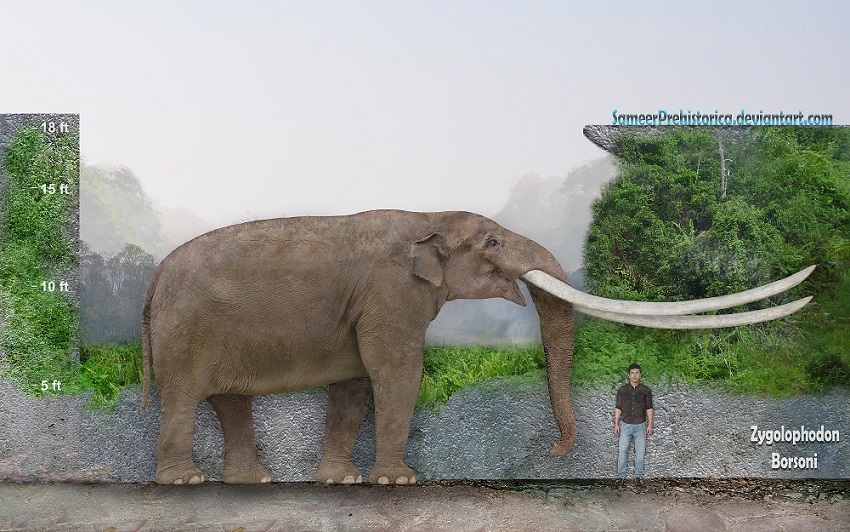
A study conducted by scientists at The University of Texas at Austin recently sequenced the genomes of 14 living and extinct elephant species to try and understand the potential gene flow within this group. This was done by mapping out the genome of living species such as the African forest elephant, the Savanna elephant, the Asian elephants, along with other like species, and then compared them with the genome of extinct species such as the woolly mammoth, the straight-tusked elephant, and the American mastodon. By doing this they were able to see the decent pattern of modern day elephants. One of the many things they discovered was that the straight tusked elephant, which went extinct approximately 120 thousand years ago, and the present-day forest elephants dissented from a related lineage.  Additionally, we have come to learn that in both past and present elephant genomes there seems to be a high amount of hybridization which has led to the group’s current speciation. 
Related image

One of the more notable discovers that came from this study was that African forest elephants and the Savanna elephant appeared to have diverged over 2 million years ago and have been genetically separated for around 500 thousand years. This discovery’s significance lies in the fact that it ends the debate of whether these two types of elephants are separate species which, evidently, they are. Because of this, these two groups of elephants can now receive more effective conservation efforts, as they can be specifically geared, and funded, to the individual species environmental resource requirements, and threats (Daley). With the advancements in genomics, both in efficiency and accuracy, demonstrated here with the successful mapping of the elephant’s genome, its applications and implications are vast and profound to say the least.
And here is the link to the original study that http://www.pnas.org/content/early/2018/02/16/1720554115

Wednesday, November 19, 2014

Cloning a Woolly Mammoth

         Scientists have discovered a well preserved woolly mammoth in Siberia kept at -10 degrees Celsius. Since the woolly mammoth was preserved at such temperatures, when scientists cut into the beast, a dark red liquid starting pouring out. This liquid was blood, scientists now have a very well preserved DNA of the woolly mammoth. South Korean scientists now want to take that DNA and bring back the extinct species. One of the leaders is Isung Hwang a geneticist at Sooam a South Korean biotech company. Sooam has stated that he is "trying hard to make this possible within our generation." The way it would work is that a mammoth embryo would be created and then inserted into an Asian elephant. The Asian elephant would then carry that mammoth to term and hopefully the mammoth would then be born. If the mammoth were cloned there would be much to learn about the once extinct species.
        Although this would be a remarkable breakthrough, there are many ethical issues that should be considered. The ethics behind cloning a mammoth are being debated daily by the scientific community. To clone a mammoth it would be assumed that you would need many Asian elephant surrogates. This is problematic for a species that is close to extinction itself. Elephants are very social animals. They also have a 22-month carrying term. Having them carry another species inside them for a 22 month term only for that animal to damage them, or die right after birth needs to be taken into consideration. Asian elephants also don't do well in captivity. There are also issues with how the ecosystem would be effected by bringing back and extinct animal. What would that animal eat? The extinct animal could potentially interrupt an entire ecosystem. 
        Brining back an extinct animal would be one of the greatest scientific experiments to date. There are a lot of ethical issues with brining back an extinct animal that must also be taken into consideration. To quote Dr. Ian Malcolm from Jurassic Park, "Your scientists were so preoccupied with whether or not they could that they didn't stop to think if they should." Weighing in the ethical issues, I don't think that cloning a mammoth would be just to the Asian elephant that would be forced to carry it. 
Article
Related Article