Showing posts with label ethics. Show all posts

Friday, November 21, 2025

The Silent Genocide: Ethics Of CRISPR and Gene Editing.


    The idea of “designer babies” honestly feels like something out of a movie, but after learning more about CRISPR, it’s clear that this could become normal in the future. I read a study where researchers edited the CCR5 gene in human embryos to try to make them resistant to HIV (Ma et al., 2017). That completely surprised me. They were not just testing cells in a dish. They actually showed that human embryos can be edited in a way that changes how they develop. It is great to think about preventing genetic diseases, especially the ones that are painful or deadly. But once we start editing embryos, it becomes hard to know where the limits should be. If we can remove a disease, what is stopping people from wanting to change things like height or intelligence someday?

CRISPR: A Shiny New Pair of Genetic Scissors – The Meliorist Publishing  Society

    CRISPR is powerful, but it definitely is not perfect. Another study pointed out that the editing process can cause mistakes. These are called off-target effects, and they can lead to new problems that scientists do not fully understand yet (Berg, Cwik, & Bordoni, 2025). That part made the whole thing feel more real to me. It also reminded me of the situation in 2018 when a scientist in China edited twin embryos. Those children are growing up with edits in their DNA that no one can predict long term. So even though gene editing could help many people, it also comes with huge responsibilities. Just because a technology is available does not mean we are ready for the risks. I think using CRISPR to stop serious diseases makes sense, but choosing traits or changing things just because someone wants a certain type of child feels like crossing a line. Genetics affects future generations, so we have to be careful with how far we take it. If we let this get out of hand, it wouldn't be ridiculous to see the appearance of “less desirable” traits be reduced drastically. That begs the question, who gets to decide which traits are more or less desirable and when does this just become eugenics with extra steps.


References

Berg, A., Cwik, B., & Bordoni, L. (2025). The ethics of human embryo editing via CRISPR-Cas9: A systematic review. Journal of Medicine and Philosophy, 50(1), 1–29. https://doi.org/10.1007/s10730-024-09538-1

Ma, H., Marti-Gutierrez, N., Park, S.-W., Wu, J., Lee, Y., Suzuki, K., ... & Mitalipov, S. (2017). Correction of a pathogenic gene mutation in human embryosNature, 548, 413–419. https://doi.org/10.1038/nature23305

Wednesday, November 20, 2024

Can Sweet Cravings be Stopped by a Genetic Defect?


Within our bodies, we have specialized genes to help us break down the food we eat, to convert it into energy. The sucrase-isomaltase (SI) gene is specialized to break down two sugars, sucrose (table sugar/fruit sugar) and maltose (sugar found in grains). Unfortunately, mutations in this gene caused a rare autosomal recessive genetic disorder called congenital sucrase-isomaltase deficiency, where those affected cannot properly digest sucrose and maltose. In fact, congenital sucrase-isomaltase deficiencies are found in 1 in 5,000 people of European descent; however, in the populations of Greenland, Alaska, and Canada, the prevalence of a SI deficiency can be found in 1 in every 20 people.

New research, from an international group of scientists, has just found that this disorder is linked to the cravings and diets of those affected. Notably, in a large study with mice, scientists found that mice without the SI gene did not show cravings or preferences to sweet foods containing dietary sucrose. Dr. Peter Aldiss, a group leader of this study even states, "Now, our study suggests that genetic variation in our ability to digest dietary sucrose may impact not only how much sucrose we eat, but how much we like sugary foods" (Aldiss). These findings were complimented by studies of SI deficient humans, who also did not enjoy sucrose-rich foods as much as an unaffected population. 

These findings are nothing short of remarkable, and they open the door to a multitude of genetic research opportunities. For example, Aldiss notes that this may lead to studies targeting the SI gene to reduce overall intake of sucrose in individuals worldwide (which would benefit digestive and metabolic health). While we cannot ethically selectively breed for this trait, our modernized technology of genetic modification may be able to artificially alter the function of SI genes. However, SI deficiencies have been associated with irritable bowel syndrome, so there may be some drawbacks to targeting this gene in large populations. If I were to be researching this, I would attempt to look into the hormonal mechanisms (occurring as a response of SI deficiency) that lead to a reduced sugar craving and look into emulating its effects for a similar result to the SI disorder. 


SOURCES:

https://www.sciencedaily.com/releases/2024/11/241112190902.htm

https://medlineplus.gov/genetics/condition/congenital-sucrase-isomaltase-deficiency/#resources

Friday, December 8, 2023

The Obligation of Academics in Creating Affordable Healthcare


    In the article published in Nature by multiple experts in law and medical ethics, the topic of academic medical institutions and their role in creating affordable access to medication was discussed. They discuss the annual costs for gene therapy in the treatment of rare diseases. Therapies discussed range from costing between $300,000 per year and over $3,000,000 per year. 
    The article discusses the fact that many of these technologies first come into being in academic laboratories often funded by public sources. Once these technologies are developed and patented, they are often then licensed to biopharmaceutical companies who in turn charge exorbitant prices for therapies that were initially developed using taxpayer dollars. Because of this, the article calls into question the ethics of this arrangement between universities and companies, concluding that universities are not only partly responsible for the high costs of these therapies, but also have an obligation to mitigate these costs.
    I find this article to be interesting because it places blame on the academic institutions involved in the system. The arguments posed have merit, but one has to consider that these universities are simply operating under the system imposed by monopolization of patents and market exclusivity. While it is important to understand that these institutions have a moral obligation to not contribute to the increase in medical costs, it is also incredibly pertinent to recognize that the system as a whole does not allow for bespoke treatments of rare diseases to be affordable no matter the effort these universities put in to lowering costs.

Article
https://www.nature.com/articles/s414s34-023-00393-2

Expensive medication I take:
https://www.drugs.com/price-guide/trientine#:~:text=Trientine%20is%20a%20member%20of,on%20the%20pharmacy%20you%20visit.

Thursday, February 11, 2021

The Unethicality of Human Cloning


    A multitude of possible technological and biological advancements arise from human cloning: ridding infertility, understanding and combatting disease, eliminating liver and kidney failure, reversing the aging process, saving endangered/extinct species, etc. The reproductive cloning of humans will grant researchers a better understanding of the human genome, therefore allowing them to successfully pursue the aforementioned possibilities. Even with the numerous beneficial aspects, human cloning (on an individual scale, not with tissues) has been called for a United Nations ban by more than 60 of the world's leading science academies. Why would these science academies push for the ban of human cloning knowing the endless opportunities it may provide?

    Psychological, social, and physiological risks associated with the reproductive cloning of humans are condemned universally. These risks introduce an increased likelihood of the the loss of life. The cloned embryo requires thorough investigation to prove its fitness and viability; even after implanting the successful cloned embryo into the womb, the pregnancy itself may fail. The loss of one life is constitutes as too much. In 2007, an experiment suffered through 100 failed attempts before successfully cloning a macaque.

    Additionally, human reproductive cloning endangers individuality. Human identity would be compromised and diversification would decrease. Monozygotic twins, colloquially known as identical twins or natural clones, often report lacking a sense of individuality. The birth rate of identical twins is 0.4% (1 in 250, or 4 in 1000). Logically, the increase in "clones" ensues an increase in those reports.


https://science.sciencemag.org/content/277/5323/195.full

https://www.britannica.com/science/cloning/Ethical-controversy


Thursday, September 17, 2020

Strict New Guidelines Lay Out A Path To Heritable Human Gene Editing


    Human gene editing has proved to be a big controversial issue of today, as well as an ethical debate. Scientists are working to perfect gene editing in the ability of producing desired babies. By essentially changing one gene on an individual, you are able to change the traits they will express such as athletic ability, intelligence, or musical talent, etc. Some scientist agree that "designer babies" are a possibility, but the ethical views against it are still too strong to even begin work. More importantly, gene editing can be used to remove diseases or disorders that normally would cause hardship and damage to an individual. One disease in particular they are working to remove is sickle cell-disease. With gene editing, scientists say that it could be corrected. This fix would help many people with this disease to become healthier and overall, live a better life. The steps toward sickle cell-disease and others are being made carefully to benefit society, however it will take some time before it is perfected and accepted by society as a whole.

https://www.sciencenews.org/article/human-germline-gene-editing-crispr-strict-new-guidelines

https://www.nature.com/articles/d41586-019-00673-1


Wednesday, December 5, 2018

Choosing Your Child's Genetics?

Choosing Your Child's Genetics?

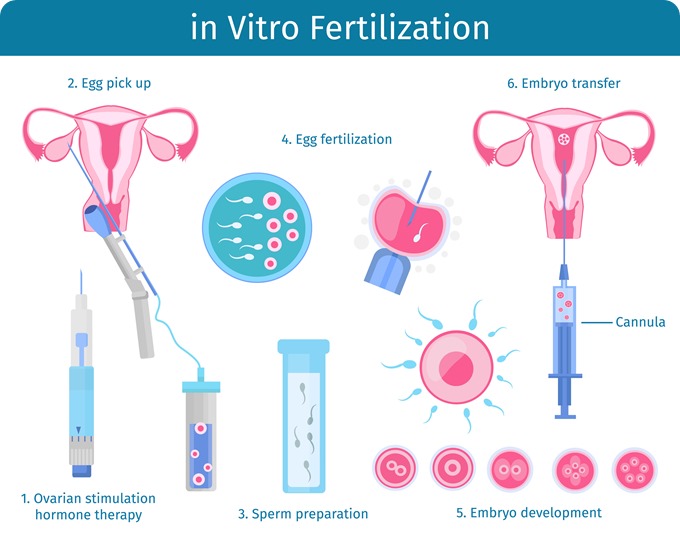
        Most people have heard by now that scientists are slowly being able to change the genetics or alter them of an embryo so a parent can almost choose what their child looks like. For years this has been around and so has the controversy about genetically altering our species. Since the first in-vitro fertilization in 1977, to the genome being completed in 2003, to now, people who are unable to have kids, have been using this to their advantage. The way this works is that an embryo that is mutated or unhealthy is taken out or the healthy one is put into the womb. However, now there is even more to that than can be altered.
      There is now a company hoping to use this technology to alter a child's intelligence. Intelligence is determined by more than one gene but one company thinks they have determined the risk score which can determine if their IQ is above 75. This is something that is also very controversial although everything from this to choosing a sex is.
       These ideas however are very controversial. They have been compared to eugenics and the death of humanity. The issue is not curing people of deadly diseases but where the line is to not giving people the chance at life. This technology could allow you to choose your child however for the most part, it is only allowed for crippling diseases. Its obviously good where its saving people but the question then arises of where does it stop? More research is being done and it isn't available to the public...yet.
      For me personally this is a tough topic. On one hand you have the possibility of making sure your child is completely healthy which is something that every parent should want. On the other hand, is changing peoples genetics ethical? Should we be interfering with something we dont really understand? This seems like something that does actually destroy humanity because theres no more magic essentially. My biggest issue is that parents will change their kids if they see something such as downs syndrome is prevalent, not giving that child the chance to live. There are plenty of people who live with downs and are happy and grateful they are able to be here so why should we get the chance to decide on their life.

Link; https://www.forbes.com/sites/adambarsouk/2018/12/01/genetically-selected-babies-are-already-readily-available/#94125a412410

Monday, December 3, 2018

Implications of Jiankui's Genetically Modified Babies


The latest news in genetics comes out of Shenzhen, China where an associate professor of bioengineering at the Southern University of Science and Technology, He Jiankui, claims that two little girls are the world’s first genetically edited newborn babies. Using CRISPR, Jiankui has modified the babies’ genes to make them resistant to infection from HIV. The father of the babies is said to be positive for HIV. As of November 27th (the date of the article), there was no data to demonstrate how this experiment took place but is said to speak on more on the topic. The University has condemned the topic and even issued a statement saying that they had no idea that the project was going on.


How HIV infects cells via CCR5


In a Youtube video, Jiankui claimed that he used CRISPR to disable CCR5, a protein receptor that allows HIV to infect blood cells. On specific mutation, Delta32, disables HIV from locking onto the cell. In theory, if all individuals carried this mutant allele, then nobody would be able to get AIDs from HIV. CRISPR has been used in the laboratory for many situations, like eliminating diseases and improving the health of different crops. This technique, though, has never been used on human embryos, and therefore the results are unknown. One major problem is that CRISPR can cause off-target mutations to genes away from the target genes, and therefore can have many other implications.

Many companies are already looking to gene therapies in adults to edit the CCR5 cells in adults. In theory, scientists would remove blood from HIV positive patients, delete the CCR5 protein and return the cell back to the patient. It seems like every action has a reaction, and in this sense, getting rid of the CCR5 protein would increase susceptibility to West Nile virus, which is already seen in the real world when individuals are born without the CCR5 protein. Overall, Jiankui wrote a piece that discussed the core principles in the genetic editing of human embryos.

I am very interested in ethics in relation to science, and especially in relation to genetic editing. I believe that it should be interesting to see the effects of this experiment over time. I do not feel strongly for or against human genome editing or the idea of “designer babies”. If this experiment works and is able to basically eliminate HIV and AIDs ability to infect humans, think of what other uses human genome editing could have. Genetic cancers could be cured, and other genetic diseases could be edited. I think the use of genome editing for superficial purposes is unethical at this point in time. I think that the world has a ways to go in terms of being able to accept genetic editing and there will always be disagreement for it. Overall, the effects of this experiment will be interesting to see how it changes genetics forever, and it is so cool to see this monumental moment in scientific history.

Friday, November 30, 2018

China Halts Work by Scientist Who Says He Edited Babies' Genes

         A scientist by the name of He Jiankui and his team are currently being investigated by authorities after revealing his gene editing experiments done on human babies. Genetic testing on human embryos is very much guarded, which is why it is such a huge deal. Gene editing is a very sensitive topic to a lot of people, including scientists, because it is seen as morally wrong as well as inhumane. A lot of genes are interconnected in some way, meaning one change in the genetic code of a human could change a lot of things, some good, some wouldn't matter too much, but a lot of them could cause extremely detrimental defects to the baby which is why it is such a serious experiment.
          In Dr. He's experiment he used crisprs in order to alter the embryos of two twin girls who were born last month. Crisprs are derived from the bacteria cell which have the ability to adopt the DNA of a virus or another outside DNA sequence. When the virus returns, the bacteria would be able to fight off the virus by producing segments of RNA which will attack the DNA of the newly introduced virus. The bacteria then use an enzyme (usually CAS9) in order to cut up the DNA, which would kill the virus. Dr. He would use the same procedure except that the virus would be replaced with human DNA from an embryo.


           Using the crispr would give Dr. He the ability to edit the genome of the embryo in order to genetically enhance the children with a particular gene that makes a human less likely to contract the disease, HIV.
          The reason I chose this article to review is because I think it is a major development in science that should and needs to be talked about. This one experiment has changed the way that we look at Genetic Science completely. Genetic editing has been referred and referenced in the human species before, but has never been used. Although it may be considered inhumane by some, it is a great leap in the world of science and how we have the ability to look at things now. Diseases may now be attacked genetically from the inside of the body like we never have been able to before. It is exciting, as well as very dangerous but we will have to see what the future holds.

Related Article
Original Article

Sunday, September 24, 2017

America's Scientists Working to Make DNA a Little CRISPR

In the movie Splice (circa my awkward tween years), it opens up with two scientists.  One scientist is seen taking blood from her own body to transfer to an artificial embryo in hopes of birthing the first ever artificially created human.  This movie is only marginally related to this article but I like to talk about it sometimes to keep it alive. On Thursday, July 20, The New York Times had reported that officials at the Oregon Health & Science University confirmed that they had completed and were planning on publishing a journal with the results of an experiment they were conducting that involved curing inherited mutations of genes in vitro.  This experiment is supposedly the first of its kind in America, although China had previously reported on similar experiments but stopped because they felt that technology at their time of research was too immature.  This method of preventing inherited diseases uses the CRISPR technique which allows specific sequences of DNA to be altered or replaced using a programmed CRISPR enzyme complex.  This technique uses molecular scissors to cut and paste DNA and is much more precise than some types of gene therapy that cannot ensure that the mutated DNA will be changed exactly the way it was supposed to.  In addition to a higher level of precision, the CRISPR method guarantees that the DNA changes will be passed down through generations, ultimately ridding the family of the inherited disease.  Given this power to control the genetic makeup of a developing embryo brings up many controversial arguments on how this technique can be manipulated.  Most scientists are for this technique, arguing that parents wouldn't go through the long and expensive process of putting their embryo through this procedure just to ensure that their children will have desired qualities that are not health related.  However, other people argue that this procedure can and will be manipulated to create "designer babies." Of course, the scientists got it under control and will have strict regulations on the procedure so that it will not be manipulated for unethical reasons.  If all else fails, the scientists that are for this advancement in genetics has brought up the strong and unarguable point of "well, everyone else is doing it so yolo lmao (this quote was loosely translated from the quotes obtained by The New York Times." This idea is similar to the main character from the movie Splice who also decided to "yolo" it but saw the horrible consequences of her yoloing that Drake had not foreseen.  All jokes and Drakes aside, these scientists seem to be heading in the right direction with their research using the CRISPR technique and the FDA seem to have a good handle on making sure that this procedure will not be manipulated in any way, shape, or form.

Saturday, October 29, 2016

Clinical Trial of New Gene Editing Technology


Lu Yong, an oncologist, and his team are going to launch new method to treat patients with lung cancer. Their plan is to carry out clinical trials of injecting patients to modify their cells with CRSIPR-Cas9 during clinical trials. This would be a great new method to use since there are many patients who experience chemotherapy in vain because the treatment is ineffective. The team of oncologist plan to execute the new procedure by first extracting T cells from the patient and then use the CRSIPR-Cas9 technology. The CRSIPS-Cas9 technology is used by snipping chromosomes which gets rid of genes at a specific point. This in turn allows the body to begin to produce cells that help the immune system of patients. Once this is done the cells are then replicated in a laboratory. Although CRSIPR-Cas9 is known to be harmful if the wrong genes are taken away from the chromosome the team of oncologist will reassure themselves that the procedure went expected before placing the gene edited cells in the patients. CRSIPR-Cas9 is a cheap, quick and easy way to do gene editing in the laboratory. However, there has been cases when the ethics of this method were questioned. For example, the genes of an embryo were used but when it was placed back in the embryo it did not survive. Questions were raised whether or not this method could throw off whole ecosystems. This method regardless of certain flaws gives scientist the power to change human genomes and cure diseases.
Although, there are possible risk with the CRSIP-Cas9 method there is even a greater risk if patients are not given more options to help combat cancer. If chemotherapy is not working then it would best to try anything else that could possibly work to save a person’s life. Medicine is about practice to determine what new innovative ways physicians can save someone’s life.


Friday, May 6, 2016

Gene editing in humans


Experiments for gene editing research in humans have now been apporved in Sweden, China, and the United Kindom. In Stockholm Fredrik Lanner is working on editing genes in uhman embryos. Back in aprial 6 of 2016 a University in Chian used gene editing CRISPR-Cas9 to introduce a mutation that would make a human resistant to HIV infection. Looking at the ethics of the situation, “I don’t think there is anything wrong with what these scientists have done,” says Sarah Chan, a bioethicist at the University of Edinburgh, UK. “This work isn’t seeking to do what is still ethically in question. It’s not seeking to create genetically modified human beings.”

The idea of being help to change genetics in an embryo to stop expression of genetic diseases or even unwanted genetic expression seems kind of like science fiction. I feel most people would be against something like it with out looking at it's real benefits, possibly seeing it as unnatural.

Article here and more information here.

“Fredrik Lanner, a stem-cell biologist at the Karolinska Institute in Stockholm, is preparing experiments that involve editing genes in human embryos ”