Showing posts with label deficiency. Show all posts

Wednesday, November 20, 2024

Can Sweet Cravings be Stopped by a Genetic Defect?


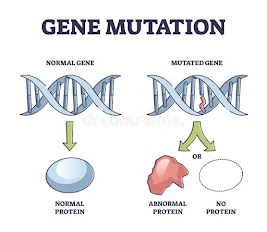
Within our bodies, we have specialized genes to help us break down the food we eat, to convert it into energy. The sucrase-isomaltase (SI) gene is specialized to break down two sugars, sucrose (table sugar/fruit sugar) and maltose (sugar found in grains). Unfortunately, mutations in this gene caused a rare autosomal recessive genetic disorder called congenital sucrase-isomaltase deficiency, where those affected cannot properly digest sucrose and maltose. In fact, congenital sucrase-isomaltase deficiencies are found in 1 in 5,000 people of European descent; however, in the populations of Greenland, Alaska, and Canada, the prevalence of a SI deficiency can be found in 1 in every 20 people.

New research, from an international group of scientists, has just found that this disorder is linked to the cravings and diets of those affected. Notably, in a large study with mice, scientists found that mice without the SI gene did not show cravings or preferences to sweet foods containing dietary sucrose. Dr. Peter Aldiss, a group leader of this study even states, "Now, our study suggests that genetic variation in our ability to digest dietary sucrose may impact not only how much sucrose we eat, but how much we like sugary foods" (Aldiss). These findings were complimented by studies of SI deficient humans, who also did not enjoy sucrose-rich foods as much as an unaffected population. 

These findings are nothing short of remarkable, and they open the door to a multitude of genetic research opportunities. For example, Aldiss notes that this may lead to studies targeting the SI gene to reduce overall intake of sucrose in individuals worldwide (which would benefit digestive and metabolic health). While we cannot ethically selectively breed for this trait, our modernized technology of genetic modification may be able to artificially alter the function of SI genes. However, SI deficiencies have been associated with irritable bowel syndrome, so there may be some drawbacks to targeting this gene in large populations. If I were to be researching this, I would attempt to look into the hormonal mechanisms (occurring as a response of SI deficiency) that lead to a reduced sugar craving and look into emulating its effects for a similar result to the SI disorder. 


SOURCES:

https://www.sciencedaily.com/releases/2024/11/241112190902.htm

https://medlineplus.gov/genetics/condition/congenital-sucrase-isomaltase-deficiency/#resources

Wednesday, October 24, 2018

The Possible Heredity of COPD

COPD affects several Americans across the country each year. COPD is short for chronic obstructive pulmonary disease. It is a combinations of many of different conditions that negatively affect the lungs along with damage and inflammation tot he airways. Physicians do not look at the genetic factor that may take place in developing this disease when believing that someone may be at risk. There are many risk factors that have a severe affect on causing COPD and making it significantly worse. There may also be a genetic link to determine the risks of individuals that may be at a higher risk for developing COPD in the future.

The genetic link that some people may have to COPD is called AAT. Also known as alpha-1 antitrypsin. The only way to be at risk for COPD would be to have a deficient of AAT. It has been determined by the National Heart, Lung, and Blood Institute, that about 100,000 individuals living in the United States have an AAT deficiency that increases their risk of developing COPD. A person who lives in an environment with clean air and is a non-smoker can still be diagnosed with COPD if found with a deficient in AAT. There is not a specific test that physicians do to determine if someone has an AAT deficiency, therefore they may never even know if they have it. Instead, they look for the following signs, shortness of breathe, wheezing, a persistent cough, and regular respiratory infections.  Individuals that are AAT deficient have a chance of developing COPD at the early age of twenty years old.

In order to try and prevent the development of COPD is to stay away from many risks factors such as smoking and polluted air. The only way that an individual can be AAT deficient is if it is passed down through both parents carrying the deficient gene. If the gene is passed along through only one parent then the individual will not be AAT deficient, but it could be passed on to their children. The AAT deficiency may not be as common as the risk factors that contribute to COPD. People who is AAT deficient should talk to their doctor, reduce their vulnerability to the risk factors, and make lifestyle changes if necessary. Personally I believe that people should be aware of the risk factors and avoid them as much as possible whether they have the deficiency or not. By ensuring good health, taking the necessary steps to be educated on the risk factors can decrease the amount of people suffering from this disease.

Article: https://www.medicalnewstoday.com/articles/323348.php
Related Article: https://www.ncbi.nlm.nih.gov/books/NBK1519/