Showing posts with label hormones. Show all posts

Thursday, December 4, 2025

Can Blood Tests Show Postpartum Depression?

    In this Smithsonian Magazine article, a San Diego company plans to launch a blood test that predicts the risk of postpartum depression with more than 80% accuracy. MyLuma would be the first test to use biomarkers that are commercially available to indicate if there is an onset of a psychiatric disorder. This is similar to how blood tests can detect signs of cancer and diabetes, so that pregnant women can know if they are at risk for postpartum depression. This would allow preparation and "reduce the stigma that keeps women from seeking help", as said by Jennifer Payne.

    This had come about when Jennifer Payne, a reproductive psychiatrist, asked why this drop in hormones after childbirth affects some women more than others. She teamed up with Zachary Kaminsky, an epigeneticist, who helped compare female mice given high levels of estrogen compared to those without. They found that estrogen caused specific patterns of methylation inside the hippocampus, which controls mood. Now knowing what to look for in blood samples, they tested women who had a history of mood disorders. They located two estrogen-sensitive genes, HP1BP3 and TTC9B, where more than 80% of those with postpartum depression had one gene with more of a methylation pattern than the other. These changes can even be caught in early pregnancy.
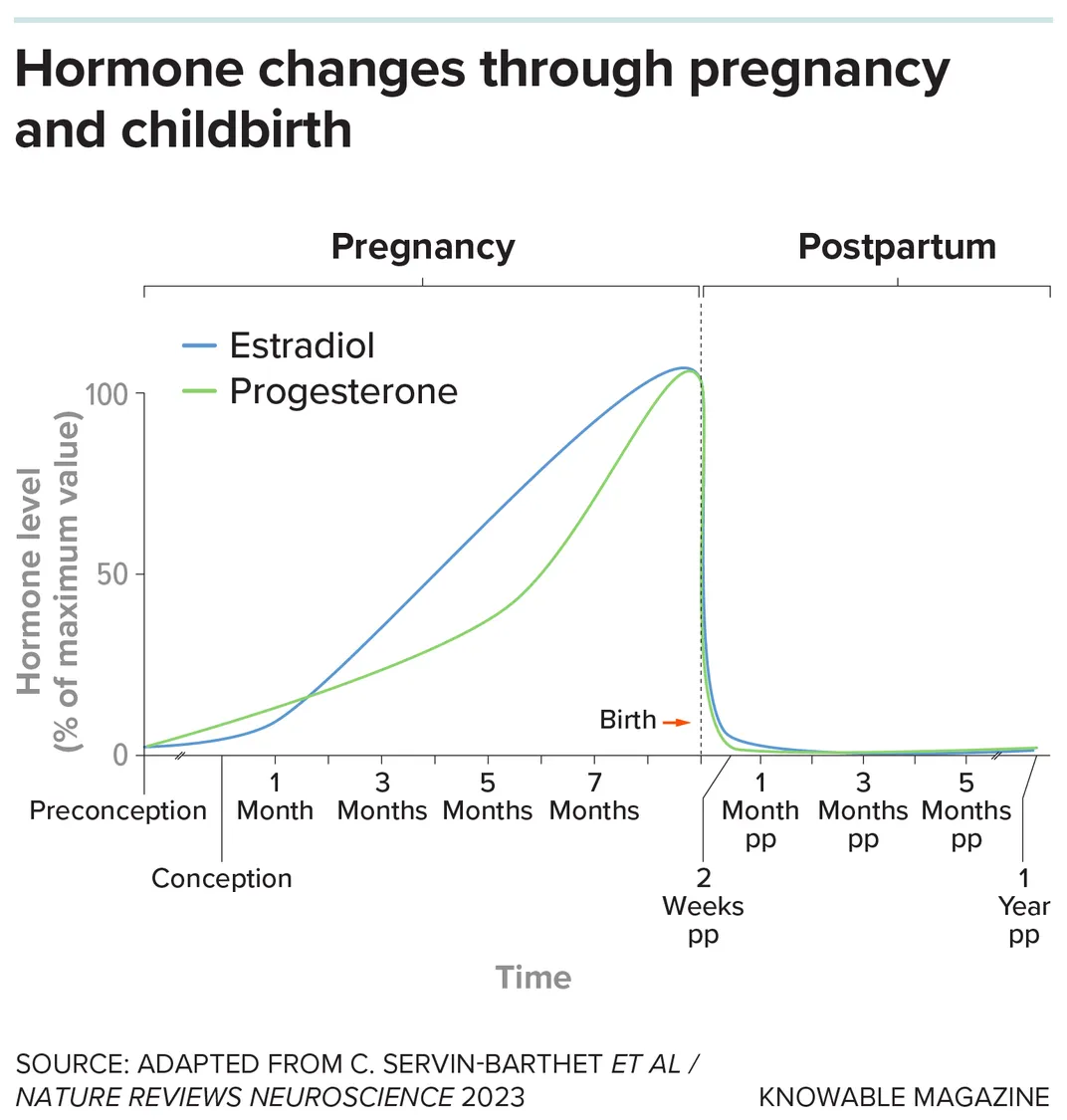

    Not all of the telltale signs are the same in people, and the hunt for more biomarkers is still on. This is a very helpful discovery that can really turn someone's life around. The ability to catch onto postpartum depression can lead to preparation and understanding of these feelings with a professional, instead of finding out after having the child. Helping expectant mothers understand these feelings and why they may happen could eliminate the shame that some mothers have in these emotions and get the proper help they need.

Thursday, May 8, 2025

Plants Need First Aid Too

         Plants get injured just like humans, but don't have the ability to heal themselves as efficiently as we do, that was until recent discoveries. Researchers discovered a way to help plants recover from damage by using a pure form of cellulose that acts like a band aid. Bacterial cellulose is commonly used in human medicine to help treat wounds and burns. Núria Sánchez Coll, a plant biologists and her team started testing patches that were made up of not only bacterial cellulose but also silver nanoparticles, which served as a antimicrobial agent while helping the plants heal. As they observed the healing process, they noticed that the plants treated with the cellulose and silver nanoparticles were healing faster and more efficiently than expected. The researchers wanted to better understand molecular process of this so they made small cuts on the leaves of  Nicotiana benthamiana and Arabidopsis thaliana, placing cellulose bandages on half of them. The results after a week were that 80% of wounds were almost fully healed while the untreated wounds were still clearly damaged. The patches not only healed the plants wounds but also kept the plants more hydrated. Plant hormones that were likely produced by bacteria were found in the bacterial cellulose, this could be why the plants responded so well to the treatment even after patches were sterilized. Scientists think that the bacterial cellulose activated a new set of genes - it shut down some of the genes that are normally used for healing and switched on other genes that help the plant fight infections. 


    I thought this article was very interesting because it showed how scientists were able to use bacteria cellulose -  something thats already used in human medicine - to help plants heal more efficiently. I never thought about how when plants get damaged it usually takes a very long time for them to heal compared to animals and humans, mostly because plants don't have specialized cells that move as quickly to repair wounds. It's amazing that the researchers basically created a band aid for plants out of natural materials. I also learned that bacterial cellulose contains plant hormones that affect which genes are activated in the healing process. I think these plant band-aids would be very helpful in the agriculture industry, especially if they work well outside of lab conditions. This article just shows how scientific ideas that are used in one industry could be applied in another. 

Wednesday, November 20, 2024

Can Sweet Cravings be Stopped by a Genetic Defect?


Within our bodies, we have specialized genes to help us break down the food we eat, to convert it into energy. The sucrase-isomaltase (SI) gene is specialized to break down two sugars, sucrose (table sugar/fruit sugar) and maltose (sugar found in grains). Unfortunately, mutations in this gene caused a rare autosomal recessive genetic disorder called congenital sucrase-isomaltase deficiency, where those affected cannot properly digest sucrose and maltose. In fact, congenital sucrase-isomaltase deficiencies are found in 1 in 5,000 people of European descent; however, in the populations of Greenland, Alaska, and Canada, the prevalence of a SI deficiency can be found in 1 in every 20 people.

New research, from an international group of scientists, has just found that this disorder is linked to the cravings and diets of those affected. Notably, in a large study with mice, scientists found that mice without the SI gene did not show cravings or preferences to sweet foods containing dietary sucrose. Dr. Peter Aldiss, a group leader of this study even states, "Now, our study suggests that genetic variation in our ability to digest dietary sucrose may impact not only how much sucrose we eat, but how much we like sugary foods" (Aldiss). These findings were complimented by studies of SI deficient humans, who also did not enjoy sucrose-rich foods as much as an unaffected population. 

These findings are nothing short of remarkable, and they open the door to a multitude of genetic research opportunities. For example, Aldiss notes that this may lead to studies targeting the SI gene to reduce overall intake of sucrose in individuals worldwide (which would benefit digestive and metabolic health). While we cannot ethically selectively breed for this trait, our modernized technology of genetic modification may be able to artificially alter the function of SI genes. However, SI deficiencies have been associated with irritable bowel syndrome, so there may be some drawbacks to targeting this gene in large populations. If I were to be researching this, I would attempt to look into the hormonal mechanisms (occurring as a response of SI deficiency) that lead to a reduced sugar craving and look into emulating its effects for a similar result to the SI disorder. 


SOURCES:

https://www.sciencedaily.com/releases/2024/11/241112190902.htm

https://medlineplus.gov/genetics/condition/congenital-sucrase-isomaltase-deficiency/#resources

Thursday, December 7, 2023

Genetic Variant to Prevent Obesity

Human genetic variations may affect people's susceptibility to weight gain. Genetic variants are differences in DNA sequence which occur between individuals naturally within a population. In a study done with mice, researchers tested them with a human genetic variant in the glucose-dependent insulinotropic polypeptide (GIP) receptor. This is associated with a lean body mass index because the way they act in the cellular level impacts metabolism and weight regulation. In the research, they found that mice were better at processing sugar and staying leaner than mice with a different more common variant of the receptor. Since the GIP receptor communicates with a hormone released in response to glucose levels after meals, if someone were to have at least one copy of the GIP receptor variant, they would have an altered metabolism that reduces their risk of developing obesity. The research team used CRISPR-Cas 9 technology to genetically engineer mice with a variant that encodes the GIP receptor. This study found that female mice with the variant were leaner than females without the variant. But they also found that male mice with the variant didn’t have much differences and had the same weight as other male mice without the variant, but did not suffer from weight gain when fed a high-fat diet as opposed to the other male mice without the variant, who did become obese. One of the researchers stated that the GIP hormone binds to the receptor which moves from the surface of the cell, to inside the cell, and this causes the GIP hormone to detach from the receptor, causing the receptor to return to the cell surface. 

It is interesting as well as very important to know that people with different genetic variants in the GIP receptor can have different impacts on their metabolism. According to the article, over 100 million adults in the US are affected by obesity. The GIP receptor is the reason some people are leaner than others. This research could give more insight and information on how to treat obesity. As of now, there are drugs that are also talked about in the article which mimic hormones that are found within the body that interact with the GIP receptor. But the goal is to develop a drug that is more precise and that matches to a specific genetic variant. This could be a much better approach for weight loss than the drugs that are now created and this opens doors to creating more solutions to many other health problems that people deal with.


Sources:

https://www.sciencedaily.com/releases/2023/12/231207161355.htm

https://www.nature.com/articles/s41576-021-00414-z


Saturday, November 20, 2021

A Single Transcription Factor Changes Ants to Queens

 Ants in Georgia - Zone Home Solutions - Blog Post

Indian jumping ants are able to adapt to the loss of the queen ant by making a switch to queen-like status in order to keep the colony functional. According to a study done in Cell, this ability to shift into the queen is caused by the response of the Kr-hl transcription factor to hormones which are present in different levels within the queen and the worker ants. Furthermore, another study has shown that these specific ants have the ability to change the size of their brains and expand their glial cells in order to compete for the status of the queen. This shows that studying ants is an effective way to see how "turning off certain genes can affect ingrained patterns of behavior." These researchers have also studied how different hormones activates the Kr-hl transcriptional factor differently in the queen and worker ants. These juvenile hormones have also impacted how ants develop over time. The studies have concluded that there are still many questions that need to be further investigated, but there is a good possibility that these mechanisms can be present in other organisms as well. 


Friday, March 12, 2021

Fierce female mole have male-like hormones and genitals. We now know how this happens.

    Moles are small mammals and they live in areas that have soil so they can dig tunnels underground. Although they spend most of their time underground they still must be able to protect themselves most of them have claws but for female moles through evolution obtained high levels of male hormone testosterone. Which makes these females have stronger muscles for digging, foraging, and defence. Most of the year they are like this but during mating season testosterone levels drop and the mating cycle occurs. 

    Male development in humans and other mammals is determined by chromosomes. In XY embryos a gene called SRY is able to turn on testis genes and turn off ovary genes to transform cells into a testis. In XX embryos the pathway is different it makes an ovary instead that allows oestrogen. Embryonic tissue become either an ovary or a testis but in female moles its different they develop a patch of tetis within their ovaries. But instead of making ovaries they make ovotestes which means one end of the tissue is ovarian and the other is testicular tissue. This explains why female moles have male like genitalia and are muscular and aggressive, because outside of breeding the testicular tissue expands more than the ovarian end. 

    The question is though is how does a female mole able to form a testis without the SRY gene? Scientist had to sequenced the entire mole genome to figure out how this was possible. They found something on the gene FGF9 this gene switches on testis growth in XY embryos and inhibits genes that determine ovarian development but in female moles this stay on even with the absence of the SRY gene. A gene CYP17A1 is another gene for the reason why female moles have male-like hormones/genitals, this gene is the key increasing testosterone so in female moles they have two copies of this gene. I think this study is very important because now we know that the development of testis or ovary development in embryo development are just not about a on/off switch in the depending if there is SRY gene or not, its a much more complex network. We can also use this study to figure out how it is possible in other mammals the females are able to much more bigger than a male such as the hyenas.  

Picture is from article: more information can be found here

Saturday, April 14, 2018

Cryo-electron Microscopy (Scaffolding) = Proteins in detail

Scaffolding method uses a cryo-electron microscopy finally being able to see the small proteins inside cells. Until now that method did not yield results. At the University of California Los Angeles (UCLA) a team led by Todd Yeates said, "This new method should be useful broadly". They were able to attach 12 copies of DARPin (a small protein) on a cube-shaped molecular cage, creating a larger version in a sense allowing them to view it by cryo-electron microscopy. Being able to finally visualize small proteins will help with figuring out how the disease causing ones work and "how it does what it does", said Yeates. This advancement will eventually foster new pharmaceuticals and treatments. 

Saturday, January 28, 2017

How insects decide to grow up

          Image of a maggot (left); the steroid producing cells with the maggot brain (middle);
and an expanded image of the steroid producing cells (right). 
Like animals, insects go through a maturity phase. That maturity phase is called metamorphosis, an example would be when maggots turn into flies. A team of scientist from the University of California, Riverside, had solved the puzzle on metamorphosis in insects. They came to a conclusion that the cells that produce steroid hormones keep cloning their DNA without cell division making their nuclei immense. This lead to belief that the amount of DNA in steroid hormone-producing cells is key for juvenile development. These scientist stated that just like human puberty, metamorphosis is irreversible. Once cells start producing steroid hormones, there is no point of return. 
I believe this study will help not only in the short run, but also in the long run. It seems that studying such a small insect can have such a major impact on the world. It is said that manipulating their steroid pathways, they can control the agricultural pest. They could also be used for aiding other insects like bees. What I found interesting is that altering these hormones can lead to developing better ways to treat diseases. The impact of this may aide in breast cancer, prostate cancer, and menopause. I support these scientists study because it is not harming or a threat to any specie; there are only benefits to this research that will help improve not only humans, but insects as well. 

https://www.sciencedaily.com/releases/2017/01/170126132550.htm
https://www.sciencedaily.com/releases/2016/11/161102080123.htm


Thursday, January 26, 2017

Having Twins is in Your Genes

For a while, scientists have known that it was highly likely to give birth to twins being a twin themselves, but nobody really knew why.  After conducting studies and collecting data from over 2,000 woman who gave birth to fraternal twins, a number of researchers from multiple countries collectively found two different genes that increased the likelihood of having twins.  Scientists searched for what are called single nucleotide polymorphisms, or SNPs.  The first one they found was linked to a hormone that regulates the release of eggs from the ovaries.  If levels are too high, multiple eggs could be released, resulting in the birth of fraternal twins or other multiple births.  The second gene found, which is still somewhat of a mystery, relates how the ovaries respond to the hormone that regulates egg release.  Not much is known about the gene, but researchers believe it could relate to why some mothers respond better to in vitro fertilization.  I find this type of research fascinating since I am a twin myself.  Knowing that there is another set of twins in my family always made me wonder if it really is true that having twins is linked to genetics, so finding this article was reassuring.
http://www.sciencemag.org/news/2016/04/having-fraternal-twins-your-genes-and-your-hormones


Sunday, April 17, 2016

Timing is Everything, Including Puberty

Children get a lot of things from their parents through genetics, including eye color, height, and even when they start to hit puberty. A study done by Dr. ChristienWohfahrt-Veje- a growth and development researcher at the University of Copenhagen- collected data over seven years from boys and girl’s medical records to find out when the children hit puberty. This was correlated back to their mothers and father’s recollection of when they first hit puberty. Through this study they have found that the fathers that were early had sons that tended to develop pubic hair almost a year earlier than other boys whose fathers hit puberty later. They also saw that this same correlation was true for the growth of enlarged testes which was about 10 months earlier. The mothers of the early bloomers also had contributed to their sons early puberty. The mothers that developed earlier had sons that had genital maturation about seven months earlier than the boys that had mothers that developed later. Girls also had their mothers and fathers contribute to how early they were hitting puberty. Fathers that developed early did have daughter that started their menstruation cycle about 11 months’ sooner than the girls that had fathers that developed later. Mothers that matured earlier typically had daughters that experienced their menstruation cycle about 10 months earlier. Although genetics plays apart in how soon or late children hit puberty, the environment has to be accounted for as well.
Environmental factors have been more influential on the girls than the boys. Early breast development in girls did not appear to be correlated to how early their fathers were hitting puberty. In recent studies it has been show that children in general are hitting puberty at earlier ages than pervious years, especially the girls. This seems to be true in the more developed countries than non developed countries. Due to these observations researchers believe that the environment like diet, obesity and chemicals are the causes.
These children that are early bloomers may see some disadvantages and problems as they grow older. For example, they are at risk of being obese as adults as well as hitting some social and emotional problems including early encounters with sex. These children can also be shorter than average because they hit a growth spurt early than average in which their growing cycle stops earlier than everyone else. All of these observations and correlations could be flawed due to the information that was received from the parents. The parents could have not given the correct timing of their puberty, as well as there were mothers that submitted their timings than men. However from the information that the researchers did receive, they can infer that the kids that developed earlier most likely came from a long line of that developed earlier.

This is interesting because I have heard about the environment starting to become a big factor in the early development of children. Though I am not much older than "generation z", I have seen over the years these kids developing earlier and earlier. Due to this increase I have also seen the kids that are developing earlier start to act as if they were actually the age they should have been when they hit puberty (about 7th and 8th grade). As the study said the environment seems to effect the girls more than the boys. I wonder when their children will hit puberty at an early age or not, and if so how long is that pattern going to go and will their be an age limitation?

Monday, April 11, 2016

Women's Emotions Do Not Cause Their Migraines

A very common misconception is that women's migraines are directly related to their stress and emotions and their inability to manage them. It was also thought that the likelihood of a women getting a migraine would increase when it was her "time of the month" only because that is when women tend to be more emotional. In reality, neurologists have discovered that this abnormal brain activity actually has nothing to do with emotions.

36 million people suffer from migraines in the United States and women are three to four times more likely to experience them. Women's migraines do correlate with their menstrual cycle, though not because of a change in emotions. Hormone fluctuation, along with environmental factors attribute to migraines. Those are not the only factors though. It has been found that variations of more than 40 genes are associated with migraines and there is a genetic component to at least 50% of migraine cases. This genetic predisposition to migraines, along with certain "triggers" (such as light sensitivity) activate networks in the brain that are interconnected and allow for a migraine to occur.

Suffering from migraines myself, this has been an interesting read and has broadened my understanding of why I experience migraines. I have always focused on finding specific triggers to my migraines. I have now learned that even though certain things may seem to increase my likelihood of a migraine, they are not the only piece of the puzzle, and that I am most likely genetically predisposed to experiencing migraines.
http://akhelp.com/907chiro/wp-content/uploads/2014/05/migraine-and-blurred-vision.jpghttp://www.nytimes.com/2016/04/07/health/debunking-migraine-misconceptions.html

Saturday, February 27, 2016

A Genetic Mutation That Leads to Obesity


Leptin is a hormone that is produced by fat cells and involved in regulating body weight. The function of this hormone is to interact with certain areas of the brain that are involved in controlling hunger. The hypothalamus and brain stem are responsible for sending signals to the body to let it know when to stop eating. There is a small percentage of people who have a genetic mutation in their leptin gene which leads to over-eating and eventually obesity. This genetic mutation is classified as hyperleptinemia. Hyperleptinemia is a condition where there is an increase of leptin in the bloodstream. When the leptin levels are high in the body then it can lead to the development of leptin resistance. Leptin resistance is a result of increased leptin which causes fat cells to increase as well. Due to leptin resistance, the brain cannot recognize when fat cells are dramatically increasing so the body is not signaled when to stop eating which leads to obesity. The physiological causes behind the development of leptin resistance is not fully understood by most people.

Researchers have conducted an experiment involving mice to determine whether the increase of leptin in the bloodstream leads to the development of leptin resistance. The mice used in this experiment were ob/ob and wild-type. This experiment discussed the effects of how a high- fat diet impairs the sensitivity of leptin to the neurons in the hypothalamus. There was two models that were developed from this experiment. One model proposed that leptin resistance is caused by increased plasma leptin levels which leads to overstimulation of leptin receptors and activation of negative feedback loops. The second model proposed that the dietary fats are directly responsible for the development of leptin resistance. The results from the experiment showed that as the mice were fed a high- fat diet they gained significant weight over a short period of time and their ability to limit their food intake was reduced. This confirmed that the diet- induced mice were resistant to leptin even when it was injected directly into their brain. The data from the results supported that hyperleptinemia and excess leptin signaling is required in order for leptin resistance to develop. 


I think that it is important to understand the effects of leptin deficiency and leptin resistance in humans and mice, and how obesity is a resulting factor. Additionally, this experiment provided valuable information that can help people that suffer from hyperleptinemia understand how it is developed. Lastly, the findings from this experiment can be used to potentially prevent this genetic mutation from occurring.


Monday, February 22, 2016

Synthetic Plant Hormones Kill Cancer Cells By Halting DNA Repair

Since there has been more than 1.6 million cancer diagnoses in the United States alone last year, there is a major need for new treatments. Many scientists are trying to uncover new treatments to help all different types of cancer. However, many scientists, like ones from the Department of Human Science at Georgetown University Medical Center in Washington D.C., have started to unravel a new way of treating prostate cancer. They have found that synthetic plant hormones MEB55 and ST362, when combined with another cancer drug, halt the DNA repair of multiple types of cancer.


The researchers found that MEB55 and ST362 stopped the DNA repair of cancer cells that occurs before the cell division starts, but after the cells have copied DNA. PARP inhibitors then halt a second DNA repair process, according to the scientists, that then make the cells die.

Unfortunately, it is too early to claim that synthetic plant hormones will be the new cure for cancer, but the Department of Human Science says that they will be testing the hormones animal models with various forms of the disease.
It was very interesting to learn about how plant cells could possibly stop the growth of cancer cells and ultimately kill them. This would be a huge step in the right direction of helping stop the spread of many cancers and even prevent them. It could also be the new source of finding brand new information into ultimately killing all cancer cells and preventing all cancers.

Monday, February 1, 2016

Studies Show Correlation Between Infidelity and Genes

Marital infidelity is an issue we are all familiar with and often it is just sees as a poor life decision. In recent studies, researchers have found that some people are more inclined to cheat than others due to mutations in certain receptor genes. It has long been believed that men cheat because they can increase their chances of having more offspring. While this evolution theory may hold some relevance, more evidence seems to point to variations of the vasopressin receptor gene.


Vasopressin and oxytocin are both hormones that play a role in sexual bonding and attraction. When a study was carried out recently with 7,400 Finnish twins and their siblings surprising results were found. Out of the people in the study who had cheated, links between promiscuous behavior and vasopressin were only found in women. Dr. Zietsch, the psychologist who was in charge of the study, stated that there are many circumstances that contribute to infidelity but about 40% could be linked back to genetics. In a different study, relations between oxytocin receptor genes and marial infidelity were found in women and men had links between vasopressin receptor genes and marital discord.

Studies have not only been done on humans, but also animals to help prove this theory. For example, the difference between the sexual behavior in montane voles and prairie voles is due to where the vasopressin receptor genes are located in their brains. The receptors for prairie voles are located in proximity to the brain's reward center causing them to remain in monogamous relationship. Where as in montane voles the receptors are found in the region associated with anxiety and fear causing no attachment to be formed to their partners. Experiments showed that it was possible to make a montane  male vole act monogamously by increasing the number of vasopressin receptors in the brain's reward center. The same goes for female voles except by increasing oxytocin receptors instead of vasopressin.

Although, the studies prove that infidelity may be caused due to certain hormones it is still a choice. The article even states, "Correlation is not the same as causation; there are undoubtedly many unmeasured factors that contribute to infidelity." From this it can be concluded that some people are more wired to cheat, but this does not mean they can use it as an excuse.


Thursday, April 9, 2015

New Research may lead to Control of Mosquito Populations


Not only do mosquitoes often prove to be a huge annoyance, but are also responsible for transmitting diseases such as malaria, yellow fever, west Nile virus and more across the globe. In attempts to solve this issue, entomologists at the University of Georgia have discovered a hormonal mechanism which allows mosquitoes to reproduce. Control of this mechanism could effectively disable mosquitoes from laying eggs, resulting in an efficient control of mosquito populations.

It was found that female mosquitoes produce two hormones responsible for the production of mature eggs, an insulin-like peptide (ILP) and an ovary ecdysteroid-ogenic hormone (OEH). All genomes of various mosquito species analyzed contained OEH, while some fruit fly species did not. These hormones work by receptors on their cell surfaces. Researchers compared DNA sequences of over 400 receptors in the genomes of mosquitoes and fruit flies, and found a gene for a receptor with an unknown function. By inhibiting the expression of this gene, the mosquitoes were unable to produce eggs. Development of this current research may prove to be a great leap in attempts to control mosquito populations.

Monday, February 9, 2015

Genes Effect Preterm Birth

After researchers conducted a study analyzing the number of copies of certain genes in hundreds of babies and their mothers, it was discovered that some babies’ genes may increase their risk of preterm birth.  A preterm birth that occurs before 37 weeks of pregnancy is classified as a preterm birth, and a birth that occurs before 34 weeks is an early preterm birth.  Babies born prematurely are at risk of having health problems such as brain damage, asthma, and problems with vision.

Though there was no link between the number of genes in the mothers and the risk of a preterm birth, the risk of birth before 34 weeks increased two to eleven times if any of four specific genes were duplicated, or if any of seven specific genes were deleted.  Dr. Joseph Biggio, of the University of Alabama explains that the differences of number of copies of the genes may put a baby at a higher risk of infection or other factors, which trigger preterm birth, instead of the differences directly trigging a preterm birth.  He also says the findings could help explain why treatment for preventing preterm births with the hormone progesterone, only works on about one-third of pregnant women.  Progesterone is a hormone that a woman’s body makes during pregnancy. Extra progesterone for some women can help to prevent preterm birth.  However, it was originally thought the mother was being treated with this hormone, but Biggio says perhaps the baby is the one being treated.

With this new information, many positive effects will follow.  Dr. Edward McCabe, the March of Dimes Chief Officer, states that the finding may help explain what triggers early labor despite an overall healthy and normal pregnancy, and hopefully one day lead to a screening test to help identify which babies are at a higher risk of an early birth.

I believe this a significant discovery in the medical world.  There are more than 450,000 preterm births in the United States each year, preterm birth is the leading cause of newborn death, and many babies who survive an early birth suffer from long-term health problems.  These findings can now give us hope that this overwhelming high number of deaths will decrease in the future, and many lives of babies will be saved.  Also, it will help eliminate and prevent children from growing up without long-term medical problems that may occur preterm births.     

Original: http://health.usnews.com/health-news/articles/2015/02/02/certain-genes-in-babies-may-up-preterm-birth-risk

Additional: http://mombaby.org/PDF/17P%20Factsheet.pdf