Wednesday, April 23, 2025
Gut Feeling: The Link Between Sugar Cravings and Gut Bacteria
Tuesday, April 22, 2025
Sweet & Smart: How Crispr Is Making Food Tastier
Crispr is this powerful gene-editing tool that's helped treat sickle cell disease, and now it's being used to level up our fruits and veggies. Scientists in China have recently used Crispr to make tomatoes that taste 30% sweeter than usual and honestly, I think that's pretty fascinating. Jinzhe Zhang and his colleagues identified two genes in tomatoes that are responsible for lowering sugar levels as the fruit ripens. By using Crispr to remove parts of those genes, it resulted in tomatoes that were noticeably sweeter - without sacrificing their size. This is very significant considering when tomatoes get to be large they tend to lose their flavor, so accomplishing both size and flavor is impressive. Crispr isn't just being used to sweeten tomatoes- researchers are also exploring ways to make apples and pears sweeter as well. They've even started conducting experiments to create seedless blackberries and less-bitter mustard greens, which really shows how versatile this tool is.
The only downside to genetically edited foods is that none of these foods can't hit the grocery stores until they're approved by the government. It might be a while before we get to try these upgraded fruits and veggies, but it's so interesting and exciting to see the advancements being made in genetically edited foods. I think this kind of innovation could have a huge impact on the agriculture industry by helping farmers grow tastier crops that appeal more to consumers, and possibly even helping crops last longer in the face of extreme climate change.
Wednesday, November 20, 2024
Can Sweet Cravings be Stopped by a Genetic Defect?
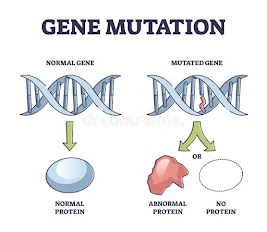
Within our bodies, we have specialized genes to help us break down the food we eat, to convert it into energy. The sucrase-isomaltase (SI) gene is specialized to break down two sugars, sucrose (table sugar/fruit sugar) and maltose (sugar found in grains). Unfortunately, mutations in this gene caused a rare autosomal recessive genetic disorder called congenital sucrase-isomaltase deficiency, where those affected cannot properly digest sucrose and maltose. In fact, congenital sucrase-isomaltase deficiencies are found in 1 in 5,000 people of European descent; however, in the populations of Greenland, Alaska, and Canada, the prevalence of a SI deficiency can be found in 1 in every 20 people.
New research, from an international group of scientists, has just found that this disorder is linked to the cravings and diets of those affected. Notably, in a large study with mice, scientists found that mice without the SI gene did not show cravings or preferences to sweet foods containing dietary sucrose. Dr. Peter Aldiss, a group leader of this study even states, "Now, our study suggests that genetic variation in our ability to digest dietary sucrose may impact not only how much sucrose we eat, but how much we like sugary foods" (Aldiss). These findings were complimented by studies of SI deficient humans, who also did not enjoy sucrose-rich foods as much as an unaffected population.
These findings are nothing short of remarkable, and they open the door to a multitude of genetic research opportunities. For example, Aldiss notes that this may lead to studies targeting the SI gene to reduce overall intake of sucrose in individuals worldwide (which would benefit digestive and metabolic health). While we cannot ethically selectively breed for this trait, our modernized technology of genetic modification may be able to artificially alter the function of SI genes. However, SI deficiencies have been associated with irritable bowel syndrome, so there may be some drawbacks to targeting this gene in large populations. If I were to be researching this, I would attempt to look into the hormonal mechanisms (occurring as a response of SI deficiency) that lead to a reduced sugar craving and look into emulating its effects for a similar result to the SI disorder.
SOURCES:https://www.sciencedaily.com/releases/2024/11/241112190902.htm
https://medlineplus.gov/genetics/condition/congenital-sucrase-isomaltase-deficiency/#resources
Thursday, April 26, 2018
The gene Ups Sugar Intake but Lowers Body Fat
One quality specifically, called FGF21, has been appeared to assume a critical part in controlling the admission of sugars and lipids.
As of late, confirm has risen that a specific variation of the quality — or the FGF21 A:rs838133 minor allele — may direct the amount we like sugary items.
As the scientists say in the paper, their investigation was, partially, incited by the information offered by three past hereditary examinations.
They illustrated "that the starch inclination [driven by this variation of the FGF21 gene was particular to sugary items and may likewise expand liquor consumption."
Similarly as they affirmed the discoveries of the past three investigations, Frayling and group experienced an amazement: a similar allele in charge of increasing our admission of sweet likewise seemed to help bring our levels of muscle to fat ratio down.
"We were surprised that the version of the gene associated with eating more sugar is associated with lower body fat," says Frayling.
Friday, March 17, 2017
Is Sugar Harmless?
The opening sentence of the article, If Sugar is Harmless, Prove It, stated, “Over the
past half-century, the rate of obesity in America has nearly tripled, while the
incidence of diabetes has increased roughly sevenfold.” The second part of this
sentence seemed to relay information that seven times more people have been
diagnosed with diabetes over the past half-century but I remembered what I
learned in class. The range to become diagnosed has increased. So, this means that
people that live today and are considered diabetic might not have been
considered diabetic a few years back. So, always look at the perspective of
these statistics. But, in this article, a science journalist named Gary
Taubes, explains why eating too much and exercising too little is the main
blame for obesity in America. He suggests that we should look at the
carbohydrate content of the diet, especially sugar. In the past years increases
in sugar consumption have occurred. Does this link to the increase of obesity
and diabetes? It is hard to tell. Unless we eliminate sugar completely from our
consumption than we cannot tell if it leads to being healthier. Taubes
explains, “It’s this energy balance thinking that leads us to blame the food
industry for providing too much tasty food, and the individual who’s afflicted
for not being able to eat in moderation and not being suitably active.” Personally,
I believe this is correct. I think if someone eats all this sugary tasty food
and does not work out than it will lead to being overweight. I always think of
the saying “you are what you eat.” Having sugar here and there will not
automatically give a human diabetes. There are other factors that contribute to
this as well. For example, genes are linked directly to some cases of obesity.
Obesity can be hereditary. It can also be from environmental factors such as surrounding
yourself around unhealthy foods. I do not think sugar is good but I also do not
think it can truly hurt you in moderation. I believe sugar consumption is all
about balancing the amount eaten and amount of daily exercise.