Showing posts with label farmers. Show all posts

Friday, April 25, 2025

StCDF1 and the Greener Way to Grow Potatoes

     Potatoes are one of the most popular starchy vegetables all over the world, but did you know to grow potatoes they use a lot of nitrogen fertilizer? Nitrogen fertilizer is harmful for the environment and is expensive for farmers to buy. Researchers recently discovered the StCDF1 gene in potatoes, this gene helps control when potatoes grow tubers. Tubers are the parts of the potato that we consume. The StCDF1 gene also affects how efficiently the plant is able to absorb nitrogen. What the StCDF1 gene does, is turns off the enzyme that helps the plant use nitrogen, knowing this now makes sense to why potatoes currently need so much fertilizer to grow. When colder places in Europe were growing potatoes, the StCDF1 gene became more active, which enabled the tubers to grow throughout the colder seasons but reduced nitrogen efficiency even more. Researchers were able to disable StCDF1 to test what would happen, it resulted in the plants growing lots of big leaves and roots with no tubers. This left them thinking that the older potato varieties probably used nitrogen more efficiently. In the future, scientists are going to try to modify the StCDF1 gene and crossbreed to create potatoes that will grow efficiently without using a ton of fertilizer. 
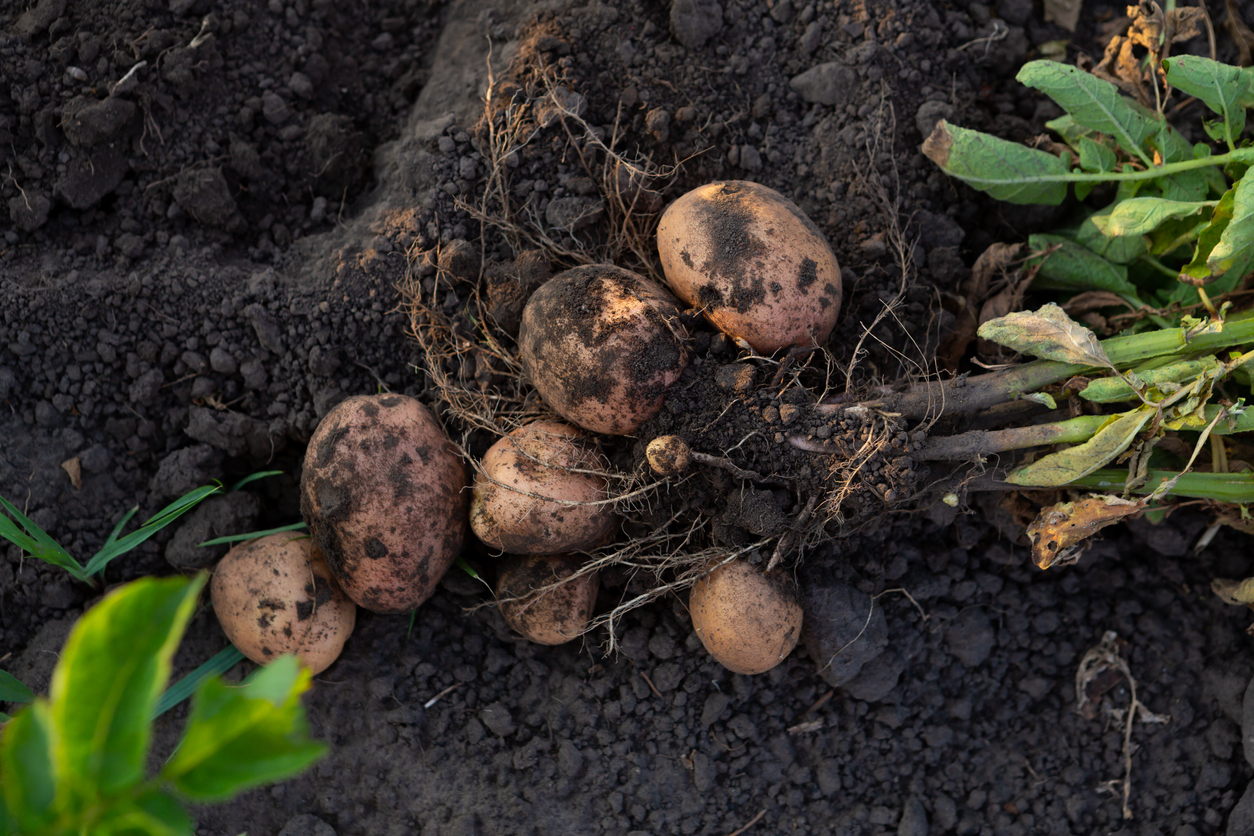


    This article really interested me because it demonstrates how one gene like StCDF1 can make a huge impact on how potatoes grow and how efficiently they use nitrogen. This study's finding can help farmers out a lot because they will be able to spend less on fertilizer while producing good quality potatoes. Not only will this help farmers out but it will also be helping our environment. Soil with excess nitrogen damages ecosystems, pollutes water, and adds to our global warming problem. This article puts into perspective how much genetics impacts real world situations. Applying genetics to industries like the agriculture industry makes it more interesting to learn about. 

Tuesday, April 22, 2025

Sweet & Smart: How Crispr Is Making Food Tastier

    Crispr is this powerful gene-editing tool that's helped treat sickle cell disease, and now it's being used to level up our fruits and veggies. Scientists in China have recently used Crispr to make tomatoes that taste 30% sweeter than usual and honestly, I think that's pretty fascinating. Jinzhe Zhang and his colleagues  identified two genes in tomatoes that are responsible for lowering sugar levels as the fruit ripens. By using Crispr to remove parts of those genes, it resulted in tomatoes that were noticeably sweeter - without sacrificing their size. This is very significant considering when tomatoes get to be large they tend to lose their flavor, so accomplishing both size and flavor is impressive. Crispr isn't just being used to sweeten tomatoes- researchers are also exploring ways to make apples and pears sweeter as well.  They've even started conducting experiments to create seedless blackberries and less-bitter mustard greens, which really shows how versatile this tool is. 

    The only downside to genetically edited foods is that none of these foods can't hit the grocery stores until they're approved by the government. It might be a while before we get to try these upgraded fruits and veggies, but it's so interesting and exciting to see the advancements being made in genetically edited foods. I think this kind of innovation could have a huge impact on the agriculture industry by helping farmers grow tastier crops that appeal more to consumers, and possibly even helping crops last longer in the face of extreme climate change. 


Monday, December 13, 2021

GMO Crops Reduce Pesticide Use and Carbon Footprint

Why do we use GMOs?


    Scientists have developed ways to make crops resistant to pests, reducing the need for the use of pesticides. By growing genetically modified crops, farmers were able to reduce their pesticide use by 776 million kilograms between 1996-2018. These crops that were used were insect resistant, which eliminated the need for insecticides, and herbicide tolerant, which allows for farmers to manage weeds more effectively. 

    There are many benefits to growing these genetically modified crops. By significantly reducing the amount of pesticides used on their crops, farmers are reducing their carbon footprints. Genetically modified crops require less tillage, which means that farmers would be using less fuel. Genetically modified crops also produce a higher yield than conventional crops, which not only reduces the cost of food for the consumer, but also lets farmers grow more with less land. 

Sunday, November 26, 2017

High yielding soybeans with high protein content

Farmers have been growing soybeans used in animal seed that produce a high yield rather than a high protein content, as referred to in the article.  The protein content and yield have been negatively correlated until researchers have tested a protein increasing gene in two varieties of soybeans and the results they obtained were promising for increasing the protein content while increasing yield at the same time.  This is a great solution because the farmers are paid based on weight not protein content, so otherwise the soybeans being produced would have low protein contents.  The gene found in the soybeans was on chromosome 15 which greatly increased protein content while decreasing only slightly the seed oil concentration.  The gene found on chromosome 20 was responsible for increasing the protein content, but was also found to decrease the yield drastically.  The gene on chromosome 15 was used to increase and counteract the gene on chromosome 20 that reduced yield.  The researchers were able to achieve results from using the gene on chromosome 15 to increase protein content as well as yield.

This article was interesting because I never really thought about how farmers were paid for growing their produce.  So choosing a variety that codes for higher yields would make more sense for the farmers to grow.  With the knowledge to grow soybeans with high protein as well as high yield would mean the animal feed has more nutrition in it and can help the animals grow better without the use of other alternatives of making the animals grow quicker.