Showing posts with label GLP-1. Show all posts

Wednesday, April 23, 2025

Gut Feeling: The Link Between Sugar Cravings and Gut Bacteria

    There was a recent study done by Nature Microbiology that found a gut bacterium called Bacteroides vulgatus and the molecule it produces, which is vitamin B5. This can help reduce the craving of sugar in mice. The mice used by the researchers were genetically engineered to be missing the FFAR4 sensor, this sensor normally detects certain fatty acids in the gut. Since these mice were missing the FFAR4 sensor, they had lower levels of B. vulgatus and vitamin B5, which resulted in them overeating sugar. When the mice were introduced to the bacteria and vitamin, their sugar intake decreased. This was most likely due to a chain reaction involving a protein called GLP-1, which is known for balancing blood sugar and appetite. Keep in mind, these side effects were heavily dependent on the fact that these mice lacking FFAR4 sensor. This means that animals' genetic makeup plays an important role on whether B. vulgatus actually helps with sugar cravings. Relating this to human, most of us also have an intact FFAR4 sensor, so theres a chance that the vitamin and bacteria might not affect people the same way. Some mice have genetic mutations that have been linked to B. vulgatus leading to gut inflammation. This shows us how much genetics can really influence how bacteria impacts health. The results of this study demonstrate the impact gut bacteria can have on behaviors such as sugar cravings. This study is difficult to apply in humans because we all have different genetics and microbiomes. 


        This article opened my eyes to how much gut bacteria can impact sugar cravings and it's actually more interesting than I thought. I think it would be incredibly beneficial for people's overall health and nutrition if we could do studies like this in humans in the future, but the fact that genetics vary from person to person makes it difficult. It would truly be amazing if scientists could discover how to manage sugar cravings with solutions that are created uniquely for our DNA and microbiomes. I know I personally get sugar cravings that I would love to put a stop to them. I feel like many people struggle with sugar cravings, and it would be beneficial to many if we could understand what causes the cravings in the first place. 

Thursday, December 1, 2016

Playtpus Venom can help manage Diabetes in Humans

     Diabetes is a disease in which blood sugar levels can increase to high because the hormone insulin is not being made or is not working properly. (Diabetes: MedlinPlus.). People can either have type 1 which is when insulin is not made at all, or type 2 which is when insulin is not working as it should. There is no cure for it but it can be managed with medication that is almost like insulin, diet and exercise. To much sugar in the blood over time can cause damage in the eyes, nerves, and kidneys, it can also led to heart disease, stroke, and the lose of a limb. The insulin that is made for diabetes patients is not as effective as the real stuff, scientists in Australia think they have found a better treatment for people with type 2 diabetes. The key is in the platypus and echinda.


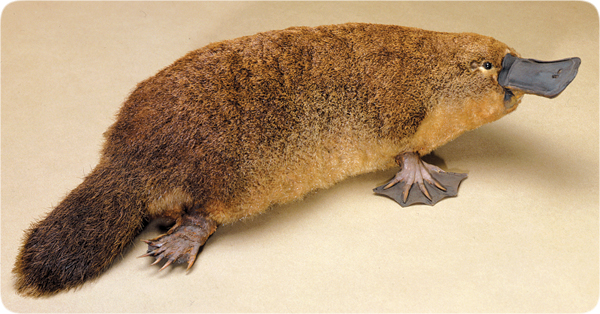
    The platypus is a odd looking aquatic egg-laying mammal from Australia, and they happen to have a venomous spur behind their back feet on males, it is the image in the bottom. The image in the top is the echinda is also a egg-laying mammal the is also called the spiny anteater. A team of scientists led by Professor Frank Grutzner at the University of Adelaide and Associate Professor Briony Forbes at Flinders University, have discovered that platypus and echinda have a glucagon-like peptide-1 (GLP-1) that is resistant to degradation. In humans GLP-1 degrades within minutes and in people with type 2 diabetes the GLP-1 is not there long enough to stimulate the release of insulin. The platypus produces GLP-1 in their venom and in their gut as well, the reason for the GLP-1 in their venom is unknown and came to quite a surprise to the scientists. The GLP-1 in platypus and echinda can help synthesis new medication for diabetes that stimulates the body to produce it's own insulin.


Diabetes: MedlinePlus. (n.d.). Retrieved December 01, 2016, from https://medlineplus.gov/diabetes.html

University of Adelaide. (2016, November 29). Platypus venom could hold key to diabetes treatment. ScienceDaily. Retrieved December 1, 2016 from www.sciencedaily.com/releases/2016/11/161129114432.htm

Tuesday, November 29, 2016

Platypus Venom As a Diabetes Treatment


It appears that Australian researchers have discovered something quite remarkable. The animal pictured above, known as a platypus, has poisonous venom, but this very venom could be used as a treatment for diabetes. In the gut of the platypus a hormone is produced that regulates blood glucose, this same hormone is also found in their venom. This research was led by Professor Frank Grutzner at the University of Adelaide and another Associate Professor Briony Forbes at Flinders University. The hormone that is discussed is called glucagon-like peptide-1 or GLP-1 is typically secreted in both human and animal gut which stimulates the release of insulin to effectively lower blood glucose. Unfortunately, this GLP-1 is known for degrading within minutes. Those with type II diabetes cannot maintain a proper blood sugar balance due to the short stimulus triggered by the GLP-1 which is why they need medication with longer lasting form of the hormone. Besides platypus's, another type of monotreme, the echidna, have been evolving changes in the hormone. These changes make GLP-1 resistant to the degradation previously mentioned that is normally seen in humans. Within these two monotremes, they degrade with a different mechanism. When they continues to analyze the genetics of these animals, there seemed to be a "molecular warfare" between the function of the hormone.
There are different functions of the GLP-1 in the platypus. In the gut, it is used as a regulator of blood glucose, but in the venom it is mostly used to fend off other platypus males during breeding season. This battle of the functions changes the GLP-1 mechanism but also has created the evolution of a stable form of the hormone which is a highly desirable as a potential type 2 diabetes treatment. This breakthrough is incredible and I think its so interesting that something seen as poisonous to a human can actually end up helping someone with one of the greatest health challenges, diabetes. I think further research in this is necessary and it will be awesome to see how it is converted into a possible treatment.