Showing posts with label glucose. Show all posts

Thursday, November 16, 2023

Gene Finding Provides New Insights

    Today's blog post has to do with new gene findings which provide new insights into pancreas development and in helping search for a cure to type 1 diabetes. For those with diabetes, glucose can't be used for energy, so it builds up in someone's bloodstream and causes serious health problems. Luckily, there is a peptide hormone called 'Insulin' that is produced by beta cells of the pancreatic islets which are encoded by the insulin gene in humans. Recently though, scientists found a gene which is essential for making the pancreas; and this gene is not found in almost all animals, except for chimpanzees, gorillas, and a few other types of monkeys. 

    A study was done and that is when the gene, which is called ZNF808 was found. By finding this gene during the study, it was able to show how different humans and animals are when it comes to research, and it really showed the importance of studies on the human pancreas. By studying the pancreas, we would be able to find new treatment for diabetes, and also figure out why the human pancreas is different in how it looks and develops compared to animals. After studying the ZNF808 gene it was found that it is a part of a family of evolved proteins which are in regions of DNA that they consider junk DNA. After recent studies it shows that this region of DNA where ZNF808 is, is actually an important role in human development. 


    Now that the DNA region in which ZNF808 was found is being studied, we understand that there are hundreds of genes which are like ZNF808 that will be able to help in overall human health. In the lab it was studied on the effect of ZNF808 loss while using stem cells; and it was found that ZNF808 plays a big role in important functions during early human development when our cells have to decide whether they want to become a pancreas or a liver. With this finding it is now known that this could be used to manipulate stem cells so that they produce beta cells which will be able to produce insulin on their own. If that works out we will be faced with finding a cure for type 1 diabetes.


Main Source:

Gene finding provides new insights into pancreas development and helps search for type 1 diabetes cure (medicalxpress.com)

Other Sources:

The Relationship Between Insulin And Glucose | DiabetesTalk.Net

Monday, October 9, 2017


          Researchers from Switzerland has done a study on TORC1, which is an enzyme that controls the normal cell growth in the body. When this enzyme is too active it causes diseases such as cancer. The Target Of Rapamycin (TOR) was first discovered in yeast, and then in humans. TOR is found in two very different proteins, TORC1 and TORC2. Researchers from UNIGE, the University of Auckland, New Zealand, and the École Polytechnique Fédérale de Lausanne (EPFL) collaborated to understand how the nutrient regulates the activity of TROC1. The researchers were able to reveal the appearance of a new TORC1 structure in cells. When the cells lack glucose, the TORC1 assemble together forming a tubular structure. The tubular structure which is the TOROID, stores inactive TORC1 and stops cell growth. Another study done by National Centre of Competence in Research (NCCR) showed that the re-addition of glucose causes the TORIDS or the tubular structure to rapidly dissemble. NCCR has done the testing in yeast. The assembly and disassembly of the TOROIDS will make it possible to search for compounds that can stabilize and destabilize the cells. This article was very interesting to me  because it could lead to curing cancer. If the cancer cells could be stopped from growing, millions of lives would be saved. Its amazing to see how modern technology can change cells from being able to grow. This research could open up new approaches to treat many diseases and change the world for ever. 


https://www.ncbi.nlm.nih.gov/pmc/articles/PMC4196627/

https://www.cancer.gov/publications/dictionaries/cancer-drug?cdrid=733685


Thursday, December 1, 2016

Playtpus Venom can help manage Diabetes in Humans

     Diabetes is a disease in which blood sugar levels can increase to high because the hormone insulin is not being made or is not working properly. (Diabetes: MedlinPlus.). People can either have type 1 which is when insulin is not made at all, or type 2 which is when insulin is not working as it should. There is no cure for it but it can be managed with medication that is almost like insulin, diet and exercise. To much sugar in the blood over time can cause damage in the eyes, nerves, and kidneys, it can also led to heart disease, stroke, and the lose of a limb. The insulin that is made for diabetes patients is not as effective as the real stuff, scientists in Australia think they have found a better treatment for people with type 2 diabetes. The key is in the platypus and echinda.


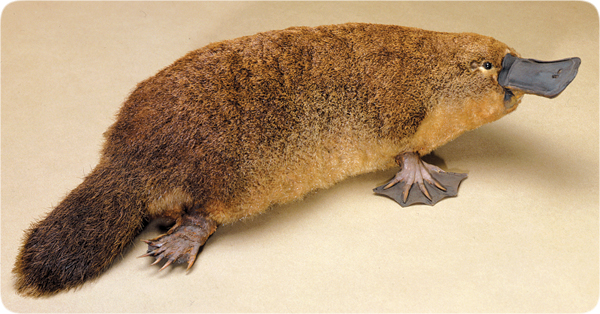
    The platypus is a odd looking aquatic egg-laying mammal from Australia, and they happen to have a venomous spur behind their back feet on males, it is the image in the bottom. The image in the top is the echinda is also a egg-laying mammal the is also called the spiny anteater. A team of scientists led by Professor Frank Grutzner at the University of Adelaide and Associate Professor Briony Forbes at Flinders University, have discovered that platypus and echinda have a glucagon-like peptide-1 (GLP-1) that is resistant to degradation. In humans GLP-1 degrades within minutes and in people with type 2 diabetes the GLP-1 is not there long enough to stimulate the release of insulin. The platypus produces GLP-1 in their venom and in their gut as well, the reason for the GLP-1 in their venom is unknown and came to quite a surprise to the scientists. The GLP-1 in platypus and echinda can help synthesis new medication for diabetes that stimulates the body to produce it's own insulin.


Diabetes: MedlinePlus. (n.d.). Retrieved December 01, 2016, from https://medlineplus.gov/diabetes.html

University of Adelaide. (2016, November 29). Platypus venom could hold key to diabetes treatment. ScienceDaily. Retrieved December 1, 2016 from www.sciencedaily.com/releases/2016/11/161129114432.htm

Tuesday, November 25, 2014

Carrots Can Reduce the Effect of Diabetes Causing Genes

There are many benefits when consuming carrots. Carrots contain beta-carotene that converts to vitamin A, which is essential to promote eye health. New researches shown that carotene in carrots can reduce the effect of diabetes causing genes and symptoms. Researches done by scientists from Stanford University has matched genetic variants linked to type 2 diabetes (failure to produce sufficient amount of insulin) and compare the genomes of those with diabetes versus those without diabetes. Scientist identified 90 genetic alteration in which increase the risk of diabetes.

Dr. Atul Butte, an associate professor at Stanford and his colleagues found give major environmental factors associated with diabetes. All five factors included levels of beta-carotene (precursor to vitamin A) and a form of vitamin E. In addition, they study individuals with different combinations of 18 of the major genetic variants linked to diabetes. It was speculated if the genetic variants linked to certain DNA pattern that can be connected to specific nutrient levels that linked to diabetes. It was concluded the presence of high or low levels of certain nutrients make the body less efficient in processing glucose.


A gene variant called SLC30A4, which code protein in the pancreas that is involved in the production of insulin. Beta carotene, commonly found in carrots interact with the gene and influence risk for Type 2 diabetes. On the other hand, higher beta carotene levels was found to protect against diabetes and improve production of insulin. Dr. Atul Butte argues, “What the findings suggest is that if you have a genetic marker now or a predisposition for Type 2 diabetes, all you really need to do is increase the number of carrots you eat to increase your beta carotene, and maybe you can compensate for having that spot in your genome.” There are still further studies needed to confirm that beta carotene levels will offset the effects of diabetes genetic variants.


Friday, April 13, 2012

Fat Cells That Protect You From Diabetes?

In Medical News Today, researchers from Beth Israel Deaconess Medical Center demonstrated the mechanisms of how type 2 diabetes is prevented in the body by fat cells. For fat cells to keep blood sugar and insulin regulated at good levels, fat cells need sugars that come from food. If fat cells don’t have the amount of sugar that comes from food, then they may not be able to maintain healthy levels in the body.  In some cases of people who have obesity, glucose is blocked from getting into the fat cells causing the body to become insulin resistant which increases blood sugar levels causing diabetes to occur. In this study, researchers located and examine the effects of the fat gene in a mouse model confirmed their results with fat tissue from both lean and obese people.


[caption id="attachment_4740" align="aligncenter" width="493" caption="Glucose and insulin flow in the body"][/caption]

From the research, they have found “that a lone gene could shift the metabolism of the fat cell so dramatically and then, that turning on this master switch selectively in adipose tissue is beneficial to the whole body”, said Dr. Barbara Kahn. Researchers have found a gene that was discovered by other scientists in the liver that helps in the understanding of how fat cells protect the body from diabetes. This gene converts sugars into fatty acids, and when the glucose levels rise in the body, this gene replicates a more active version of itself to allow for sugar molecules to be taken apart and remade into fatty acid.  In the study, Dr. Kahn injected mice with genetic alterations of  GLUT4 (glucose transport). In the set of mice that had approximately 10 times the amount of GLUT 4 didn't exhibit any signs for diabetes; however, in the set of mice that didn't have the GLUT4 developed diabetes. There will be further research done.

This was very interesting to read. I considered fat cells being damaging instead of being beneficial because of the way it has been portrayed. I believe that there are many misconceptions in science that we do not of yet because these misconceptions haven’t been tested against, and we still accept them as completely true. It is great to hear that fat cells can possibly be used in the future to treat type 2 diabetes because, as of the current moment, the most commonly used medicine for type 2 diabetes is metformin. For those who suffer with disease or those who are trying to prevent them, it can tremendously help having more options. While this study was specific to type 2 diabetes, maybe they will do research in the future for type 1 diabetes. If a proper diet and daily exercise regimen is maintain,  diabetes can also be maintained or prevented. Diabetes is not just based on your genetics; it is also influenced on your external environment.

Monday, December 5, 2011

Unhealthy Food Cravings

As stated in a recent article, researchers have found that as you get hungrier high calorie foods become more and more appetizing. When glucose levels drop, an area of the brain that controls emotion and impulses loses its' ability to decrease your desire for high calorie foods, so that cake looks twice as good. Researchers at Yale ran studies using an fMRI where they monitored changes in blood levels of subjects while they were shown images of high-calorie, low-calorie, and non-food. When glucose levels drop, the hypothalamus can sense the change. When this happens, the insula and striatum are activated, which makes people want to eat more.


I think this is a study that a lot of people can relate to, as I know many people have late night cravings to eat something because they haven't eaten in a few hours and often are tempted to eat the worst foods for you, and this can help to explain why we make those choices.