Showing posts with label liver. Show all posts

Thursday, November 16, 2023

Gene Finding Provides New Insights

    Today's blog post has to do with new gene findings which provide new insights into pancreas development and in helping search for a cure to type 1 diabetes. For those with diabetes, glucose can't be used for energy, so it builds up in someone's bloodstream and causes serious health problems. Luckily, there is a peptide hormone called 'Insulin' that is produced by beta cells of the pancreatic islets which are encoded by the insulin gene in humans. Recently though, scientists found a gene which is essential for making the pancreas; and this gene is not found in almost all animals, except for chimpanzees, gorillas, and a few other types of monkeys. 

    A study was done and that is when the gene, which is called ZNF808 was found. By finding this gene during the study, it was able to show how different humans and animals are when it comes to research, and it really showed the importance of studies on the human pancreas. By studying the pancreas, we would be able to find new treatment for diabetes, and also figure out why the human pancreas is different in how it looks and develops compared to animals. After studying the ZNF808 gene it was found that it is a part of a family of evolved proteins which are in regions of DNA that they consider junk DNA. After recent studies it shows that this region of DNA where ZNF808 is, is actually an important role in human development. 


    Now that the DNA region in which ZNF808 was found is being studied, we understand that there are hundreds of genes which are like ZNF808 that will be able to help in overall human health. In the lab it was studied on the effect of ZNF808 loss while using stem cells; and it was found that ZNF808 plays a big role in important functions during early human development when our cells have to decide whether they want to become a pancreas or a liver. With this finding it is now known that this could be used to manipulate stem cells so that they produce beta cells which will be able to produce insulin on their own. If that works out we will be faced with finding a cure for type 1 diabetes.


Main Source:

Gene finding provides new insights into pancreas development and helps search for type 1 diabetes cure (medicalxpress.com)

Other Sources:

The Relationship Between Insulin And Glucose | DiabetesTalk.Net

Tuesday, November 29, 2022

Benefits and Safety of Bepirovirsen in Chronic Hepatitis B Infection


Bepirovirsen is an antisense oligonucleotide that produces sustainable clearance of hepatitis B virus (HBV) and hepatitis B surface antigens (HBsAg). Bepirovirsen is designed to specifically recognize the RNA that HBV uses to replicate in infected liver cells and to make the viral antigens that facilitate the severity of the virus by helping to avoid being cleared by the immune system. In addition, bepirovirsen is able to stimulate immune responses through Toll-like receptor 8 (TLR8), which may enable the immune system to achieve a long-lasting clearance of HBV from blood circulation.

Researchers conducted a phase B trial involving participants with chronic HBV infection or not receiving nucleoside or nucleoside analog therapy. Participants were randomly assigned to receive weekly injections of bepirovirsen at a dose of 300 mg for 24 weeks (group 1), 300 mg for 12 weeks then 150 mg for 12 weeks (group 2), 300 mg for 12 weeks then placebo for 12 weeks (group 3), or placebo for 12 weeks then bepirovirsen at a dose of 300 mg for 12 weeks (group 4). It was found that bepirovirsen at a dose of 300 mg for 24 weeks resulted in the most sustained HBsAg and HBV DNA loss in participants with chronic HBV infection. 

Bepirovirsen has shown many positive results in the treatment of hepatitis B. Although, many of the participants who were injected with bepirovirsen experienced pyrexia, fatigue, and increased alanine aminotransferase levels.  Even though some of these are common reactions that may occur when injected with treatments, I believe that more trials should be done to prove the efficacy and safety of bepirovirsen. It is also important to remember that hepatitis B is a chronic medical condition like diabetes and high blood pressure that can be successfully managed if you take care of your health and liver. 


Friday, November 18, 2022

Fluorescent Mouse Blood Helping to Find Brain Diseases

Albumin Protein


Scientists conducting a study with mice at the University of Copenhagen have discovered a way to make the mice's blood fluorescent so that it can be seen as it moves through the body and brain. The process works with a protein produced in the liver called albumin. The researchers took a gene on a fluorescent protein and attached it to a gene of albumin. The modified albumin is then inserted into a genetically modified virus and the virus is injected into a mouse's tail, which has large blood vessels. The virus causes the mice no harm but enters the liver and tricks it into making the modified albumin which makes the blood fluoresce. As the blood moves throughout the body and goes into places like the brain, the flow of blood can be studied and analyzed to find out more about diseases like Alzheimer's, depression, and even strokes. 

The new fluorescent blood method is a game changer for these types of studies because it lasts in the animal for months. Before this method, the main way to highlight blood and trace its flow was by chemical dyes and this lasted for only hours. Now blood can be traced over much longer periods of time and be used to trace long-term disease progression. The method is also being applauded by advocates for the ethical use of animals in research. The method is less painful and stressful for mice since it only requires one injection whereas the dye method required many reinjections since the dye disappeared over a few hours and had to be reinserted. 

I think this was very fascinating research and really showed how advancements in genetics have allowed for this great new type of technology to be developed. This new method of using fluorescent blood is a revolutionary development and I believe will be very helpful to researchers and tracing blood flow for years to come. Being less stressful for lab animals is another plus of this study and I feel is another important advantage of this new method. 

Tuesday, November 23, 2021

CRISPR potential cure for Transthyretin Amyloidosis


A trial done by Intellia Therapeutics demonstrated that CRISPR (Cas9) can be administered into the body and target the liver to treat a disease called transthyretin amyloidosis. This would be done by Cas9 editing the gene that expresses the mutated protein (ATTR). This gene is the mutated form of the normal gene that expresses TTR. The mutated protein builds up in the heart and kidneys. A patient with this disease has the inability to control basic body functions. 

Some drugs that were utilized were small interfering RNAs and antisense oligonucleotides. Small interfering RNAs are RNAs that affect the transcription of a certain gene. This would prevent the gene from being transcribed and then translated into a mutated protein.  Antisense oligonucleotides are small pieces of RNA or DNA that bind to a specific mRNA, which would block it from being translated. These drugs had to be administered monthly which also had side effects. Cas9 provides a safer alternative by splicing the genome and preventing the expression from happening. 

In Phase I of the trials, 3 out of the 6 patients with transthyretin amyloidosis look a low dose of Cas9 (drug name NTLA-2001), and the other half took a higher dose. The results showed that TTR levels dropped by 50% and 96% for the higher dose group. If these trials continue, then this can be used in 2 hours in the nearest outpatient clinic. 

Friday, November 27, 2020

A shield like genetic mutation


Canadian geneticist discovered a health helping genetic mutation in French Canadian families. Almost shield like in terms. The gene is PCSK9, and this mutation in the gene is believed to be a source of defense against "cardiovascular disease, liver disease, and other unidentified human illnesses."(staff) The gene mutation is believed to lower plasma LDL- cholesterol. Thus resulting in less cardiovascular disease. Overall this genetic mutation could be a BIG find for the medical community. Once it's fully understood it could be used in a variety of ways, including gene therapy to help people who's families suffer with histories of cardiovascular, and liver disease. (staff)


Source: staff, Science X. “A Gene Mutation That Protects against Disease.” Medical Xpress - Medical Research Advances and Health News, Medical Xpress, 19 Nov. 2020, medicalxpress.com/news/2020-11-gene-mutation-disease.html. 


Links Used: 

https://medicalxpress.com/news/2020-11-gene-mutation-disease.html

https://www.jci.org/articles/view/128650


Li

Wednesday, April 19, 2017

Serial killers on cancer


Dr. Rosenberg has been operating on patients for years. He deals with cancer, and for one special patient their own immune system took out their cancer cells. Thinking that this person had a special blood type, he transfused it into another patient with cancer. He was however, unsuccessful. He did learn though a new technique on a way to kill cancer. This technique is called "cell therapy." The patients t-cells are extracted from the body and then modified to recognize and destroy cancer. These t-cells are then multiplied millions of times and then put back into the body to fight the cancer. These cells are known as "serial killers" because they can kill thousands of cancer cells. Cell therapy is a unique treatment because it is using a live thing to fight the cancer and it is unique to every person. There have been side effects on a few patients, but research is still going on. These killer cells are mostly used on blood cancers. This article kept my attention the whole time. This could change the whole world, and lead to a cure if further research is as successful as this. Cancer amazes me because it is a mystery and always changing. Today every single person has been effected by some type of cancer, this could lead to solving one of the worlds greatest mysteries. Dr. Rosenberg looked at cancer in a different way and made me think in a different way as well. I would love for him to publish more about this research so I can keep up to date on it. 


Article: https://www.nytimes.com/2016/08/02/health/cancer-cell-therapy-immune-system.html?action=click&contentCollection=health&region=rank&module=package&version=highlights&contentPlacement=1&pgtype=collection&_r=0

Related article: http://annualreviews.org/doi/abs/10.1146/annurev.immunol.25.022106.141527


Thursday, April 13, 2017

The Holy Grail of DNA, HITI

Adult body cells in tissues cannot divide. With this, DNA does not change or develop especially DNA found in the heart, brain and liver. Scientists have discovered a way to enter the cell and modify the DNA to prevent previously incurable diseases. The technique, known as HITI, was based on the famous CRISPR gene-editing technique. With this, they can insert DNA at a target location into the non-dividing cells that make up the majority of adult organs and tissues.

 The researchers used the technique on rats born with a genetic disease called retinitis pigmentosa, which affects about one in 4,000 people in the UK. Researchers are now using this mechanism to correct gene defects. Clinical trials are a long way off because the CRISPR proteins may cut DNA at other sites that may have untoward effects.'

https://www.thesun.co.uk/living/2205506/what-is-dna-editing-and-how-could-fixing-broken-genes-make-us-live-longer/

Sunday, November 22, 2015

Gene Study of Liver Tumor Reveals Versatile DNA


Researchers have been working on sequencing a single human liver tumor.  The tumor was only slighter larger than one inch in diameter, yet it contained 100 million distinct mutations within the coding region of its genetic sequence.  This is thousands of times more than originally believed.  Each of these mutations is capable of altering proteins in the tumor, affecting the ability to treat tumors.

These results show even the smallest of tumors have extremely high genetic diversity in their genetic sequences.  This diversity explains why chemotherapy does not always work in treating tumors.  Cells with mutations that are resistant to standard treatment methods, go on to reproduce more cells with these mutations, causing treatment to be futile in some circumstances.  

This is a great discovery, however it is rather unfortunate.  We often believe we are making great medical advances, however this study shows we might have much more work ahead of us to effectively treat tumors.  It is known that patient’s survival rates decrease substantially as genetic diversity in a tumor increases.  It seems the medical field will need to make huge advances to find a way to properly eliminate these genetically varying cells to find a successful cure in the treatment of tumors.

For the original article click here.

Tuesday, April 14, 2015

Need a Heart Transplant? Just Grow One!

In a search for a method of heart transplant that would eliminate the need for anti-rejection drugs, scientists are working to grow a heart from stem cells. This sort of a medical breakthrough could revolutionize the way modern medicine operates. 

Researchers take a fully functioning heart and remove all cells until they are left with a "ghost heart" or "scaffolding". Stem cells are then introduced to this framework and a new heart is grown. After being exposed to blood flow for 20 days, this new heart begins to contract again at a normal rate. 

This new technology could be used to replace parts of a heart damaged by a heart attack, or even possibly the entire organ in some patients. The heart is not the only organ that has been grown artificially. Research is also being done with other organs such as the liver. This new technology could be the future of medicine, eliminating the need for traditional transplant and the plethora of anti-rejection drugs. If a patient receives a heart grown directly from his/her stem cells, problems with the implant are less likely. 


Wednesday, April 1, 2015

Protein to Help Liver Regeneration

In an article recently published this week talks about how a protein, GF21, encourages regeneration in mice carrying the human liver regeneration protein.  The human form of the protein tends to not be very active, especially after a transplant or damage from alcohol consumption.

The study showed that after experiencing liver damage, mice were able to regain original liver mass in approximately ten days, while mice with the human protein had no change after three months.   Providing GF21 allowed their liver to regain mass.  The mouse version of this protein causes cancer, meaning that there is no way they would try to modify the human protein to be the same.  In addition, the human gene is usually targeted in cholesterol treatment; another reason why the liver may struggle to regenerate.

Reading how giving a certain protein can cause the liver the regenerate is really interesting.  I know people who have liver damage and struggle, so the idea of them being able to have a slightly easier situation because of a treatment is amazing.  It's interesting to think that a slight difference in genetic coding could cause two similar proteins to be so different that one can regenerate, while the other can't.

Secondary Link: http://ucdmc.ucdavis.edu/publish/news/newsroom/9856

Tuesday, November 25, 2014

Understanding Circadian Rhythms through Transcription Factors


In most recent discoveries pertaining to the study of Circadian Rhythms and genetics, researchers from the Perelman School of Medicine at the University of Pennsylvania have found the secret to how cellular clocks are in time with different circadian phases during different times of days.

Sciencedaily.com states something very eyeopening in this article, "Most of us wake in the morning, sleep in the evening, and eat in between. Body temperature, metabolism, and hormone levels all fluctuate throughout the day, and it is increasingly clear that disruption of those cycles can lead to metabolic disease." By understanding these molecular clocks that are affected by DNA-binding proteins called transcription factors that control these oscillation factors that make the clock work, one can question the connection between different circadian peaks and how the clock keeps in time with other cycles.

Mitchell Lazar (MD, PHD), a Sylman Eisman Professor of Medicine, and his group of researchers have collected a survey of "genome-wide" circadian rhythm survey and enhancers (regulatory elements) that control the expression of genes. What Lazar's team did was use high-density DNA sequencing to measure activity of enhancers in mice (in their liver) and discovered that these enhancers also have a daily oscillation rate are grouped up in a way that is timed in sync with different transcription factors. Loss of a factor throws the system out of balance and thus causes metabolic disease. Out of balance circadian rhythms can also cause cancer as found in this article.

I found this article and subject matter most interesting because the research being done on circadian rhythm and synchronization that could lead to new ways to make more effective metabolic medicine is staggering. Through understanding these pathways and transcription peaks, medicine can be tailored to be taken at a certain time of day as Lazar says with also the possibility to reduce unwanted side effects. Overall, metabolic drug treatment will be revolutionized by these important discoveries.
Original Article: http://www.sciencedaily.com/releases/2014/11/141120123019.htm
Supporting Article: http://www.sciencedaily.com/releases/2014/06/140624110714.htm


Wednesday, October 15, 2014

EPIGENETIC CHANGES CAUSED BY BINGE DRINKING LEAD TO INFLAMMATORY RESPONSE IN LIVER


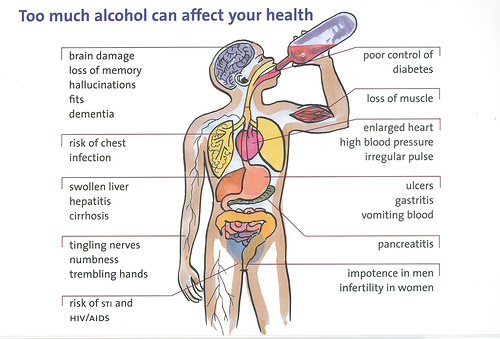
Research from the University of Missouri school of Medicine found that epigenetic protein changes can lead to treatments for alcohol-related liver diseases when caused by binge drinking. High blood pressure, heart disease, stroke, cancer and digestive problems are also caused from binge drinking: five or more drinks for a man and four or more drinks for a woman in a two-hour period according to the National Institute of Alcohol Abuse and Alcoholism. This statistic shows how prevalent binge drinking is in the U.S. today. 


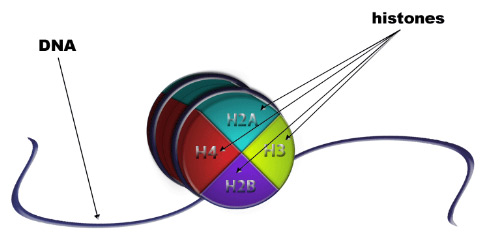
Shivendra Shukla explained that binge drinking causes epigenetic modifications in histone structures in the liver. Epigenetic modifications are the changes in genes that are not caused by changes in the DNA sequence or genetic code. Shukla further found that binge drinking will cause unnatural changes in histones, which are proteins that organize the DNA strands that surround them and they help the DNA function correctly. The changes in histones affect how the genetic code of an individual is interpreted and regulated. Shukla continued by saying how the negative affect binge drinking has on histones will initially cause inflammation and damage cells as they form, and cause cirrhosis and cancer. Shukla stressed that binge drinking does not only affect the liver and should not only be associated with the liver since the liver can send out damaging signals to other systems in the body. 


Binge drinking is an ever growing public health concern not only in the U.S., but globally. This problem is not going away and I believe that it is important to stress the many negative affects that result from alcohol abuse. Studies like the one Shuka performed can lead to future treatments for alcohol-liver damage; however, getting the word across that this is a very serious matter can help limit binge drinkers and alcohol abuse. 

Article: http://www.medicalnewstoday.com/releases/283683.php

Related Article: http://pubs.niaaa.nih.gov/publications/arcr343/293-305.htm

Sunday, December 4, 2011

The Mechanism for Cell Polyploidy May Have Been Defined

Polyploidy is defined as when a living creature, usually a plant or insect, has more than two, or diploid, sets of chromosomes – for example, it can have a triploid (three) or tetraploid (four) sets of chromosomes. Sometimes polyploidy can occur in tissues of otherwise diploid animals, including people, in which tissues of the muscle, placenta, and liver produce large polyploid cells.

[caption id="attachment_3205" align="alignright" width="200" caption="Color-coded chromosomes. (Image source: NIH, NIGMS)"][/caption]

An international team of scientists, including geneticist Bruce Edgar, PhD of the University of Heidelberg, Germany and Robert J. Duronio, PhD, professor of biology and genetics at the University of North Carolina at Chapel Hill (UNC), may have pinpointed the underlying mechanism for cell polyploidy. They noted that many organisms achieve this growth by increasing cell size rather than number. Drosophila melanogaster, or the laboratory fruit fly, enter a specialized cell cycle called an endocycle, which ultimately results in cell polyploidy. The researchers studied the Drosophila endocycle by mathematically modeling “the behavior of molecules known to control this special type of cell cycle and the progression to polyploidy” and then making predictions about the regulation of these molecules, which they then tested in fruit flies.

The results in their original research article abstract showed that the cyclical manner in which genes were turned on and off led cells to continue in the endocycle and become polyploid, and that one specific mutation of the mechanism disrupted this process. Duronio noted that further research may allow scientists to someday manipulate cells into becoming polyploid, which may be crucial to liver regeneration, for example, since polyploidy in the human liver may be important to its functions. Personally, I believe that this type of research is valuable since organs like the liver are necessary to survival in vertebrates, prone to disease because of its role in supporting most other organs in the body, and cannot be regenerated to its original form even though its function can be restored.