Showing posts with label stem cells. Show all posts

Monday, April 13, 2026

Treating Genetic Disease Before Birth: A New Approach to Fanconi Anemia

         A recent study from Stanford Medicine is exploring a new approach to treating Fanconi anemia, which is a rare genetic disorder that impairs the body’s ability to repair damaged DNA. This condition often leads to bone marrow failure, meaning the body is unable to produce enough healthy blood cells. This results in patients experiencing serious complications early in their lives.

        In this study, researchers are testing a prenatal stem cell transplant, meaning the treatment is given before birth. The procedure involves transferring stem cells from the mother into the developing fetus during pregnancy.  This approach may reduce the risk of immune rejection because the fetus naturally tolerates the mother’s cells, which is a major challenge in traditional transplants.


        Previous treatments for Fanconi anemia often required chemotherapy or radiation to prepare the body for a transplant. These treatments may be very harmful, especially for young patients. This new method, however, may allow healthy stem cells to develop in the fetus without the need for these aggressive therapies. Early studies in animals have shown promising results with transplanted cells successfully growing and helping restore normal function.

        This research is significant because it focuses on treating a genetic disease before symptoms even appear. By correcting the problem early, scientists may be able to prevent long-term damage and improve patient outcomes.

        Overall, this study by Stanford Medicine highlights how advances in genetics and stem cell therapy can work together to create new treatment options for patients. If this treatment is successful in humans, this approach may change how genetic diseases are treated in the future and provide safer and earlier interventions for patients.


Source: https://med.stanford.edu/news/insights/2026/03/fanconi-anemia-prenatal-stem-cell-transplant-trial.html Additional Link: https://medlineplus.gov/genetics/condition/fanconi-anemia/

Wednesday, November 26, 2025

Scientists Grow Human Organs Inside Pigs

 Organ transplants are often the final treatment option for people with severe organ failure. Still, their success depends heavily on having enough donor organs, something the medical field continues to struggle with. Because of this shortage, scientists are placing high hopes on organ regeneration as a future solution. One major goal in regenerative medicine is to grow human organs from pluripotent stem cells. Recently, researchers have made progress in creating organs with complex structures and functions using these stem cells. Reproductive biology has also become essential in developing new strategies for organ regeneration. This review explores how animal biotechnology, especially using pigs, could serve as a platform for growing human organs in the future.

Link to article ; https://www.sciencedirect.com/science/article/pii/S0093691X16300954
Additional source: https://www.researchgate.net/figure/Generating-exogenic-human-organs-in-interspecies-chimeras-using-blastocyst_fig1_373257214

Commentary: Researchers have successfully grown human-compatible organs in pigs using advanced stem cell technologies. This process involves editing pig embryos so that they cannot form a particular organ, then inserting human induced pluripotent stem cells to grow the organ in its place. This breakthrough could solve the organ transplant shortage and save countless lives. However, it also raises ethical concerns about chimeras and the boundaries between species. The research shows how genetics and biotechnology can transform medicine in ways that push ethical and scientific limits.


Friday, April 16, 2021

Human + Mice Hybrid Embryo


Researchers have created a hybrid embryo that primarily consists of mouse cells, but has adopted human cells as well. In the embryo image above, the green fluorescence indicates where human cells are packed into the blue fluorescent mouse cells.  Researchers have garnered human stem cells, manipulated the stage in which stem cells existed, inserted them into the forming mouse embryo, and then became part of the mouse retina, liver, heart and many other organs. In addition, it was found that 0.1 to 4 percent of the mouse was made of the human cells. Of these human cells, the most abundant were found in the red blood cells of the mouse. Also, a few human stem cells were found on the mouse brain. There were no human stem cells that joined the mouse cells that would form sperm and egg. The most fascinating part of this research is how human stem cells will adapt to the host's rate of growth. Researchers identified human stem cells that matured in only 17 days whereas it would have taken significantly longer in a human host. This stem cell study raises a lot of hope and many possibilities. However, many scientists insist on repeating this study in other laboratories to eliminate some doubts. 

References 

Sanders, L. (2020, May 14). New hybrid embryos are the most thorough mixing of humans and mice yet. Retrieved from https://www.sciencenews.org/article/mouse-human-chimera-hybrid-embryos

Z. Hu et al. Transient inhibition of mTOR in human pluripotent stem cells enables robust formation of mouse-human chimeric embryosScience Advances. Published May 13, 2020. doi: 10.1126/sciadv.aaz0298.

Thursday, November 26, 2020

Direct targeting stem cells


Dr. Evan Y. Snyder at Sanford Burnham believes to have found a way to target where stem cells can go, wether it be certain regions of the body or organs. In his research he found that stem cells are attracted to areas of inflammation, therefor inflammation may be used as a guider for stem cells. This is called "inflammo-attraction". However inflammation therapy would be too rough on the body especially on the inside. So him and his team designed the drug SDV1a. This drug is meant to minorly inflame desired areas of the body without harm in order to guide stem cells to the chosen location. Although not tested in humans yet, him and his team have been having great success in mice. (World's first: Drug guides stem cells to desired location, improving their ability to heal)


Source: “World's First: Drug Guides Stem Cells to Desired Location, Improving Their Ability to Heal.” ScienceDaily, ScienceDaily, 24 Nov. 2020, www.sciencedaily.com/releases/2020/11/201124101031.htm. 

Links used: 

https://www.sciencedaily.com/releases/2020/11/201124101031.htm

https://www.pnas.org/content/early/2020/11/19/1911444117

Wednesday, October 28, 2020

New hybrid embryos are the most thorough mixing of humans and mice yet

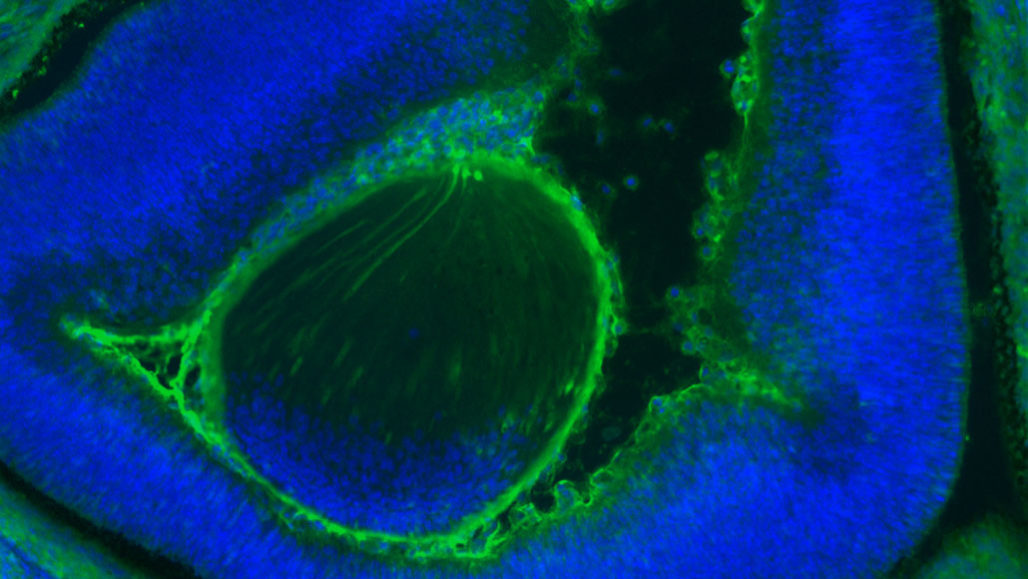
 false-color microscope image of embryonic mouse eye

According to ScienceNews, in an article by Laura Sanders, scientists have made embryos that are a lot mice, but a bit human. Human cells don't really grow well with other animals, but in a new mice embryo, 4 percent of it was human cells. From all the trial and errors, scientists came down to the fact that time played a crucial role. Human stem cells' development clocks must be turned back to an earlier phase known as the naive stage. "Feng and his colleagues reset the stem cells’ clocks by silencing a protein called mTOR for three hours. This brief treatment shocked the cells back to their naïve stage, presumably restoring their ability to turn into any cell in the body." These youthful stem cells were injected into the mouse embryos where the human cells knitted themselves into the developing tissues of the mouse. This eventually let to become the liver, heart, bone marrow and a bit of the brain. I think this article was very interesting as this could give rise to more advancements in science. To be more specific, this could help us study diseases and give a source to human organs. 

Monday, July 1, 2019

Gene Therapy Restores Hearts After Myocardial Infarction in Pigs

According to the National Institute of Health, gene therapy is an experimental technique that uses genes to treat or prevent disease. This technique includes but is not limited to inserting a gene into another’s cells, inactivating a mutated gene or replacing a mutated gene. At King’s College London, researchers used microRNA-199a to invigorate cardiac repair in pigs. The treated animals demonstrated noticeable improvements such as increased muscle mass and reduced scarring. 

MicroRNAs are small non-coding RNA molecules involved in the regulation of gene expression. To do so, they bind to a target mRNA in order to prevent protein production. It is speculated that microRNAs regulate about 30% of human protein coding genes. MicroRNAs also aid in the regulation and reprogramming of stem cells.

PHOTOGRAPH BY SIMONE VAN DEN BERG, DREAMSTIME
However, many pigs did not benefit from the gene therapy. Persistence and uncontrolled amounts of the gene therapy led to a sudden arrhythmic death of the pigs. Although the numbers favor the undesired side of this breakthrough, researchers are hopeful for a better outcome next time with strict control regarding the dosages for this therapy.


In my opinion, this study opens the door for more research regarding the heart. It shows how effective microRNAs can be when used properly. As lead author, Mauro Giacca, said, “It is a very exciting moment for the field. After so many unsuccessful attempts at regenerating the heart using stem cells, which all have failed so far, for the first time we see real cardiac repair in a large animal.” This is mostly exciting because of how closely related a pig’s heart is to a human heart. Does that mean humans are next? 

Friday, November 23, 2018

New Stem Cell use for Creating Genetically Corrected Skin Cells for Patients with Junction Epidermolysis Bullosa

               Through gene therapy doctors were able to synthesize skin tissue for patients diagnosed with junction epidermolysis bullosa (JEB). JEB is a form of epidermolysis bullosa which is a genetic condition that causes the skin to peel and blister very easily. The condition leaves the skin extremely fragile allowing easy rubbing or scratching of the surface could cause painful blisters all over the body. There are two types of the condition, Herlitz JEB and non-Herlitz JEB. Herlitz JEB is the more severe condition starting when babies are just born and results in painful blisters all over the body. The condition can also affect the muscous membranes on the inner line of the throat and mouth making it extremely difficult for the patients to consume food and drink. This leads to the early developing kids to become malnutricious and have slower growth. Because the symptons from this disease are so severe many kids do not survive the first year of life. 
               However, about one year ago (November 2017), Italian researchers from the 
Department of Biomedical Sciences, University of Modena and Reggio, Epithelial Stem Cell Research Center in Veneto Eye Bank Foundation, H. SS and other institutions successfully reconstructed the skin of a 7 year old boy with JEB. Combining stem cell research with gene therapy the doctors were able to take healthy skin cells from the boy and reprogram them into stem cells. From here they created a sheet of skin cells corrected to graft onto the patient. The patient was covered with many separate grafts of the corrected skin cells and in a couple of years the body that was once covered in painful blisters had regenerated into healthy skin cells. 

Junctional epidermolysis bullosa


Wednesday, April 11, 2018

First stem cells created using CRISPR genome activation


The Gladstone Institutes made a discovery using the CRISPR technology. By activating a specific gene, researchers were able to turn skin cells from mice into stem cells. This potentially allows scientists to produce valuable cell types, while providing insight pertaining to cellular reprogramming process.

Senior investigator of Gladstone Institute, Sheng Ding, PhD, discovered that there is the way to reprogram a cell by unlocking a specific location of the genome. Pluripotent cells, iPSCs, have the ability to turn into virtually any cell type in the body. These kinds of cells are used in therapeutic purposes for incurable conditions. These cells are also useful when studying diseases and testing new drugs. The pluripotent stem cells were made by treating ordinary skin cells with transcription factors that work by changing the genes expressed in the cell. Doing so turns off the genes associated with the skin cells and turns on the genes associated with the stem cells.

One other way to turn skin cells into stem cells is by using the CRISPR gene to manipulate the cell genomes. CRISPR is useful when manipulating genomes and targeting a unique sequence of DNA. Targeting a location in the genome would trigger a chain reaction that converted the cell to a pluripotent cell.

For additional information, refer to the original article.


For additional information on CRISPR or pluripotent stemcells, click on the hyperlinks.


Sunday, November 26, 2017

Transgenic skin received by Syrian refugee

A Syrian boy with a rare genetic disease has received an almost entirely new epidermal layer of skin from his own stem cells. This boy has a disease called Junctional epidermolysis bullosa  and has a mutated gene causing the basement membrane of the containing laminin 332 does not develop properly. so a group of scientists and pediatricians created Karatinocyte cultures from the boys stem cells , they used invivo and invitrio renewment of human epidermal cells, the boy will still have to live with the disease for the rest of his life and may also have issues with other systems in his body this disease is also known to affect the mucosa. besides the amazing accomplishment that this undergoing was, researchers were also able to end  a long standing discussion whether the epidermis was regenerated by many equally powerful progenitor cells or a fewer number of individual stem cells. The later of the two is true according to the researcher.

I believe any advancement in stem cell research is a good thing , the more we as a society can create new cells from a persons original cells is amazing and could help such a young child have anew lease on life from the cultivation of his own stem cells is remarkable.


Link 1

Thursday, November 9, 2017

Stem cell responsible for spinal regeneration located

Seeing a Gecko slowly regrow its tail may not seem that important to some people until it is pointed out what is inside the gecko's tail.  The article, "Cells driving gecko's ability to regrow its tail identified,"  goes into detail about the study done to examine the gecko's cell functions after the tail has been removed.  Inside the geckos tail, unlike in mammals, is a portion of the spinal cord so when the tail is removed the gecko is able to not only regrow the tail but the spinal cord as well.  The type of cell responsible is called "radial glia," which is a type of stem cell that is usually dormant.  However, once the injury is sustained the cells change function and begin to regenerate tissue rather than create scar tissue.  Discovering the cells responsible for this could mean the knowledge could be applied to human injuries by coaxing those cells to regenerate tissue rather than apply scar tissue.  As humans DNA code for the same type of stem cell as the geckos, for some reason it is not active in the regeneration process.  Putting scar tissue over the wound rather than regenerating tissue is a quick fix but is bad for the long run.  With this knowledge I think a better understanding of how the injuries can be solved preventing the lose of activity in some limbs due to the spinal injury, which would mean saving a lot of people the pain of having surgeries that may or may not work to regain control of their limbs.

Thursday, October 26, 2017

Chronic Back Pain Stem Cell Treatment Could Cut Need for Opioids

There is an opioid epidemic killing the nation.  Back pain affects roughly twenty-eight million people in the United States.  The stem cell treatment discussed in this article could bring relief millions of people and the best part is that it would not require individuals to take opioids.  Unfortunately, opioid overdose has increased about four times since 1999; they account for 33,000 deaths in 2015 alone.  A leading cause to overdose is from getting a serious injury that requires the individual injured to rely on opioids.  Sometimes these individuals become addicted to the opioids.  However, stem cell treatment aims to stop this epidemic. 

In this stem cell treatment, stem cells are injected into the damaged discs between the vertebrae of the spine.  Each dose or stem cell contains about six million cells called mesenchymal precursor cells.  These cells decrease inflammation and secrete factors which help rebuild the damaged tissue in the spine.  The stem cells being used for these injections are being tested for treating degenerative disc diseases.  The discs between vertebrae act as cushions that absorb the shock from the normal wear and tear of every day life.  When these discs wear down and become thinner, they loose their ability to cushion the vertebrae.  This then leads individuals to seek relief from opioids.  Studies done with stem cell treatment show that one injection of stem cells helped individuals become mobile again and did not experience back pain for two years. 

Stem cell treatment is the new pain killer.  Using stem cell injections will lower the opioid epidemic across the nation.  I found this article informative and relatable.  Almost every individual experiences lower back pain at some point in their life, and those who have know it is an unbearable pain.  However, for those individuals who may be affected by addiction stem cell treatment is a perfect replacement for opioids.  Overall, I agree with the ideas presented in this article and I am excited to learn about future stem cell treatments.


Tuesday, March 21, 2017

A New Form of Stem-Cell Engineering Raises Ethical Questions


Researchers at Harvard Medical School addressed it is time to create synthetic embryos. Moving further passed in vitro fertilization, scientist believe they can assemble stem cells which organize into embryo-like structures aka “synthetic human entities with embryolike features” (Sheefs).These scientists believe they will be able to assemble these cells into tissues and organs to create features of a mature human being.This article discusses, Nobel Prize Winner, Robert G. Edward's proposal of in vitro fertilization and how this new form will change the game. In vitro fertilization is a form of assisted reproductive technology that joins the woman's egg and man's sperm in a laboratory dish and is then placed into the woman's womb. The new scientist are working towards synthesizing embryos with  hearts and rudimentary brains in the lab. This is surpassing the in vitro idea completely, and is creating many ethical issues.

I found this article difficult comprehend because of my beliefs. I understand couples having in vitro fertilization to assist pregnancy, but I do not agree with scientists creating synthetic embryos. I am a religious person, and it almost seems as though they are acting as God with synthesizing human entities. I believe there are too many ethical issues with this new form of stem-cell engineering.

Sunday, March 12, 2017

I Can See Clearly Now the GABA is Almost Gone! - How Zebrafish Recover From Blindness


A recent study funded by the National Eye Institute found a link between the neurotransmitter GABA, or gamma-aminobutyric acid, and recovery from blindness in zebrafish.  For some time now, scientists were aware of the zebrafish's ability to recover from loss of vision that would normally blind humans permanently.  This is due to the zebrafish having a miraculous ability to regenerate cells in the retina.  Prior studies showed that dying retinal cells produced signals to trigger Muller glia, which revert back to an undifferentiated state and divide.into new cells.  Studies in mice on the brain and pancreas indicated that GABA could play a role in the regeneration process, where low levels signaled stem cells to  divide.  The researchers of the current study, therefore, hypothesized that GABA in zebrafish could be a factor in the regeneration of retinal cells.  To test their theory they injected zebrafish with GABA inhibitors.  They found that these fish responded with retinal cell regeneration.  Fish with retinal damage that were given high levels of GABA, on the other hand, displayed little to no regeneration.  These findings clearly support the hypothesis that GABA plays a very important roll in the regeneration of new cells.

I found this article interesting because I often joke about how I'm going blind because my vision is so poor.  But on a serious note I think the findings in this study could be very significant for finding cures to diseases in humans that affect vision, and it could lead to new treatments to cure blindness.  It is also the first study to report these kind of results, so with more experiments in the future it would be fascinating to see what else researchers find out about the subject.

Tuesday, October 18, 2016

Mouse egg cells made entirely in the lab give rise to healthy offspring

The scientific team of Katsuhiko Hayashi of Kyoto University in Japan has successfully created live fertile offspring from completely lab made egg cells.  This is a huge achievement in the field of fertilization research and could have many possibly uses in the future. These eggs were created from stem cells entirely in a lab dish. The team made fertile egg cells from stem cells back in 2012, however to accomplish the last steps of fertilization, they had to implant the eggs into live mice. This summer, the scientists showed that they can keep developing mouse ovaries in the lab in order to make mature, fertile egg cells.  They use the stem cells to develop immature egg precursor cells, and then culture them in clusters of cells taken from fetal mouse ovaries.  The process resulted in 50 mature eggs, but the lab created cells have a higher rate of chromosome abnormalities than normal egg cells, but 75% of the lab created cells had the correct number of chromosomes. The scientists then fertilized those eggs with sperm cells in order to create 300 embryos, and then injected them into host female mice. Only 11 of them, or 3%, were able to grow and become pups.
Mice derived from lab made eggs were normal, fertile adults.

Though these techniques may one day have applicable uses for humans, they are still far away from their goal.  This process can be used to help infertile people have children. It can also be used to genetically modify eggs in order to get rid of undesired traits or harmful diseases.  It could also help women who lost eggs due to chemotherapy treatment for their cancer. Of course with most scientific discoveries, many ethical issues arise.  Movements toward a designer baby, with specific genetic alterations, could pose serious implications for our species.

Sunday, May 8, 2016

How fish can regenerate eye injuries at the cellular level

Fish have the special ability to regenerate injuries to the retina at a cellular level. Scientists from Heidelberg University’s Centre for Organismal Studies, or COS, have discovered as to how the regeneration process starts by studying the Medaka fish. There is one genetic factor that triggers two steps for this process to occur. The two steps are cell division and differentiation of progenitors into new and different cell types. Stem cells have been a huge topic as of late in the medical world. Stem cells can be used to correct faults in the body. However, we have not yet been able to actually figure out how to perfect this system. One-day scientists hope that we will actually be able to use stem cells to help repair various injuries. In a study, researchers looked into the retina of fish and found that they can completely repair injuries to the retinal nerve cells. There are special glia cells that act like stem cells. Both fish and humans have these cells in their eyes. These cells are also called Muller cells. Professor Wittbrodt of COS explored if these cells could be activated and what would stimulate the regeneration process. A gene called Atoh7 is responsible for cell differentiation and is triggered by a single genetic factor. There are several steps that go into the regeneration process of a fish’s eye. The glia cells first start to proliferate. “First the Müller cells near the injury start to proliferate. The resultant neuronal clusters contain the progenitor cells for the cell types of the retina. In the last step, these progenitors differentiate and turn into the neuronal retinal cells to be restored”. These cells supposedly show signs of being able to repair any injuries. The Atoh7 gene is the big factor, which fulfills two functions and triggers proliferation and differentiation into various retinal cell types. Scientists hope that one day we will be able to decode this ability in humans.

Regeneration is a very interesting and unique ability that various species possess. By studying these species more and more I believe that one day we will be able to figure out a way to possess this ability in humans. Being able to cure someone’s blindness would be a miracle. Hopefully one day it will only take one simple surgery for someone to repair their damaged retinal cells. I think more research and funding should go into fully understanding the regeneration process.


Links: