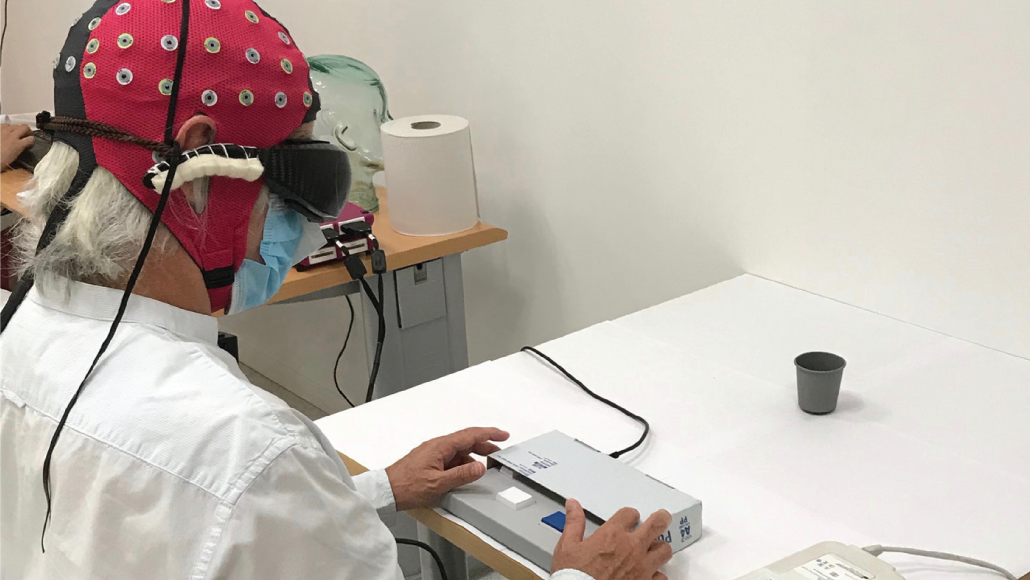
 A 58 year old man with retinitis pigmentosa can now see and count objects due to a new gene-based therapy that "rewires" nerve cells in the eyes known as optogenetic therapy. Vision is still limited but more light is able to be picked up by the eyes and special goggles are required to assist. The therapy uses a light-sensitive protein to make nerve cells react and signal the brain when hit by a certain wavelength of light. Different from gene editing and traditional gene therapy, which can only assist in the degradation of eyesight and can only target certain genes, optogenetic therapy can aid with someone who has completely lost their vision regardless of what gene or disease caused the blindness. A virus was used to deliver instructions to the eye cells to create the light-sensing protein. As this is not a cure for blindness, it is a step towards the progress of neutralizing blindness.
Showing posts with label blindness. Show all posts
Showing posts with label blindness. Show all posts
Tuesday, November 23, 2021
A gene-based therapy partially restored a blind man's vision

Sunday, March 12, 2017
I Can See Clearly Now the GABA is Almost Gone! - How Zebrafish Recover From Blindness

A recent study funded by the National Eye Institute found a link between the neurotransmitter GABA, or gamma-aminobutyric acid, and recovery from blindness in zebrafish. For some time now, scientists were aware of the zebrafish's ability to recover from loss of vision that would normally blind humans permanently. This is due to the zebrafish having a miraculous ability to regenerate cells in the retina. Prior studies showed that dying retinal cells produced signals to trigger Muller glia, which revert back to an undifferentiated state and divide.into new cells. Studies in mice on the brain and pancreas indicated that GABA could play a role in the regeneration process, where low levels signaled stem cells to divide. The researchers of the current study, therefore, hypothesized that GABA in zebrafish could be a factor in the regeneration of retinal cells. To test their theory they injected zebrafish with GABA inhibitors. They found that these fish responded with retinal cell regeneration. Fish with retinal damage that were given high levels of GABA, on the other hand, displayed little to no regeneration. These findings clearly support the hypothesis that GABA plays a very important roll in the regeneration of new cells.
I found this article interesting because I often joke about how I'm going blind because my vision is so poor. But on a serious note I think the findings in this study could be very significant for finding cures to diseases in humans that affect vision, and it could lead to new treatments to cure blindness. It is also the first study to report these kind of results, so with more experiments in the future it would be fascinating to see what else researchers find out about the subject.
Sunday, May 8, 2016
How fish can regenerate eye injuries at the cellular level
Fish have the
special ability to regenerate injuries to the retina at a cellular level. Scientists
from Heidelberg University’s Centre for Organismal Studies, or COS, have
discovered as to how the regeneration process starts by studying the Medaka
fish. There is one genetic factor that triggers two steps for this process to
occur. The two steps are cell division and differentiation of progenitors into
new and different cell types. Stem cells have been a huge topic as of late in
the medical world. Stem cells can be used to correct faults in the body.
However, we have not yet been able to actually figure out how to perfect this
system. One-day scientists hope that we will actually be able to use stem cells
to help repair various injuries. In a study, researchers looked into the retina
of fish and found that they can completely repair injuries to the retinal nerve
cells. There are special glia cells that act like stem cells. Both fish and
humans have these cells in their eyes. These cells are also called Muller
cells. Professor Wittbrodt of COS explored if these cells could be activated
and what would stimulate the regeneration process. A gene called Atoh7 is
responsible for cell differentiation and is triggered by a single genetic
factor. There are several steps that go into the regeneration process of a
fish’s eye. The glia cells first start to proliferate. “First the Müller cells
near the injury start to proliferate. The resultant neuronal clusters contain
the progenitor cells for the cell types of the retina. In the last step, these
progenitors differentiate and turn into the neuronal retinal cells to be
restored”. These cells supposedly show signs of being able to repair any
injuries. The Atoh7 gene is the big factor, which fulfills two functions and
triggers proliferation and differentiation into various retinal cell types.
Scientists hope that one day we will be able to decode this ability in humans.
Regeneration is a
very interesting and unique ability that various species possess. By studying
these species more and more I believe that one day we will be able to figure
out a way to possess this ability in humans. Being able to cure someone’s blindness
would be a miracle. Hopefully one day it will only take one simple surgery for
someone to repair their damaged retinal cells. I think more research and
funding should go into fully understanding the regeneration process.

Links:
Sunday, November 22, 2015
'Miracle' Gene Therapy To Cure Blindness

Dr. Jean Bennett, a gene therapist
at the University of Pennsylvania, and her colleagues, began treating people
who are blind with injections of a harmless virus that inserts good copies of
genes that are defective in the patient. The genes were inserted into the cells
of the retina. The retina is a light sensitive tissue at the back of the inner
eyeball. Its job is to receive light and convert that light into neural signals
to which the brain uses for visual recognition.
In 2007, researchers began conducting
gene therapy clinical trials on ten patients with Leber’s congenital amaurosis
Type 2. Leber’s congenital amaurosis Type 2 causes a degeneration of retinas
thus limiting vision at birth and progressive blindness by mid life. The ten
patients, ages ranging from 20-45, underwent gene therapy only in one of their
eyes, the one which had the worst vision. After gene therapy for two or three
years, researchers used an MRI to scan deep into the patients’ brains. The MRI
showed the visual pathways in each patient was nearly as strong and healthy as
a normal persons vision at that age. The MRI scan also showed the untreated
eyes had much weaker visual pathways. This observation suggested that regaining
sight also helped to rebuild the visual pathways in the brain. This revision is
called brain plasticity.
The data collected from this study
hinted that the patients’ visual pathways were in better condition after more
and more time had elapsed since undergoing gene therapy. Because the pathways
improve as more signals get sent through, Bennett and her colleagues are
working on larger phase trials to determine whether their gene therapy can be
used more widely as treatment.
This article and the research
behind it were truly remarkable. The patients undergoing gene therapy are in
their 20’s, and one patient was 45. This age range demonstrated visual pathways
and brain plasticity could be improved at any age, not just young children. I
found this article to be extremely uplifting and encouraging in the field of
gene therapy. The ability to use gene therapy in repairing a person’s sight that
had been nearly blind is just so moving.
Saturday, January 31, 2015
Mutated gene in dogs could help treat blindness
In humans and dogs incurable blindness is usually from inherited retinal diseases. Since the ocular anatomy in dogs and humans are similar scientists found that studying dogs can help them get a better understanding of these diseases and help in finding new treatments in blindness.
In a recent article from Science Daily, a group of scientists from the University of Helsinki and Michigan State University did just that. They conducted a study in which they looked at 324 blood samples of Swedish Vallhund dogs who are known to get retinal diseases. They found that the retinal disease was linked to a mutation in the MERTK gene. They also found that the retinal disease in these dogs known as progressive retina atrophy were similar to the human disease retinis pigmentos. With further research these scientists are working towards a treatment that will inhibit the mutated gene in humans and dogs hoping to prevent blindness. I believe this is an interesting study and will hopefully help in the future with blindness in humans and animals. I am interested to see what the new studies will lead to in the future.

Secondary article
Monday, December 1, 2014
Gene Found to be Associated with Common Cause of Blindness
 |
| CFH is red, FHL-1 protein is green |
Scientists from the Faculty of Medical and Human Sciences, at The University of Manchester, have excluded protein factor H from being the main regulator of immunity in the back of the eye. They have discovered that factor H-like protein 1 (FHL-1), which is made from the same CFH gene is the main regulator of immunity. Dr Simon Clark, a Medical Research Council Career Development Fellow, led the research and had a lot to say about the results.
"FHL-1 is a smaller version of FH, in fact it is about a third of the size. However, it has all the necessary components to regulate the immune system and is still subject to the genetic alterations that affect AMD risk. Our research has shown that the FHL-1, because it is smaller than FH, can get into structures of the back of the eye which cannot be reached by the larger FH. Therefore, this research suggests that it is FHL-1 rather than FH which protects the back of the eye from immune attack and that insufficient FHL-1 in the back of the eye may result in inflammation that eventually results in vision loss from AMD. FHL-1, although similar to FH in many ways, does not have a totally unique 'tail' structure at its end. This tail seems to mediate how FHL-1 binds tissue. As such, this work has identified a new target for therapeutics aimed at readdressing immune imbalance in the eye, thereby preventing or slowing down AMD," says Dr. Clark.
I believe just as Dr. Clark said, this can open new doors for treatments involving imbalances in the eye. New information, targets, and ideas are always a step forward in the medical field. I know nothing about Age-related Macular Degeneration, but since it is the major cause of blindness in the western world, preventing or slowing down AMD will help out many people.
Main Article: http://www.sciencedaily.com/releases/2014/11/141114085839.htm
Related Article: https://www.nei.nih.gov/news/statements/genes_amd
Sunday, November 16, 2014
Genetic Mutation in Glaucoma Patients
Glaucoma is a
medical condition that remains a significant origin of permanent blindness in
humans. Greater than 60 million individuals are currently affected by this
medical condition, and by the year 2020 this quantity is estimated to rise to
79.6 million individuals. There has existed the belief by scientists that there
may be genetic variations that result in the onset of glaucoma. Newer genetic
sequencing strategies may have finally started to explain the genetic alterations
that produce the consequence of becoming victim to the implications of this
medical condition.

Scientists at
the University of Liverpool have investigated the most common form of glaucoma,
called primary open-angle glaucoma, in their genetic studies. They have used a
newer genetic sequencing technology called massively parallel sequencing in
their collection of data from the genomes of mitochondria. These have been
taken from various glaucoma patients to study the existence of genetic mutations,
and with these data they have found that mitochondrial mutations are certainly
apparent.
Study of the
effect of mitochondrial gene mutation on the nature of diseases in humans has
remained a difficult task, due mainly to the likely possibility for individuals
to possess both mutated and healthy mitochondrial genes. Despite this,
massively parallel sequencing has allowed for more differentiated study to aid
in the identification and examination of mutated mitochondrial genes.

Further investigation
is necessary; however, this research has demonstrated the efficacy of massively
parallel sequencing in providing data regarding the mitochondrial mutations in
glaucoma patients. A larger sample pool of glaucoma patients is certainly
necessary for future studies, and scientists believe such research will yield linkage
of specific genetic mutations to development of glaucoma in patients. Such
information can achieve two essential goals. The first is to maintain the
ability to identify predisposition for the blindness caused by glaucoma prior
to experiencing the symptoms. If particular gene mutations are identified,
testing can be done earlier in life to combat the disease prior to its
appearance in the form of symptoms. The second is to develop drug therapies
that can target the sites of genetic mutation on the mitochondria and prevent
the symptoms of the condition.
Link to Article: http://www.sciencedaily.com/releases/2014/11/141114124901.htm
Related Links:
Thursday, September 26, 2013
Gene Mutation Linked to Age-Related Macular Degeneration (AMD)

According to ScienceDaily, an international team of researchers led by scientists from the Genome Institute at Washington University School of Medicine and the University of Michigan School of Public Health, have recently discovered a gene mutation linked to age-related macular degeneration. AMD is the leading cause of blindness in Americans over the age of 50. This chronic disease causes vision loss in the center of your field of vision due to the deterioration of the macula, which is the center of the retina. Past studies, along with recent studies have assisted co-senior investigator Elaine R. Mardis, PhD with the findings in the study. Mardis expressed that past research has shown that AMD has a relationship with the compliment pathway, part of the immune system that helps immune cells fight infection. Thus, the gene variant interferes with the compliment pathway, therefore damaging the retina, leading to AMD.
In this study researcher's analyzed 57 genes in about 2,300 patients with AMD. Then, they sequenced the same genes in 789 people of the same age not suffering from the disease. The results gave two gene variants: the C3 complement gene and the alteration of one gene identified in previous AMD studies. These two genes together created a three-fold increased risk for macular degeneration. Mardis hypothesized that the mutations work together and increase the age-related macular degeneration risk by intercepting the inactivation of complement in the retina. For the future, Mardis and her co-investigators plan on expanding their look across the genome and going beyond the 10 regions of DNA that were studied in this article. They hope to identify new genes that could possibly relate to AMD.
In my opinion I feel that this is a horrible disease that can affect anyone. It has the ability to disable somebody all because they have a blurry spot in the center of one's field of vision. Mardis and her colleagues can hopefully do more studies and find more results as to what can possibly be done to prevent AMD.

This video also shows exactly how macular degeneration evolves and affects a person's vision http://www.youtube.com/watch?v=ozZQIZ_52YY
Thursday, April 11, 2013
Gene Therapy Fixes Blindness
http://www.nytimes.com/2009/11/03/health/03eye.html

Researchers and Doctors have found a way to help restore photo receptors in the eye to help patients who have rapid deteriorating vision. This procedure does not work with those who are already fully blind because some healthy photo receptors in the eye are needed. A virus called RPE65 is injected into the eye. In this virus are multiple key DNA that is needed for sight. When the photo receptors absorb the virus the absorb the important DNA needed for vision. This procedure works best in children because their receptors arent as damaged as an adults would be. All patients have reported better vision after the procedure. On average their vision increases for about 8 weeks but some cases have exceeded that limit.
Short video on gene therapy
http://www.youtube.com/watch?v=Xl99IbeJLaA
Researchers and Doctors have found a way to help restore photo receptors in the eye to help patients who have rapid deteriorating vision. This procedure does not work with those who are already fully blind because some healthy photo receptors in the eye are needed. A virus called RPE65 is injected into the eye. In this virus are multiple key DNA that is needed for sight. When the photo receptors absorb the virus the absorb the important DNA needed for vision. This procedure works best in children because their receptors arent as damaged as an adults would be. All patients have reported better vision after the procedure. On average their vision increases for about 8 weeks but some cases have exceeded that limit.
Short video on gene therapy
http://www.youtube.com/watch?v=Xl99IbeJLaA
Wednesday, April 25, 2012
Gene Therapy for Blindness
 According to ScienceDaily, a form of blindness may be able to be treated due to a new therapy treatment. The method is carried out by supplying "a protein necessary for light-sensitive cells in the eye to function." This is done by placing a normal working gene in the eye and simultaneously taking out the defected gene. The treatment is a great step in gene therapy which is "safe and lasts for years in humans." There are still many precautions that need to be carried out before it can be used in people. I think this is a great advance in a gene therapy that already aids people with blindness. I hope testing for this advancement shows positive affects and can be used in improving eyesight in humans sometime in the near future.
Thursday, February 9, 2012
Working Towards a Cure for Inherited Blindness
 A team of scientists from The Children's Hospital of Philadelphia and from the Perelman School of Medicine at the University of Pennsylvania performed a study, examined in an article in Science Daily, on three patients suffering from congenital blindness. The study consisted of inserting a specific gene within the patients by injection of vectors into the patients eyes. Fortunately the treatments did not trigger any kind of immune response from the eye particularly because the eye is separate from the immune system of the rest of the body. The vector that was injected into the eye was a genetically engineered adeno-associated virus, which carried a normal version of a RPE65 gene. In mutated forms the gene is known as LCA and is responsible for a group of heredity retinal diseases. After studying and treating the patients over a period of one and half to three and half years the doctors began to see improvements in the vision of these patients. The improvements were specifically seen in the area of light sensitivity, for example, the pupil's ability to respond to a range of light intensities. These were great results for the doctors conducting the study. Partial vision was able to be restored to the same patients who were not able to previously see anything. This is a great medical advancement and hopefully is not the end to discoveries in the field of restoration of vision.
Subscribe to:
Posts (Atom)