Showing posts with label light. Show all posts

Thursday, December 19, 2024

Shedding Light on Cancer Treatment

 Lightspeed to a Cancer-Free Era


Cancer treatments have been improving year after year leaps and bounds for the last few decades, and another milestone was hit today. A lab in Ohio State found a way to break up the structures of mitochondria by inducing light-activated electrical currents inside the cell. They dubbed the technique mLumiOpto. According to the results of the research this causes "programmed cell death followed by DNA damage." To do this they implant the genetic information of a light-sensitive protein known as CoChR, which carries a positive charge, and a bioluminescent enzyme. They follow that injection with the injection of an unnamed chemical that induces the bioluminescence, and thus activates CoChR, inducing mitochondrial collapse. To ensure that the virus doesn't target host cells, they use "well-characterized adeno-associated virus (AAV)" which has a low infectious characteristic. As the team is well versed in dealing with cancer cells, they decided to refine the process and add a promoter protein to increase the growth of CoChR in the cells. They innovatively use a monoclonal antibody that is geared to detect the specific receptors found in cancer cells. 


This research is phenomenal. I can't wait to see what cancers they are capable of treating in the future, it is unfortunate they patented the technology, and I can only hope that they are doing that so nobody else can price gouge it and that they will release the procedure for a low cost to help save lives. Building off of this could be used for non cancerous tumors possibly, depending on the cell surface receptors found in those cells, leading to a revolution in our cell-specific targeting for diseases and other maladies. Big congratulations to Ohio State for this one, as well as the researchers involved in the project: Lufang Zhou, Margaret Liu, Kai Chen of Liu's lab and Patrick Ernst of Zhou's lab, Anusua Sarkar, Seulhee Kim, Yingnan Si, Tanvi Varadkar and Matthew Ringel. All involved were from Ohio State.

Links

https://www.sciencedaily.com/releases/2024/12/241213125202.htm
https://www.biotechniques.com/cancer-research/let-there-be-light-gene-therapy-targets-cancer-cells-mitochondria/

Tuesday, November 23, 2021

A gene-based therapy partially restored a blind man's vision

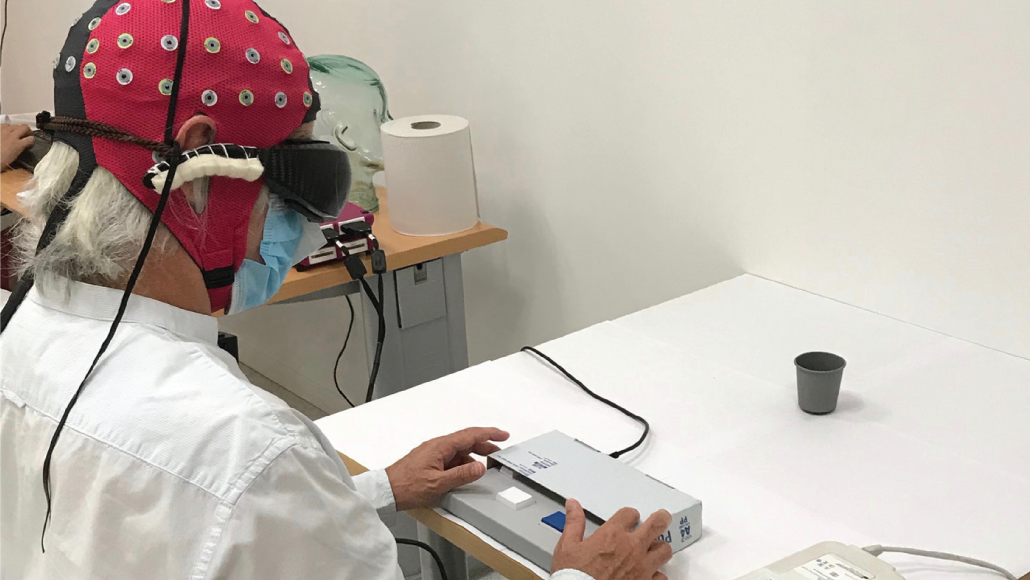
 A side view of a man wearing an EEG cap and dark gogglesA 58 year old man with retinitis pigmentosa can now see and count objects due to a new gene-based therapy that "rewires" nerve cells in the eyes known as optogenetic therapy. Vision is still limited but more light is able to be picked up by the eyes and special goggles are required to assist. The therapy uses a light-sensitive protein to make nerve cells react and signal the brain when hit by a certain wavelength of light. Different from gene editing and traditional gene therapy, which can only assist in the degradation of eyesight and can only target certain genes, optogenetic therapy can aid with someone who has completely lost their vision regardless of what gene or disease caused the blindness. A virus was used to deliver instructions to the eye cells to create the light-sensing protein. As this is not a cure for blindness, it is a step towards the progress of neutralizing blindness.

Friday, April 15, 2016

Why is the Sky Blue?

Have you even questioned why the sky is blue? The logical answer may not be the correct one. Researchers at the laboratory of Markus Meister, Anne P. and Benjamin F. Biaggini, have conducted research on photo-receptors in both rats and humans. Humans have two different types of photo receptors cones and rods. Rods are dim light receptors that can only provide contrast betwwen black and white. Cones are made up fo three different pigment receptors red, green and blue. Mice on the other hand have on two types of receptors medium wavelength (green) receptors and UV receptors. The then discovered that a certain neuron (JAMB retinal ganglion cell) can signal color to the brain because they fire medium wavelength neurological signals and stop sending UV signals. This is the first time this relationship has been documented. the relationship is as follows rods excite neurons which then innhibit UV light detection.
Next researchers decided to see how the vision effects a rats surrounding. They found that two things stood out in rats vision: seeds and urine. These are both the most important things to a mouse or rats since it is a food source nd teritory. Reserachers also believe that the human body follws a similar pathway of rods to neurons which truns off both red and green receptors leaving the baseline blue color which is why we percieve the sky as blue according to Markus Meister, Anne P. and Benjamin F. Biaggini

https://www.sciencedaily.com/releases/2016/04/160414145217.htm

http://www.nature.com/nature/journal/v532/n7598/full/nature17158.html

Sunday, November 22, 2015

Using Optogenetics to Repair Nerve Damage

Optogenetics is a cutting edge science which involves the use of light to influence certain proteins. Researchers at Helmholtz Zentrum Munchen, a German research center for environmental health, were able to use optogenetics to fix a neural network in a zebrafish. The researchers specifically used an enzyme called adenylyl cyclase to produce a messenger molecule called cAMP. The adenylyl cyclase is sensitive to blue light and will produce more cAMP when hit with this light. The researchers found that zebrafish hit with this blue light showed a significant increase in neural repair as opposed to fish that did not get the light treatment.

A common Zebrafish
This science, while still in its infancy, has huge implications for people that suffer from nerve-damage related illnesses. The hope is that one day light treatment just like this can be used for people that suffer from degenerative nerve diseases such as Alzheimer's, Parkinson's and Multiple Sclerosis. The problem currently is the method in which the light can be introduced into the system. Zebrafish are translucent and are easily influenced by the light. Human skin, however, is not translucent and light cannot be directly used to cause any changes in any enzymes. Much more research and testing needs to be done to one day make this science a potentially valid cure for these diseases.


Saturday, October 17, 2015

Prosthetic skin can now feel touch


prosthetic hand-with-real hand-Stanford-Bao Lab-released

Prosthetic skin can now feel touch

by Andrew Smythe

Engineers at Stanford created a new kind of prosthetic limb that could sense and touch just like a human limb. The prosthetic limb has the capability of sensing any kind of touch, and sending a chemical signal to the brain. Zhenan Bao, a professor of chemical engineering at Stanford and main contributor of the project, hopes to create skin that could sense the differences between any kind of physical stimulus, feel temperature differences, and possibly heal itself in times of injury. The first step was achieved by making the pressure sensing limb.

Bao and her research team used a technique called optogenetics, which was created by Karl Deisseorth. The idea was that they could alter the cells to sense differences in light in order to deduce a change in environment. Dependent on the frequency of light available, the cells would turn on or off. If the cells were to be turned on, then they would send the electrical signal, and relay it to the neurons in the brain.

The next step for Bao's research group is to apply a two-ply plastic construct method. The top layer of the construct feels pressure against human skin, and the bottom layer would create a biochemical stimulus that would serve as a signal for the neurons. In addition to the six available biomechanisms of touch, the two-ply method would create more possible sensations for the limb to feel

Original Article

Other Article

Saturday, November 24, 2012

Hit the Switch!

Dr. Alex Deiters, chemist at NC State, was determined to find a way to control triplex-forming oligonucleotides (TFOs). TFOs are molecules used to prevent gene transcription on double-stranded DNA. 

Deiters used a light-activated cage to the TFO to inhibit its activity.

When the cage is exposed to UV light, it is removed and the TFO is no longer inhibited. Deiters then adjusted the process of attaching the cage so that in when there is no UV light, the TFO acts normally, but in the presence of UV light, the cage activates and slows down the TFO. This research produced a tool allowing for other researchers to study gene behavior in the environment of their choice with the simple flick of a switch.