Showing posts with label optogenetics. Show all posts

Thursday, February 15, 2024

New Gene-Based Therapy Partially Restored a Blind Man’s Vision


Retinitis pigmentosa is a rare genetic disease that people are born with- it causes the light-gathering cells in the retina to die resulting in vision loss over time. There is no known cure for retinitis pigmentosa, but scientists announced in their report in the journal Nature Medicine that they partially restored a blind man’s sight by using a new technique called optogenetics.

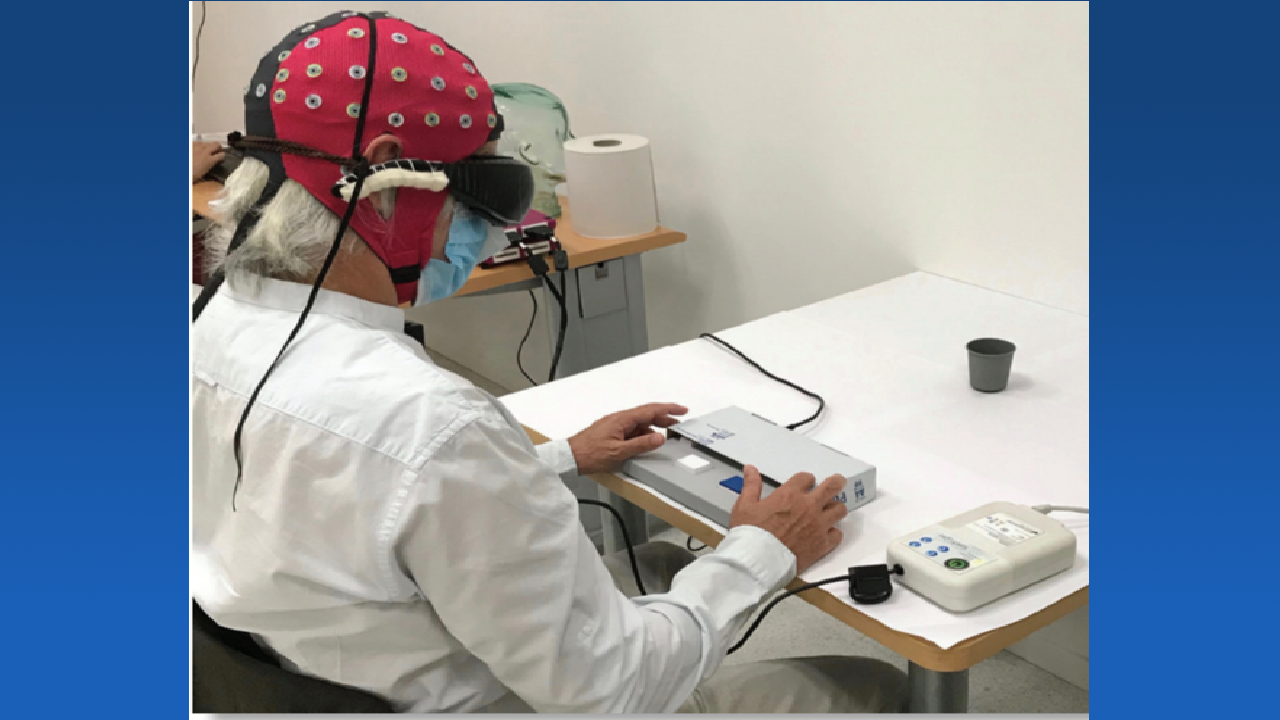
Before the optogenetic therapy treatment, the man could detect some light but could not see motion or pick out objects- now he can see and count objects, and even reported being able to see the white stripes of a pedestrian crosswalk! His vision is still limited and requires him to wear special goggles, but his results are proof of more effective treatments to come.

For people with degenerative eye diseases, the therapy involved uses a light-sensitive protein to make nerve cells fire off a signal to the brain when hit with a certain wavelength of light. These therapies may halt or slow progression of degenerative eye diseases, but it does not help people who have already lost vision. This is simply because when victims lose their photoreceptors completely- you cannot repair the gene defect from dead cells.

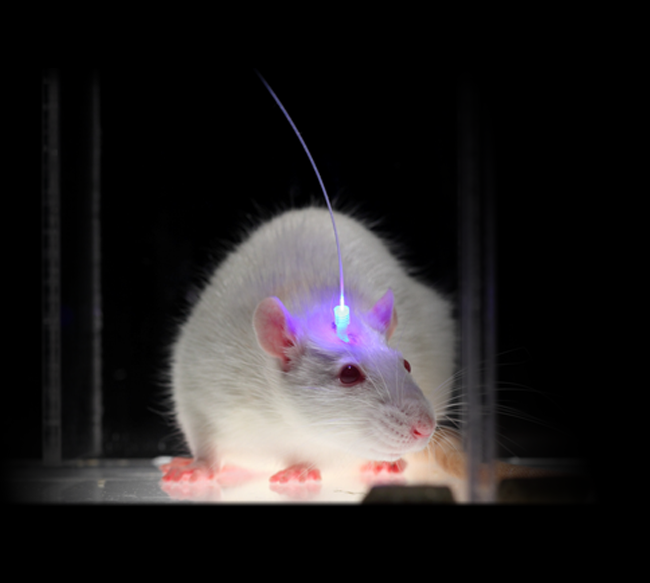
In this new optogenetic therapy treatment, researchers have been experimenting with a radical kind of repair- they are using gene therapy to turn ganglion cells into new photoreceptor cells, even though they do not normally capture light. Scientists are taking advantage of proteins derived from algae and other microbes that can make any nerve cell sensitive to light. In the early 2000s, neuroscientists figured out how to install some of these proteins into the brain cells of mice and other lab animals by injecting viruses carrying their genes. The viruses infected certain types of brain cells, which then used the new gene to build light-sensitive channels. Now, Dr. Sahel and other researchers are using optogenetics to add light-sensitive proteins to cells in the retina. They reason that retinal cells are nerves as well- or in other words, an extension of the brain.

To create their goggles, scientists chose an optogenetic protein that is sensitive only to amber light, which is easier on the eye than other colors, and used viruses to deliver these amber proteins to the ganglion cells in the retina. A special device was used to transform visual information from the external world into amber light that could be recognized by the ganglion cells. The goggles then send a pulse of amber light from that pixel into the eye thus activating parts of the brain involved in vision.

Even though it will take many more positive results from clinical trials before optogenetics can become a standard treatment for some forms of blindness, there is no doubt that this opens up a new world for the lives of individuals with vision impairment. Certainly this is an exciting time for scientists and researchers involved in the field of vision and vision treatment, and I am interested in seeing how optogenetic therapy progresses.


Sources:
https://www.nytimes.com/2021/05/24/science/blindness-therapy-optogenetics.html

https://www.sciencenews.org/article/blindness-retinitis-pigmentosa-gene-therapy-vision-optogenetics

https://www.nature.com/articles/s41591-021-01351-4

Monday, November 8, 2021

Man Blind for 40 Years Regains Some Sight Through Gene Therapy


According to data released, doctors have employed a type of gene therapy to restore partial vision in a blind individual. In a man whose vision was lost by retinitis pigmentosa, an inherited degenerative eye disease that breaks down the cells that absorb and convert light into brain impulses, the research group genetically changed retinal ganglion cells to become light-sensitive. Researchers revealed that the 58-year-old man progressed from complete blindness to being able to distinguish a large notepad, a smaller staple box, glass tumblers, as well as the stripes of a street crossing using unique goggles. The human retina has an inverted structure. The photoreceptors that detect light are located in the rear of the retina, whereas ganglion cells in the front relay visual data from photoreceptors to the brain through the optic nerve. Optogenetics was utilized to make the top layer of ganglion cells photosensitive, avoiding the non-functional bottom layer of photoreceptors in this instance. A sunken cold virus encoding the genetic code for a channelrhodopsin termed ChrimsonR, which is capable of perceiving amber light, was injected into the man's eye. Scientists equipped him with a set of customized goggles that transmit visual images into the retina at amber light wavelengths after providing his retinas five months to accept the genetic change. The individual had to become used to wearing the goggles, but after seven months of practice, he began to rapidly express indications of improved vision. Readings from an electroencephalogram (EEG), which measures electrical activity in the brain, revealed that the man's brain was responsive to image perception from the eye. According to experts, more patients have been treated with this gene therapy, but the COVID-19 pandemic has made it difficult for them to go to medical centers where they can practice with the special eyewear. Although researchers have expressed that the individual's vision was unlikely to return to the point where he can read or identify faces, this milestone is a huge advancement for these patients. This form of gene therapy can be incredibly useful with some refinement. Hopefully one day, we can reach a point in the advancements of gene therapy to allow individuals with total blindness to recognize faces and be able to read.

Tuesday, August 3, 2021

Reshaping Rodents' Risk Response

 Everything alive in this world is afraid of something. There are some that say the bravest are not those who fear nothing, but are capable of standing up to what they fear most, and coming out stronger. But some scientists question if such responses are inherently necessary at all times, and potentially can be harmful if activated in the wrong circumstances. That's why some researchers have developed an optogenetics treatment to deactivate the 'fight or flight' response in lab mice, and claim that this breakthrough could be expanded upon in order to treat things such as severe anxiety disorders. 

Parasite Makes Mice Fearless of Cats


https://www.labroots.com/trending/neuroscience/20914/researchers-switch-fear-response-on-off-mice

https://www.health.harvard.edu/staying-healthy/understanding-the-stress-response

Sunday, July 26, 2020

The Power of Colored Light


The Power of Colored Light 

A group of researchers revealed that using colored light could lead to advances in the development, flowering, and adaption to environment for certain plants. The team used optogenetics, which is defined as using light control biological processes, specifically for plant life. Since plants respond to light as they grow, optogenetics was not working in the past. The genetic switches would be constantly activated. However, the team came up with a solution that allows for different cellular processes to be controlled by colored light. Basically this colored light is turning certain genes on and off. For example, red light can be used to turn on gene expression at a certain time. When they want the gene to "turn off" they will put on white light. This process of switching the colors back and forth can happen as much as possible. 

Rather than using chemicals or drugs that are ultimately hurting the plant and the environment, the optogenetics is a great advancement to be used. Ultimately, using colored light can increase plant yields and could potentially improve the plants defense against pathogens. 

Tuesday, March 1, 2016

Seeing the Light on Opto-Genetics

An article I previously posted entitled, See-Weed? , highlighted opto-genetics with the use of an algae extracted, light sensitive protein Channelrhodopsin-2 in a virus injecting the photosensitive characteristics into our brain. 


When you first think Opto-genetics, visual advances may be the first thought, because light is co-related with vision. But the science of the virus being able to add a new gene where cells will be reproduced to have the light activated characteristics integrated in a new area can infiltrate areas where light receptors do not normally reside. This is shown in mice video in my last article, how the virus allowed a control of movement. 

However as I was thinking about the neurological components of light, I wondered if it could be used to help fight depression. Currently there is a market for "light boxes" where patients with depression and bipolar receive therapy from a lighted source for 30 minutes a day. It has proven to be effective a scientifically grounded way to reduce depression. 

What if it went a step forward and those with depression were prescribed this virus? Dr. Deisseroth from Stanford University is heading opto-geneticstudies. He is able to "control individual signaling pathways in neurons on a timescale of tens of milliseconds. " This magnitude of control is unheard of in any other neuroscience field. His team is working towards studying this field, and studying the mechanics of depression in order to target it. A whole new market could be made of neural-prosthetic to control mood and psychology, 

As I continued to research this, a slippery slope was presented as some alluded to opto-genetics alluding to mind control. Is a slippery slope valid, would the benefits of a potentially ultimate method for saving lives of suicidal individuals be worthy? Should all of society have access to a uniform happiness and influx of serotonin? Are we already controlling our mind with the large amount of SSRI's being prescribed? Is it necessarily a bad thing?


Monday, February 29, 2016

See-weed?

Vision  is one of the most complex processes in the human body. Because of the density and connectivity of  neural pathways involved, it's extremely hard to target areas and try to restore sight. For this reason all opto-genetic testings up until this point has been done upon animals.  However, in the next month, RetroSense Theraputics will inject a Virus injected into legally blind volunteer's eyes, to restore sight.


How it works is, the DNA coding for the light sensitive protein in algae, chanelrhodopsin-2, activated retinal cells under blue light. This activation allows for visual information to be transduced to the brain. Here is how to prepare the virus. 

The mechanisms of chanelrhodopsin-2 are astounding, In the absence of blue light, it is like a tunnel compressed. When it is activated by the blue light it opens, flowing molecules through. When mice received this virus and attached to a fiber optic cable, brain movements could be controlled by light here is what happened. 


In the video, the blue light activates the neuron on the right hemisphere shown when it runs in left circles.  The yellow light turns the neuron off.


This is extremely interesting because it is the first study of this kind that will be performed on humans. There have been optogenetic tests performed on mice, but Scientists do not know if this will work with the Human Eye. Will the eye reproduce the genes from Chanelrhodopsin-2 as its own? I am extremely excited to follow up.

Sunday, November 22, 2015

Using Optogenetics to Repair Nerve Damage

Optogenetics is a cutting edge science which involves the use of light to influence certain proteins. Researchers at Helmholtz Zentrum Munchen, a German research center for environmental health, were able to use optogenetics to fix a neural network in a zebrafish. The researchers specifically used an enzyme called adenylyl cyclase to produce a messenger molecule called cAMP. The adenylyl cyclase is sensitive to blue light and will produce more cAMP when hit with this light. The researchers found that zebrafish hit with this blue light showed a significant increase in neural repair as opposed to fish that did not get the light treatment.

A common Zebrafish
This science, while still in its infancy, has huge implications for people that suffer from nerve-damage related illnesses. The hope is that one day light treatment just like this can be used for people that suffer from degenerative nerve diseases such as Alzheimer's, Parkinson's and Multiple Sclerosis. The problem currently is the method in which the light can be introduced into the system. Zebrafish are translucent and are easily influenced by the light. Human skin, however, is not translucent and light cannot be directly used to cause any changes in any enzymes. Much more research and testing needs to be done to one day make this science a potentially valid cure for these diseases.


Saturday, November 14, 2015

Flexible, Implantable Device Could Block Pain Signals

Mice with implantable devices

The field of optogenetics - which employs genetically encoded switches that turn neurons on or off with light - has taken a step forward because scientists have created flexible, implantable, wireless devices that can activate and potentially block pain signals in the body before they make it to the brain. In a new study, researchers from Washington University of Medicine and the University of Illinois have built on wireless technology to create the flexible devices that can be implanted under the skin - without the need for batteries. Study author Prof. Robert W. Gereau IV, from the Washington University Pain Center, explains that previously, such devices had to be "anchored" to bone, whereas the new devices are held in place with sutures. The benefit of these new devices is that they enable scientists to work with neurons in the spinal cord or other locations outside of the central nervous system

For the study, Prof, Gereau and his team experimented with genetically engineered mice with light sensitive proteins on specific nerve cells. They established that their implants could disrupt the pain pathway in nerve cells by triggering a pain response using light. For example, mice would walk through a certain area in a maze, the researchers would activate the devices, which would cause discomfort for the mice. The researchers would turn off the devices as the mice left that area, so the mice learned to steer clear of that specific area in the maze. The researchers explained that the technology could now be used to block these pain signals, providing hope for patients with untreatable pain.

Pain is a distressing feeling often caused by intense or damaging stimuli, such as stubbing a toe, burning a finger, bumping the "funny bone", etc. Some people have pain that just won't go away because it is untreatable. This study will help combat this because Prof. Gereau's implants could now be used to block pain. This new technology will help lots of people, who are dealing with untreatable pain, in the future. Prof. Gereau explained that the implants could be made readily available, so it won't be long until these implants are out there.

Original article here