Showing posts with label EEG. Show all posts
Monday, November 8, 2021
Man Blind for 40 Years Regains Some Sight Through Gene Therapy
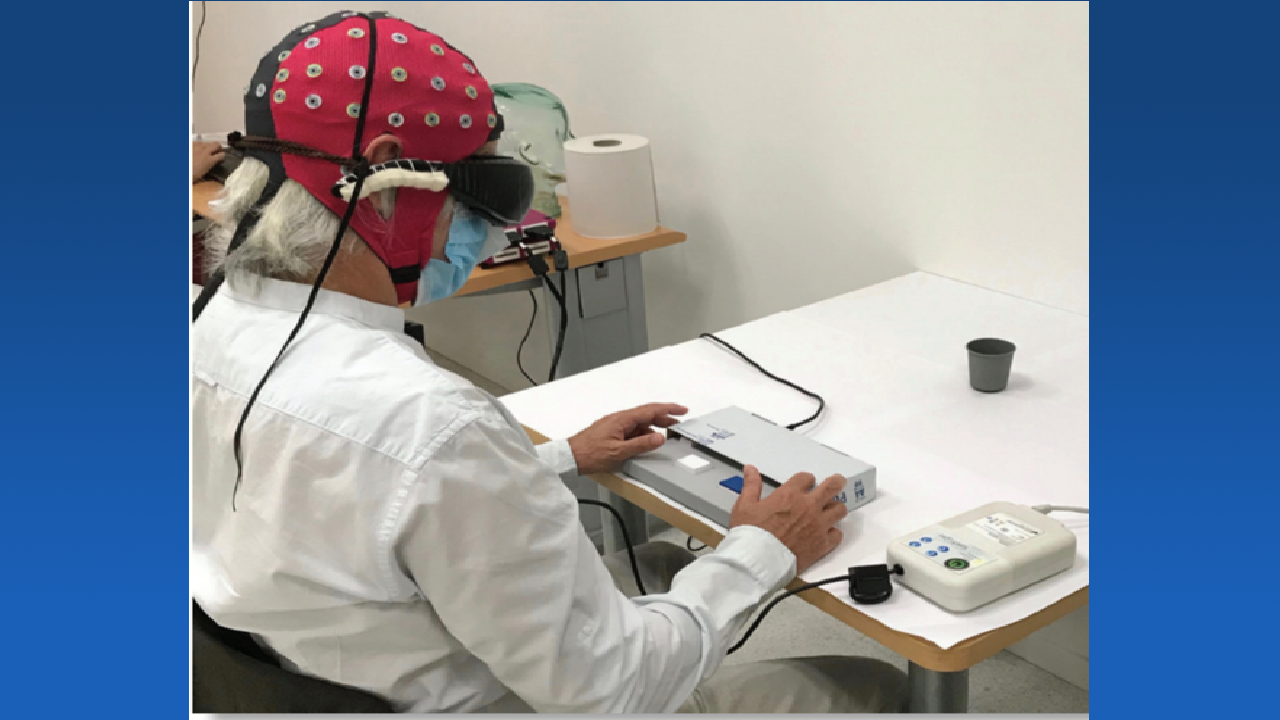
According to data released, doctors have employed a type of gene therapy to restore partial vision in a blind individual. In a man whose vision was lost by retinitis pigmentosa, an inherited degenerative eye disease that breaks down the cells that absorb and convert light into brain impulses, the research group genetically changed retinal ganglion cells to become light-sensitive. Researchers revealed that the 58-year-old man progressed from complete blindness to being able to distinguish a large notepad, a smaller staple box, glass tumblers, as well as the stripes of a street crossing using unique goggles. The human retina has an inverted structure. The photoreceptors that detect light are located in the rear of the retina, whereas ganglion cells in the front relay visual data from photoreceptors to the brain through the optic nerve. Optogenetics was utilized to make the top layer of ganglion cells photosensitive, avoiding the non-functional bottom layer of photoreceptors in this instance. A sunken cold virus encoding the genetic code for a channelrhodopsin termed ChrimsonR, which is capable of perceiving amber light, was injected into the man's eye. Scientists equipped him with a set of customized goggles that transmit visual images into the retina at amber light wavelengths after providing his retinas five months to accept the genetic change. The individual had to become used to wearing the goggles, but after seven months of practice, he began to rapidly express indications of improved vision. Readings from an electroencephalogram (EEG), which measures electrical activity in the brain, revealed that the man's brain was responsive to image perception from the eye. According to experts, more patients have been treated with this gene therapy, but the COVID-19 pandemic has made it difficult for them to go to medical centers where they can practice with the special eyewear. Although researchers have expressed that the individual's vision was unlikely to return to the point where he can read or identify faces, this milestone is a huge advancement for these patients. This form of gene therapy can be incredibly useful with some refinement. Hopefully one day, we can reach a point in the advancements of gene therapy to allow individuals with total blindness to recognize faces and be able to read.
Saturday, November 22, 2014
Thoughts Controlling Genes
The experiment that tested this process is a very interesting one. The cells were tested in cell cultures and in mice. When doing these experiments, it is desirable to pick a protein that is easily detected. The protein used was the human protein SEAP. When the implants were put into mice or cell cultures, the implants were stimulated by test subjects undergoing different activities such as playing Minecraft or meditating. With those playing Minecraft, average SEAP values were detected in the bloodstream of mice; however, with those who were meditating, high levels of SEAP were found in mice.
If gene expression and protein production could be
controlled simply through thought, this would be a massive breakthrough in the
medical field. As Martin Fusseneggar, Professor of Biotechnology and Bioengineering
at the Department of Biosystems in Basel, says, “Controlling genes in this way
is completely new and is unique in its simplicity.” This incredible
breakthrough makes Fusseneggar hopes this could one day help combat
neurological diseases including epilepsy and chronic headaches.
Thursday, November 13, 2014
Brain Waves Control Gene Expression
Researchers in Basel of Switzerland have found a way to control protein production and its quantity indirectly through use of EEG, electroencephalogram, and controller which is responsible for production of proteins. This process, interestingly, was inspired by a game named Mindflex. Similar to the experiment, Mindflex uses EEG of the user to manipulate a ball lifted by wind power to overcome various obstacles. In the research, the brainwaves of test subjects in different states of minds were recorded, analyzed, and transmitted to an electromagnetic field generator. An LED light is then turned on and initiate protein production. The protein used in this experiment is the recombinantSEAP protein, protein commonly used in gene expression research for it is easily detected. Implants are put in cell culture and rats for the experiment. The scientists found that when the test subject is in meditation or relaxed, a greater amount of SEAP were produced.
I found this article to be fascinating. To control gene expression with brainwaves is extremely futuristic to me personally. To hear this news at this time of my life is truly exciting. I was also intrigued to find researchers incorporate games such as MindFlex and Minecraft in genetic research. Even though the experiment is only administered to lab rats and cells right now, it won't be too long before these tests are done on humans. I'm curious to find out what kind of results and ethical issues would be brought up along with the advancement.
Source: http://www.sciencedaily.com/releases/2014/11/141111111317.htm
Support Article: http://www.medicalnewstoday.com/articles/269910.php
I found this article to be fascinating. To control gene expression with brainwaves is extremely futuristic to me personally. To hear this news at this time of my life is truly exciting. I was also intrigued to find researchers incorporate games such as MindFlex and Minecraft in genetic research. Even though the experiment is only administered to lab rats and cells right now, it won't be too long before these tests are done on humans. I'm curious to find out what kind of results and ethical issues would be brought up along with the advancement.
Source: http://www.sciencedaily.com/releases/2014/11/141111111317.htm
Support Article: http://www.medicalnewstoday.com/articles/269910.php
Labels:
Basel,
EEG,
gene expression,
Genetics,
LED,
SEAP,
Switzerland
Wednesday, November 12, 2014
Controlling genes with your thoughts?
On November 11, 2014 researchers invented the first gene network thst can be controlled by an individuals thoughts. This is allowed because of a developed method that enables thought-specific brainwaves to control the conversations of genes into proteins, or gene expression. Marc Folcher and other researchers from a group led by Martin Fussenegger, Professor of Biotechnology and Bioengineering at the department of biosystems in Basel are the creaters of this novel gene regulation. Fussenegger states that this is the "first time researchers have been able to tap into human brainwaves, transfer them wirelessly to a gene network and regulate the expression of a gene depending on the type of thought." The inspiration of this project was a game called Mindflex, where the player wears a headpiece that records their brainwave activity. Ultimately, the registered electroencephalogram (EEG) is then transerred in the playing environment.
Ultimately, the system the Basel-based bioengineers produced also uses an EEG headset. The headset records the brainwaves, which is then transmitted via a Bluetooth to a controller, thus controls a field generator that generates an electromagnetic field. A light then goes on in the implant: an integreated LED lamp that emits light, thus turning on and illuminating a culture chamber that holds genetically modified cells. Finally, the cells then begin to produce the desired proteins.
These proteins were tested in lab mice by the diffusion of the culture chamber into the bloodstream. Ulitmately, to regulate the number of released proteins, the test subjects were tested on three states of mind while playing the computer game Minecraft; the three categories were bio-feedback, meditation and concentration. When completely relaxed, the test subjects produced a very high SEAP values in the test animals. For bio-feedback the test subjects observed the LED light of the implant in the body of the mouse and were able to consciously switch the LED light on or off via visual feedback. Fussenegger believes that "controlling genes in this way is a completely nrew and is unique in its simplicity." Moreover, the use of near-infrared light was used because it not harmful to human cells, thus allowing the modified light-sensitive protein within the gene-modified cell to trigger an artifical signal cascade, resulting in the production od SEAP.
I found this article and finding to be quite interesting, although I do find these findings to be odd and unusual. I do not know if these findings should be considered to be phenomenal because I do not know what the ultimate outcome of these findings will be! However, this field of research is extremely interesting and I am interested in seeing what is to come from this!
Main article: http://www.sciencedaily.com/releases/2014/11/141111111317.htm
Subscribe to:
Posts (Atom)
