Showing posts with label egg cells. Show all posts

Monday, December 9, 2024

Miscarriage Caused by K1F18A Gene

Miscarriage Caused by K1F18A Gene


    Researchers from Rutgers University identified a gene variant called K1F18A. The study was done using data from an IVF clinic and mice. Their findings showed the gene has been linked back to miscarriages by accelerating aging of women's reproductive system. When the women's reproductive system is accelerated it leads to the development of mutated eggs. This leads to diminished fertility and chromosomal abnormalities that cause infertility.

    This will lead to a decrease in miscarriages because women can now get tested for the K1F18A gene. It will help inform their decisions so they can consider whether to have a child younger or consider freezing their eggs at a younger age.


https://www.usnews.com/news/health-news/articles/2024-11-26/scientists-spot-gene-that-could-help-cause-miscarriages

Saturday, November 25, 2023

First U.K. Children Are Born Using DNA from 3 'Parents'

 First U.K. Children Are Born Using DNA from 3 'Parents'


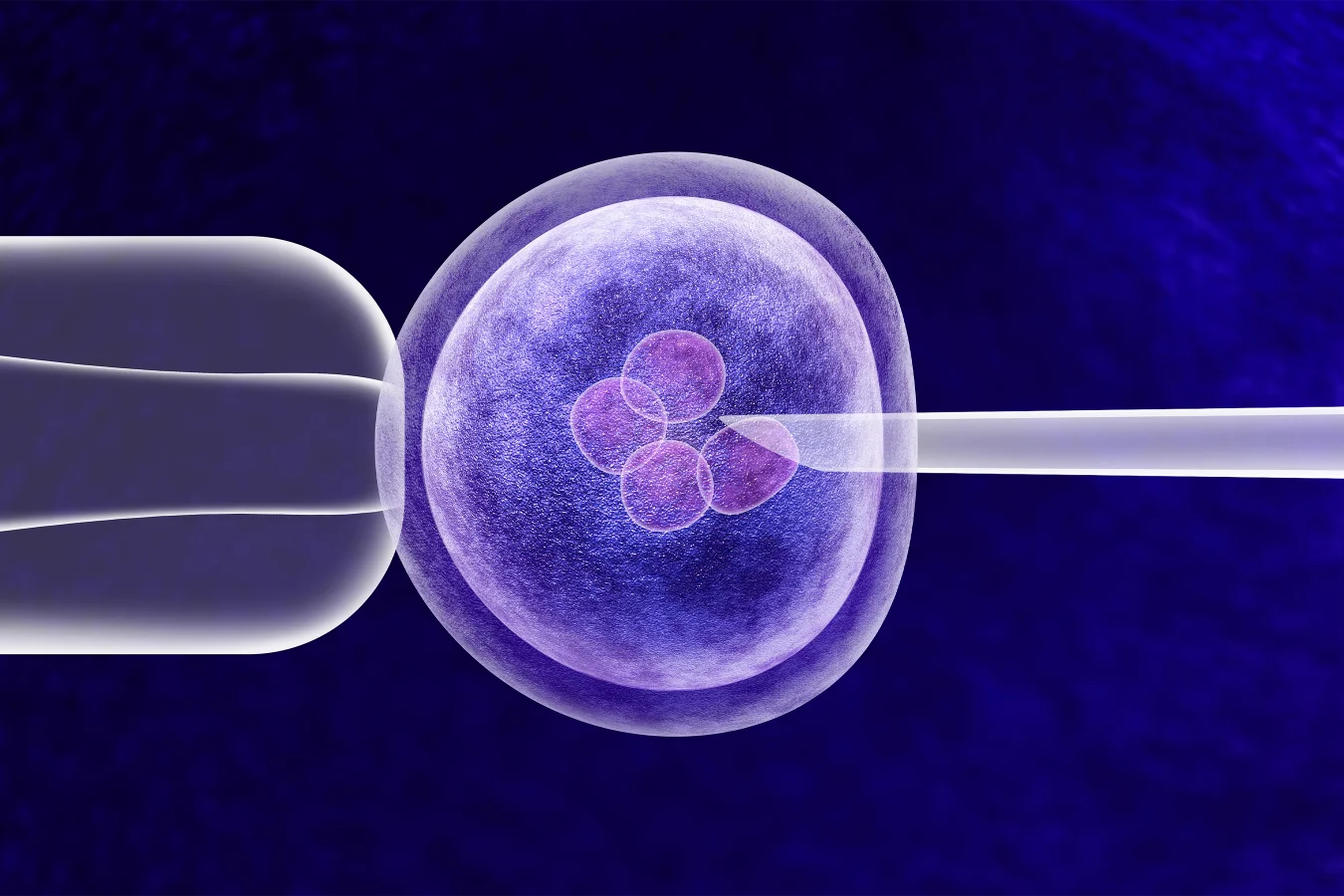
    The United Kingdom was the first country to regulate the reproductive technique called mitochondrial replacement. 8 years after this children have been born using the procedure. Mitochondrial Replacement Therapy involves moving genetic information from an egg with diseased mitochondria to a donor egg that had its genetic material removed. This procedure remains restricted in the United States. This is still an area of medicine that requires much more research and they have many questions they need to answer. Since these are the first kids born using the MRT method it's not yet been determined how effective the treatment is and if it really cures mitochondrial diseases. 
    This article wasn't exactly what I was expecting it to be, the title kind of tricks you. Although technically there are 2 eggs being used the other egg's genetic material is removed so I don't really think it's like 3 parents had a baby. There still is DNA from all 3 parents however so it really is like 3 parents had a baby. I think this is really cool because if something is wrong with you a super close friend can help and really be their other mother. I do however think this is a very interesting discovery but it kind of scares me as it still isn't allowed in most countries. If these babies that were born are healthy and it seems the treatment worked I'm sure it'll be more widespread but I think most countries don't allow it since it's such a gray area.

LINKS:

Sunday, December 4, 2016

Mitochondrial Replacement Therapy Allows Birth of First Child with DNA from Three Parents

A few months ago, the first healthy child toever have DNA from three parents was born in New York to a couple from Jordan. This was due to mitochondrial replacement therapy, a controversial procedure in which nuclear DNA is removed from a donor egg cell containing healthy mitochondria, while the nuclear DNA from a potential mother with defective mitochondria is inserted into the donor cell. The donor egg cell with the mother’s nuclear DNA is then fertilized by the father’s sperm. Though this procedure is controversial because it utilizes DNA from three parents rather than two, it is necessary in the case where the mother’s mitochondria contains harmful DNA. This harmful mitochondrial DNA can be fatal to babies. The mother of the child recently born has ¼ of her mitochondria mutated, and had two children before this experiment that were both killed from Leigh Syndrome, caused by the defective mitochondria.


However, that does not mean that the experiment is 100% perfect. Often, a few of the defective mitochondria may alsobe taken out of the mother’s cell along with the nuclear DNA during a processcalled carry-over. This unhealthy mitochondria can become prevalent in the donor cell, and can outcompete the healthy mitochondria, replicating and becoming numerous enough to cause the disease in the child. Scientists believe that this is due to the speed of mitochondrial replication, as certain genes could cause some mitochondria to replicate faster than others, resulting in unhealthy mitochondria with these genes to become more prevalent than healthy mitochondria without. Scientists hope to combat this by matching mitochondrial haplotypes between the mother and donor cells so that their speed of replication would be about the same.


Though this experiment is revolutionary, the United States as well as many other countries ban the procedure. Because of this, the doctor who performed the procedure, Dr. Zhang, had to travel to Mexico along with the couple to complete the procedure legally. However, the UK may be the first country to explicitly allow this procedure, and if approved procedures may happen as early as March or April. This is extremely important because if a highly developed country allows a procedure with a high success rate, other countries may follow suit and allow couples where the mother has faulty mitochondria to have children of their own.


Tuesday, October 18, 2016

Mouse egg cells made entirely in the lab give rise to healthy offspring

The scientific team of Katsuhiko Hayashi of Kyoto University in Japan has successfully created live fertile offspring from completely lab made egg cells.  This is a huge achievement in the field of fertilization research and could have many possibly uses in the future. These eggs were created from stem cells entirely in a lab dish. The team made fertile egg cells from stem cells back in 2012, however to accomplish the last steps of fertilization, they had to implant the eggs into live mice. This summer, the scientists showed that they can keep developing mouse ovaries in the lab in order to make mature, fertile egg cells.  They use the stem cells to develop immature egg precursor cells, and then culture them in clusters of cells taken from fetal mouse ovaries.  The process resulted in 50 mature eggs, but the lab created cells have a higher rate of chromosome abnormalities than normal egg cells, but 75% of the lab created cells had the correct number of chromosomes. The scientists then fertilized those eggs with sperm cells in order to create 300 embryos, and then injected them into host female mice. Only 11 of them, or 3%, were able to grow and become pups.
Mice derived from lab made eggs were normal, fertile adults.

Though these techniques may one day have applicable uses for humans, they are still far away from their goal.  This process can be used to help infertile people have children. It can also be used to genetically modify eggs in order to get rid of undesired traits or harmful diseases.  It could also help women who lost eggs due to chemotherapy treatment for their cancer. Of course with most scientific discoveries, many ethical issues arise.  Movements toward a designer baby, with specific genetic alterations, could pose serious implications for our species.