Showing posts with label Mitochondrial DNA. Show all posts

Monday, November 24, 2025

DNA Evidence Prevents the Extermination of a Species of Iguanas


    In this NY Times article, a Mexican island has been invaded by these spiny-tailed iguanas, or so they thought. Clarion Island houses these iguanas, who were assumed to arrive on the island through humans around the late 20th century. This has never been tested, but because they were considered invasive, the government planned on exterminating them to help the ecosystem. Dr. Mulcahy had seen the iguanas and collected DNA to find that they don't match the sequence of the spiny-tailed iguanas on the mainland. Once he heard about the plan to exterminate, he went to publish the analysis he found to prevent the elimination.

    To analyze the DNA, Dr. Mulcahy and his colleagues compared the mitochondrial DNA of the Clarion iguanas to the mainland iguanas to find a 1.5% difference in the DNA. This meant that the iguanas on the island were distinct enough that they couldn't have recently been introduced to the island. They used data and fossils to find when the split between the two species had happened and found it may have been around 425,600 years ago. This was well before humans arrived in the Americas and implies that the iguanas came to the island on the second-longest known aquatic journey iguanas have gone through.

    These findings came in time to prevent the eradication of these animals and, ironically, the disruption of the ecosystem. The question of how these iguanas went unnoticed has been asked. This could possibly be because of the change in landscape on the island, as settlers brought livestock onto the island that ate away at much of the vegetation. Iguanas are naturally scared and wary of humans and hide when close by, which would leave people unaware of their presence until these hiding spots started running out. 

    This kind of situation happens when the assumption of an animal's role in the ecosystem isn't tested. Research on these iguanas was necessary to prevent a mistake from coming out of extermination, and if it had never been done, there would have been many problems coming about on the island. Assumptions without proof can hurt, and I am glad that someone was able to piece the puzzle together on why they looked and were genetically different from the mainland species.

Tuesday, November 19, 2024

Mitochondrial DNA Insertions into Nuclei of Brain Cells


It has recently been discovered that mitochondria have been inserting bits of mitochondrial DNA into the nuclei of brain cells at unusually high rates. During a study on over 1,200 older adults, it was found that the more mitochondrial insertions an individual had, the younger they died. One of the normal functions of mitochondria is to ship their DNA into the nucleus of the cell to integrate it with the nuclear DNA in a process called numtogenesis. Numtogenesis has been commonly observed in reproductive cells and cancer cells but has never before been observed in brain cells. These insertions were studied on blood cells and brain tissue from the cerebellum and the dorsolateral prefrontal cortex, or DLPFC. What they found is that cells from the DLPFC had an average of 15 times as many insertions as the blood cells and 5 times as many insertions as the cerebellar cells. It was also discovered that mitochondrial insertions increased under certain stressors such as drug treatments or genetic mutations.


In my opinion, this is something that definitely needs more attention. I believe this is something necessary to further study. This study seems to suggest that numtogenesis is somehow linked to life span. Since the DLPFC has been known to be affected by many age related and neurodegenerative conditions, the higher rate in mitochondrial insertions in the DLPFC could provide a potential explanation or be linked as a factor. With this knowledge we could potentially develop improved treatments for these conditions.


Tuesday, July 25, 2023

Advances in Detecting Mitochondrial Diseases and Cures

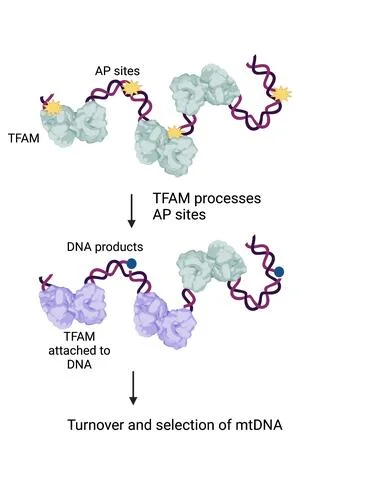
Previously, mitochondrial diseases were said to be rare because not many people were diagnosed with one. Although with new genetics research, scientists are realizing that mitochondrial diseases are not as rare as they previously thought because they would misdiagnose patients with other diseases. Mitochondrial diseases will injure your cells, knocking out entire organs and eventually leading to death because the mitochondrial struggles to send enough energy/signals to the rest of the cell to be detected in genetic tests. Linlin Zhao, an assistant professor of chemistry at UC Riverside, studied that the TFAM protein could repair or remove damaged pieces of DNA molecules. This is a great step in being able to cure mitochondrial diseases. TFAM is the mitochondrial transcription factor A which is a mtDNA binding protein that maintains genes. New research shows that decreased mtDNA is linked with aging-related hypotheses which is a start to understanding how TFAM abundance and disease are linked. Zhao and his colleagues were not only surprised by TFAM since is known for its different functions, but they also took a step in helping repair cells that mitochondrial diseases damage. With future research, mitochondrial diseases may be easily detected and cured.


Monday, November 23, 2020

Baby with 3 DNA Origins?


New Studies: Frozen Embryos Not Always Necessary for IVF | Fortune
https://time.com/5569057/three-parent-baby-dna/
https://mitochondrialtransfer.wordpress.com/the-logistics/mitochondrial-replacement/maternal-spindle-transfer/

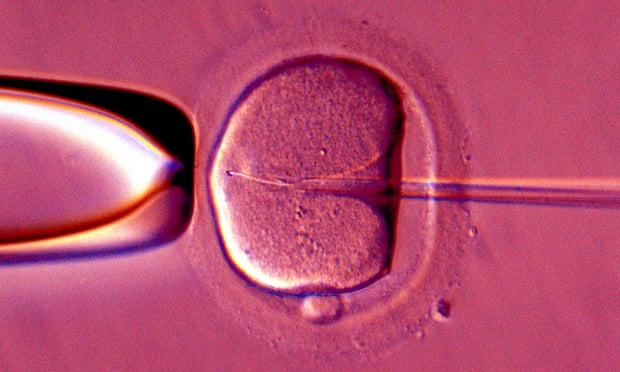
We all know that a mother and father are the two sources of genetic material that an embryo develops from to become a functioning, healthy human baby. However, in some cases the mother has problems with reproduction either functionally or genetically. So, other means of conception have been established in order to help these cases. One of the alternatives to natural reproduction is something called maternal spindle transfer. To explain this simply, the genetic material of the mother's egg is removed and placed into an egg of a donor which has its genetic material removed and discarded. After the genetic material has been transplanted, the egg is fertilized and the embryo is transferred back to the mother for proper development. This is done because the mother has mutations in her mitochondria that inhibit proper development, so the donor egg is used for its correct mitochondrial characteristics in regards of reproductive development. How does this all relate to a baby that was found with 3 different types of DNA you may ask. Well, mitochondria has its own DNA separate of the nucleic DNA, and with this procedure the mitochondria also has transferred into the embryo. The three different DNA's that were found were the mother's, the father's, and the donor's DNA.
I think this is fantastic. I feel that it is the right thing to do morally to help out someone that cannot bring life into this world on their own, but still want to have their own children. This is only one technique used for woman who have reproductive issues, and there are several more to meet the standards of whomever needs a procedure like this done.

Wednesday, November 18, 2020

The First Mitochondrial Gene Editor


It has never been possible to fix mutations in mitochondria... until now. Recently, a protein from bacteria has been re-engineered to change DNA in mitochondria, which has not been possible before.  Tools such as Crispr-Cas9 have attempted to be used in mitochondrial DNA, but they have not worked. But, the bacteria Burkholderia cenocepacia has been found to secrete a toxin that is capable of assisting in the creation of a mitochondria-friendly base editor. This toxin is a cytosine-converting protein, which means that it binds to DNA and converts cytosine to thymine. However, unlike all other cytosine-converting proteins, this toxin makes changes to double-stranded DNA, rather than single-stranded DNA. Most gene editors must edit DNA in single strand form, so this toxin is a huge step in the right direction for mitochondrial gene editing. In my opinion, mitochondrial gene editing would be an amazing capability of human gene editing. "Mutations in mitochondrial DNA cause over 150 distinct syndromes and affect 1,000 to 4,000 children born in the United States every year," (Lee, 2020). It could help prevent mitochondrial mutations, as well as so many types of diseases. It could also aid in the process of finding cures for these diseases. Mutations in mitochondrial DNA often involve multiple organ systems and can affect the body as a whole in so many different ways. It would be a miracle to find a way to cure these diseases, and even better, prevent them. I think this work is something that needs to be rapidly pursued, but it seems like scientists are on their way to fixing mitochondrial mutations!

https://www.sciencenews.org/article/mitochondria-gene-editing-bacterial-toxin-crispr

https://www.the-scientist.com/news-opinion/new-gene-editing-tool-corrects-mutations-in-mitochondrial-dna-67726

https://medlineplus.gov/genetics/understanding/mutationsanddisorders/mitochondrialconditions/#:~:text=In%20some%20cases%2C%20inherited%20changes,often%20involve%20multiple%20organ%20systems.

Thursday, November 12, 2020

Dead Sea Scrolls


https://www.sciencenews.org/article/dead-sea-scrolls-dna-genetic-clues-origins-hebrew-bible

           https://www.deadseascrolls.org.il/learn-about-the-scrolls/introduction?locale=en_US


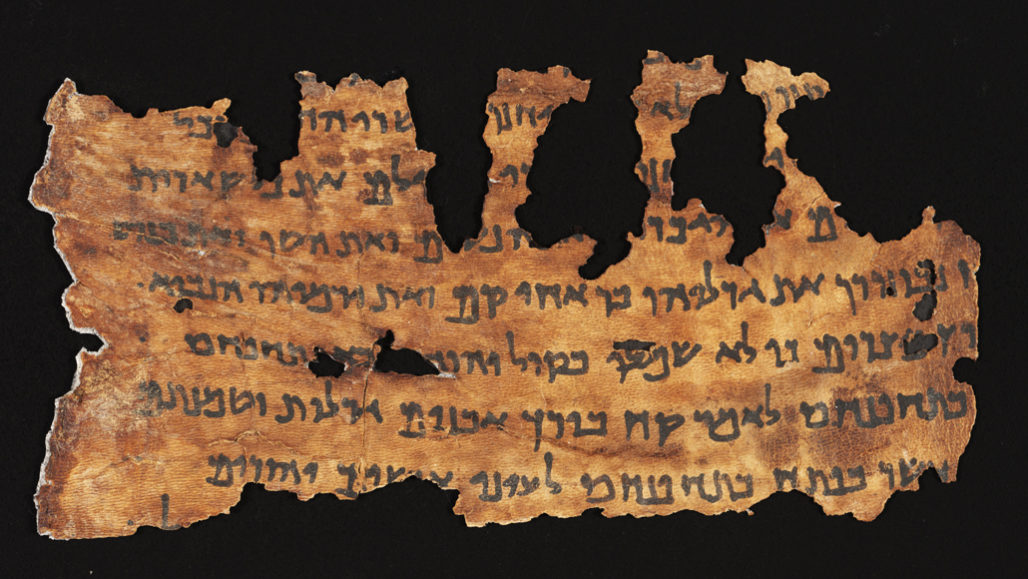
           The Dead Sea Scrolls are some of the oldest and most valuable religious artifacts that man has uncovered. These scrolls were used to distinguish the place of origin and the consistency of material to ensure the scrolls authenticity. Since these scrolls are made out of sheep or cow skin, the DNA of these animals can be investigated and analyzed. Slivers of the scrolls were taken to be researched to begin marking out the genetic map for the animal skins. After excluding the DNA from people who have handled the scrolls, the mitochondrial DNA and nuclear DNA were studied to compare against the samples from other scrolls. Relationships between the scrolls DNA and foreign DNA can be distinguished, determining the place of origin of the sheep or cow used for the scrolls. Through scientific research, the experimenters came to the conclusion that some of the scrolls were made elsewhere not in the community of Qumran - where the scrolls were believed to originated - due to the DNA markers suggesting a second lineage of sheep or cow used for the writings was apparent. This leaves researchers of both of the scientific and religious field to believe the scrolls origin is more broad in terms of location than expected, and that some scrolls were crafted and written after the original scrolls were, suggesting alteration or translation of the original text.    


Tuesday, October 6, 2020

Wild Wolves Became Dogs


    It is common sense nowadays that the pets that we know and love, our domesticated dogs, descended from wild wolves. But when and how? Research shows that between 15,000 - 40,000 years ago, gray wolves and domesticated dogs descended from an extinct wolf species. Scientists used studies of mitochondrial DNA and DNA across different genomes to distinguish a time range. The DNA sequenced from the different genomes like the similarities in wolves and domesticated dogs back to Asia. It was discovered that dogs from southeast Asia have the highest genetic diversity and are genetically closest to the wolf. There are two popular theories as to how wolves became domesticated dogs that I found interesting. One theory is that wolf pups were stolen from their mothers and raised by humans as pets and gradually became domesticated. The other theory is that wolf pups interacted with human hunters and were separated by survival of the friendliest. 

https://www.nationalgeographic.com/news/2015/12/151217-dogs-domestication-asia-china-genetics-animals-science/#close


Wednesday, December 4, 2019

Did The Ancient Egyptians Farm Ibises?

Ibises are a bird native to Africa with a long scythe-like beak that hunt by wading through rivers. They are a sacred animal to the ancient Egyptians. Their god of writing and wisdom, Thoth, is often depicted with the head of an ibis. As an offering, the Egyptians would mummify ibises and place them in catacombs.
Image result for ibis

Scientists have discovered rooms filled floor to ceiling with these sacrifices. This raises an interesting question. Where did these birds come from? Ibises have not been native to Egypt in hundreds of years. It is unknown if they migrate in large enough flocks with high enough frequency to provide the quantity of birds required for these uncovered offerings. A theory offered instead is that they were farmed by Egyptians.

The mummification process is fantastic at preserving DNA. Scientists were able to extract mitochondrial DNA from several birds. Due to controlled breeding, you would expect to see lower levels are variance between domesticated individuals. Instead, scientists found the same levels as measured in modern day ibis wild populations. While this is not enough evidence to rule out the possibility of Egyptian farms, it suggests there might be more to the story than we currently know. I thought this was an interesting application of mitochondrial DNA. Since the mitochondrial DNA is passed down from the mother, I wonder if its possible to trace the lineage of a modern ibis to one of these mummified birds.

Links:
https://search.proquest.com/nytimes/docview/2314696925/C49933956F5741C4PQ/19?accountid=29054
https://www.smithsonianmag.com/smart-news/dna-suggests-ancient-egypts-millions-ibis-mummies-were-wild-caught-birds-180973556/ 

Wednesday, November 20, 2019

World’s First Baby Born With New “3 Parent” Technique


A boy’s mother who carries genes for leigh syndrome which is a fatal disorder that affects the developing nervous system. Approximately a quarter of her mitochondria has the disease-causing mutation that was responsible for the deaths of her first two children. John Zhang and his team at the New Hope Fertility Center in New York City has been working on a way to avoid mitochondrial disease using a “three-parent” technique. The technique is called spindle nuclear transfer, in which the nucleus from the mother is transferred into a donor egg that has had its nucleus removed. The donor egg is then fertilized with sperm from the father and returned to the mother. Zhang had to insert the embryo into the mother’s womb in Mexico because federal legislation forbids implanting genetically modified embryos. The team avoided destroying embryos, and used a male embryo, so that the resulting child wouldn’t pass on any inherited mitochondrial DNA. When Zhang and his colleagues tested the boy’s mitochondria, they found that less than 1% carry the mutation. Hopefully, this is too low to cause any problems; generally, it is thought to take around 18% of mitochondria to be affected before problems start.

Honestly, the technique should be legalized in the US. It could help so many people create families that they always wanted but couldn’t due to poor egg and embryo quality or something very similar to this mother’s situation. Most likely the more births using this technique will likely force the US policy to change. The government needs to allow specialists to alter the genetic makeup of an embryo. There definitely needs to have very strict guidelines in what they can change but allowing this technique in the US would make a great impact in so many lives.


Wednesday, May 1, 2019

Medieval Crusaders Were Very Diverse Based on Recent DNA Analysis

A 13th century sea castle built by Crusaders in Sidon, Lebanon.

In a mass grave around the ruins of the Castle of St. Louis, just outside the city of Sidon, south Lebanon, the burnt skeletons of roughly 25 soldiers were found. The castle was a stronghold for the Crusaders from the 12th to 13th centuries. Based on the evidence that many suffered violent deaths and the origin of artifacts that were found – an Italian coin minted in 1245 and European belt buckles, it was concluded that these were Crusader soldiers.


During those late medieval centuries, soldiers and civilians from Europe were pouring into the Levant, a region in West Asia that borders the Mediterranean Sea. They had arrived seeking to control holy sites that were sacred among all the Abrahamic religions (Christianity, Judaism, and Islam). With their arrival, however, came the murder and displacement of native populations, most of which who were Muslim. This was the time of a series of religious wars, known collectively as the Crusades, that would span 200 years. The date on the Italian coin, the location, and radiocarbon dating of the material from the mass grave points to idea that these men were presumably soldiers of the Seventh Crusade who had died in a failed battle at Sidon in 1253. This war was led by the French king Louis IX.


Geneticist Marc Haber and his colleagues from the Wellcome Sanger Institute obtained DNA sequences from nine of the skeletons. The results of their genetic analysis were astounding. The Crusader armies were much more ethnically diverse than historians had previously believed. In fact, when they compared the DNA of the soldiers to reference databases of modern people’s DNA, they found that three were probably European (two Spaniards and one Sardinian), four were probably Lebanese, and the final two were intermediate between European and Near Eastern.


The last two individuals are evidently of mixed ancestry. When the researchers then analyzed the Y chromosome and Mitochondrial DNA sequences, they discovered that the three European and the two mixed ethnicity soldiers all belonged to Y chromosome haplogroups typical of Europe. However, the latter two had Mitochondrial DNA broadly found across both Europe and the Near East. This suggests that these men were most likely the children of European men who intermarried with local Near Eastern women, or that they were the children of parents who were of mixed ancestries themselves.


This research truly illustrates how long the Crusades lasted. For two hundred years, men from many cultures converged in one place to live, fight, and die together, united by the same religious goal. During their lives, these groups of people forged lasting connections with one another despite coming from different places. This multicultural brotherhood is evident in the genetic legacy they passed on to subsequent generations of Crusaders, born of intermarriages.

Thursday, March 21, 2019

Mystery on the Canary Islands


For many years, the mystery of how the indigenous people arrived on the Canary Islands before European settlers were unknown. The debate over when and why the canary islands were first populated initially arose by Europeans in the 1400s. Records indicated that the Canarians had no navigational skills. This led scholars to wonder how the Canarians even reached the islands. Were they brought by the Romans or perhaps sailed there themselves? Because the language and culture of the indigenous people were lost after European colonization, it has been especially difficult to learn about the past of the Canary Islands. To investigate, Dr. Fregel and her colleagues collected almost 50 mitochondrial DNA genomes from remains at 25 different sites. Most of the cites were radiocarbon dated 150 and 1400 C.E. Results showed North African, Mediterranean, and some sub-Saharan African lineages.  This fit with the genetic history of North Africa. The analysis also showed that the islands didn't have much diversity, where others had a great deal of diversity. This indicated that these ancient populations must have been large. Researchers found lineages that were known only from parts of North Africa and Europe. As well as four new lineages exclusive to Gran Canaria and two eastern islands. Dr. Fregel proposed that this might mean colonization happened in at least two phases with the second wave of migration only on islands closer to the African continent. Even though this evidence did not show how the Canarians arrived on the island, they were able to discover where they may have originated from.

https://www.nytimes.com/2019/03/21/science/canary-islands-indigenous-dna.html
Samples being collected from mummified remains at El Museo Canario in the Canary Islands.


I found this article really interesting and amazing that the researchers were able to study a remains dated all the way back to 150-1400 C.E. Mitochondrial DNA can tell us a lot of valuable information about the past that can then be used for many things science or health-related in the future!

Saturday, April 14, 2018

Wildlife Forensics: The Use of DNA to Catch a Smuggler

Totoaba, the Mexican fish that is quoted of higher value than cocaine.
When one thinks of forensic science, thoughts often roam to TV shows and murder mystery novels. Few think of forensic science being applied to the US Fish and Wildlife Service and their efforts to catch poachers and smugglers. Well, in Ashland, OR there is a full forensic lab dedicated to such efforts in crimes against wildlife. This lab consists of departments dedicated to chemistry, morphology, pathology, criminalistics, and of course genetics. With the use of genetic examination, the US Fish and Wildlife Service is able to distinguish when seized products have come from CITES (Convention on International Trade in Endangered Species) endangered listed species. They've even developed ways to even extract DNA from the leather of a handbag.

In 2013, the lab was faced with a task: to identify a swim bladder as belonging to the endangered totoaba or not. With the use of mitochondrial DNA, an altered swim bladder can be identified as a totoaba by distinguishing it from the next closest relative. But what is mitochondrial DNA? It's DNA that is found in the mitochondria of the cell, thousands of mitochondria per cell have this DNA that contains 37 genes. In 2013, this lead the Fish and Wildlife Service to prosecute Shong Shen Zhen for smuggling the swim bladders of totoaba from Mexico into the US to be sold on the black market.

The use of genetics in forensic science is imperative to solving crime, but we can't forget about the crimes against wildlife and biodiversity as well. The US Fish and Wildlife Service forensic lab is making strides and opening new windows to forensic science in wildlife protection , and it's only the beginning.

Tuesday, April 18, 2017

Researchers Identify Tactic Dengue Virus Uses to Delay Triggering Immune Response


Image result for dengue virus

When a person is infected with the Dengue virus, the body detects the infection through a protein, which acts as a cytosolic DNA sensor, called cyclic GMP-AMO synthase (cGAS). The Dengue virus is recognized by cGAS through traces of mitochondrial DNA found in the cytoplasm from the virus. The cGAS then binds to the DNA and activates the cGAS/cGAMP/STING pathway, which induces type 1 interferon signaling. Once this happens, with body's immune system responds to the infection. In the study, it has discovered that the virus tries to reduce the chances of triggering this cycle by degrading cGAS and stopping it from binding to the mitochondrial DNA. The virus is able to do this by releasing a cofactor called NS2B.  In conducting this study, the researchers have found interest in mapping how cGAS recognizes this virus and learning more on mitochondrial DNA's role in conducting an immune response. This article was interesting to read about because it sheds light on how viruses are evolving to bypass the human body's detection. It is also interesting because this information can help scientist to help fight against this disease which affects 400 million people each year.   

Tuesday, March 21, 2017

First License for Three-Person Baby Granted in UK


Image: Guardian article, photograph by Alamy

Yes, you read that correctly. A three-person baby (AKA, a baby that has DNA from three people) isn't something new. In fact, a girl named Alana Saarinen is one of the first people to have DNA from three parents (mother, father, and mitochondrial DNA from female donor). Her parents used a fertility treatment called cytoplasmic transfer to have her in the 1990s. However, creating babies using IVF is a new method being used today. Doctors in Newcastle, UK were granted licenses to perform IVF three-parent treatments. What doctors and families hope with three DNA is to essentially eliminate the possibility that their child will be affected by devastating genetic diseases caused by defected mitochondrial DNA in the mother. 
The idea of having children with DNA from three people has been shrouded in controversy since its inception, but it is an interesting topic. It will be exciting to see how successful the treatments are with regards to diseases in children after birth. 

Tuesday, December 13, 2016

Using Vampire Bat Genetics to Predict Rabies Expansions in Peru


Rabies is a serious viral disease in animals that effects the central nervous system, ultimately leading to brain inflammation and death. This disease is most often transmitted through animal bites, scratches or salvia of infected animals. It causes serious public health risk in Latin America as it causes human death and the death of millions of dollars of livestock every year. The largest cause of rabies spread in Latin America is due to vampire bats and their blood-feeding diet. Although there are efforts to reduce vampire bat populations in epidemic areas, it has proved ineffective because the the death toll of humans and livestock is higher than before and the rabies virus is spreading to areas it was not before. Scientists have come up with the idea to use the genetic analysis of vampire bats in Peru to forecast the migration of the rabies disease. This research has led to the theory that the rabies virus will spread to the Pacific coast of Peru by the year 2020. Peru's Pacific coast is currently VBRV(Vampire Bat Rabies Virus)-free, however, evidence from testing the genomic sequences of vampire bats in VBRV-epidemic areas have given researchers insight on how the rabies virus is spreading and it suggests it is moving towards the coast. They analyzed 264 samples of rabies virus collected from livestock all over the country over fifteen years, and that it could be traced back to one of three common ancestors. The virus lineages were traced back the the east North Andes, east South Andes, and the inter-Andean valleys south of these areas. To collect data from the vampire bats, they used tissue samples from 468 vampire bats across Peru over five years and examined the mitochondrial DNA and the nuclear DNA. The data suggested that females did not move between different regions of Peru and that spatial distribution of the three location lineages was at fault of the male vampire bats. Based off of this information, scientists were able to create a map that forecasted future rabies invasions. To confirm their map's predictions, these scientists have been tracking livestock in their predicted areas and seen an increase in rabies spread toward the coast. Understanding how a disease spreads can allow us to prevent or control proliferation and prevent epidemics. 
Rabies is most commonly associated with canines in the United States, or wildlife such as foxes, raccoons, and squirrels. However, in the United States the most common source of human rabies is from vampire bats as well. At every veterinary hospital, animal clinic, and wildlife rehabilitation clinic in the nation, it is required that every animal handled is up to date on it's rabies shot. Most jobs that require jobs handling wildlife, including my job with exotic birds and wildlife animal care center, require humans to receive a preliminary rabies vaccine before handling any animal that could possibly have rabies. It is the worst time anyone could have at the doctors to receive those shots. If an animal is suspected of having rabies, this is taken very seriously in the veterinary field. Since rabies is a disease that effects the central nervous system, and not blood or tissue or urine/feces, the way to test for an animal having rabies is extremely gruesome. The animal must be euthanized and the head must be decapitated and sent to a lab to test the brain tissue for rabies. This process may seem harsh, especially when it affects domesticated animals who bit someone and may not have rabies being euthanized and having their head removed to test, but it is the only accurate testing method for rabies. This is done so that the people who have come in contact with the rabid animal can receive medical treatment if the animal did in fact have rabies. This has happened at the practice I work for only a handful of times, and it never gets easier for anyone involved in the process. The spread of rabies in Peru being able to be tracked is one step closer in understanding the disease, and hopefully making strides toward it's containment. 

Sources
Centers for Disease Control and Prevention, National Center for Emerging and Zoonotic Infectious Diseases, and Division of High-Consequence Pathogens and Pathology. "Learning about Bats and Rabies." Rabies. Centers for Disease Control and Prevention, 22 Apr. 2011. Web. 13 Dec. 2016. <https://www.cdc.gov/rabies/bats/education/>. 
Centers for Disease Control and Prevention, National Center for Emerging and Zoonotic Infectious Diseases, and Division of High-Consequence Pathogens and Pathology. "Rabies Basics." Rabies. Centers for Disease Control and Prevention, 05 Oct. 2016. Web. 13 Dec. 2016. <https://www.cdc.gov/rabies/>. 
Escobar, Luis E., A. Townsend Peterson, Myriam Favi, Verónica Yung, and Gonzalo Medina-Vogel. "BAT-BORNE RABIES IN LATIN AMERICA." Revista Do Instituto De Medicina Tropical De São Paulo. Instituto De Medicina Tropical, Jan. 2015. Web. 13 Dec. 2016. <https://www.ncbi.nlm.nih.gov/pmc/articles/PMC4325525/>. 
National Geographic Society. "Desmodus Rotundus: Vampire Bat." Common Vampire Bat. National Geographic, 2016. Web. 13 Dec. 2016. <http://animals.nationalgeographic.com/animals/mammals/common-vampire-bat/>. 
The New Jersey Department of Health, Communicable Disease Service, Infectious and Zoonotic Diseases Program, and Zoonotic Disease Unit. "Packaging and Transport of Animal Rabies Specimens to the New Jersey Rabies Laboratory." Rabies Laboratory Form. The New Jersey Department of Health, Mar. 2014. Web. 13 Dec. 2016. <https://www.nj.gov/health/cd/documents/faq/specimentophel.pdf>. 
University of Georgia. "Scientists Use Genetic Analysis to Forecast Spatial Expansion of Rabies in Peru." Science News: Genetics. ScienceDaily, 16 Sept. 2016. Web. 13 Dec. 2016. <https://www.sciencedaily.com/releases/2016/09/160912161303.htm>.


Sunday, December 4, 2016

Mitochondrial Replacement Therapy Allows Birth of First Child with DNA from Three Parents

A few months ago, the first healthy child toever have DNA from three parents was born in New York to a couple from Jordan. This was due to mitochondrial replacement therapy, a controversial procedure in which nuclear DNA is removed from a donor egg cell containing healthy mitochondria, while the nuclear DNA from a potential mother with defective mitochondria is inserted into the donor cell. The donor egg cell with the mother’s nuclear DNA is then fertilized by the father’s sperm. Though this procedure is controversial because it utilizes DNA from three parents rather than two, it is necessary in the case where the mother’s mitochondria contains harmful DNA. This harmful mitochondrial DNA can be fatal to babies. The mother of the child recently born has ¼ of her mitochondria mutated, and had two children before this experiment that were both killed from Leigh Syndrome, caused by the defective mitochondria.


However, that does not mean that the experiment is 100% perfect. Often, a few of the defective mitochondria may alsobe taken out of the mother’s cell along with the nuclear DNA during a processcalled carry-over. This unhealthy mitochondria can become prevalent in the donor cell, and can outcompete the healthy mitochondria, replicating and becoming numerous enough to cause the disease in the child. Scientists believe that this is due to the speed of mitochondrial replication, as certain genes could cause some mitochondria to replicate faster than others, resulting in unhealthy mitochondria with these genes to become more prevalent than healthy mitochondria without. Scientists hope to combat this by matching mitochondrial haplotypes between the mother and donor cells so that their speed of replication would be about the same.


Though this experiment is revolutionary, the United States as well as many other countries ban the procedure. Because of this, the doctor who performed the procedure, Dr. Zhang, had to travel to Mexico along with the couple to complete the procedure legally. However, the UK may be the first country to explicitly allow this procedure, and if approved procedures may happen as early as March or April. This is extremely important because if a highly developed country allows a procedure with a high success rate, other countries may follow suit and allow couples where the mother has faulty mitochondria to have children of their own.


Wednesday, November 23, 2016

Environmental DNA Leads to New Population Studies of Whale Sharks

There are a wide variety of methods for tracking and studying populations of animals, from satellite tagging to aerial surveys to tissue samples. However, a new effective means of studying rare marine animals has arisen, and was recently used to study whale shark populations. Seawater environmental DNA (eDNA), or DNA collected in thesurrounding seawater, was used to predict population sizes and relations amongwhale sharks. Scientists from Denmark and Qatar collected water samples and then used DNA sequencing machines to decode the mitochondrial DNA found in the samples. The amount of DNA and the differences between them can be used to determine population sizes and to distinguish between related and unrelated whale sharks. The scientists then compared the DNA from the water samples to DNA previously taken from whale shark tissue samples, and used them to match haplotypes together.


This study took 20 seawater samples off of the coast of Qatar to identify whale shark populations. It discovered that whale sharks will group together between the Arabian Gulf and Indo-Pacific region, but will not group with Atlantic whale sharks. Sharks in the Arabian Gulf and Indo-Pacific region were more closely related due to similar genes, while Atlantic whale sharks had vastly different genes from the ones found around Qatar. The scientists also collected eDNA from mackeral tuna, and discovered that the amount of mackeral tuna eDNA in seawater was proportionate to the amount of whale shark eDNA. The more tuna there are, the more whale sharks that will be present, while fewer tuna results in fewer whale sharks. This indicates that the whale sharks likely feed on the spawn of mackeral tuna.

Though the methods of estimating population size are far from perfect, it is a good start. The predicted range of population size of whale sharks is very large, and ocean currents can move the eDNA to different locations. However, this method of study is beneficial to both humans and whale sharks, as it avoids the stress and potential damage towards whale sharks from tagging and tissue samples all while still allowing scientists to study population sizes. With the continuing advancement of technology and study techniques, the population size range can be narrowed down further and further until it reaches greater accuracy with little variation.

Sunday, November 20, 2016

Giraffes Are Actually Four Species - Not One

The giraffe has been previously considered one species. However, recent research has proven that there are actually four, rather than one, species of giraffes. Giraffes were considered to be split into sub-species before the light of this knowledge based off of their different patterns of coat and their habitat. This study consisted of tracking seven different genomic sequences that researchers chose to study genetic diversity in the mitochondrial DNA from giraffes in Namibia. The mitochondrial DNA evidence displayed that there were distinct differences in four different groups and that these four groups of giraffes had not cross-bred to exchange genetic material for over millions of years. This was enough to prove that there were four distinct species of giraffes now, and there have been for a while. These four species are the Southern Giraffe (Giraffa giraffa), the Masai Giraffe (Giraffa tippelskirchi), the Reticulated Giraffe (Giraffa reticulata), and the Northern Giraffe (Giraffa cameopardalis). Each of these species may be adapted based off of their habitat or their diet. Conservationists believe that based of this information that these four species of giraffes need to be re-assessed for their conservation status. Previously, they were considered a single species, so this data may change the status of them as "Least Concern" to a more threatened status. The four tallest species of mammals are the four recently-discovered giraffe species.


The science in this article indicates that for over a million years these giraffes have been separated into distinct species, yet we have only now discovered this information. This is a reminder that conservation science always is learning new information and there are many strides still to be taken to protect the species of our planets. A giraffe is an animal that everyone knows of, but this proves how much we still do not know about them. This makes me question the species of giraffes we may not have known that have gone extinct to due overlooking them as separate species. These gentle giants need our recognition and to be paid attention to because of their 70% decline in population over the last fifteen years. The mitochondrial DNA that was the sample studied is the same DNA that is studied in ancestry testing in humans. It is interesting to see the vast number of information stored in our DNA and the different ways we can use that information to further our understanding of life around us. 

Works Cited
Department of Health & Human Services. "Mitochondrial DNA." Genetics Home Reference. U.S. National Library of Medicine, June 2016. Web. 20 Nov. 2016. <https://ghr.nlm.nih.gov/mitochondrial-dna#resources>.
DNA Diagnostic Center. "What Is Mitochondrial DNA (mtDNA) and How Is It Used?" Paternity & DNA Testing. DNA Diagnostic Center, 22 Sept. 2014. Web. 20 Nov. 2016. <https://www.dnacenter.com/blog/mitochondrial-dna-mtdna-used/>.
Fennessy, J., and D. Brown. "Giraffa Camelopardalis (Giraffe)." The IUCN Red List of Threatened Species. International Union of Conservation of Nature, 2010. Web. 20 Nov. 2016. <http://www.iucnredlist.org/details/9194/0>.
Gill, Victoria. "Giraffe Genetic Secret: Four Species of Tallest Mammal Identified." BBC News Science & Environment. BBC News, 8 Sept. 2016. Web. 20 Nov. 2016. <http://www.bbc.com/news/science-environment-37311716>.
Morell, Virginia. "Inside the Fight to Stop Giraffes' 'Silent Extinction'" National Geographic. National Geographic Society, 25 June 2015. Web. 20 Nov. 2016. <http://news.nationalgeographic.com/2015/06/150625-giraffes-animals-science-conservation-africa-endangered/>.


Monday, November 14, 2016

Reestablishing Genetic Diversity in California Condors

California Condors have experienced a huge lack of genetic diversity in the last century due to a genetic bottle-necking event that occurred in the 1900's, causing the population to diminish rapidly. A recent study carried out for The Condor: Ornithological Applications has examined 93 Condor specimens from various museums on the west coast that dated between 1825 and 1984, and aimed to analyze how much genetic variation was present before the rapid decline of the Condor population. The DNA that was collected for the study was Mitochondrial DNA. By comparing the diversity that exists today with that of the specimens, researchers determined that approximately 80% of Condor genetic diversity has been lost due to this bottle-necking event.


An unavoidable result that comes out of the population being diminished is that due to low numbers, Condors are forced to breed with an available Condor if they wish to reproduce. The lack of choices results in inbreeding, and inbreeding can create many problems in itself. Most importantly, for the purpose of this study, it prevents the Condors from being able to create a lot of genetic diversity since they are basically passing down the same traits from one generation to the next. Genetic diversity is hugely important because it is what helps these creatures to adapt and sustain life in different environments, thereby creating a larger population. With the help of professionals and by using the capture and release method, it is possible to prevent inbreeding and to work on repopulating this species. Further research and active participation can bring the California Condor back before it is too late, but action needs to be taken.

I believe that it is a very important goal to increase the number of California Condors and to aid them in increasing their genetic diversity. Variation in a population is extremely necessary for the species survival and inbreeding is severely inhibiting this effort. By spreading awareness and working actively with this species, they can definitely improve over time, but actions need to be taken before it is too late. The California Condor is a beautiful creature and it would be a shame to see them wiped off the planet.

Link: https://www.sciencedaily.com/releases/2016/10/161016141132.htm

Wednesday, May 4, 2016

Ancient mitochondrial DNA provides time scale of the first "American" people.

Living in the United States of America the "melting pot" of the world we consider ourselves Americans even though everyone has a different ethnic background and linage. There were native Americans and pilgrims living when the land was first colonized but who was before them ?
The exact timing, route, and process of the initial peopling of the Americas remains uncertain despite much research . Archaeologist with the help of geneticist used mitochondrial DNA found from ancient remains indicating the presence of humans as far as southern Chile 14.6 thousand years ago. This time period puts this migration of people shortly after the retreat of the Pleistocene ice sheets blocking access from Eastern Beringia. The initial idea of where humans first entered America.
 

The data suggest a small population entered the Americas via a coastal route around 16 thousand years ago, following a previous isolation in eastern Beringia 2 - 9 thousand years earlier than previously thought. Following a rapid movement throughout the americas, limited gene flow in South America resulted in a marked phylogeographic structure of populations that remained constant.

All go the ancient mitochondria linkages detected in this study were absent from modern at a sets suggesting a high extinction rate.

In conclusion the first travelers to the Americas were unsuccessful, Maybe if it wasn't for a poor gene pool the Americas could been a lot different. 

http://advances.sciencemag.org/content/2/4/e1501385.full