Showing posts with label mtDNA. Show all posts

Monday, November 22, 2021

The Influence of Mitochondrial DNA Heteroplasmy in Green Sea Turtles


In this study heteroplasmy genotyping of green sea turtles, Chelonia mydas, using high throughput sequencing (HTS) was used to better understand SNP and mtSTR in the mitochondrial genome and its variation within individuals across generations. HTS allows for the observing of mtDNA on the repeating the D-loop, which is not under strong selective pressure. Heteroplasmy is the existence of mitochondrial DNA (mtDNA) variant within a cell. Mitochondrial DNA is 0.001% of genomic content and due to oxidative phosphorylation, mutations that occur in mtDNA are directly associated to inherited diseases. Since heteroplasmy deals with variation in mtDNA the haplotypes passed down to generations, the mtDNA comes from maternal inheritance. Population sizes green turtles will determine the variation in haplotypes especially depending on the amount of female turtle populations. The maternal inheritance of mtDNA has a large influence on heteroplasmy due to the number of mitochondria passed, the DNA inherited and mutations along with it. Due to mtDNA being only maternally inherited and the low population sizes of green turtles, the passed down mtDNA has low genetic diversity, low mutation rates, and low rates of new generations. A shift in haplotypes from maternal inheritance will signal genetic bottlenecking during oogenesis meaning heteroplasmy will increase with larger populations and decrease in diversity with smaller populations. This study found haplotypes in individuals of green turtles in foraging grounds more than nesting sights meaning there mixing of stocks and the HTS revealed that heteroplasmy is low in frequency among these individuals.

https://www.nature.com/articles/s41598-019-56918-6.pdf

https://pubmed.ncbi.nlm.nih.gov/22578655/

https://pubmed.ncbi.nlm.nih.gov/17391067/

https://www.sciencedirect.com/topics/biochemistry-genetics-and-molecular-biology/high-throughput-sequencing

Friday, April 19, 2019

A Procedure Allowed a Baby to be Born with the DNA of 3 Different People


On April 9th, 2019, a healthy baby boy was born to a woman who previously went through several failed rounds of IVF treatment. This woman was finally able to get pregnant thanks to a technique called maternal spindle transfer. The news was announced by researchers at the Institute of Life in Athens, Greece, where the woman is a participant in a study they are conducting. The technology used was developed by Embryotools, a company partnered with the Institute of Life on this study.


In this procedure, the nuclear DNA from a woman’s egg is placed into a donor’s egg that has been emptied of its nuclear DNA. The modified egg is then fertilized, and the subsequent embryo is placed into the woman who is trying to become pregnant. Aside from the small amount of mitochondrial DNA (mtDNA) from the donor’s egg, the resulting child of the fertility procedure is biologically the offspring of the mother and father. Nevertheless, this child is unlike all others in that it carries the DNA of three separate individuals.


For this woman, something within her eggs was preventing the development of viable embryos. There are very many factors that could have been the cause, from deficiencies in essential products to poor quality of the eggs. Maternal spindle transfer and fertility techniques like it make it possibly for women with many unsuccessful IVF treatments or mitochondrial genetic diseases to be able to have healthy children.


Interestingly, this baby was the first ever born by maternal spindle transfer whose mother did not have a mitochondrial disease. While she didn’t have such a disease, she was still unable to get pregnant in the past due to reasons still unknown. Once she underwent the procedure – which replaced her mtDNA and egg – however, an embryo was able to form properly. For researchers such as Dr. Jonathan Tilly of Northeastern University, the fact that this technique worked in the case of this woman points to the idea that mitochondria may be more important in human reproduction and the application of fertility treatments than was previously thought.


Tilly and others will continue to conduct research to hopefully begin to understand what the successful conditions were within the donor egg that were apparently inadequate in the new mother’s eggs. They will also try to discover what the long-term effects could be for children born as a result of procedures that insert an additional individual’s genetic material into their genome.

Sunday, November 12, 2017

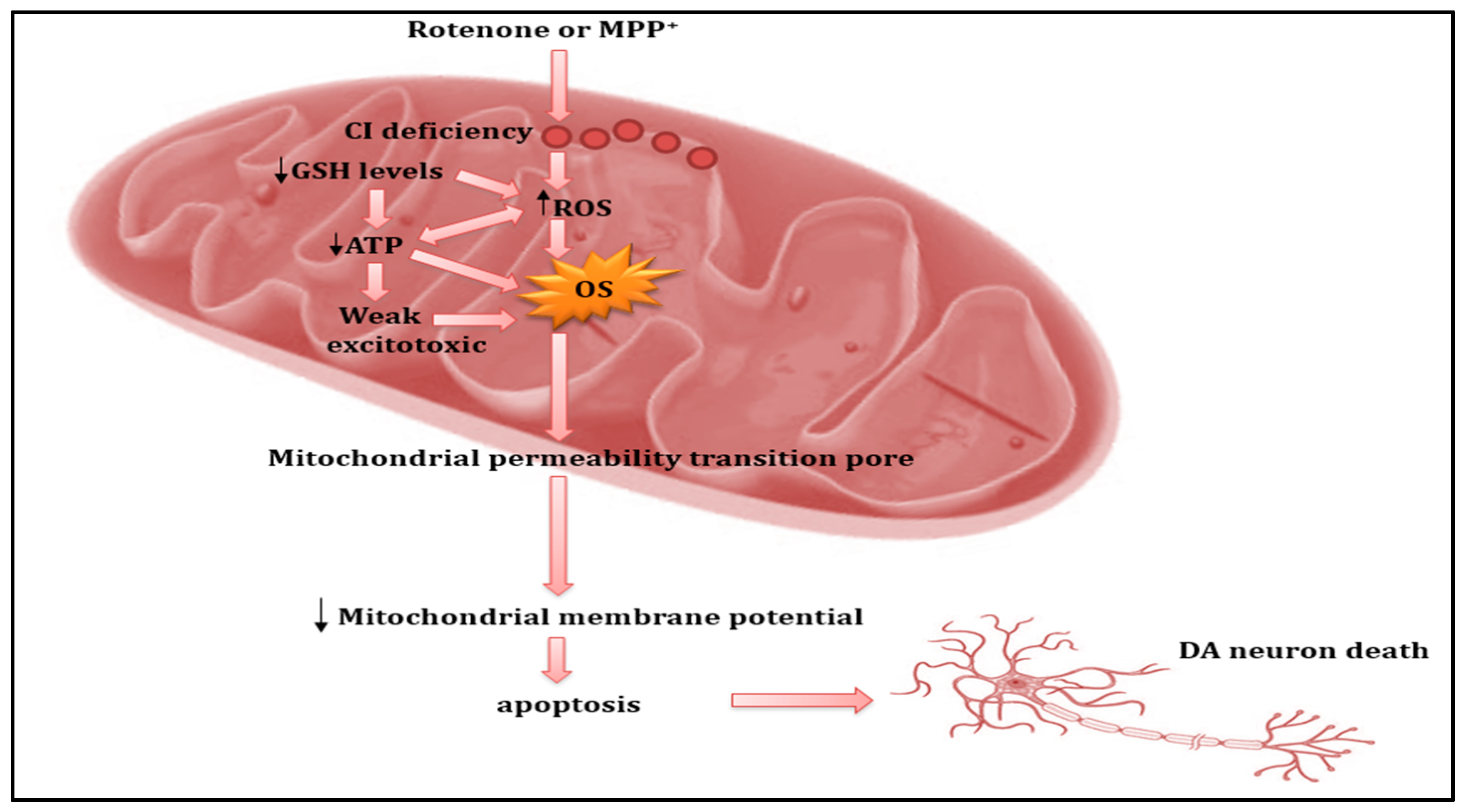
Oxidative Stress: Mechanistic Insights into Inherited Mitochondrial Disorders and Parkinson's Disease


While the mitochondria is responsible for the majority of cellular metabolic energy, it can also result in a number of consequences when its function is compromised. When oxidative stress occurs, this leads to a phenomenon known as mitochondrial catastrophe. Oxidative stress increases reactive oxygen species (ROS) levels which damage the mtDNA due to lesions in the mitochondria. Programmed cell death, or apoptosis, is induced and further impairs mitochondrial function. Errors in metabolism can cause a number of inherited mitochondrial disorders such as Barth syndrome and Friedrerich ataxia.
Mitochondrial dysfunction has also led to the neurological disorder of Parkinson's disease. In 1997, it was discovered that the autosomal dominant mutation in the alpha-synculein (SNKAwas linked to this disorder. Moreover, evidence of IV drug abusers injecting 1-methyl-4-phenyl-1,2,3,4-tetrahydropyridine (MPTP) produced a neurotoxin which induced mitochondrial dysfunction and further led to Parkinson's disease-like symptoms.
I think this was a very interesting article that shed insight into how crucial the mitochondria is. Not only is it important in regulating metabolism, but proper function is necessary to prevent the inheritance of mtDNA disorders. I also thought it was intriguing that IV drug abuse could lead to a disorder as detrimental as Parkinson's disease.

http://www.mdpi.com/2077-0383/6/11/100/htm
https://www.ncbi.nlm.nih.gov/pubmed/29077060

Sunday, November 20, 2016

Giraffes Are Actually Four Species - Not One

The giraffe has been previously considered one species. However, recent research has proven that there are actually four, rather than one, species of giraffes. Giraffes were considered to be split into sub-species before the light of this knowledge based off of their different patterns of coat and their habitat. This study consisted of tracking seven different genomic sequences that researchers chose to study genetic diversity in the mitochondrial DNA from giraffes in Namibia. The mitochondrial DNA evidence displayed that there were distinct differences in four different groups and that these four groups of giraffes had not cross-bred to exchange genetic material for over millions of years. This was enough to prove that there were four distinct species of giraffes now, and there have been for a while. These four species are the Southern Giraffe (Giraffa giraffa), the Masai Giraffe (Giraffa tippelskirchi), the Reticulated Giraffe (Giraffa reticulata), and the Northern Giraffe (Giraffa cameopardalis). Each of these species may be adapted based off of their habitat or their diet. Conservationists believe that based of this information that these four species of giraffes need to be re-assessed for their conservation status. Previously, they were considered a single species, so this data may change the status of them as "Least Concern" to a more threatened status. The four tallest species of mammals are the four recently-discovered giraffe species.


The science in this article indicates that for over a million years these giraffes have been separated into distinct species, yet we have only now discovered this information. This is a reminder that conservation science always is learning new information and there are many strides still to be taken to protect the species of our planets. A giraffe is an animal that everyone knows of, but this proves how much we still do not know about them. This makes me question the species of giraffes we may not have known that have gone extinct to due overlooking them as separate species. These gentle giants need our recognition and to be paid attention to because of their 70% decline in population over the last fifteen years. The mitochondrial DNA that was the sample studied is the same DNA that is studied in ancestry testing in humans. It is interesting to see the vast number of information stored in our DNA and the different ways we can use that information to further our understanding of life around us. 

Works Cited
Department of Health & Human Services. "Mitochondrial DNA." Genetics Home Reference. U.S. National Library of Medicine, June 2016. Web. 20 Nov. 2016. <https://ghr.nlm.nih.gov/mitochondrial-dna#resources>.
DNA Diagnostic Center. "What Is Mitochondrial DNA (mtDNA) and How Is It Used?" Paternity & DNA Testing. DNA Diagnostic Center, 22 Sept. 2014. Web. 20 Nov. 2016. <https://www.dnacenter.com/blog/mitochondrial-dna-mtdna-used/>.
Fennessy, J., and D. Brown. "Giraffa Camelopardalis (Giraffe)." The IUCN Red List of Threatened Species. International Union of Conservation of Nature, 2010. Web. 20 Nov. 2016. <http://www.iucnredlist.org/details/9194/0>.
Gill, Victoria. "Giraffe Genetic Secret: Four Species of Tallest Mammal Identified." BBC News Science & Environment. BBC News, 8 Sept. 2016. Web. 20 Nov. 2016. <http://www.bbc.com/news/science-environment-37311716>.
Morell, Virginia. "Inside the Fight to Stop Giraffes' 'Silent Extinction'" National Geographic. National Geographic Society, 25 June 2015. Web. 20 Nov. 2016. <http://news.nationalgeographic.com/2015/06/150625-giraffes-animals-science-conservation-africa-endangered/>.


Tuesday, October 25, 2016

All-female hybrid fish species that 'uses' males for better genetics

A naturally occurring hybrid fish species, Hexagramos octogrammus/H. grampus (Hoc/Hag), composed of all-female members, is thought to have developed a unique method of evolutionary survival by switching matings between two different male species of the same genus.  The (Hoc/Hag) hybrid females are thought to have a competitive advantage because 100% of their species is capable of producing offspring, thus allowing them to quickly replicate and outnumber other species that produce both male and female offspring.  Replication without variation is an evolutionary disadvantage though, and this can be detrimental to the long term survival of the all-female species due to also developing a decreased ability to genetically adapt to environmental pressures.

Researchers from Hokkaido University in Japan have compared the genes of three species: Hexagramos octogrammus/H. agrammus (Hoc/Hag), H. octogrammus/H. otakii (Hoc/Hot), as well as their maternal pure line, H. octogrammus (Hoc).  Their study, published in Ecology and Evolution, found that the hybrid females, (Hoc/Hag), mate with their choice of two hybrid male species: (Hoc/Hot) or (Hoc/Hag).  The result of either mating always produces 100% all-female hybrid offspring in which both maternal and paternal genes influence their development.  The subsequent generation only inherits the maternal genome though, and excludes the paternal genome from gamete formation when they're able to form their own eggs.  In addition, the all female offspring can only mate with (Hoc) males whose sperm activate their eggs to start development.  The resulting (Hoc) offspring undergo normal germ cell development in which genetic recombination can occur between maternal and paternal genomes, resulting in a more diversified genome for their male/female offspring.

“When a female descendant of one of these backcrossed Hocs mates with a Hag male, a new all-female Hoc/Hag hybrid lineage arises. This could be another factor that increases the diversity of Hoc/Hac hybrids, increasing their survivability,” says the paper’s lead author, Hiroyuki Munehara.
The researchers constructed a mtDNA genealogical tree that showed that the (Hot) and (Hag) species diverged from their common ancestor around 1.5 million years ago.  Furthermore, their analysis also revealed that (Hoc/Hot) hybrids originated from hybrid (Hoc/Hag) females switching choice of host; instead of breeding with (Hag) males, they bred with larger (Hot) males that would better protect their eggs.

Tuesday, December 2, 2014

Skeleton of King Richard III Identified


King Richard III has now become the oldest known individual to ever be identified through DNA. His remains had been unearthed two years ago, in a parking lot in Leicester, England. The archeologists who discovered the skeleton had claimed it to be the remains of King Richard III. This 15th century monarch had been known for stealing the throne, killing his nephews, and ruling for two years before dying in battle. Shakespeare even wrote a play about him. The skeleton showed many signs of being the king’s remains, including battle wounds, uneven shoulders and scoliosis. The parking lot was at the site of a ruined monastery where the king was rumored to have been buried at.


But now that the DNA analysis has been completed by a team of scientists led by University of Leicester geneticists Turi King, the remains are confirmed to be his. The researchers sifted through millions of ribbons of splintered DNA strands to create a DNA profile. They then compared it to the genetic profiles in over 20 generations of the dead king’s family tree, all the way up to his living descendants.

More specifically, the team used the skeleton’s mitochondrial DNA to trace the related female descendants/ancestors in the family tree, and the Y chromosome to trace the related male descendants/ancestors. The mitochondrial DNA was a rare variant to have in England. Furthermore, going through the male living descendants and seeing who shared the Y chromosome, they found that only 4 of the 5 shared the Y chromosome. This means that somewhere in the family tree, a female committed adultery.

I think this is very interesting and really impressive how they were able to identify such an old skeleton using DNA analysis, considering how difficult that process can be. It is also interesting that they even were able to identify adultery in the family. Considering the amount of inbreeding that goes on in royal families to keep the blood “pure”, that woman might have actually done the lineage a favor.

Monday, October 27, 2014

Mitochondrial DNA Causes Drastic Effects On Nuclear DNA

     New research is revealing that subtle changes in mitochondrial function may cause a very broad range of common metabolic and degenerative diseases. Dr. Douglas Wallace is leading the research at The Children's Hospital of Philadelphia. The study has shown that small changes in the ratio of mutant to normal mitochondrial DNA can lead to abrupt changes in the expression of numerous genes within nuclear DNA. These changes also correspond directly with mutations in mitochondrial DNAthat are associated with diabetes, autism, brain disease, muscle disease, heart disease, and lethal infantile disease. 

     Dr. Wallace says, "By showing that subtle changes in the cellular proportion of the same mitochondrial DNA mutation can result in a wide range of different clinical manifestations, these findings challenge the traditional model that a single mutation causes a single disease. The research offers key insights into understanding the underlying cause of metabolic and neurodegenerative disorders such as diabetes, Alzheimer, Parkinson and Huntington disease, as well as human aging. The discrete changes in nuclear gene expression in response to small increases in mitochondrial DNA mutant level are analogous to the phase changes that result from adding heat to ice. As heat is added, the ice abruptly turns to water and with more heat, the water turns abruptly to steam.
     This means that the quantitative change taking place in mitochondrial DNA is producing qualitative results, since it is coordinating changes in nuclear gene expression. Dr. Wallace has been researching mitochondrial DNA for years, beginning in 1988 when he was the first to demonstrate that mitochondrial DNA mutations can cause human disease. Since then, he has continued studying mechanisms by which mitochondrial DNA contribute to diseases by disrupting the body's energy production. 
     I found this article interesting because it still amazes me that mitochondria have their own DNA and that this DNA can have such a profound impact. The implications of knowing more about how this mitochondrial DNA works and its effects on nuclear DNA could be the step we need to combat many genetic diseases more effectively. 

Article: http://www.medicalnewstoday.com/releases/284346.php

Friday, November 22, 2013

The Connection between mtDNA and Breast Cancer Progression


A comparison of normal breast cells (top) versus breast cells with low levels of mtDNA

           A team led by Manti Guha and Narayan Avadhani at the University of Pennsylvania have found the connection between low levels ofmitochondrial DNA and the metastasis of human breast cancer cells. Previously, it was known that reduced amounts of mitochondrial DNA existed in patients with aggressive forms of cancer, but the influence of the low levels was not known. The work may allow for a greater understanding of the disease progression and help clinicians provide treatment that is specific for the varying prognoses.
            Mitochondria have several functions in cells. They function in apoptosis (which can allow for the death of cancer cells before metastasis) and cellular metabolism. Mitochondria also code for proteins that deliver energy. Yet, about 80% of individuals with breast cancer have reduced mitochondrial DNA.
            In the study, mtDNA was reduced in two ways: genetically lowering levels of mtDNA and employing a chemical to reduced DNA. Both treatments were administered to cancerous and non-cancerous breast cells. The cells that had reduced levels of mtDNA took on characteristics of cancer cells. The cells had disorganized structure, the cells metabolism was changed, and the cells were self-renewing. Further, these cells had surface markers that are present on breast cancer stem cells.
            Uncovering the connection between low levels of mtDNA and cancer is significant for several reasons.  mtDNA is now a possibility for a target for treatment of aggressive forms of cancer. Further, such a discovery can allow for more personal, specific cancer treatment. Additionally, the research provides insight into the connection between metastatic diseases and mtDNA levels. There is still much potential with such work, as the team would like to study tumor samples and in vivo mouse models.
            Another recent study has provided insight into the progression of breast cancer. Researchers have discovered the connection between Fragile X Mental Retardation Protein (FMRP) and the advancement of the disease. In mice, decreased metastasis resulted from decrease FMRP levels while secondary metastasis and spread of the cancer to the lungs resulted from high levels. Thus, it is believed that FMRP controls mRNAs affecting cancer progression. The discovery can be used to predict the spread of cancer and to reveal aggressive breast cancer.
            I found both articles were very enlightening and promising. As stated in the article on FMRP, the most common cancer in women is breast cancer. Even when the individual thinks they beat the disease, it can return and spread. For the individuals suffering from this terrible disease, there is little hope and much fear. These studies provide the hope that is lacking, in uncovering the mechanisms of the elusive disease and providing hope for more personalized care. I found the possibility of more personalized care as one of the most significant results of this study. Most individuals, myself included, want to be treated as an individual when seeking medical treatment and want to feel that treatment is most effective for their situation. This study may make that possible for those suffering from one of the most dangerous threats to human life. I found this that article was very intriguing, and I am interesting in seeing the results of the future research that the University of Pennsylvania team will conduct.

 Primary article: http://www.sciencedaily.com/releases/2013/11/131108124850.htm
Secondary Article: http://www.sciencedaily.com/releases/2013/09/130918090754.htm