Showing posts with label Nuclear DNA. Show all posts

Thursday, November 12, 2020

Dead Sea Scrolls


https://www.sciencenews.org/article/dead-sea-scrolls-dna-genetic-clues-origins-hebrew-bible

           https://www.deadseascrolls.org.il/learn-about-the-scrolls/introduction?locale=en_US


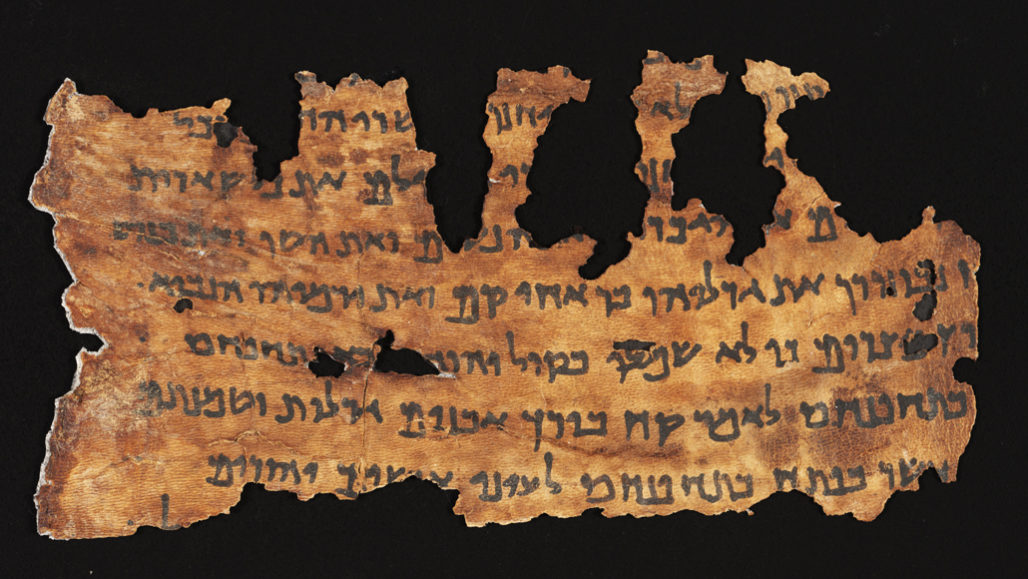
           The Dead Sea Scrolls are some of the oldest and most valuable religious artifacts that man has uncovered. These scrolls were used to distinguish the place of origin and the consistency of material to ensure the scrolls authenticity. Since these scrolls are made out of sheep or cow skin, the DNA of these animals can be investigated and analyzed. Slivers of the scrolls were taken to be researched to begin marking out the genetic map for the animal skins. After excluding the DNA from people who have handled the scrolls, the mitochondrial DNA and nuclear DNA were studied to compare against the samples from other scrolls. Relationships between the scrolls DNA and foreign DNA can be distinguished, determining the place of origin of the sheep or cow used for the scrolls. Through scientific research, the experimenters came to the conclusion that some of the scrolls were made elsewhere not in the community of Qumran - where the scrolls were believed to originated - due to the DNA markers suggesting a second lineage of sheep or cow used for the writings was apparent. This leaves researchers of both of the scientific and religious field to believe the scrolls origin is more broad in terms of location than expected, and that some scrolls were crafted and written after the original scrolls were, suggesting alteration or translation of the original text.    


Tuesday, December 13, 2016

Using Vampire Bat Genetics to Predict Rabies Expansions in Peru


Rabies is a serious viral disease in animals that effects the central nervous system, ultimately leading to brain inflammation and death. This disease is most often transmitted through animal bites, scratches or salvia of infected animals. It causes serious public health risk in Latin America as it causes human death and the death of millions of dollars of livestock every year. The largest cause of rabies spread in Latin America is due to vampire bats and their blood-feeding diet. Although there are efforts to reduce vampire bat populations in epidemic areas, it has proved ineffective because the the death toll of humans and livestock is higher than before and the rabies virus is spreading to areas it was not before. Scientists have come up with the idea to use the genetic analysis of vampire bats in Peru to forecast the migration of the rabies disease. This research has led to the theory that the rabies virus will spread to the Pacific coast of Peru by the year 2020. Peru's Pacific coast is currently VBRV(Vampire Bat Rabies Virus)-free, however, evidence from testing the genomic sequences of vampire bats in VBRV-epidemic areas have given researchers insight on how the rabies virus is spreading and it suggests it is moving towards the coast. They analyzed 264 samples of rabies virus collected from livestock all over the country over fifteen years, and that it could be traced back to one of three common ancestors. The virus lineages were traced back the the east North Andes, east South Andes, and the inter-Andean valleys south of these areas. To collect data from the vampire bats, they used tissue samples from 468 vampire bats across Peru over five years and examined the mitochondrial DNA and the nuclear DNA. The data suggested that females did not move between different regions of Peru and that spatial distribution of the three location lineages was at fault of the male vampire bats. Based off of this information, scientists were able to create a map that forecasted future rabies invasions. To confirm their map's predictions, these scientists have been tracking livestock in their predicted areas and seen an increase in rabies spread toward the coast. Understanding how a disease spreads can allow us to prevent or control proliferation and prevent epidemics. 
Rabies is most commonly associated with canines in the United States, or wildlife such as foxes, raccoons, and squirrels. However, in the United States the most common source of human rabies is from vampire bats as well. At every veterinary hospital, animal clinic, and wildlife rehabilitation clinic in the nation, it is required that every animal handled is up to date on it's rabies shot. Most jobs that require jobs handling wildlife, including my job with exotic birds and wildlife animal care center, require humans to receive a preliminary rabies vaccine before handling any animal that could possibly have rabies. It is the worst time anyone could have at the doctors to receive those shots. If an animal is suspected of having rabies, this is taken very seriously in the veterinary field. Since rabies is a disease that effects the central nervous system, and not blood or tissue or urine/feces, the way to test for an animal having rabies is extremely gruesome. The animal must be euthanized and the head must be decapitated and sent to a lab to test the brain tissue for rabies. This process may seem harsh, especially when it affects domesticated animals who bit someone and may not have rabies being euthanized and having their head removed to test, but it is the only accurate testing method for rabies. This is done so that the people who have come in contact with the rabid animal can receive medical treatment if the animal did in fact have rabies. This has happened at the practice I work for only a handful of times, and it never gets easier for anyone involved in the process. The spread of rabies in Peru being able to be tracked is one step closer in understanding the disease, and hopefully making strides toward it's containment. 

Sources
Centers for Disease Control and Prevention, National Center for Emerging and Zoonotic Infectious Diseases, and Division of High-Consequence Pathogens and Pathology. "Learning about Bats and Rabies." Rabies. Centers for Disease Control and Prevention, 22 Apr. 2011. Web. 13 Dec. 2016. <https://www.cdc.gov/rabies/bats/education/>. 
Centers for Disease Control and Prevention, National Center for Emerging and Zoonotic Infectious Diseases, and Division of High-Consequence Pathogens and Pathology. "Rabies Basics." Rabies. Centers for Disease Control and Prevention, 05 Oct. 2016. Web. 13 Dec. 2016. <https://www.cdc.gov/rabies/>. 
Escobar, Luis E., A. Townsend Peterson, Myriam Favi, Verónica Yung, and Gonzalo Medina-Vogel. "BAT-BORNE RABIES IN LATIN AMERICA." Revista Do Instituto De Medicina Tropical De São Paulo. Instituto De Medicina Tropical, Jan. 2015. Web. 13 Dec. 2016. <https://www.ncbi.nlm.nih.gov/pmc/articles/PMC4325525/>. 
National Geographic Society. "Desmodus Rotundus: Vampire Bat." Common Vampire Bat. National Geographic, 2016. Web. 13 Dec. 2016. <http://animals.nationalgeographic.com/animals/mammals/common-vampire-bat/>. 
The New Jersey Department of Health, Communicable Disease Service, Infectious and Zoonotic Diseases Program, and Zoonotic Disease Unit. "Packaging and Transport of Animal Rabies Specimens to the New Jersey Rabies Laboratory." Rabies Laboratory Form. The New Jersey Department of Health, Mar. 2014. Web. 13 Dec. 2016. <https://www.nj.gov/health/cd/documents/faq/specimentophel.pdf>. 
University of Georgia. "Scientists Use Genetic Analysis to Forecast Spatial Expansion of Rabies in Peru." Science News: Genetics. ScienceDaily, 16 Sept. 2016. Web. 13 Dec. 2016. <https://www.sciencedaily.com/releases/2016/09/160912161303.htm>.

Sunday, December 4, 2016

Mitochondrial Replacement Therapy Allows Birth of First Child with DNA from Three Parents

A few months ago, the first healthy child toever have DNA from three parents was born in New York to a couple from Jordan. This was due to mitochondrial replacement therapy, a controversial procedure in which nuclear DNA is removed from a donor egg cell containing healthy mitochondria, while the nuclear DNA from a potential mother with defective mitochondria is inserted into the donor cell. The donor egg cell with the mother’s nuclear DNA is then fertilized by the father’s sperm. Though this procedure is controversial because it utilizes DNA from three parents rather than two, it is necessary in the case where the mother’s mitochondria contains harmful DNA. This harmful mitochondrial DNA can be fatal to babies. The mother of the child recently born has ¼ of her mitochondria mutated, and had two children before this experiment that were both killed from Leigh Syndrome, caused by the defective mitochondria.


However, that does not mean that the experiment is 100% perfect. Often, a few of the defective mitochondria may alsobe taken out of the mother’s cell along with the nuclear DNA during a processcalled carry-over. This unhealthy mitochondria can become prevalent in the donor cell, and can outcompete the healthy mitochondria, replicating and becoming numerous enough to cause the disease in the child. Scientists believe that this is due to the speed of mitochondrial replication, as certain genes could cause some mitochondria to replicate faster than others, resulting in unhealthy mitochondria with these genes to become more prevalent than healthy mitochondria without. Scientists hope to combat this by matching mitochondrial haplotypes between the mother and donor cells so that their speed of replication would be about the same.


Though this experiment is revolutionary, the United States as well as many other countries ban the procedure. Because of this, the doctor who performed the procedure, Dr. Zhang, had to travel to Mexico along with the couple to complete the procedure legally. However, the UK may be the first country to explicitly allow this procedure, and if approved procedures may happen as early as March or April. This is extremely important because if a highly developed country allows a procedure with a high success rate, other countries may follow suit and allow couples where the mother has faulty mitochondria to have children of their own.


Friday, May 6, 2016

New Technology Applied to Studdying Nuclear Pores

Scientist have recently begun putting a new technology to use to study the micro-physiology of our cells.  With the aide of an atomic force microscope (AFM), researchers from Basel University have been able to observe the nuclear pores that control traffic through the nucleus of a cell.  The most notable discovery from this research was the ability of these pores to prevent unwanted chemicals from entering the cell.  This was observed via microscopic tentacles that monitor movement in and out of the nucleus.  The AFM does not work like any regular microscope.  This machine uses a fine-tipped feeler to sense the environment in which it has been emmersed.  This method and information could prove incredibly useful for the study of carcinogens and how they enter the nucleus.

Monday, October 27, 2014

Mitochondrial DNA Causes Drastic Effects On Nuclear DNA

     New research is revealing that subtle changes in mitochondrial function may cause a very broad range of common metabolic and degenerative diseases. Dr. Douglas Wallace is leading the research at The Children's Hospital of Philadelphia. The study has shown that small changes in the ratio of mutant to normal mitochondrial DNA can lead to abrupt changes in the expression of numerous genes within nuclear DNA. These changes also correspond directly with mutations in mitochondrial DNAthat are associated with diabetes, autism, brain disease, muscle disease, heart disease, and lethal infantile disease. 

     Dr. Wallace says, "By showing that subtle changes in the cellular proportion of the same mitochondrial DNA mutation can result in a wide range of different clinical manifestations, these findings challenge the traditional model that a single mutation causes a single disease. The research offers key insights into understanding the underlying cause of metabolic and neurodegenerative disorders such as diabetes, Alzheimer, Parkinson and Huntington disease, as well as human aging. The discrete changes in nuclear gene expression in response to small increases in mitochondrial DNA mutant level are analogous to the phase changes that result from adding heat to ice. As heat is added, the ice abruptly turns to water and with more heat, the water turns abruptly to steam.
     This means that the quantitative change taking place in mitochondrial DNA is producing qualitative results, since it is coordinating changes in nuclear gene expression. Dr. Wallace has been researching mitochondrial DNA for years, beginning in 1988 when he was the first to demonstrate that mitochondrial DNA mutations can cause human disease. Since then, he has continued studying mechanisms by which mitochondrial DNA contribute to diseases by disrupting the body's energy production. 
     I found this article interesting because it still amazes me that mitochondria have their own DNA and that this DNA can have such a profound impact. The implications of knowing more about how this mitochondrial DNA works and its effects on nuclear DNA could be the step we need to combat many genetic diseases more effectively. 

Article: http://www.medicalnewstoday.com/releases/284346.php