Showing posts with label genetic analysis. Show all posts

Wednesday, April 13, 2022

Baby whale genetic testing may help save species, study says


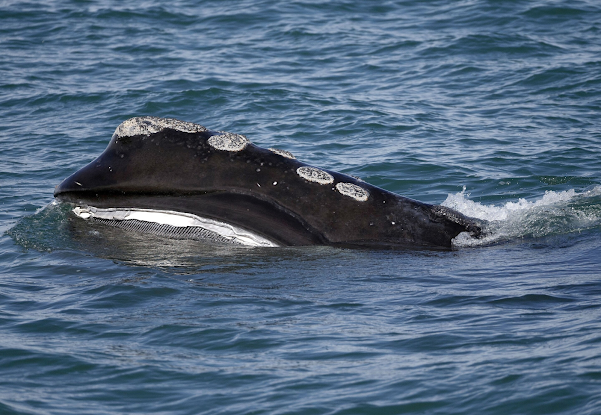
In an article posted by ABC News, a team of scientists led by researchers at the New England Aquarium in Boston studied critically endangered North Atlantic right whales. The scientists analyzed decades of data about the whales and found that they had more success tracking the animals’ survival, growth rates, and life histories when they had access to genetic samples. The results of this study were published in Mammalian Biology.


The scientists focused on 13 right whale calves identified via genetics and were able to determine the ages of 12 of the whales and match 11 with their mothers. They even found that four believed to be dead were actually still alive. Right whales have been historically tracked using photo ID. According to Philip Hamilton, the senior scientist at the aquarium, the photographic archive is still important but it is even more helpful when used alongside genetic data.


Right whales were once abundant off the East Coast but their populations were decimated during the commercial whaling era. The whales are now vulnerable to ship strikes and entanglement in fishing gear. Climate change is also a new danger that has been forcing whales to flee coastal areas in search of food, which puts them at risk to the other dangers previously mentioned.


A greater reliance on genetic data can help fill in the gaps about these whales. Relying on genetics in addition to photo or acoustic data adds another layer of complexity that can help scientists further understand this very endangered and complex species. The researchers learned that it’s possible for mother right whales to be seen without their calves in feeding grounds for short periods. Previously, calves were assumed to be dead if their mothers were alone on feeding grounds during the birth year, according to the study.


Samples used in the biopsy were sent to Saint Mary’s University in Halifax, Nova Scotia, for genetic analysis. According to Timothy Fraiser, a biology professor at the university who was involved in the research, integrating the genetic samples with field research yields data that is more comprehensive than the sum of its parts. This leads to a much richer understanding of right whales than either approach could provide on its own.


Related article: https://www.nature.org/en-us/newsroom/florida-north-atlantic-right-whales-fight-for-survival/


Friday, December 10, 2021

Genetic similarities between PTSD and other mental health disorders


In the article "Genetic analysis yields new insights into PTSD", a study conducted by researchers at Yale and the University of California-San Diego (UCSD) has uncovered that there are genetic similarities between PTSD and other mental disorders such as anxiety and bipolar disorder. Researchers are also trying to identify the genetic cause of neuropsychiatric diseases. There are various symptoms between PTSD and other mental health disorders. There are three clinical symptoms linked to just PTSD which are re-experience of a traumatic event, anger and irritability, ad avoidance of subject relating to past trauma. The gene variants are also found in disorders like depression. Drugs used for major depression or schizophrenia can be used to treat PTSD. The gene MAD1L1 of PTSD which regulates cell cycling, is also found in schizophrenia and bipolar disorder patients. The specific gene can be a general risk factor for people of different kinds of mental or behavioral disorders.

https://news.yale.edu/2021/01/28/genetic-analysis-yields-new-insights-ptsd

https://www.nimh.nih.gov/health/topics/post-traumatic-stress-disorder-ptsd 

Wednesday, April 28, 2021

Hominid DNA Analyzed from Dirt


    Recently researchers have learned how to extract prehistoric human DNA from the dirt and mud in ancient human cave sediments. This is useful because finding ancient human skeletal remains is very rare. Scientists use this genetic analysis to track the migration of ancient humans throughout the world and to understand a timeline of interactions between ancient humans and neanderthals.

    In this dirt/mud extract, chromosomal DNA is very hard to find, so researcher have to try to find hominid mitochondrial DNA. This leads us to find hominid DNA in caves where no hominid remains remain. I think this dirt/mud mitochondrial genetic analysis can give us a further insight into anthropological history and can give us further insight into out relationship with neanderthals.


Links:


https://www.sciencenews.org/article/neandertal-dna-cave-mud-migration-eurasia


https://science.sciencemag.org/content/356/6338/605

Thursday, March 28, 2019

Devious Defecator: Who done it

A warehouse in Atlanta, Georgia named Atlas Logistics Group Retail Services came across an issue in which an unknown employee was defecating on their floors near the food they store for retail stores. The supervisors of the warehouse proposed and used a cheek swab for genetic analysis on two employees to try to link the DNA to one of them that they believed committed the dirty crime. The DNA test came back and proved both men innocent of there accused crime. The men, upset from the jokes and accusations, sued the company. 

Federal judge, Amy Totenburg, ruled that the workers had a case and were to be awarded damages that were undecided due to the fact that there is not many cases regarding situations of the nature in this one. According to the Genetic Information Nondiscrimination Act (GINA), "although the test did not reveal any medical information, it fell under the GINA law" which is used to protect people from genetic information that they feared could be used against them. Ultimately the judge ruled that "A genetics test is a genetic test is a genetics test". The real argument that the article provides us is, if a company requests genetic information but it provides no medical information, does it break the GINA act and infringe your rights as a human?

Personally, I believe that a company who demands any employee to submit genetics testing, is in fact, breaking the GINA act and violating a persons rights. Regardless if the test is used medically or for another genetic reason, it all involves genetics of people who are to be protected. I do also believe that the article provides us with a situation where employers and employees should know the laws regarding genetics and genetic testing. 


Sunday, February 12, 2017

Invading Danger: Gecko Style


Image result
A newly discovered Gecko has developed a way to evade danger. The fish-scale gecko rips off its scales and skin so it can slip away unharmed when attacked. The ripped scales resembles a pink flesh, and through the translucent tissue, the spine and blood vessels can be seen. Losing the skin and scales is very easy for the gecko and they develop a new skin within a few weeks. The new scales are different from the previous one. This newly discovered gecko was discovered in the limestone karst of Northern Madagascar. Its' scale is the largest from any geckos. The scales are a decoy to distract the attackers while the geckos have time to escape naked. A genetic analysis have suggested that there might be about ten species of these but only five are recognized so far. These new species could be a descendant from the species; Geckolepis. The only differences are found in its eye bones and enormous size of its scale. They are also hard to obtain because of their speed, agility, and the way their skins are easily removed.
These geckos have a really cool way of surviving! I do like the fact that new species are evolving in different ways. This technique is really different from how other species escape from their attacker. 

Tuesday, December 13, 2016

Using Vampire Bat Genetics to Predict Rabies Expansions in Peru


Rabies is a serious viral disease in animals that effects the central nervous system, ultimately leading to brain inflammation and death. This disease is most often transmitted through animal bites, scratches or salvia of infected animals. It causes serious public health risk in Latin America as it causes human death and the death of millions of dollars of livestock every year. The largest cause of rabies spread in Latin America is due to vampire bats and their blood-feeding diet. Although there are efforts to reduce vampire bat populations in epidemic areas, it has proved ineffective because the the death toll of humans and livestock is higher than before and the rabies virus is spreading to areas it was not before. Scientists have come up with the idea to use the genetic analysis of vampire bats in Peru to forecast the migration of the rabies disease. This research has led to the theory that the rabies virus will spread to the Pacific coast of Peru by the year 2020. Peru's Pacific coast is currently VBRV(Vampire Bat Rabies Virus)-free, however, evidence from testing the genomic sequences of vampire bats in VBRV-epidemic areas have given researchers insight on how the rabies virus is spreading and it suggests it is moving towards the coast. They analyzed 264 samples of rabies virus collected from livestock all over the country over fifteen years, and that it could be traced back to one of three common ancestors. The virus lineages were traced back the the east North Andes, east South Andes, and the inter-Andean valleys south of these areas. To collect data from the vampire bats, they used tissue samples from 468 vampire bats across Peru over five years and examined the mitochondrial DNA and the nuclear DNA. The data suggested that females did not move between different regions of Peru and that spatial distribution of the three location lineages was at fault of the male vampire bats. Based off of this information, scientists were able to create a map that forecasted future rabies invasions. To confirm their map's predictions, these scientists have been tracking livestock in their predicted areas and seen an increase in rabies spread toward the coast. Understanding how a disease spreads can allow us to prevent or control proliferation and prevent epidemics. 
Rabies is most commonly associated with canines in the United States, or wildlife such as foxes, raccoons, and squirrels. However, in the United States the most common source of human rabies is from vampire bats as well. At every veterinary hospital, animal clinic, and wildlife rehabilitation clinic in the nation, it is required that every animal handled is up to date on it's rabies shot. Most jobs that require jobs handling wildlife, including my job with exotic birds and wildlife animal care center, require humans to receive a preliminary rabies vaccine before handling any animal that could possibly have rabies. It is the worst time anyone could have at the doctors to receive those shots. If an animal is suspected of having rabies, this is taken very seriously in the veterinary field. Since rabies is a disease that effects the central nervous system, and not blood or tissue or urine/feces, the way to test for an animal having rabies is extremely gruesome. The animal must be euthanized and the head must be decapitated and sent to a lab to test the brain tissue for rabies. This process may seem harsh, especially when it affects domesticated animals who bit someone and may not have rabies being euthanized and having their head removed to test, but it is the only accurate testing method for rabies. This is done so that the people who have come in contact with the rabid animal can receive medical treatment if the animal did in fact have rabies. This has happened at the practice I work for only a handful of times, and it never gets easier for anyone involved in the process. The spread of rabies in Peru being able to be tracked is one step closer in understanding the disease, and hopefully making strides toward it's containment. 

Sources
Centers for Disease Control and Prevention, National Center for Emerging and Zoonotic Infectious Diseases, and Division of High-Consequence Pathogens and Pathology. "Learning about Bats and Rabies." Rabies. Centers for Disease Control and Prevention, 22 Apr. 2011. Web. 13 Dec. 2016. <https://www.cdc.gov/rabies/bats/education/>. 
Centers for Disease Control and Prevention, National Center for Emerging and Zoonotic Infectious Diseases, and Division of High-Consequence Pathogens and Pathology. "Rabies Basics." Rabies. Centers for Disease Control and Prevention, 05 Oct. 2016. Web. 13 Dec. 2016. <https://www.cdc.gov/rabies/>. 
Escobar, Luis E., A. Townsend Peterson, Myriam Favi, Verónica Yung, and Gonzalo Medina-Vogel. "BAT-BORNE RABIES IN LATIN AMERICA." Revista Do Instituto De Medicina Tropical De São Paulo. Instituto De Medicina Tropical, Jan. 2015. Web. 13 Dec. 2016. <https://www.ncbi.nlm.nih.gov/pmc/articles/PMC4325525/>. 
National Geographic Society. "Desmodus Rotundus: Vampire Bat." Common Vampire Bat. National Geographic, 2016. Web. 13 Dec. 2016. <http://animals.nationalgeographic.com/animals/mammals/common-vampire-bat/>. 
The New Jersey Department of Health, Communicable Disease Service, Infectious and Zoonotic Diseases Program, and Zoonotic Disease Unit. "Packaging and Transport of Animal Rabies Specimens to the New Jersey Rabies Laboratory." Rabies Laboratory Form. The New Jersey Department of Health, Mar. 2014. Web. 13 Dec. 2016. <https://www.nj.gov/health/cd/documents/faq/specimentophel.pdf>. 
University of Georgia. "Scientists Use Genetic Analysis to Forecast Spatial Expansion of Rabies in Peru." Science News: Genetics. ScienceDaily, 16 Sept. 2016. Web. 13 Dec. 2016. <https://www.sciencedaily.com/releases/2016/09/160912161303.htm>.

Sunday, March 15, 2015

A Treatment plan for Cold Sores?

Cold sores, also known as fever blister, are small blisters that develop on or around the lip area. When one has a cold sore the skin around the blister is usually red and swollen. Cold sores will take several days to two weeks to heal. Most cold sores are a product of a virus. The virus is the herpes simplex virus type 1 or HSV-1. Roughly twenty percent of people get these cold sores regular. Research say that the people that do get the cold sores normally can thank genetics. 
The virus type 1 (HSV-1) is found in nine out of ten people, but cold sores only effect the minority. Scientists have proposed the question as to why only the minority get these sore when the virus is found in so many people. In a study researchers at the University of Edinburgh in Scotland analyzed thousands of genes. They studied the genes to see which ones were responsible for halting the virus by making certain protein. In this studied they found multiple genes that could be preventing the virus from becoming active. When the researchers took a look at it from the opposites end, they found a mutated gene that was in people who got cold sores. The mutated IL28B gene was present in the blood samples of twenty people who had cold sores. The mutated IL28B gene is unable to produce the protein need to stop the virus from creating cold sores. The mutated gene leaves the body's immune system unable to protect itself again the cold sores.

The discovery of the mutated gene and its affect on the HSV-1 virus has open the door for a treatment  plan of the cold sores and other infection caused by HSV-1. The work done in this study was interesting. The study was first unsuccessful until the researchers looked at in reverse. The study will provided crucial information to help treat and prevent the HSV-1 virus from becoming active. This I though, was wonderful because the treatment could be used for all kinds of diseases, other than cold sores, that the virus causes. 

Monday, December 9, 2013

Genetic Analyses: a helpful tool in identifying the source of Hepatitis C


Genetic analyses have been used more and more each year in the identification of the source of diseases. Specially, the article linked here shows how the genetic analysis of the transmission of the virus Hepatitis C was used to decipher where the disease spread from and how fast it spread. It is interesting to see just how complicated these analyses can get when diseases are involved. Unfortunately, with this type of research disease sometimes spreads faster than the scientists can research it. This was often the case when the scientists in Spain were using these analyses on the Hepatitis C virus. Another complication with these methods is the high rate of mutation amongst the Hepatitis c virus. As the article reads, "another consequence of the high viral mutation rate is that there are millions of variants of HCV kicking around in each infected person’s liver, and only a very small fraction of those are present in any given blood sample, making matches between viral sequences in the source and those suspected to have been infected by that source even harder to pin down." All of these components make it exciting to see the world of genetics spreading in all areas of life, and hopefully eventually helping solve the mysteries of diseases.


http://www.geneplanet.com/personal-genetic-analysis.html

Friday, December 6, 2013

23andMe to Only Provide Ancestry, Raw Genetics Data During FDA Review


23andMe is a genetic testing company of growing popularity that, for a fee, allows users to get their genes tested and analyzed. Through this process, a person could get a look into over 200diseases and conditions, heritage, and more and compare their results to others. The information gained would be used for education and further research. Recently, however, the Food and Drug Administration has made the company stop analyzing the genes while they review the company. The FDA claimed that 23andMe was not approved by the government to release information regarding diseases. Fear over consumers using the information to make life changing and drastic choices is the FDA's primary concern and that consumers would be more likely to take matters into their own hands rather than consult a professional. Another fear was that 23andMe would sell the data gained from consumers to other organizations, though the company has firmly said they would not share information without user consent.

The idea that 23andMe has been restricted in sharing the knowledge which seems to rightfully belong to the consumer seems strange. While it may make a person take unnecessary precautions it could also help a person make a life saving decision. Not to mention it is a portal for education. 23andMe claims that if approved by the FDA, they will go back to giving out health related information based on gene analysis and those who purchase their gene kit and do not get have health results will get them.

Article: http://www.cbsnews.com/news/23andme-to-still-provide-ancestry-raw-genetics-data-during-fda-review/
23andme Official notice: https://www.23andme.com/ancestry-only-notice/

Thursday, November 7, 2013

Report claims that scientists are able to edit any part of the human genome


In Great Britain a new technique known as Crispr, enables scientists to engineer parts of the genome with extreme precision. This type of precision holds the key to new treatments towards cancer, HIV, and inherited genetic disorders. Crispr operates by enabling the most detailed and specific possible alteration to any part of DNA of the 23 pairs of human chromosomes without introducing unintended mutation or flaws. 2006 Nobel Prize winner Craig Mello describes Crispr as, “incredibly powerful and it has many applications, from agriculture to potential gene therapy in humans.” Tofigure out the alterations that could take place Crispr works by using an RNA guide molecule that can be programmed to match any unique DNA sequence in the human genome. The molecule is attached to a special enzyme that cut both strands of the DNA double helix. The copied DNA then is inserted into the double helix and defective DNA is deleted. Some scientists are arguing that the technique could be used to eliminate certain genetic diseases like Down Syndrome and Huntington’s Disease by altering the DNA of an embryo before implanting it in the mother’s womb.

http://www.foxnews.com/science/2013/11/07/report-genetics-breakthrough-enables-scientists-to-edit-any-part-human-genome/

http://guardianlv.com/2013/11/genetic-crispr-radical-game-changer-against-incurable-conditions/

Tuesday, October 29, 2013

Spit out your gum and become a sculpture

Ever wounder what happens to that piece of gum you spit out on the sidewalk or that used tissue you threw away well wounder no more. Heather Dewey Hagborg , Ph.D. candidate in Electro Arts at Resselaes Polytechnic Institute, who is living in New York is putting all of those used tissues and chewed pieces gum to good use. Hagborg uses the chewed gum to retrieve DNA, by genetic analysis, from the person who chewed it and uses 3D printing techniques to creates a 3D facial sculpture of that person without ever having to meet that person in person. Hagborg gets most of her art materials from public sidewalks, subways, and public bathrooms in New York. She mostly uses items people have left saliva or DNA on like gum, cigarette butts, used tissues, and what ever else she can find. With all the items she finds she creates a exhibit of anonymous strangers. Hagborg does not create an exact copy of the persons face, but she creates more of a resemblance of the person.      

I found this to be very interesting because I never really thought people would want to use someones used and chewed gum to create a sculpture of them. It also interested me because the creator of the sculptures was using pretty much anything that people had left their spit on to create an exact 3D sculpture of their face.