Showing posts with label bipolar disorder. Show all posts

Thursday, November 20, 2025

Genetic Breakthroughs in Bipolar Disorder Blog #2


Angelina Tadros

Genetics Blog #2

Dr. Barbato

November 20, 2025


Genetic Breakthroughs in Bipolar Disorder


Bipolar disorder (BD) is a highly heritable psychiatric condition. Its genetic basis has been difficult to map because it involves many small genetic effects rather than a singular “bipolar gene”. This large multi-ancestral study broadens our understanding by identifying 298 genetic loci linked to BD, making it one of the strongest genetic analyses done so far. The researchers compared clinically diagnosed cases with a large set of self reported data (from 23AndMe and others), finding that the self reported samples often more closely resemble BD type II, while clinically established samples matched better with BD type I and schizophrenia related genetic patterns. This shows that bipolar disorder varies across different groups of patients (clinically diagnosed and self reported), and that the type of sample researchers use can influence the kind of genetic patterns they see.

This study further revealed that many of the identified genetic variants influence pathways involved in synaptic function( how neurons communicate with each other at the synapses), dopamine and calcium signaling, and specific neuron types in the prefrontal cortex and hippocampus- areas heavily involved in mood regulation. Genetic risk scores are able to now give some sort of an idea of who might inherit/develop bipolar disorder, especially when using high quality clinical data, although they are not yet reliable enough for medical decisions. Still, the study identified over 100 genes that may contribute to the disorder, showing links between bipolar disorder, schizophrenia, and other mental health conditions.

Figure 1-shows the correlation, and standard error, between BD and other disorders

This research is important for individuals living with bipolar disorder because it ensures that BD is a biological, brain-based condition, not an issue of personal weakness. By exposing how complex the genetics of bipolar disorder truly are, this study helps scientists move a step in the right direction toward more accurate/precise diagnoses and possibly better treatments at some point in the future. While the results are not yet entrusted to predict who will get BD, it offers an opportunity to better understand and grow in how we think and address similar situations. The study ultimately brings us closer to understanding its biology and offers hope for improved therapies in the future.

Article link +picture link 

https://www.nature.com/articles/s41586-024-08468-9

Similar article https://www.thelancet.com/journals/lancet/article/PIIS0140-6736(09)60072-6/abstract


Tuesday, March 25, 2025

Study Illuminates the Genetic Architecture of Bipolar Disorder

 NIH Study Sheds Light on a Common Mental Disorder


    A very common mental disorder named Bipolar disorder is a chronic mental health conditioned ultimately characterized by extreme fluctuations in mood, energy, and lastly behavior. In the article, it goes ahead and explains many people feeling extremely "up" or irritable and also feeling very "down" or lack of pleasure. This disorder can be treated with medication, but over a long period of time it can get challenging to keep up with. The study suggests "a persons risk for developing bipolar disorder is influenced by many genes but open questions remain about the full range of genes involved and whether they differ for specific subtypes." This study is the largest to date with including 158,036 people with the specific disorder and 2,796,499 total people who do not have the disorder. The participants were of East Asian, African American, Latino, and European. In this study they found almost 300 gene locations and 36 unique genes being linked to this disorder. There were shown to be many overlapping other mental disorders like depression and schizophrenia. This research is a building block and new medications or approaches can be sought out and identified to help individuals suffering from bipolar disorder and even other types.


    My dad suffers from bipolar disorder and I know a few others who do to. It is more common than we know and some people just brush the symptoms off or don't know what to look for, so it gets untreated. It is great that researchers want to know more about the architecture of it and what genes make up the mental disorder. More studies and research can help educate individuals suffering from this specific disorder or even healthcare workers can learn something too. I wonder what research in the future will look like and what advancements in medicines and approaches there will be to help people like my dad. 


Sources:

https://www.nimh.nih.gov/news/science-updates/2025/study-illuminates-the-genetic-architecture-of-bipolar-disorder

https://www.nimh.nih.gov/health/topics/bipolar-disorder

Sunday, February 18, 2024

Bipolar Disorder Linked to Genetics?

    In the article written by the National Institute of Mental Health, researchers have identified genetic locations related to bipolar disorder and tell us the possible biological cause for the disorder. The study also compared the overlap between bipolar I disorder (manic and sometimes depressive episodes) and bipolar II disorder (depressive and hypomanic episodes). Bipolar I disorder shows a stronger genetic correlation with schizophrenia, while bipolar II disorder correlates with major depression. Now it is also noted that traits such as excessive alcohol consumption, smoking, and sleeping issues can also affect bipolar disorder. To test the genome and understand differences researchers sampled 57 groups across Europe, North America, and Australia. This includes about 41K people with bipolar disorder, and 371K without. 64 genomic locations were noted as risk loci pertaining to this issue, which means this study identified 33 more than previously identified in previous studies. Those 64 genomes include 161 individual genes where some involve how brain neurons signal each other. This allows targets for biological treatments with specific medication to help treat bipolar disorder.

    Bipolar disorder is a mental illness known for its highs and lows. I truly believe that more research into not just environmental causes but also genetic risks could make someone more susceptible to exhibiting symptoms of this illness. It is interesting to see how they can identify differences in loci that can cause the neurons to not signal properly, but also affect how the medication given to treat it affects our brain. If research can understand biologically how bipolar disorder affects people's brains, we can create more personalized treatments for those who have this disorder.

Sources:

Genomic Data From More Than 41,000 People Shed New Light on Bipolar Disorder. 2021 Sep 29. National Institute of Mental Health (NIMH). https://www.nimh.nih.gov/news/science-news/2021/genomic-data-from-more-than-41000-people-shed-new-light-on-bipolar-disorder.

Bipolar disorder - Symptoms and causes - Mayo Clinic. 2022 Dec 13. Mayo Clinic. https://www.mayoclinic.org/diseases-conditions/bipolar-disorder/symptoms-causes/syc-20355955.

Sunday, October 22, 2023

Genetic Basis of Postpartum Depression

PPD, GABA, and the Thalami


    A recent study from the UNC School of Medicine revealed that 14% of the variability in postpartum depression (PPD) is due to genetic factors/on a genetic basis and also provided a glimpse into the connections PPD has with a variety of pre-existing psychiatric disorders. The basis of PPD symptoms lays with GABAergic neurons in the hypothalamus and thalamus; areas of your brain responsible for regulatory functions (hunger, thirst, thyroid function, etc), and seem to have promising advancements for future PPD research. This data was collected using a genome-wide-association study and compiled data in order to get a bigger glimpse into PPD. Jerry Guintivano, PhD, assistant professor of psychiatry at the UNC School of Medicine, was able to identify similarities in the genetic architecture of PPD and major depression, bipolar disorder, anxiety disorders, post-traumatic stress disorder, insomnia, and polycystic ovary syndrome, meaning "...PPD symptoms likely occur as a result of the interplay between the same genes involved in these other psychiatric and hormone-related conditions." Furthermore, the research concluded a link between PPD, its genetic architectural siblings, and GABAergic neurons in the hypothalamus and thalamus of the brain: neurons releasing GABA neurotransmitters appear to have a link to PPD and its similar familial connections of disorders. Brexanolone is a common drug used to treat PPD and now researchers are able to see the interconnectedness of Brexanolone and the two regions of the brain, which is promising for additional treatment in the foreseeable future. Due to such a wide study and too few PPD cases, however, the researchers at UNC were unable to identify specific locations on the genome or loci that are consistently similar amongst the data group.

    This study was fascinating to read and it provided an overlap between multiple specialties in biology -- from neuroscience to anatomy to physiology. Women's health is making big strides in the 21st century and I think this article is just another step towards more progress being made. The linkage between hormones and psychiatric disorders seems to be a hot topic, and scientists had avoided looking at female models for a long time due to the "complexity" of female hormones and their interactions with physiological processes in the body. But now, we have more evidence that encourage this research and should make women feel a lot better about the improvements being made and the connections established between the two factors. Furthermore, the researchers had also confirmed that PPD is genetic which is also a huge step as well! This can impact treatment plans for pregnant women and might improve their quality of postpartum treatment if they are better prepared and more aware of their chances for PPD. Nevertheless, this study was so interesting to read about and I love the idea of its medical/pharmaceutical improvements as well. 


LINKS:

1) https://neurosciencenews.com/post-partum-depression-genetics-24968/ 

2) https://news.unchealthcare.org/2023/10/researchers-confirm-postpartum-depression-heritability-home-in-on-treatment-mechanism/ 


Thursday, September 21, 2023

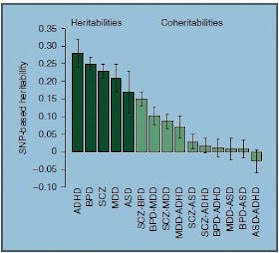
Mental Disorders and Their Heritability

Chart showing genetic overlap of mental disorders


Mental disorders, such as ADHD, BPD, SCZ, MDD, and ASD, are traceable to the same genetic variations. People who have any of these mental disorders are more likely to have variations at the same four chromosomal sites. Since the extent of this overlap still remained unclear, researchers looked into this by looking for any comparisons and similarities in the genetic variations among a population of those who have those mental disorders. The population of those with the mental disorder was compared to a control group (those who have not been diagnosed with a mental disorder), to be able to calculate the extent of any overlaps between genetic variants and these mental disorders. Bipolar disease and depression had a 10% heritability and common genetic variation overlap, schizophrenia, and depression had a 9% overlap, schizophrenia and autism had a 3% overlap, and schizophrenia and bipolar disorder had a 10% overlap. Although some of these overlaps may seem minor or insignificant, it is a good starting place to continue research and learn more about the genetic inheritance of these mental disorders.


Mental disorders are greatly affecting our population, so it is crucial to look into the origin of these disorders. If researchers are able to find a greater overlap in the connection between these disorders and heritability, then maybe we can learn more about mental disorders and how to better treat and manage them. I would be curious to know if any other mental disorders have significant overlaps between heritability and genetic variation.


https://www.nih.gov/news-events/news-releases/new-data-reveal-extent-genetic-overlap-between-major-mental-disorders 


https://www.healthline.com/health/are-mental-illness-genetic 


Friday, August 4, 2023

Genetic Factor Found In 5 Mental Disorders

 A study suggests that major mental disorders like autism, ADHD, bipolar disorder, major depression, and schizophrenia, which were thought to be distinct, share certain genetic variations. This indicates potential genetic connections among these disorders. The study used data from genome-wide association studies to analyze over 33,000 patients with these disorders and found significant genetic variations associated with all five conditions. Specific genes related to calcium regulation in neurons, particularly CACNA1C and CACNB2, were linked to these disorders. Additionally, certain regions of chromosomes 3 and 10 were found to have illness-linked variations. While these genetic associations alone can't predict or diagnose these conditions, they could contribute to better diagnoses and a deeper understanding of the disorders' causes.


Friday, December 10, 2021

Genetic similarities between PTSD and other mental health disorders


In the article "Genetic analysis yields new insights into PTSD", a study conducted by researchers at Yale and the University of California-San Diego (UCSD) has uncovered that there are genetic similarities between PTSD and other mental disorders such as anxiety and bipolar disorder. Researchers are also trying to identify the genetic cause of neuropsychiatric diseases. There are various symptoms between PTSD and other mental health disorders. There are three clinical symptoms linked to just PTSD which are re-experience of a traumatic event, anger and irritability, ad avoidance of subject relating to past trauma. The gene variants are also found in disorders like depression. Drugs used for major depression or schizophrenia can be used to treat PTSD. The gene MAD1L1 of PTSD which regulates cell cycling, is also found in schizophrenia and bipolar disorder patients. The specific gene can be a general risk factor for people of different kinds of mental or behavioral disorders.

https://news.yale.edu/2021/01/28/genetic-analysis-yields-new-insights-ptsd

https://www.nimh.nih.gov/health/topics/post-traumatic-stress-disorder-ptsd 

Monday, November 15, 2021

The 15 Genes that Can Cause Bipolar Disorder

 Bipolar disorder (BP) is a mental health disorder that impacts one’s mood, energy, and every day functions. There are three main types of bipolar disorder which are Bipolar I, Bipolar II, and Cyclothymia. All of these types include mood shift, high/low energy levels, irritability, and  manic episodes. This disorder can be heritable and be passed down from generation to generation. There are different genes that make up BP. 

In the article “Genome-wide association study of more than 40,0000 bipolar disorder cases provide new insight not the underlying  biology,” a study was conducted to determine which genes are found in people living with bipolar disorder. After studying over 40,000 people with (BP) they were able to identify that there are 64 genomic loci connected to the disorder.  From the loci, 15 specific genders were determined including HTR6, MCHR1,DCLK3, and FURIN. The research team was also able to specifically identify the certain genes of each type of BP with some being the same and others being different. Being able to identify the genes that can cause BP can further help understand the genetic component associate with it as well s ways to help people dealing with the disorder.    

https://www.nature.com/articles/s41588-021-00857-4 

https://www.nimh.nih.gov/health/topics/bipolar-disorder

Sunday, September 9, 2018

Using fox genes to predict the genetics of behavior


CATHLEEN O'GRADY
         Almost 60 years ago in 1969 a experiment began in Siberia by Dmitry Belyaev to explore the process of domestication in foxes. Some foxes were calmer than others when being introduced to humans so he bred foxes that were calm with each other and after a few generations, many differences were revealed. Besides being calmer around humans, they also were more baby-faced, with floppy ears, patchy coloring, curlier tails and even dog like changes such as a bark. This group and another bred with aggression then had their genomes explored looking for a connection between the genomes and domestication. These conditions are created by humans as opposed to the wild so they look for the signature of artificial selection instead of natural selection. 103 regions of fox genomes were found to be altered which points to one gene in particular. This gene has also been related to behavior in rats and bipolar disorder in humans. This research shows us how easily changes can be made in a short amount of time. This also gives us many other routes tot take to continue this research. 
         This is a very interesting active and research that is decades in the making. This could also lead to our better understanding of the behavior in animals which would make it easier to domesticate and prevent dangerous situations. This eventually could help us understand the behavior of humans with their genomes which could lead to breakthroughs in human behavior disorders. 

Article: https://arstechnica.com/science/2018/08/friendly-fox-genomes-help-us-understand-the-genetics-of-behavior/
Related Article: https://www.washingtonpost.com/news/animalia/wp/2018/08/06/a-soviet-era-experiment-to-tame-foxes-may-help-reveal-genes-behind-social-behavior/?noredirect=on&utm_term=.57cf1a86448e

Tuesday, August 8, 2017

A Possible New Hope is On the Horizon For Those With Mental Illness


Through genetics many traits are passed down both physically and mentally; categorizing depression and bipolar disorder as a gene that can be inherited is not as far fetch as some many believe. A study on whether these disorders can be found in ones genes will be conducted by a genetics company 23 and Me along with assistance from Milken Institute and company for pharmaceuticals known as Lundbeck. These companies hope to acquire data from 15,000 people with depressive disorder and 10,000 people with bipolar disorder, all who have been medically diagnosed. To be looked at other than just the genetic aspect of the person will be their cognitive reaction through completing a total of 9 surveys online that will be given monthly. For the researchers to gather data on possible phenotypes that could cause these disorders, each person involved with submit a swab of salvia that will be studied. These companies understand that all cases of each disorder may not be from genetics since it is known already that many are due to environmental factors but looking into the possible cause in genetic reasoning could be groundbreaking still. From this project the researchers hope to be able to come up with potential therapies that could help people who suffer from these disorders. The companies are readying the necessary requirements for this project and currently are looking for applicants that would like to use information on their disorder to possibly help others going through the same hardships in the future.

Monday, July 31, 2017

You'll age quicker if your parents had bipolar disorder: Cells shrink and break quicker in those with a family history of the mental illness

Bipolar disorder in parents is linked to faster ageing in relatives. The study was conducted by King's College London researches with help from a team at the Icahn School of Medicine at Mount Sinai. Healthy relatives of those suffering from bipolar disease had shorter telomeres. Telomeres shorten each time a cell divides. They shorten till they are totally degraded and cells are no longer able to divide. The findings also showed promise for the main drug used to treat bipolar disease. Bipolar patients treated with lithium have been discovered to have longer telomeres compared to those on other drugs providing hope for patients who suffer from the disease


Wednesday, May 4, 2016

Genetic Variants in Psychiatric Illnesses

Bipolar disorder affects approximately 1-3% of Americans, causing intense mood swings that are very disruptive to the individual.  Recent studies show that variations in two different genes, CACNA1C and CACNB2, are significantly associated with psychiatric conditions such as bipolar disorder, schizophrenia, and major depression.  The CACNA1C gene is known to impact brain function involved in emotion, attention, thinking, and memory. 

Scientists can analyze which genes travel with or segregate with bipolar disorder by a mechanism called exome sequencing.  The trial involves examining the genomes of the individual with bipolar disorder as well as their family members.  In this particular study, researchers found 84 genetic variants that were previously linked to schizophrenia and autism.  Those genetic variants were also considered to be destructive to the gene that is responsible for coding.


It makes perfect sense that psychiatric conditions such as schizophrenia, bipolar disorder, autism, and major depression have similar genes in common.  All of those disorders have similarities in terms of affecting the way we think and feel.  I hope to see more progress in detecting genes responsible for certain psychiatric illnesses in the near future.  

Tuesday, March 29, 2016

Similar genes involved in different mental disorders?


       Schizophrenia, bipolar disorder, autism, major depression, and attention deficit hyperactivity disorder (ADHD), may share several genetic glitches that can facilitate the brain on a path to mental illness. These diseases are thought to be caused by environmental or other genetic factors.

A psychiatric disorder that was based on an examination of genetic data of nearly 60,000 people showed that diagnoses should be based on genetic aberrations underlying disease rather than disease symptoms. Two of the aberrations that were discovered were genes involved in a major signaling system in the brain.

Another study found four DNA regions that conferred a small risk of psychiatric disorders. Two regions involve genes that are unknown in what they do. The other two regions involve genes that are part of calcium channels, which are used when neurons send signals in the brain. Researchers believe that drugs that block calcium channels may be useful in treating bipolar disorder. A small-scale experiment is being performed by Dr. Roy Perlis to see if this may be a viable treatment.

What causes mental disorders has always interested me. I had to take a psychology class at Stockton and we learned about these different mental disorders and had a guest speaker who had schizophrenia come in to talk to us. The class did not go in-depth like this article did so it was a great article to read and hopefully a step forward in the treatment of mental illness that many people struggle with everyday.


Wednesday, September 16, 2015

5 Disorders Share Same Genetic Risk Factors


Researchers studied 60,000 people’s DNA to learn more about the genetics of five psychiatric illnesses- schizophrenia, bipolar disorder, autism, depression, and ADHD. Until now, scientists thought families with individuals with two different illnesses were the exception, but now they look to be the rule. The same type of genetic mutation could lead to two types of illnesses. Researchers found two regions of DNA that pose a risk for disorders that involve genes dealing with calcium channels, which help send signals in the brain. This finding could mean that treatment for altering calcium channels could help many of these disorders.

I think these findings are wonderful. It will allow doctors to diagnose illnesses based on DNA and solid evidence instead of symptoms that could sometimes be iffy. Also, if it really is true that one type of treatment could cure many disorders, than that means that a lot more people will be getting better in a lot less time, which, of course, is always a good thing.


Monday, April 27, 2015

Five Different Disorders Sharing Genetic Risk Factors

Schizophrenia, bipolar disorder, autism, major depression and attention deficit hyperactivity disorder all share the same genetic risk factor, a new study finds.  The genes used were very important signaling genes that are located in the brain. Scientists hope to study these signaling genes to see how the signaling may become altered thus leading to these disorders. While scientists believe that this is just the beginning and there is a long way to go it is believed that there will be no simple fix since hundreds of different mechanisms probably cause these conditions. Scientists believe this is simply a starting point. This article says that there is a long way to go, however since there is now a know starting point hopefully results and new findings come flooding in. http://www.apa.org/monitor/2013/05/disorders.aspx

Monday, December 1, 2014

Rare Genetic Disease Found to Protect Against Bipolar Disorder

Scientists lead by researchers at university of Massachusetts Medical School and University of Miami Miller School of Medicine believe they have identified an essential pathway that influences bipolar disorder. They believe their findings can lead to a better treatment of bipolar disorder and other related mood disorders. The research was based on Old Order Amish families in Pennsylvania who had a high occurrence of bipolar disorder and have a rare genetic dwarfism known as Ellis van-Creveld (EvC) syndrome. Using 40 years of documentation across several generations, researchers found that no person with EvC ever reported with bipolar disease. These finding lead researchers to believe that this genetic conditions protects against bipolar affective disease.
            

Bipolar affective disorder is an illness known for recurring swings of mania to periods of extreme sadness and depression. Periods of mania usually involve a person with abnormally high energy leading to sleep reduction. A person is abnormally impulsive, happy, and energetic. The periods of depression are characterized by crying, and a negative perception of the world.

Studies have already proven that there are genetic components that lead to the illness. Genetic mutations that disrupt a signaling pathway called Sonic Hedgehog (Shh) produce EvC dwarfism. Statistical analyses found a significant negative correlation between EvC and bipolar disorder. I believe this study offers insight on improving treatment for devastating disorders such as bipolar disease. It is interesting to see how beneficial an observational based study can be. Further, it makes me wonder what other mechanisms could be interacting and inhibiting one another that have yet to be discovered. Overall, this study has both medical and research-based implications.

Tuesday, November 4, 2014

Women with Bipolar Disorder Have a 50% Greater Risk of Delivering a Premature Baby

A new study was recently done at Women's College Hospital and at the Institute for Clinical Evaluative  Sciences (ICES) concerning the amount of premature babies born from women previously diagnosed with bipolar disorder. Bipolar disorder is a brain disorder that can cause major changes in mood, energy, or anything that has to do that can affect someone's everyday life.


In the study they conducted the researchers looked at the health record of women who delivered a baby between the years of 2003 and 2011. They then compared the women who were previously hospitalized for bipolar disorder and major depressive disorder to the general population. When the researchers did this they found many many differences between the women who have been hospitalized and the women who have not and the birth of their babies.

These findings included:
Women who have been previously hospitalized for bipolar disorder were twice as likely to give birth to a premature baby compared to women who have no history of mental illness.
Babies that were born to women with bipolar disorder were more likely to be bigger for their age while babies born to women with major depressive disorder were more likely to be smaller for their age.
Babies that were born to women with bipolar disorder were more likely to show birth defects and malformations.
Babies that were born to women with bipolar disorder were also more likely to be readmitted to the hospital just after 28 days of being home.

Although this study did not examine the causes that led to their findings they could still possibly try and reduce the risk of premature babies. Babies being born premature can also negatively affect their childhood and adulthood so every possible reduction to it is important. Since it is clear that women with mental illness are more likely to have premature babies this shows that stress hormones can lead to premature birth. We can also see that the symptoms of the mental illnesses can lead to premature birth such as lack of exercise, lack of nutrition, obesity and even lack of interaction with other people.


http://www.sciencedaily.com/releases/2014/11/141103114144.htm


Sunday, February 16, 2014

PAK7 and DISC1


      Researchers at Trinity’s School of Medicine have found a risk gene mutation that increases the risk of bipolar disorder and schizophrenia by tenfold. The gene is known as Protein Activated Kinase 7 (PAK7) and is found to promote growth of a certain brain pathway that is known to inhibit another risk gene known as DISC1. When both of these genes are present, bipolar disorder and schizophrenia chances skyrocket. Trinity’s School of Medicine experimented with thousands of subjects who were diagnosed with either bipolar disorder or schizophrenia and those without; the control group. Through testing it was found that any subjects who had both genes were always diagnosed with either bipolar disorder or schizophrenia. Further testing is planned in hopes of better understanding the genetic makeup and warning signs of mental disorders.
       It is exciting that an area of treatment like this that has not seen much action is finally having a bit of a breakthrough. Although bipolar disorder and schizophrenia are rare, I believe they are devastating to the victims of the diseases and a threat to people around the victims such as friends and family members.
Read about the difference between schizophrenia and bipolar disorder here.

Monday, April 29, 2013

Bipolar Disorder Drugs May 'Tweak' Genes Affecting Brain

Recent research has showed evidence that medications that patients suffering from bipolar disorder may actually affect the genes of the brain, producing a more normal function.

Researchers now realize that this surprising evidence of changing gene expression due to antipsychotic medications could open many doors for future gene-targeted and stem cell treatments. The brains of deceased people with bipolar disorder and also taking antipsychotic drugs at the time of death were donated among other “normal” brains. The brains of the bipolar patients taking the medications appeared to have similar function as the “normal” brains, which was unexpected.
"It was a major surprise to us that people treated with an antipsychotic [medication] had changes in the gene expression pattern," McInnis said.

The brains of people with bipolar disorder who were medicated was able to communicate and send signals similarly to a brain without bipolar disorder.

The creation of medications to treat psychiatric illnesses will change due to the new research and insight on biological mechanisms in diseases such as bipolar disorder. However, these medications are still at great concern for patients. The antipsychotic medications used to treat diseases like bipolar often have dangers that outweigh their benefits. This creates an obstacle for the future of new treatments in regards to the recent research evidence.

For more information visited the following sites: http://health.usnews.com/health-news/news/articles/2013/04/25/bipolar-disorder-drugs-may-tweak-genes-affecting-brain or http://www.sciencedaily.com/releases/2013/04/130411105833.htm


Sunday, April 14, 2013

Effect of Drugs for Bipolar Disorder on Brain's Genes

A new study at the University of Michigan Medical School has revealed that drugs for Bipolar Disorder may actually help to 'normalize' the activity of genes in the brain.  An article in Science Daily has revealed that there were striking differences between the brains of those who took antipsychotics to treat bipolar disorder and those who did not.  The study was done on stem cells derived from the brains of 26 people who had passed away, some with bipolar disorder and some without.  The brains were provided by a nonprofit brain bank that recorded the medication each person was taking before their death and studied by researchers.  There were strong similarities in the expression of genes associated with the transmission of signals across synapses between subjects who were taking medication to treat bipolar disorder and those without the disorder.  Senior author Melvin McInnis noted,
We found there are hundreds of genes whose activity is adjusted in individuals taking medication -- consistent with the fact that there are a number of genes that are potentially amiss in people with bipolar.

Genes that were already shown to be linked to bipolar disorder were shown to be altered, to align more with the normal patterns, in the brains of those taking medication.  "Gene chip" analysis was used to measure the presence of messenger RNA molecules that indicate gene activity.  Further research using stem cells will be able to bring new advances in medicine to help fight bipolar disorder.  More information on the way medications treat bipolar disorder can be found at the National Institute of Mental Health's website shown at the link below.


National Institute of Mental Health