Showing posts with label exome sequencing. Show all posts

Monday, July 31, 2017

Genetics Tests Improve Pre-Natal Screening

According to the Huffington Post, new pre-natal tests are being implemented in pregnant mothers to assess the risk of their child carrying a genetic disease. Currently, pregnant women can be tested for genetic diseases, such as Down syndrome, by simply using a blood test. “It’s an exciting time in perinatal testing,” explains Myra Wick, M.D., Ph.D. “DNA sequencing and molecular technology have improved and become more cost effective. These tests are important for family planning before pregnancy as well as planning for the care of a baby who is found to have a genetic disorder during pregnancy. ” 
The first of the three tests is Cell-free DNA testing. In this test, the mother's blood is screened to detect the DNA from the fetus and looks for common chromosomal disorders (like Down Syndrome or Wolf-Hirschhorn syndrome). This test has a higher detection rate and a few false-positives. “Prior to this new test, mothers had the option of traditional first trimester screening, which is a blood test and ultrasound, or second trimester screening, which is a blood test. In general, the cell free DNA blood test can be used in place of the traditional first and second trimester screening,” explains Dr. Wick.

In an Expanded Carrier Screening, a blood test is done on each prospective parent prior to the conception of their child. In the past, couples who had a genetic screening could only be assessed based on history of known familial genetic diseases and risks based on their respective ethnic groups. Obviously, these tests were limited in scope and could not help parents that were not sure of their ethnic group or family history (such as an adopted child). However, with the new screening, prospective parents can take a more comprehensive test that looks at over 100 different diseases and disorders. Dr. Wick explains that the tests look at multiple genes associated with a genetic disorder and takes into account recessive autosomal inheritance, "A child is affected with an autosomal recessive disorder when he or she inherits one abnormal copy of the gene from mom, and one abnormal copy of the gene from dad. Approximately 5% of couples who undergo expanded carrier screening are found to be carriers for the same disorder, and at risk for having an affected child."

In extreme cases where the baby has been identified with several medical problems, a Whole Exome Sequencing can take place. With a WES test, the genes and proteins associated with growth and health can be used to asses the fetus's condition. Dr. Wick explains that “We are beginning to use WES even before the baby is born. Results can be used to plan for care of an infant who may be born with several complex medical concerns. In addition, parents can use this information for future family planning."As the human genome becomes better understood, it is becoming increasingly important for prospective or expectant parents to seek out a genetic counselor that can interpret genetic tests and help with family planning based on genetic risk.

Wednesday, November 23, 2016

European Diseases may have Genetically Changed the Immune System


Tsimshian people drinking tea outside Fort Simpson in 1889.

Around the 15th century, European settlers migrated towards America, coming in contact with Native Americans. Not only did they bring new perspectives on religion, but they brought diseases that ultimately killed a large number of Native Americans. Researchers have begun a study on how diseases stemming from the 15th century have affected the modern immune system genetically.

The immune system is designed to protect your body against bacteria, toxins, viruses, etc. As your body becomes infected, the antibodies, proteins that attack viruses, fight it off for the first time. If the same infection enters your body again, then these antibodies are able to recognize it much faster, and respond accordingly.The Europeans were typically more exposed to smallpox, measles, and influenza. Different antibodies were developed due to the diversity of disease and the different groups of people affected with these diseases.

A research team has decided to analyze the DNA from the remains of 25 people that lived in the general area 500-6000 years ago. Most of these remains were from those who encountered Europeans in the 1700s. They used a process called whole exome sequencing. They searched for genes related to the immune system. They also sequenced 25 current Tsimshian residents. After comparing both sequences, researchers noticed that some variants of the genes related to the immune system were rare among those that were living. HLA-DQA1 is one of those genes that was found in all ancient people but only found 36% of the time in the living ones.

Researchers believe that these genes were adapted to the local diseases but not to the new ones. They predict that the genetic shift occurred about 175 years ago. After this finding, researchers would also like to do a study on the immune related genes in other Native American communities.

This study is very interesting because it explains how the immune system has changed over time. It didn't just evolve as a way of being able to fight off infections much easier. It evolved with the genetic aspect as well, leading to much more research that could possibly be done.

http://www.sciencemag.org/news/2016/11/european-diseases-left-genetic-mark-native-americans

https://www.broadinstitute.org/blog/what-exome-sequencing

Wednesday, May 4, 2016

Genetic Variants in Psychiatric Illnesses

Bipolar disorder affects approximately 1-3% of Americans, causing intense mood swings that are very disruptive to the individual.  Recent studies show that variations in two different genes, CACNA1C and CACNB2, are significantly associated with psychiatric conditions such as bipolar disorder, schizophrenia, and major depression.  The CACNA1C gene is known to impact brain function involved in emotion, attention, thinking, and memory. 

Scientists can analyze which genes travel with or segregate with bipolar disorder by a mechanism called exome sequencing.  The trial involves examining the genomes of the individual with bipolar disorder as well as their family members.  In this particular study, researchers found 84 genetic variants that were previously linked to schizophrenia and autism.  Those genetic variants were also considered to be destructive to the gene that is responsible for coding.


It makes perfect sense that psychiatric conditions such as schizophrenia, bipolar disorder, autism, and major depression have similar genes in common.  All of those disorders have similarities in terms of affecting the way we think and feel.  I hope to see more progress in detecting genes responsible for certain psychiatric illnesses in the near future.  

Tuesday, November 25, 2014

New Genes Linked to Autism Discovered


Recently, over one-hundred genes have been identifies as directly related to Autism Spectrum Disorder. Researchers are now confident that they are one their way to finding one-thousand more soon. Autism spectrum disorder includes a wide range of mental, social, and behavioral impairments, all differing in severity. Up until these genes were discovered, scientist only knew of a handful of genes linked to this disorders, this new discovery will help open the door to new findings and possibly a prevention method.

The genes being discovered are shedding a light on the biological processes involved in Autism as well as the genes that are affected. There are a vast number of genes that create a very high Autism risk when damaged. Discovering environmental and genetic causes of this disease has been difficult for researchers due to the large amount of variations of the disease. Also, Autism does not have one because it is a combination of causes.

Researcher expect the small changes to several genes is one of the causing factors of Autism. Some of these gene abnormalities are expected to be inherited while others are expected to be environmental factors. This research is being done with exome sequencing to locate the genes related to Autism Spectrum Disorder and decode DNA sequences. More than five percent of studied patients have had new genetic mutations suspected to be linked to this disorder. Genes contributing to Autism risk will be investigated much further in the future and new discoveries are expected to be made. This research could help solve this scientific puzzle.


Thursday, October 30, 2014

Identification of a Gene Associated with Familial ALS

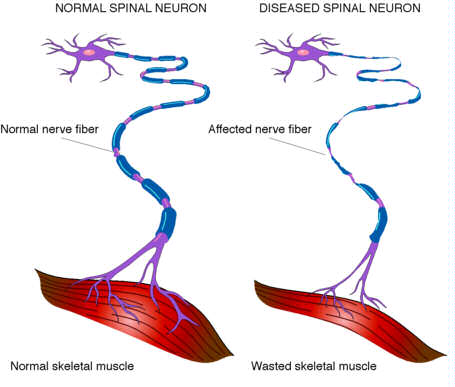
Amyotrophic lateral sclerosis (ALS), commonly known as Lou Gherig's disease, is a fatal, "progressive, neurodegenerative disorder affecting the motor neurons in the central nervous system." As the motor neurons die, the brain loses its ability to communicate signals to the body's muscles, ultimately resulting in loss of voluntary muscle movement, paralysis, and eventual respiratory failure. According to the ALS association, the disorder affects 6-8 out of 100,000 people, and 10% of the cases are inherited. There is no cure for the disorder, and the cause of most cases is unknown.

A team of international scientists at the University of Massachusetts Medical School used exome sequencing in order to determine possible genes associated with familial ALS. This technique entails sequencing only the protein-coding genes in a genome. The team performed an exome-wide screen on 363 people with famililar ALS. Each subject also had a relative with the disorder. The team analyzed every coding gene in the genome of the subjects, specifically looking for patterns of rare, damaging mutations that are found more frequently in subjects with ALS.

Through their analysis, the team recognized an elevated frequency of  mutation in the TUBA4A gene in subjects with ALS. The team performed further analyses and was able to determine that the TUBA4A gene is associated with familial ALS. TUBA4A encodes for the protein Tubulin Alpha 4A.
Although the highest levels of the protein occur in the brain, the protein can be found in all human tissue. TUBA4A protein plays a vital role in the nerve cell. The protein "helps build the microtubule network, one of the most important structural components of the nerve cell" by moving the vital building blocks. The team found that mutated TUBA4A protein "is toxic to the neuron by weakening the entire microtubule network.

Landers, PhD, states that "identifying even rare mutations that could cause ALS" is of great importance as these mutations may lead to other common pathways that are changed before motor neuron death in ALS. The study also supports the idea that the cytoskeleton architecture and dynamics are crucial in the progression of ALS.

I was immediately drawn to this article after being bombarded by "Ice Bucket Challenges" all summer. Overall, I think it is really exciting that the TUBA4A was identified to be associated with familial ALS. Any advancements in this disorder are of great value to the scientific community as there is little knowledge regarding the disorder. Hopefully, with all of the donations and increased awareness of ALS, more studies like the one outlined in this article can be performed to gain more knowledge of the genetic roots of the disease.

Article: http://www.medicalnewstoday.com/releases/284333.php
Related Article:
http://ac.els-cdn.com/S0896627310009785/1-s2.0-S0896627310009785-main.pdf?_tid=469435f8-6079-11e4-a282-00000aacb362&acdnat=1414703652_490b044105d452aeb30b16b2123d7470

Sunday, September 28, 2014

Synapse gene found to play a major role in severe childhood epilepsy

        An international research team has been able to identify gene mutations involved with causing severe forms of childhood epilepsy. They used a method called family- based exome sequencing. This method looks at the part of the human genome that carries blueprints for proteins. The researchers looked at the sequence information of the children and compared that to the parents. They were then able to identify de novo change in children's genomes. They hoped that these genes will tell researchers more about underlying disease mechanisms and how to address them with treatment.
       Researchers say the most surprising finding is a gene called DNM1. DNM1 codes for dynamin-1 a structural protein that plays a role in communication between the body of the neuron and the synapse. The mutated DNM1 was found in five of the affected epileptic patients. Many of the mutated genes found to be connected to epilepsy were related to the function of the synapse.
This research looks to be a positive step in identifying causes in certain types of childhood epilepsy. hopefully the knowledge gained through this study can help identify a treatment for this devastating disease in children. The communication between the research teams were also successful and because of their good communication a lot was able to be accomplished.

Article:http://www.sciencedaily.com/releases/2014/09/140925130508.htm
related Article:http://epilepsygenetics.net