Showing posts with label "Genetic counseling". Show all posts

Friday, December 5, 2025

Mutations Occurring In Human Genome Much Faster Than Previously Thought

                   Mutations are the basis over evolution providing genetic diversity to allow for the survival of the most fit. Modern technology allows for the comparison of parental genomes to their children. With this comparison mutation rates can be calculated and used to understand human biology. “The researchers estimate that every human has nearly 200 new genetic changes that are different from either parent” (University of Utah Health). Further investigation shows that parts of the human genome change much faster than known. "To get a complete, high-resolution picture of genetic variation over time, the team sequenced each person's DNA using multiple different technologies"(ScienceDaily). Parts of the human genome previously thought to be unchanging are changing at rapid rates. 

                   This doesn’t just affect research but medical care as well. Genetic counselors now must adjust their probabilities considering this randomness. If a child is found to be afflicted was it inherited, or a mutation and if it was a mutation is it now inheritable to their offspring? With this research and sequencing results made publicly available for further exploration a lot more genetic findings can now be discovered. 

Image from ScienceDaily

Wednesday, March 27, 2024

Successful Case in Genetic Counseling for Premature Chromatid Separation (PCS) Syndrome

Source: https://www.cureus.com/articles/109045-genetic-counseling-for-an-infertile-couple-with-premature-chromatid-separation-pcs-syndrome-a-case-report#!/

Additional Recourses:

https://www.ncbi.nlm.nih.gov/gtr/conditions/C1864389/

https://www.plannedparenthood.org/learn/pregnancy/fertility-treatments

An article posted on Cereus.com documented the first successful case of genetic counseling for couples with Premature Chromatid Separation (PCS) Syndrome. PCS is a rare genetic syndrome found in only 40% of individuals. According to the National Library of Medicine, “Premature chromatid separation consists of separate and splayed chromatids with discernible centromeres and involves all or most chromosomes of a metaphase” (National Library of Medicine 2024). People that have this trait have no phenotypic symptoms, but there have been reports of decreased fertility for those who have it. People who seek genetic counseling can be provided with not only psychological support, but tests can also be run so information can be gathered to make a decision. 

The first successful test of couples who were treated for this syndrome occurred in August, 2016 on a wife that was 33 years old and had her third miscarriage at 10 weeks. They decided to run tests that showed an abnormal karyotype on the fetus, found to be 91, XXYY, -21, and was likely to be the cause of the miscarriage. Although the family tree indicated that the husband was a PCS carrier, a G-Band test confirmed that the husband was asymptomatic for PCS syndrome and PCS was not the cause of this couple's infertility. After further discussion, it was decided that the couple would continue infertility treatment as long as the husband stayed away from drugs such as  vincristine and vinblastine, and paclitaxel since carriers of PCS can be sensitive to them. In the end, the couple had a successful pregnancy in 2018. 

It is interesting to hear the great things that genetic counseling can do. In the beginning, this couple thought that they wouldn’t be able to have children as a result of PCS syndrome, but due to genetic counseling they were able to receive helpful information in order to make the decision to continue infertility treatment. I am excited to hear what else genetic counseling can do for people in the future! 


Sunday, November 26, 2023

Expanding What We Know About Rare Diseases


A report by Dr. Alisdair McNeill in the European Journal of Human Genetics discusses the current research being done on rare diseases. McNeill gives a brief overview of the current rare diseases being researched and what the research has found. He then moves onto discussing genome sequencing and how genetic predisposition is an important part of pediatric cancer and how analyzing a potential parent's genome can help predict if their child will have pediatric cancer.

McNeill then discusses the need for an adequate genetic counsellor workforce and how the increase in research in genetics demands an increase in the amount of genetic services offered to people. McNeill gives the example of Korea's nationwide genomics diagnosis program as an example of what needs to be done in order to increase diagnosis rates of rare diseases.


Article:

https://www.nature.com/articles/s41431-023-01453-2

McNeill, A. Expanding what we know about rare genetic diseases. Eur J Hum Genet 31, 1091–1092 (2023). https://doi.org/10.1038/s41431-023-01453-2


Review on a rare disease I have:

https://www.ncbi.nlm.nih.gov/books/NBK1512/

Weiss KH, Schilsky M. Wilson Disease. 1999 Oct 22 [Updated 2023 Jan 12]. In: Adam MP, Feldman J, Mirzaa GM, et al., editors. GeneReviews® [Internet]. Seattle (WA): University of Washington, Seattle; 1993-2023. Available from: https://www.ncbi.nlm.nih.gov/books/NBK1512/

Wednesday, February 6, 2019

Non-invasive Prenatal Testing

This is an editorial piece that was published on Nature. Large strides are being made in the capabilities of non-invasive prenatal testing. Previously, tests such as amniocentesis and chorionic villi sampling were used to help determine if there were any genetic abnormalities present in the fetus. Both of these testing techniques come with small risks of possible miscarriage. Now, through blood work, testing is able to be done by sampling snippets of fetal DNA that is found within the mother's blood. These tests can help find chromosomal abnormalities such as Trisomy-21 (Down Syndrome).

Many parents would like to know if their unborn baby has any abnormalities. As mothers get older their risk for having babies with such abnormalities is increased. Amniocentesis have been one of the few methods in diagnosing such abnormalities but with potential risk to the unborn baby. Diagnosis through blood work of the mother is ideal as it poses no risk to the baby and still allows parents the ability to diagnose genetic disorders.

Sunday, November 25, 2018

Could Genes Responsible for Antler Growth Benefit Human Bone Growth?


Antlers in deer regrow quickly and efficiently as each season produces a new pair that can reach up to 50 inches long, scientists have identified the two genes that control this growth in deer DNA. Similar genes have also are believed to be located in human genetic makeup. This means that those people who have genetic conditions that relate to bone growth can hopefully receive gene therapy in the near future. The study started by collecting samples from deer antlers and discovering that they were mostly comprised of stem cells, these stem cells produce similar RNA to humans. This allowed for the RNA to be injected into mice to tinker with the genetic makeup to hopefully produce the proper DNA sequence to aid in bone growth. The study identified genes uhrf1 and s100a10 as the genes responsible for the antler growth and is currently under testing to understand how they function. Uhrf1 is a tissue promoter while s100a10 creates calcium deposits, these two genes in tandem are what creates antlers in deer. The study claims that if successful, these genes can have unrivaled potential in the health sciences fields.


I believe that such a study is key to helping out those affected with bone conditions and those that struggle with maintaining bone density such as elderly and sickly people. It seems almost obvious that the genes that cause antler growth in deer would also help produce bones in humans. Those who have held or felt an antler can notice it is strikingly similar to bones in its appearance alone but the structures of each could differ at the genetic level. However if the study can find some way to manipulate these genes than it truly would have unrivaled potential in health sciences.


References


Quenqua, D. (2018, October 31). Deer Antlers Couldn't Grow So Fast Without These  Genes. Retrieved from https://www.nytimes.com/2018/10/30/science/deer-antlers-genes.html


Deer Genes Identified in Antler Production. (n.d.). Retrieved from https://www.jdsupra.com/legalnews/deer-genes-identified-in-antler-75926/

Monday, July 31, 2017

Genetics Tests Improve Pre-Natal Screening

According to the Huffington Post, new pre-natal tests are being implemented in pregnant mothers to assess the risk of their child carrying a genetic disease. Currently, pregnant women can be tested for genetic diseases, such as Down syndrome, by simply using a blood test. “It’s an exciting time in perinatal testing,” explains Myra Wick, M.D., Ph.D. “DNA sequencing and molecular technology have improved and become more cost effective. These tests are important for family planning before pregnancy as well as planning for the care of a baby who is found to have a genetic disorder during pregnancy. ” 
The first of the three tests is Cell-free DNA testing. In this test, the mother's blood is screened to detect the DNA from the fetus and looks for common chromosomal disorders (like Down Syndrome or Wolf-Hirschhorn syndrome). This test has a higher detection rate and a few false-positives. “Prior to this new test, mothers had the option of traditional first trimester screening, which is a blood test and ultrasound, or second trimester screening, which is a blood test. In general, the cell free DNA blood test can be used in place of the traditional first and second trimester screening,” explains Dr. Wick.

In an Expanded Carrier Screening, a blood test is done on each prospective parent prior to the conception of their child. In the past, couples who had a genetic screening could only be assessed based on history of known familial genetic diseases and risks based on their respective ethnic groups. Obviously, these tests were limited in scope and could not help parents that were not sure of their ethnic group or family history (such as an adopted child). However, with the new screening, prospective parents can take a more comprehensive test that looks at over 100 different diseases and disorders. Dr. Wick explains that the tests look at multiple genes associated with a genetic disorder and takes into account recessive autosomal inheritance, "A child is affected with an autosomal recessive disorder when he or she inherits one abnormal copy of the gene from mom, and one abnormal copy of the gene from dad. Approximately 5% of couples who undergo expanded carrier screening are found to be carriers for the same disorder, and at risk for having an affected child."

In extreme cases where the baby has been identified with several medical problems, a Whole Exome Sequencing can take place. With a WES test, the genes and proteins associated with growth and health can be used to asses the fetus's condition. Dr. Wick explains that “We are beginning to use WES even before the baby is born. Results can be used to plan for care of an infant who may be born with several complex medical concerns. In addition, parents can use this information for future family planning."As the human genome becomes better understood, it is becoming increasingly important for prospective or expectant parents to seek out a genetic counselor that can interpret genetic tests and help with family planning based on genetic risk.

Friday, May 5, 2017

Scientists Discover Genetic Mutation That Causes Rare Skin Disease Keratolytic Winter Erythema

Scientists have now discovered the genetic mutation that is responsible for KWE in Afrikaners. The skin disease causes redness in the palms of the hands, as well as the soles of the feet followed by cycles of large areas of peeling skin. The symptoms are exaggerated in the winter, when the disease is at its peak in the cycle. A town in the Western Cape of South Africa is where it is most prevalence, affecting large families in this region. Keratolytic Winter Erythema, as well as other diseases such as familial Hypercholesterolemia, and porphyria are very common in this area as it has been observed the Afrikaner people have genetic predispositions for them. It has been a recent discovery that KWE is genetically linked instead of an environmental affect, as previously thought. Professor George Findley described the mode of inheritance as being dominant, and an unfortunate disease to have. Although this disease is extremely uncomfortable to live with, it can now be prevented in future generations with genetic counseling. I believe efforts like these to find the root of problems happening in populations are vital in society, especially when we wish to prevent them from occurring.

Medical Express

Sunday, April 23, 2017

23andMe Sell Genetic Test


For the first time in United States the Food and Drug Administration (FDA) allows the company 23andMe to sell genetic test directly to the public. The Ancestry and Health test is sold for $199 and will allow the customer to know which mutation increases their risk for certain diseases. The test is made simple for the customer, they just spit into a tube and mail it away. 23andMe will extract the DNA from saliva cells and find genetic markers using a special chip for genotyping. The customers will receive the results within 6-8 weeks with 10 common diseases and the information educating them. Some disease indicators tested are celiac disease, Gaucher disease type 1 and factor XI deficiency.
I think this can reduce the costs of health care because you no longer have to see your primary doctor which in turn will refer you to genetic doctor. It’s a time and money saving approach. Although as convenient as it seems it might cause some people to get upset or overreact. They might think that just because the have a genetic indicator they WILL have the disease.   

Thursday, April 20, 2017

23andMe Can Predict Your Health Risks

http://www.latimes.com/business/la-fi-23andme-reports-20170414-htmlstory.html
The FDA recently approved the website 23andMe to use people's genetic analysis to provide them with possible health risks that are "detected" in their genome. The FDA said that 23andMe "provided sufficient data to show that the tests are accurate". This means that they can identify SNPs that correlate with health risks with reproducible results. These new reports cost the user $199 compared to the standard ancestry report that is $99. These new tests check for 10 diseases including late on-set Alzheimer's, celiac disease, Parkinson's, and a few others. They use the participant's saliva to look for genetic mutations that are associated with these diseases. The test does not determine a person's overall risk for getting the disease, just their genetic risk. This means that a person who shows no risk could get the disease and one that shows a great amount of genetic risk could not get the disease. I think that this testing is not a good idea because it is not accurate. 23andMe only testing a few populations and ethnic groups, so the genes they are looking for have only been observed in small sample. Although the company states that they inform their customers before and after the testing not to take the results too seriously, people are bound to worry about their results, especially in terms of Alzheimer's and Parkinson's. I think especially after we looked at the 23andMe reports in class, that this kind of testing can only need to negative outcomes. If a person wants to know their genetic risk for specific diseases, they should go to genetic counseling, not to the internet.

Wednesday, April 12, 2017

Genetic Mutation Testing Now Made Public


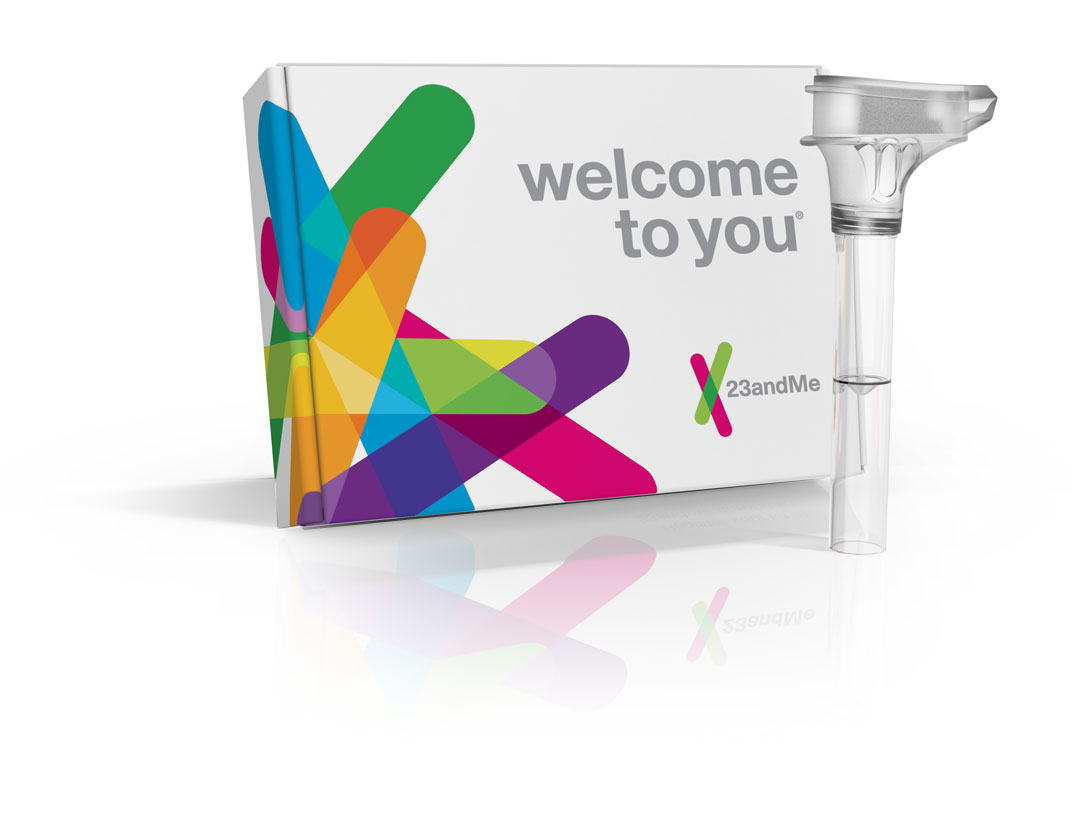
23andMe is just one of the many companies that use a consumers DNA to report to them their ancestry and heritage. The above picture is the device a consumer spits in and sends away to the company. Now the company wants to use the DNA in order to provide consumers with do-it-yourself diagnostic testing. At first, this service was stopped by the FDA in 2013 because they feared consumers would use the information to make real life medical decisions. The FDA finally allowed 23andMe to tell consumers “whether they possess genetic mutations (Maxmen, 2017)” that are known to cause certain medical conditions. Some of the conditions include Parkinson’s, Alzheimer’s, coeliac and thrombophilia. The downsides of this service include consumers reading these results without the help of a genetic counselor or doctor.