Showing posts with label prenatal testing. Show all posts

Thursday, February 22, 2024

Advancements in Prenatal Genetic Testing

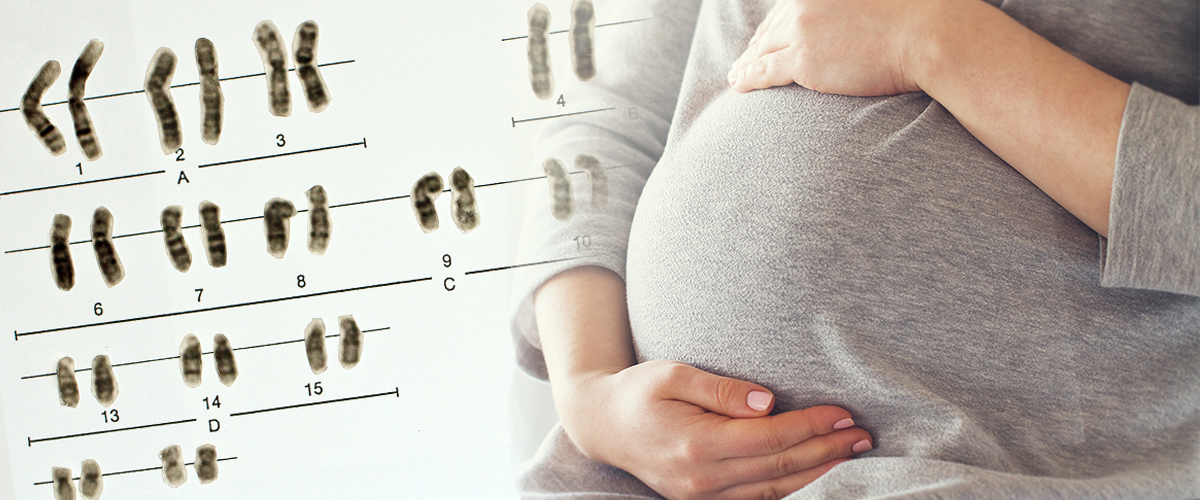
    Embarking on the journey of parenthood very exciting and largely transformative experience for most people. Genetic testing provides an opportunity for expectant parents to gain a deeper understanding of their soon to be baby's genetic health. There is a few different genetic testing options available but they only skim the surface of the amount of potential genetic disorders. The testing that was previously available is said to be extremely invasive, inserting a needle into the uterus to retrieve fetal cells for analysis. Recently discovered though is a new and non-invasive technique (non-invasive prenatal testing NIPT) that just requires a small blood sample from the soon to be mother.

    This non-invasive procedure though not as advanced as it counterpart is more safe and a cheaper alternative to see if there may be any potential signs of genetic disorders before taking the next step of an invasive procedure. Especially being that invasive genetic testing has a chance of miscarriage. Though NIPT is still not as advanced as invasive because it can not identify full chromosomes there are new technologies and advancements being made in order to further the use of blood testing so we can fully terminate invasive testing as an option for seeking prenatal health.

    Genetic testing in my opinion is something very important that should be financially and readily available for all expecting mothers. This is because in the world we currently live in most parents are financially independent enough to be able to afford and take on the responsibility of a child with a genetic disorder. Therapies and interventions being so new also comes with a large price tag that parents should be informed and prepared for when planning for a newborn.     


Articles Cited:

1. https://pubmed.ncbi.nlm.nih.gov/38020177/

2. https://www.nichd.nih.gov/newsroom/news/120623-new-method-prenatal-testing


Wednesday, February 6, 2019

Non-invasive Prenatal Testing

This is an editorial piece that was published on Nature. Large strides are being made in the capabilities of non-invasive prenatal testing. Previously, tests such as amniocentesis and chorionic villi sampling were used to help determine if there were any genetic abnormalities present in the fetus. Both of these testing techniques come with small risks of possible miscarriage. Now, through blood work, testing is able to be done by sampling snippets of fetal DNA that is found within the mother's blood. These tests can help find chromosomal abnormalities such as Trisomy-21 (Down Syndrome).

Many parents would like to know if their unborn baby has any abnormalities. As mothers get older their risk for having babies with such abnormalities is increased. Amniocentesis have been one of the few methods in diagnosing such abnormalities but with potential risk to the unborn baby. Diagnosis through blood work of the mother is ideal as it poses no risk to the baby and still allows parents the ability to diagnose genetic disorders.

Thursday, November 22, 2018

The Largest-Scale Genetic Study of Chinese People to Date


Data from noninvasive prenatal testing for fetal trisomy (condition that can cause Down Syndrome) was used by scientists in order to determine and predict past and present characteristics of people in China. The testing analyzes free floating bits of fetal DNA in the mother's blood. This test occurs in China and costs only $100 compared to high quality, whole genome sequencing which costs $1,000 per person. Using the cheaper testing method came with a cost by covering only 10 percent or less of the person's genome, while the more thorough test covered 80 percent or more. Designing custom software and using heavy computations and statistics made up for the leftover analysis.

The resulting data represented nearly every Chinese province which eclipsed many genome-wide studies which include only tens of thousands of participants making this the largest scale genetic study of Chinese people. A total of 141,431 individuals participated. Some information they reported included data showing that more northern than southern Chinese populations contain a mutation of FADS2, a gene involved in metabolizing fatty acids, which indicates a diet richer in animal content. This helps explain the type of food that they eat in their area based on their resources and climate. Also, DNA that was not aligned to the human genome against a database of viral sequences were found in order to diagnose viruses, most commonly identifying hepatitis B and other viruses that can affect pregnancies. In addition, 48 gene variants associated with height and 13 with body mass index were collected by analyzing the height and body mass index of their samples. Doing this reveals associations between genes and specific traits through noninvasive pregnancy testing. This data collection on evaluating prenatal testing is still moving forward today for more than 3.5 million Chinese people.

This type of research seems very promising and intriguing to me as they can continue this type of data analysis for other races, not just Chinese. Since I am Filipino, I'm hoping they can expand their data collection in the Philippines so I can learn more about genetic characteristics and their history. Each race should receive this type of testing which can lead to predictions in human traits of fetuses.

Sunday, October 7, 2018

Hidden Stories of Chinese Migration and Culture Found in Giant Genetic Study


        A recent study performed in China by Dr. Jin has allowed for minority ethnic groups to be studied for their genetic mutations. The data set, which included 141,3000 participants, obtained from noninvasive prenatal testing represented nearly all of China's provinces and 37 out of 56 minority ethnic groups. While the data from the noninvasive prenatal testing only cover's 10% or less of each persons genome, a custom software was used along with statistics to infer missing DNA. The information obtained allowed researchers to study gene variants.  China's population was found to be 92% genetically homogeneous and the majority of the difference was among the north and south provinces.

  One of the interesting finds from the study was that the northern and southern provinces of China had a mutation in the FADS2 gene. The FADS2 gene is involved in metabolizing fatty acids and it was found to be more common in northern populations, which indicated a diet richer in animal content. I found the study to be important because studies are rarely done on minority ethnic groups and it will allow for gene variants to be studied which can drastically affect a human being. The study found a high prevalence of hepatitis b and other viruses that can affect pregnancy in the mother's DNA. In the future, the $100 prenatal testing can possibly allow individuals to be tested for gene variants rather than a $1000 genome sequence. The study is now being performed on 3.5 million people to verify that the methods of DNA analysis are correct.


                            Image result for noninvasive prenatal testing

Thursday, November 24, 2016

Non-Invasive Fetal Genetic Test

Researchers at Wayne State University School of Medicine have developed a non-invasive testing method - Trophoblast Retrieval and Isolation (TRIC). This method of genetic disorder testing is as legitimate as more invasive tests like amniocentesis, and can be performed as early as 5 weeks into pregnancy. Knowing that the placenta is derived from the embryo, its DNA is identical to that of the fetus, thus the cells collected by TRIC can be used for prenatal genetic testing. For this research, data was collected from fetuses anywhere between 5-19 weeks of gestation, all of which were proven to be effective test subjects.


This research opportunity first started as a two year long grant given to the researchers in 2012. Shortly after publishing these discoveries earlier this month, a related paper, head researchers D. Randall Armant and Sascha Drewlo released a seperate paper describing a correlation between the presence of specific proteins in the fetus, obtained by TRIC, and pregnancy complications such as an undernourished fetus, and high blood pressure and kidney disorders in the mother.

Overall, this new fetal genetic testing method can prove to be immensely helpful in identifying the sources of pregnancy complications as well as learning how to manage troublesome pregnancies. I believe this is a much needed discovery in the development of the medical sciences, and that there is so much more that can be done with this new finding, in both testing method and complication correlations.

Picture provided by Medical Xpress (http://medicalxpress.com/news/2016-11-reveals-non-invasive-prenatal-genetic-accurate.html).

Non-Invasive Fetal Genetic Test

Researchers at Wayne State University School of Medicine have developed a non-invasive testing method - Trophoblast Retrieval and Isolation (TRIC). This method of genetic disorder testing is as legitimate as more invasive tests like amniocentesis, and can be performed as early as 5 weeks into pregnancy. Knowing that the placenta is derived from the embryo, its DNA is identical to that of the fetus, thus the cells collected by TRIC can be used for prenatal genetic testing. For this research, data was collected from fetuses anywhere between 5-19 weeks of gestation, all of which were proven to be effective test subjects.


This research opportunity first started as a two year long grant given to the researchers in 2012. Shortly after publishing these discoveries earlier this month, a related paper, head researchers D. Randall Armant and Sascha Drewlo released a seperate paper describing a correlation between the presence of specific proteins in the fetus, obtained by TRIC, and pregnancy complications such as an undernourished fetus, and high blood pressure and kidney disorders in the mother.

Overall, this new fetal genetic testing method can prove to be immensely helpful in identifying the sources of pregnancy complications as well as learning how to manage troublesome pregnancies. I believe this is a much needed discovery in the development of the medical sciences, and that there is so much more that can be done with this new finding, in both testing method and complication correlations.

Picture provided by Medical Xpress (http://medicalxpress.com/news/2016-11-reveals-non-invasive-prenatal-genetic-accurate.html).