Showing posts with label pregnancy. Show all posts

Wednesday, December 1, 2021

Cannabis Use During Pregnancy and DNA Methylation of the DRD4 Gene in a Fetus


Pregnant women are cautioned to avoid drugs and alcohol during and after the birth of their child as a way to avoid manifesting disorders related to fetal development. The epigenetics of a fetus's dopamine levels are one of the many behavioral changes that affect the genes of a child in the uterus.  Cannabis sativa, otherwise known as cannabis, is a psycoactive drug that derives from a plant that is often smoked or inhaled for the relaxing effects and medicinal properties it offers. While smoking cannabis causes an increase in dopamine levels in adults, it has been questioned as the link that alters the patterns of DNA methylation of a baby in utero of pregnant women who smoke it, similar to the relationship between methylation and mothers who smoke tobacco. DNA methylation is a process that modifies DNA to protect it from being destroyed. It regulates gene expression  by inhibiting or binding the proteins involved in gene repression.  A study of 57 pregnant women who use drugs, 44 who used cannabis, was conducted to observe the changes of THE DRD4 gene of a fetus at 8 weeks of pregnancy. The dopamine receptor gene DRD4  is a protein coding gene that regulates dopamine levels and behaviors related to said dopamine levels. A SEQUENOM MassARRAY was used to measure the DNA methylation of the DRD4 gene in mothers who smoked cannabis to understand how cannabis affected the gene. The CpG sites of DNA that were tested and observed in the DRD4 gene confirmed the link between cannabis use and increased DNA methylation, but with other drugs such as tobacco, it was the complete opposite. Due to these results, there was very weak evidence as to whether or not cannabis alone fully altered the DNA methylation of the DRD4 gene in an offspring.

https://pubmed.ncbi.nlm.nih.gov/28448718/


Thursday, August 5, 2021

THE DETECTION OF ALBINISM

 THE DETECTION OF ALBINISM 


    Albinism is a medical condition that affects a person's skin color, eye color, and hair color; it tends to be white. This condition is cause by the decrease of tyrosinase activity. Albinism has different types of patterns, it depends on the genes of the chromosomes and the mutation that occurs. It is an inherited condition, that is considered to be an autosomal recessive defect. This means that it is passed on from family members; meaning there must be a history of this condition in the family. According to one of the websites, "In certain ethnic groups we found at least one mutation in all, and two mutations in over 90% of albinos."  

    This medical condition can be detected by a "..light and electron microscopic examination of melanogenesis in fetal scalp biopsies or by molecular genetic tests" during pregnancy. The physical appearance of the individual can involve a major factor for detection; their skin pigmentation, eye color, and hair color is white and abnormal. This condition can also be associated with bowel disease and bleeding problems. When an individual suffers from this condition it is important for the individual to speak with their doctor to explain the treatment and restrictions; such as avoiding a long time in the sun, and wearing sunscreen. 


1. Prenatal diagnosis and carrier detection of albinism | Genetics in Medicine (nature.com)

2. Albinism | Genetic and Rare Diseases Information Center (GARD) – an NCATS Program (nih.gov)

The Genetics & Biology in Preeclampsia

The Genetics & Biology in Preeclampsia


    Preeclampsia is a medical condition that occurs during pregnancy, “...characterized by the onset of hypertension, proteinuria, and edema”(Kanasaki and Kalluri). This condition results from placenta defects. It affects approximately 5 to 8% of women during pregnancy. One of the most common and major complications is hypertension (high blood pressure) which is often associated with preeclampsia. This can cause complications to the mother and the unborn child. This condition leads to the presence of edema, which has the plasma volume lower than normal. This may cause damage to the mother and baby’s organs, because of the lower systemic perfusion. Preeclampsia can affect not just the pregnancy, but also the kidneys, because it can cause glomerular endotheliosis. “The risk of preeclampsia increases in those who have limited sperm exposure with the same partner before conception” (Haram et al.).

This condition can cause other medical conditions such as HELLP syndrome, which brings more complications to the pregnancy. In many studies, it shows the “evidence of a genetic association with preeclampsia for the endoplasmatic reticulum aminopeptidases 1 and 2 (ERAP1 and 2) genes. The ERAP1 and ERAP2 genes encode enzymes that play roles in blood pressure regulation via involvement of the renin-angiotensin system in addition to the innate immune system” (Haram et al.). Preeclampsia is still being studied and researched to understand the cause and all of its factors involved.


1. Genetic Aspects of Preeclampsia and the HELLP Syndrome (hindawi.com)

Haram, Kjell, et al. “Genetic Aspects of Preeclampsia and the HELLP Syndrome.” Hindawi. Accessed June 2014.
2. The biology of preeclampsia (sciencedirectassets.com)

Kanasaki, Keizo, and Raghu Kalluri. “The Biology of Preeclampsia.” Biological Science Collection. Accessed August 2009.

Study Reveals HAND2 Gene Might Be Responsible for Initiating Human Labor


                        National Institute of Health. “Scientists Seem to Be Studying the Same Genes, over and over.” Newsroom.uw.edu, UW Medicine, 21 Sept. 2018, newsroom.uw.edu/media-coverage/studying-same-genes-decades. 

          For years, scientists have been working to understand how women go into labor from a molecular level, but the molecular mechanisms behind labor are poorly understood. Scientists have attempted to study pregnancy in animal models to understand it better. Still, the problem they have encountered in trying to do so is that pregnancy in animals is too different from humans to be very helpful. Yet, understanding the differences between animal and human pregnancy can give more insight into how labor is initiated. Mirna Marinić, a developmental biologist, and her research team studied twenty-seven species and compared gene expression profiles in the endometrial tissue that forms the maternal-fetal barrier. The team was looking for differences in gene expression linked to the evolution of different reproductive systems. The team found one hundred forty-nine genes that evolved to be expressed in the endometrial tissue of placental animals. One of these genes, HAND2, was of particular interest to the researchers. HAND2 is a transcription factor that is involved in readying the lining of the uterus for implantation and repressing estrogen signaling.             The researchers combed through available data and found that the expression of the HAND2 gene decreased as pregnancy progressed in humans. Mirna Marinić and the team performed an experiment in which they blocked the HAND2 gene from being expressed in human endometrial tissue. From this experiment, they pinpoint changes in gene expression patterns involved with protecting the fetus from the mother's immune system and premature birth. The team's findings heavily imply that HAND2 plays a role in starting labor. Mirna Marinić and her team's work will help scientists better understand how pregnancy and childbirth operate on a molecular level. By understanding how pregnancy and labor function on a molecular level, researchers can learn more about what causes premature birth and study it more in-depth.


Link to Article: https://www.the-scientist.com/the-literature/gene-offers-clue-to-how-human-labor-starts-69023

Link to Supporting Study: https://elifesciences.org/articles/61257


Friday, April 19, 2019

A Procedure Allowed a Baby to be Born with the DNA of 3 Different People


On April 9th, 2019, a healthy baby boy was born to a woman who previously went through several failed rounds of IVF treatment. This woman was finally able to get pregnant thanks to a technique called maternal spindle transfer. The news was announced by researchers at the Institute of Life in Athens, Greece, where the woman is a participant in a study they are conducting. The technology used was developed by Embryotools, a company partnered with the Institute of Life on this study.


In this procedure, the nuclear DNA from a woman’s egg is placed into a donor’s egg that has been emptied of its nuclear DNA. The modified egg is then fertilized, and the subsequent embryo is placed into the woman who is trying to become pregnant. Aside from the small amount of mitochondrial DNA (mtDNA) from the donor’s egg, the resulting child of the fertility procedure is biologically the offspring of the mother and father. Nevertheless, this child is unlike all others in that it carries the DNA of three separate individuals.


For this woman, something within her eggs was preventing the development of viable embryos. There are very many factors that could have been the cause, from deficiencies in essential products to poor quality of the eggs. Maternal spindle transfer and fertility techniques like it make it possibly for women with many unsuccessful IVF treatments or mitochondrial genetic diseases to be able to have healthy children.


Interestingly, this baby was the first ever born by maternal spindle transfer whose mother did not have a mitochondrial disease. While she didn’t have such a disease, she was still unable to get pregnant in the past due to reasons still unknown. Once she underwent the procedure – which replaced her mtDNA and egg – however, an embryo was able to form properly. For researchers such as Dr. Jonathan Tilly of Northeastern University, the fact that this technique worked in the case of this woman points to the idea that mitochondria may be more important in human reproduction and the application of fertility treatments than was previously thought.


Tilly and others will continue to conduct research to hopefully begin to understand what the successful conditions were within the donor egg that were apparently inadequate in the new mother’s eggs. They will also try to discover what the long-term effects could be for children born as a result of procedures that insert an additional individual’s genetic material into their genome.

Friday, March 22, 2019

A Genetic Mutation in the Khoe-San People of Africa Reduces Complications in Pregnancy


The Khoe-San people of Africa, a group that was thought to have broken off from other tribes 100,000 years ago, have been shown to have a genetic mutation in the formation of their placentas. This gene variant alters the size of placentas of mothers so that placentas are larger. This leads to healthier babies, and reduces the chances of the congenital disease pre-eclampsia, which can be fatal. It is therefore said by scientists that the Khoe-San people of Africa have developed a genetic mutation that reduces complications in pregnancy

Image result for khoe san


I believe that such a genetic mutation is amazing news for the Khoe-San people. One might believe that genetic mutations can usually cause so much harm to individuals if they come to negatively affect a bodily function, however this mutation in particular is good news. This genetic mutation leads to healthier babies, and can reduce the chances of complications in pregnancy, which is particularly helpful for tribe people who may or may not have proper medical services nearby. This genetic mutation is also good news because hopefully scientists will be able to ascertain the reason behind this mutation, and in time, be able to simulate it in order to reduce pregnancy complications in the future.

Monday, December 3, 2018

The Placenta, an Afterthought No Longer

           For centuries after births, the human placenta was thought of as trash and quickly discarded of without a thought. However, in the past three months scientists have been proving that this organ could be the source of rectifying some of the world's most puzzling pregnancy issues like pre-eclampsia, the fetus running out of room during early development, as well as premature births.
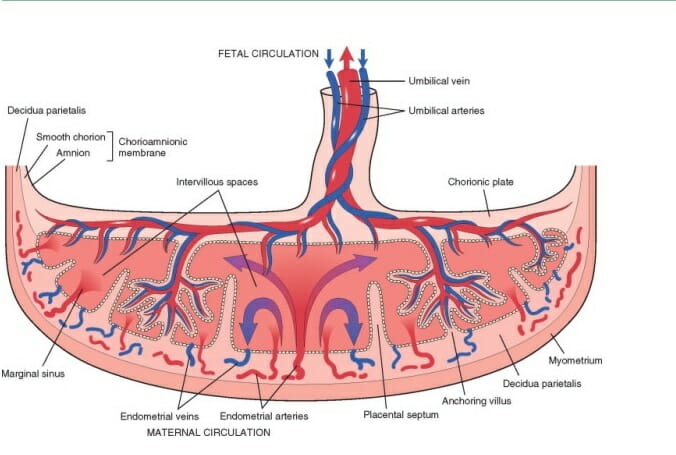
          The placenta is a group of cells formed mostly from the cells of the fetus. The job of the placenta is to feed, provide oxygen, and to do all of the work for the fetus's major organs until it is developed enough to do so on its own. If the placenta is not formed correctly, it could cause many of serious birth defects, as well as miscarriage and could also risk the mother's health in some ways too. Not all placentas develop in the same way and we know this because males are at a higher risk of a lot of different mental and physical illness (like ADHD or autism). Doctors believe this to be true as well as the fact that male babies are more vulnerable to stress during pregnancy, yet they are not really sure why female babies are less vulnerable to these things than males.
          They discovered that although the genes affecting the males more highly are thought to be located on the x-chromosome, females have two copies of the chromosome so they are less affected, but in some males, even where it should be affected, the genes are still activated in some places and not in others. Studies have not been done on the differences between males and females yet and the way that their placentas affect their vulnerability to genes, but it is the next question on the list to answer for scientists interested in this study. They also say that the stress put on one's baby during pregnancy are activating genes at higher levels than normal, which is why stress on pregnant women is so dangerous.
          The placenta is a difficult organ to study because after the placenta has been expelled, it is way too late to test on it. Scientists because of this reason have developed a way to create an artificial placenta in the lab in order to study the genes of placentas and how each one may differ from one another.
          Pre-eclampsia is caused by the mother's arteries being too small to carry oxygen to the fetus and could begin quite early in the pregnancy and is very difficult to detect at the early stages. This oxygen deficiency causes stress to the baby resulting in a higher blood pressure than normal, which is why it is so serious. Currently they are trying to work with the placenta to find a new way to identify this problem in the earlier stages of pregnancy before it causes a bigger problem that could risk the life of the fetus and the mother. It will be a long time before enough testing is done on any of the new procedures that they believe may help identify pre-eclampsia in patients and their babies, but it will be well worth the wait.
         I thought this was an important article because you hear all the time in the news about all of the different problems that babies face due to stresses as well as other factors during the pregnancy. The fact that the placenta may hold all of these answers is exciting and we may be able to help future generations to not go through pre-eclampsia or have a child whom has developed autism, ADHD, or schizophrenia. I'm excited to see what the next scientist, or group of scientists, will bring to the table.

Related Article
Original Article
         

Monday, July 31, 2017

Genetics Tests Improve Pre-Natal Screening

According to the Huffington Post, new pre-natal tests are being implemented in pregnant mothers to assess the risk of their child carrying a genetic disease. Currently, pregnant women can be tested for genetic diseases, such as Down syndrome, by simply using a blood test. “It’s an exciting time in perinatal testing,” explains Myra Wick, M.D., Ph.D. “DNA sequencing and molecular technology have improved and become more cost effective. These tests are important for family planning before pregnancy as well as planning for the care of a baby who is found to have a genetic disorder during pregnancy. ” 
The first of the three tests is Cell-free DNA testing. In this test, the mother's blood is screened to detect the DNA from the fetus and looks for common chromosomal disorders (like Down Syndrome or Wolf-Hirschhorn syndrome). This test has a higher detection rate and a few false-positives. “Prior to this new test, mothers had the option of traditional first trimester screening, which is a blood test and ultrasound, or second trimester screening, which is a blood test. In general, the cell free DNA blood test can be used in place of the traditional first and second trimester screening,” explains Dr. Wick.

In an Expanded Carrier Screening, a blood test is done on each prospective parent prior to the conception of their child. In the past, couples who had a genetic screening could only be assessed based on history of known familial genetic diseases and risks based on their respective ethnic groups. Obviously, these tests were limited in scope and could not help parents that were not sure of their ethnic group or family history (such as an adopted child). However, with the new screening, prospective parents can take a more comprehensive test that looks at over 100 different diseases and disorders. Dr. Wick explains that the tests look at multiple genes associated with a genetic disorder and takes into account recessive autosomal inheritance, "A child is affected with an autosomal recessive disorder when he or she inherits one abnormal copy of the gene from mom, and one abnormal copy of the gene from dad. Approximately 5% of couples who undergo expanded carrier screening are found to be carriers for the same disorder, and at risk for having an affected child."

In extreme cases where the baby has been identified with several medical problems, a Whole Exome Sequencing can take place. With a WES test, the genes and proteins associated with growth and health can be used to asses the fetus's condition. Dr. Wick explains that “We are beginning to use WES even before the baby is born. Results can be used to plan for care of an infant who may be born with several complex medical concerns. In addition, parents can use this information for future family planning."As the human genome becomes better understood, it is becoming increasingly important for prospective or expectant parents to seek out a genetic counselor that can interpret genetic tests and help with family planning based on genetic risk.

Thursday, April 27, 2017

Good News for Pregnant Women with Depression

According to two new large studies, pregnant women with depression and who are taking antidepressants are not increasing the risk of their child having autism or ADHD (Attention Deficit Hyperactivity Disorder). The article states, “Genetic or environmental influences, rather than prenatal exposure to the drugs, may have a greater influence on whether a child will develop these disorders.” This is a huge breakthrough since about 1 in 10 pregnant women will encounter a major depressive episode and these are the women who had to weigh their options and decide whether they wanted to risk taking the antidepressants, depending on the severity of the depression. The two studies involved large sample sizes and sophisticated statistical techniques which compared siblings in families where the mother used antidepressants during one pregnancy but not the other. “In the sibling matchup, the children had essentially the same risk for autism, ADHD and poor fetal growth whether they were exposed to antidepressants in the womb or not.”

                This is an incredible step forward in relation to the health of pregnant mothers and their children, which is obviously one of the most important, if not the most important aspect of life in general. Depression is a huge issue for millions of people across the US and throughout the rest of the world and it is breakthroughs like this that give people with depression hope of getting better and living happier and healthier lives while mothers give birth to happier and healthier babies.


Thursday, April 6, 2017

Three Person Embryo's

This seems very interesting, and it's a great way for mothers to be able to carry their own healthy child, and not have to rely on a surrogate or an adoption to have a healthy baby. It still seems a little confusing to me, but I think this would be an amazing thing for mothers who are worried about passing on bad genes, since it says mostly every embryo the mother passes would have those mutated genes. The child would still have the looks but wouldn't have the mutations of the mother.


This article was from a few years ago, but this one is just from last month, their latest update.

Friday, February 24, 2017

Why We Need to Rethink Ethnicity-Based Genetic Testing

     This article discusses the importance of abolishing ethnicity- based genetic testing for mothers who are pregnant, but rather open up the genetic testing without ethnicity being the sole testing standards. Currently the data is skewed toward a European Caucasian population. This makes it hard to to interpret due to the genetic variance in minority races. This should be concerning and important because the US has been increasingly diversifying. Genetic testing is offered to women during pregnancy and allows the mother to see if there are any diseases or complications with the offspring before birth. However, the genetic testing is currently ran biased on the self reported ethnicity the mother provides. An example would be African patients are offered testing for sickle cell disease. Although, there are some diseases that are prevalent in certain minority groups, it doesn't inhibit other disease from happening that might not be getting tested for. With updated technology there is an inexpensive way to genetically screen multiple diseases at a time. This doesn't only allow physicians to better a universal disease panel to the parents but also promoting equality in genetics.
     I agree with this article that it is important to do genetic testing regardless of what ethnicity the child is. With so much diversity amongst individuals that are reproducing it is hard to determine the exact ethnicity of a child. Being able to create a common screening to check for multiple mutations and diseases regardless of race or ethnicity allows physicians to provide parents a more in depth result of the child's health.

Friday, November 25, 2016

Does Exercise During Pregnancy Lead to Exercise-Loving Offspring

In the article "Does Exercise During Pregnancy Lead to Exercise-Loving Offspring" they discuss whether a persons child comes out athletic or "exercise loving" if their mother exercises during pregnancy. Just from common simple test results showed that if a mother is not very active during pregnancy then her child will most likely not be very active; and the same goes for the other way around. Although, a lot or research has not been done on this study, a few researchers from Baylor College of Medicine and Rice University in Houston did an experiment with mice testing this theory. Even though mice are not people they genetically are similar in many ways. For the experiment they got 6 female mice and put them in cages with running wheels. After a week with the wheels the female mice were paired up with male mice from the same genetic line so that they could procreate . Then half of the pregnant mice were placed in cages with locked wheels and the other half were placed in cages with unlocked wheels. Researchers observed that the mice in the cages with the locked wheels used their wheels everyday and were much more active in general compared to the mice in the cages with locked wheels. After the mice had their children the second generation was moved in a cage with a wheel. They were separated from their mothers so they would not be influenced by what they do. After observing the mice the results were that all the mice who were active were much more active then the mice who came from mothers that were not active. Even though mice aren't human this theory still makes sense because lets use athletes as an example. Most athletes kids play sport and are athletic. I personally agree with the fact that it does make a little of a difference if the mother is active during her pregnancy. In the article they also mention that there are deeper biological influences as well such as in someone's DNA. If a mother is unhealthy during her pregnancy such as gaining a lot of weight and other things her child is at a much higher risk or having health issues. Therefor, it defiantly will not hurt a mother if she is active during her pregnancy even if her child will not be the #1 athlete in the world.  

Friday, April 22, 2016


            When a pregnant women smokes researchers best explain the effects on fetuses to be much like the effects that occur to women or men who smoke.  The same side effects a person experiences when they are smokers can be present to a fetus that is in the womb of a mother who is a smoker. Findings on new development related genes in correlation with pregnant smokers may help many understand about the connection between children health problems and smoking during pregnancy. Researchers have been intrigued with this topic and have began many studies on newborns to identify correlations between smoking while a fetus is still in the womb. Scientists have collected blood samples from umbilical cords of babies whose mothers are smokers and compared them to samples of blood of babies whose mothers are nonsmokers. The results showed that those babies who were born to smokers had 6,000 spots in which their DNA was chemically modified.

            Specific chemicals like carcinogens for example can cause mutations and therefore the increase of birth defects rises incredibly. Nearly half of the locations could be linked to specific genes including those involved in lung and nervous system development according to the article. Researchers also found that even in older children whose mothers had smoked during pregnancies DNA modifications were still found. It is important for women to know that although the fetus is not physically smoking the cigarette it does not mean it will not affect the fetus! Serious health issues and birth defects can be of consequence of this act. Perhaps if one knows they are unable to quit smoking, they should consider not having a baby after all. 

Tuesday, April 19, 2016

Exercise Loving Offspring

If you exercise during pregnancy, is your offspring going to love exercise? Scientists have found that mice born to mothers that ran, enjoyed running as adults. As for the mice born to nonathletic moms, did not share the same fondness for exercise. This is also noticeable in actual people. Parents who are active, typically have children who grow up to be active. Scientists believe that this is not only due to environment, but also genetics. They have found bits of DNA that can lead a person who carries it to be athletic. Adding on to this theory, a baby's body and DNA can be changed by the environment in the womb, which can affect health and disease risk.

An experiment helped proved this case with genetically identical mice and a cage with running wheels. Since mice typically love running, all the female mice in this experiment ran on wheels for about a week and then were mated with the male mice. About halfway through the pregnancy, half of the pregnant mice's wheels were locked so they couldn't run anymore. The other half of the pregnant mice were allowed to run freely, which they did. Once the pups were born, they were separated from their moms so they couldn't see and copy their moms running. All of their cages had unlocked wheels and monitors that tracked their movement. Entering adolescence, they found the mice born to running mothers were more athletic themselves than the other mice. During their middle age, the mice born to runners were still more athletic than the ones who weren't. Although this can't tell us much about humans, the experiment concluded that a mother's physical activity during pregnancy does impact the physical activity of the offspring. Dr. Waterland believes that the mother's physical movements alter the fetal brain development and that certain biochemicals pass through the placenta affecting the baby's gene activity. He also strongly urges that mothers do not take this as criticism!

This was a very interesting article. The results of the experiment were cool because the newborn mice were put in the same exact cages away from influence from their mothers, yet the mice born to runners were still more athletic than the ones who weren't. I do believe that it is very important to try and exercise when pregnant, not to have an active child but just for the baby's health. Not anything hardcore but walking and stuff.

Saturday, April 9, 2016

Pregnant Runners = Child Runners?

Exercise trends come and go like trains at Grand Central Station, but running seems to be a constant favorite for many. There have been many studies done on the health benefits of running, but there has never been a study that correlates mother runners having produced offspring runners, until now.
Researchers at Baylor College of Medicine and Rice University of Houston have conducted a study with pregnant mice and their offspring. The study consisted of a group of pregnant mice being able to run on their wheel freely while the other group of pregnant mice had their running wheel locked. Once the offspring were born and weaned, they were placed in separate cages from their mothers. The offspring were closely monitored throughout their lives. During their childhood there were not much differences until they hit adolescence. At that point in their lives those born to mothers that ran started to become runners themselves. As the mice got older they became more and more enthusiastic about running.
The researchers have concluded from the results that the mother’s physical activity during pregnancy had a likely affect of the offspring having the want for the physical activity. Though they have made this correlation through research with mice, it is not clear if humans would have the same affects. It is also not clear as to how having a mother run while pregnant is affecting the offspring to become a runner.

Though there are many un-answered questions due to the immaturity of the research, it is an interesting concept. Once the researches figure out if the same affect on mice happens with humans, they would next have to figure out how it is actually happening.

Thursday, April 7, 2016

Early Fetal Abnormalities May Correct Themselves In Time


         Today in the United States, about every 4 ½ minutes a baby is born with a birth defect. This is affects 1 in every 33 babies born each year. Mothers whom have family history of genetic disorders or who are at risk of such disorders undergo chorionic villus sampling (CVS) which is carried out around 11-14 weeks of pregnancy. CVS removes and analyzes cells from the placenta, around 15-20 weeks amniocentesis can be preformed, this is when a small amount of amniotic fluid is removed and analyzed, this fluid contains cells shed by the fetus. The only downfall to getting this procedure is the 0.6% of miscarrying and once you get the results that indicate a chromosomal condition then the parents must decide whether or not to continue with the pregnancy. 

       Prof. Zernicka-Goetz’s decided to carry out this experiment with her second child at the age of 44. Zernicka-Goetz’s CVS results indicated that up to 25% of the cells in her placenta were abnormal, knowing the risk Zernicka-Goetz proceeding to continue with the pregnancy and her child was born without any disorders. Zernicka-Goetz explains that the embryo has an amazing ability to correct itself, even when half of the early stage cells are abnormal. Further research must be done in order to determine what is the exact proportion of healthy cells are required to achieve the complete repair of an embryo.

       I feel as this discovery is very beneficial to the embryonic development because it allows the opportunity for fetus to self repair itself. With the fetus being capable of fixing the abnormal cells, expecting mothers now, may not have to worry or consider abortion as a solution when there is 25% percent abnormal cells.

Click here for original source: http://www.medicalnewstoday.com/articles/308404.php