Showing posts with label ADHD. Show all posts

Sunday, December 14, 2025

The Genomic Link to Developing a Stutter

     Developmental stuttering is a common speech disorder that affects over 400 million people worldwide and is recognized by syllable repetitions, sound elongations, and speech blocks. Although many children recover, a fraction continue to stutter into adulthood. A groundbreaking study led by Dr. Hannah Polikowsky at Vanderbilt Genetics Institute connects the dots of the heritability of stuttering.

    Polikowsky's study contained large-scale genome association analyses on over one million subjects. By using ancestry stratification and metal-analytic approaches, the researchers were able to identify 57 unique loci associated with stuttering risk. These findings validate the role genetics has in developing a stutter and reveals the overlap it has with neuro-developmental and neuropsychiatric traits such as autism and ADHD.
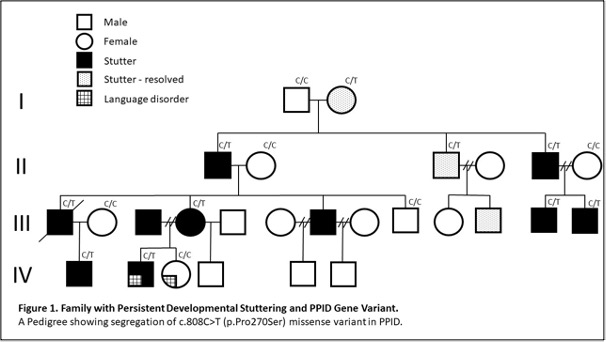

Figure 1: Family with Persistent Developmental Stuttering Gene Variant stutteringhelp.org

    This study also highlights sex-specific effects, being that the persistence of stuttering is majorly higher in males. Researchers were able to identify loci with different effect sizes by analyzing sex-stratified GWAS. Furthermore, the researchers uncovered enrichment for genes that play a role in axon guidance, neurotransmitter signaling, and cortical brain regions associated with speech and motor control. 

    This study represents a major step forward in furthering the understanding of the biology of stuttering. This study reveals the polygenic nature of stuttering and how it links to other neuro-developmental processes. 


Sources:

    Polikowsky et a.l (2025). Genome-wide association analyses of developmental stuttering in over one million individuals. Nature Genetics, 57(12), 1785–1797. https://doi.org/10.1038/s41588-025-02267-2

    Hildebrand, M., & Morgan, A. (2024, Spring). Unlocking the genetics of stuttering. Stuttering Foundation. https://www.stutteringhelp.org/content/unlocking-genetics-stuttering


Saturday, November 22, 2025

Neurodivergence and Genetics


            I’ve always heard people say that ADHD is caused by “too much screen time” or kids not being disciplined enough, but after learning more about it, that honestly feels pretty inaccurate. ADHD has a real biological basis, and genetics play a huge role in it. I was reading a study that looked at thousands of people and found that ADHD is highly heritable, meaning it tends to run in families because of shared genes (Demontis et al., 2019). The researchers even identified specific genetic variants that show up more often in people with ADHD. I found that interesting because it shows that ADHD isn’t about being lazy or unmotivated. It’s rooted in how the brain is wired, and genetics shape a lot of that wiring.  

Can you inherit ADHD? | Attention Deficit Doctor

What surprised me even more is how complex the genetics behind ADHD actually are. There isn’t one single “ADHD gene.” Instead, hundreds of small genetic differences each add a tiny amount of risk, and when they stack together, someone might develop ADHD. The study also pointed out overlaps between ADHD genetics and other neurodivergent traits, which made me think about how connected different conditions can be. It makes sense, though. Neurodivergence isn’t just one thing. It’s a huge spectrum with a lot of shared biology. Reading this made me appreciate how diverse brain functioning really is. ADHD doesn’t make someone “less than.” It just means their brain works differently, and that difference has roots in their DNA. I think the more people understand that, the easier it will be to move away from stereotypes and treat ADHD like the real neurological condition it is.


References

Demontis, D., Walters, R. K., Martin, J., Mattheisen, M., Als, T. D., Agerbo, E., … & Neale, B. M. (2019). Discovery of the first genome-wide significant risk loci for attention deficit/hyperactivity disorder. Nature Genetics, 51, 63–75. https://doi.org/10.1038/s41588-018-0269-7


Tuesday, November 21, 2023

Science Reveals Genes That Help Drive Dyslexia


Dyslexia is a learning disorder that involves difficulty reading due to problems decoding words and identifying speech sounds. Symptoms of dyslexia include; late talking, learning new words slowly, reading below the expected level for their grade, and more. There is no cure for dyslexia however parental support and tutoring at school can help the child to read better. Science has been studying what genes drive dyslexia. Researchers have begun to pinpoint specific genes responsible for the disorder. The findings show that common genetic differences have the same effect on both genders. Also, there is a linkage between dyslexia and ambidexterity. The results also showed that dyslexia is very closely genetically related to performance on reading and spelling tests. To determine these conclusions, the researchers tested millions of genes and genetic variants and found 42 significant variants. Many of the genetic variants that were linked to dyslexia were also linked to attention deficit hyperactivity disorder (ADHD). The study also found that several genetic variants were associated with the same symptoms of dyslexia in different languages, such as Chinese. This was the largest genetic study on dyslexia and is a great start at determining the specific genetic markers for the learning disorder. 

Monday, November 20, 2023

Largest-Ever Study of Suicide Genetics Gives Clues to Who's at Risk

Largest-Ever Study of Suicide Genetics Gives Clues to Who's at Risk


In a groundbreaking study published in the American Journal of Psychiatry on October 1, researchers have identified 12 gene variants that may be linked to an increased risk of suicide attempts. Led by Anna Docherty, an associate professor of psychiatry at the Huntsman Mental Health Institute (HMHI) at the University of Utah, the research sheds light on the intricate connection between genetics, mental health, and various physical ailments.

Contrary to expectations, the study revealed that it isn't a single gene but the cumulative impact of different genes that contributes to the risk of suicide attempts. Drawing data from 22 diverse populations, including people of various ethnic backgrounds, the research team conducted a meta-analysis involving the Million Veteran Program and the International Suicide Genetics Consortium. This comprehensive approach included data from nearly 44,000 documented suicide attempts and over 915,000 ancestry-matched individuals serving as a control group.


The findings uncovered a complex web of genetic variants associated with suicide attempts. The team then compared this data with genetic information on more than 1,000 other health issues. Remarkably, the study demonstrated significant overlap not only with mental health conditions but also with various physical health problems such as chronic pain, attention-deficit/hyperactivity disorder (ADHD), lung conditions, heart disease, smoking, and lung-related illnesses.

This study showing that causes of suicide can be studied through genes that we are born with is very good and helpful information that can help treat people who are suicidal. Many times people who are suicidal are not able to express how they feel and it makes it much harder for people trying to help. With this study it can make it easier to see what genes are effecting people into having them be suicidal.


Links:


Thursday, September 21, 2023

Mental Disorders and Their Heritability

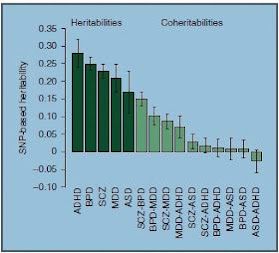
Chart showing genetic overlap of mental disorders


Mental disorders, such as ADHD, BPD, SCZ, MDD, and ASD, are traceable to the same genetic variations. People who have any of these mental disorders are more likely to have variations at the same four chromosomal sites. Since the extent of this overlap still remained unclear, researchers looked into this by looking for any comparisons and similarities in the genetic variations among a population of those who have those mental disorders. The population of those with the mental disorder was compared to a control group (those who have not been diagnosed with a mental disorder), to be able to calculate the extent of any overlaps between genetic variants and these mental disorders. Bipolar disease and depression had a 10% heritability and common genetic variation overlap, schizophrenia, and depression had a 9% overlap, schizophrenia and autism had a 3% overlap, and schizophrenia and bipolar disorder had a 10% overlap. Although some of these overlaps may seem minor or insignificant, it is a good starting place to continue research and learn more about the genetic inheritance of these mental disorders.


Mental disorders are greatly affecting our population, so it is crucial to look into the origin of these disorders. If researchers are able to find a greater overlap in the connection between these disorders and heritability, then maybe we can learn more about mental disorders and how to better treat and manage them. I would be curious to know if any other mental disorders have significant overlaps between heritability and genetic variation.


https://www.nih.gov/news-events/news-releases/new-data-reveal-extent-genetic-overlap-between-major-mental-disorders 


https://www.healthline.com/health/are-mental-illness-genetic 


Friday, August 4, 2023

Genetic Factor Found In 5 Mental Disorders

 A study suggests that major mental disorders like autism, ADHD, bipolar disorder, major depression, and schizophrenia, which were thought to be distinct, share certain genetic variations. This indicates potential genetic connections among these disorders. The study used data from genome-wide association studies to analyze over 33,000 patients with these disorders and found significant genetic variations associated with all five conditions. Specific genes related to calcium regulation in neurons, particularly CACNA1C and CACNB2, were linked to these disorders. Additionally, certain regions of chromosomes 3 and 10 were found to have illness-linked variations. While these genetic associations alone can't predict or diagnose these conditions, they could contribute to better diagnoses and a deeper understanding of the disorders' causes.


Thursday, November 10, 2022

The genes that may be responsible for autism, Tourette syndrome, and ADHD

    Recent research has proposed some gene variants that may help explain the gender disparity in being diagnosed for disorders like autism, Tourette syndrome, and ADHD. It has been known that boys are significantly more likely to be diagnosed with these and it is often attributed to their XY sex determination. Since boys only have one X chromosome, there is no way for them to compensate for X-linked disorders. However, specific genes on the X chromosome were not found until now.     

    Jeremy Willsey has identified the MAGEC3 gene to be the contributing factor. Studies found that women gave four regions of the MAGEC3 gene to their sons with autism that they did not give to their sons without autism. Willsey found similar results when looking at the genomes of people with Tourette syndrome and ADHD. Those with Tourette syndrome were 2.1 times more likely to have these variant regions than those without the disorder. This with ADHD were 2.5 time more likely than their non-diagnosed counter parts.

    These findings are valuable to a multitude of spaces. It can be used in genetic counseling scenarios for families or possible parents. It can also help scientists better understand males vulnerability to develop genetic disorders. This research could help provide more funding for male programs and potentially be applied to key genes involved in other neurological diseases. 

Tuesday, April 12, 2022

New Genetic Variants and Markers Discovered in the ADHD Genome Puzzle


    In March of 2022 researchers from the University of Michigan published a study in The Journal of Neuroscience where a human gene variant coding for the choline transporter was correlated with poor cognitive performance in mice faced with attentional challenges. In humans this same variant (val89) is correlated with ADHD, the study aimed to provide better neurobiological framework on how this variant directly effects changes in the brain. This work demonstrated how the val89 variant reduced choline uptake in affected individuals, as well as their ability to sustain acetylcholine throughout attentional challenges. These results echo a 2021 article on how fruit flies with fewer choline transporters struggled to tune out a specific scent. The flies not only failed to habituate to the smell but also became hypersensitive to it, a reaction in line with humans affected by cognitive disorders such as ADHD possibly associated with choline transporters. 

    Ever since it was believed that ADHD is a condition linked to inheritance back in 2000, it has been the goal of many geneticists to search for the existence of genetic markers that may be one day used to diagnose ADHD or at least identify at risk individuals. Many studies were conducted in this effort, including a massive meta analysis in 2019 identifying 304 single nucleotide polymorphisms concentrated in 12 "significant risk loci" on 11 different chromosomes that were the first in the field to be accepted as "robustly associated with ADHD". 

    Through the past 20 years geneticists have gotten their hopes up before that a possible genetic link to ADHD was discovered and there is no promise these studies will result any differently. Neurological conditions often involve complex systems that lack a simple answer, and we are likely still far away from being able to replace the present methods of ADHD diagnosis outlined in the Diagnostic and Statistical Manual of Mental Disorders (DSM-5), with reliable forms of genetic testing. But these studies still shed significant light on the inner workings of the biochemistry and genetics of ADHD, possibly leading to newer more effective forms of medication and treatment.

Sunday, November 15, 2020

ADHD


This article discussed ADHD. Attention-deficit hyperactivity disorder is a behavioral disorder that develops during childhood and can be characterized by a short attention span, hyperactivity, and little to no impulse control. ADHD runs within families, the genes a person inherits from their parents play a huge role. Some with the disorder, have a hard time with school, work, and relationships with others, due to the fact that the behaviors are severe enough to interfere and cause a lack of attention. ADHD may be caused by a rare gene mutation, a mutation within a single gene is enough to trigger this disorder. Many people in my family have ADHD and it is interesting to see first hand how it may affect their day to day lives and how they do things differently than others, not being able to pay attention for long periods of time or often being forgetful. 

https://medlineplus.gov/genetics/condition/attention-deficit-hyperactivity-disorder/#resources


https://www.nature.com/articles/s41380-018-0070-0

Wednesday, November 11, 2020

ADHD and Genetics


            ADHD or Attention Deficit Hyperactivity Disorder is a common neurodevelopmental disorder.  It affects roughly eleven percent of young children.  The question begs, is ADHD genetic, or is it novel in families? ADHD seems to be one of the most inherited neurological disorders, usually if it present in one family member, multiple others have it.  However, studies cannot strongly confirm the genetic or environmental contributions to one having ADHD.   Research has tried to identify genes responsible for the disorder through linkage studies.  Studies have revealed that certain regions on chromosome 16 may be connected to ADHD, but the results are still inconclusive.  

    While, science knows a lot about ADHD behavior, treatment options, brain structure as well as brain function, etc.  Genetically speaking there is not a wealth of answers, there are many studies and research but nothing concrete.  For example, through brain imaging, it is known that the brain structure of a person with ADHD is different from that of a neurotypical human.  The hope for more genetic research and answers is that it will provide an avenue for more effective medical treatment. 

Links:

https://www.sciencedirect.com/science/article/pii/S109037981200013X?casa_token=HSOPfl22qo4AAAAA:icwUWT2cbYtxAxH9etwGY-zvda2Sk5HTSMLSHiyfhzAHRkozuoWvEjk_Svyigv1TlznTvGEuejQ

https://www.nhs.uk/conditions/attention-deficit-hyperactivity-disorder-adhd/causes/#:~:text=ADHD%20tends%20to%20run%20in,likely%20to%20have%20ADHD%20themselves. 


Wednesday, July 10, 2019

Can ADHD be Inherited?

Attention deficit hyperactivity disorder, commonly known as ADHD, can effect a person’s attention, behavior and learning ability. The disorder seems to impair neurotransmitters in four different regions of the brain. 

In reference to ADDitude, Inside the ADHD Mind,  researchers suspect a gene is involved in the creation of dopamine, or lack thereof, which may be traced to the effects of ADHD. Dopamine functions as a neurotransmitter in the brain that can affect a person’s mood, learning and concentration. Although experts can not be sure exactly what causes ADHD, those with a parent or sibling with the condition are at greater risk. 

Can a Brain Scan Help Diagnose ADHD? -American Health Imaging
Researchers believe a combination of genetic, environmental and social factors contribute to the latency of ADHD. To continue the research, scientists evaluated DNA in search of variations contributing to ADHD. Researchers studying ADHD believe more than on gene is associated with the disorder due to its complexity. In 2018, a global team of researchers completed a study where they discovered genetic variations that accounted for about 22% of the risk for ADHD. For further information, the study can be read at Nature’s Genetics.


According to the Journal of Clinical Child and Adolescent Psychology, a study from 2016 reports 9.4% of children between the ages of 2 and 17 years of age, received an ADHD diagnosis. That equals approximately 6.1 million children in the United States. I knew ADHD was common, but the numbers from this study were shocking to me. With a disorder being so substantially common, it’s hard to believe scientists, researchers or doctors still don’t know what causes it. Oddly enough, this article ties into our lecture today because if researchers believe more than one gene is linked to the affects of ADHD, it would make sense for genes to be linked or how crossing-over plays a role in the diagnosis of ADHD. 

Monday, November 26, 2018

ADHD and Genetic Variants

About 2.5% of adults and 5% of children are affected by ADHD (attention deficit hyperactive disorder).  The disorder can cause a lack of attention, hyperactivity, disorganization, and much more, making it seem like a behavioral problem in many cases.  However, scientists have discovered specific genetic variants that have been shown to link to ADHD, which could change the way many people view the disorder.  These variants can account for an increase in the risk of ADHD.  Although scientists knew ADHD was heritable, it was always difficult to find these genetic variants.  A study scanned 55,000 individual's genomes, in order to do research on the topic and found that there were 12 regions in the genome where some changes could increase the risk of having ADHD.  These findings do not account for much of the "genetic risk," says Professor Anders Borglum, but represent the "tip of the iceberg" and can lead to many more discoveries in the future.  This could lead to finding out more about the biological elements of the disorder, and can help in finding new drugs to treat the condition.  This in turn could help those who are just seen with "behavioral problems" be more understood and not as stigmatized.
https://www.theguardian.com/society/2018/nov/26/scientists-find-genetic-variants-that-increase-risk-of-adhd
https://www.webmd.com/add-adhd/guide/attention-deficit-hyperactivity-disorder-adhd#1

Thursday, April 27, 2017

Good News for Pregnant Women with Depression

According to two new large studies, pregnant women with depression and who are taking antidepressants are not increasing the risk of their child having autism or ADHD (Attention Deficit Hyperactivity Disorder). The article states, “Genetic or environmental influences, rather than prenatal exposure to the drugs, may have a greater influence on whether a child will develop these disorders.” This is a huge breakthrough since about 1 in 10 pregnant women will encounter a major depressive episode and these are the women who had to weigh their options and decide whether they wanted to risk taking the antidepressants, depending on the severity of the depression. The two studies involved large sample sizes and sophisticated statistical techniques which compared siblings in families where the mother used antidepressants during one pregnancy but not the other. “In the sibling matchup, the children had essentially the same risk for autism, ADHD and poor fetal growth whether they were exposed to antidepressants in the womb or not.”

                This is an incredible step forward in relation to the health of pregnant mothers and their children, which is obviously one of the most important, if not the most important aspect of life in general. Depression is a huge issue for millions of people across the US and throughout the rest of the world and it is breakthroughs like this that give people with depression hope of getting better and living happier and healthier lives while mothers give birth to happier and healthier babies.


Tuesday, April 18, 2017

Autism is not linked to prenatal exposure to antidepressants


The linkage between giving birth to a child with Autism and exposure to antidepressants is not entirely clear, but progress has been made. Researchers have now come to realize that a woman who is pregnant and depressed, might harm the child more if her depression goes untreated. The effects of depression causes serious effects on the child such as how the child grows, feels, and eats. Exposure to the antidepressants has no correlation. A study down in Sweden showed that newborns exposed to antidepressants were just as much at risk to have autism as kids who were not exposed. More research has to be done to know the exact answer however. This blog was very interesting, I like how it is a relevant topic and still needs more research to be done. Most people now have been effected by Autism whether it is a sibling or a family friend. It would be awesome to further the knowledge on this disorder. I think this goes hand in hand with the theory that needles/vaccinations cause Autism. This proves again that we are wrong and this disorder is much more and needs more research to be done.


Article: https://www.sciencenews.org/article/autism-adhd-risk-not-linked-prenatal-exposure-antidepressants

Related article: http://pubmedcentralcanada.ca/pmcc/articles/PMC3832387/


Monday, April 17, 2017

Genetic discovery provides new insight into cognitive disorders

 Image result for ADHD
This Article discusses the finding of the genes that are responsible for cognitive ability. Dr. Lencz and other scientist studied the genes of 35,000 people. scientists measured the individuals brain function by having them go through tests that test their learning ability, memory, and other functions that have to do with cognitive function. These finding will help better and create new medication for cognitive disorders of the brain, such as schizophrenia and attention deficit hyperactivity disorder (ADHD). Dr. Lencz stated that these findings will also provide new clues into how the brain works at the molecular level. It was also found that people who have a attitude that makes them more open to learning new things has a connection to higher cognitive function 

cognitive ability

Sunday, October 2, 2016

The Genes Behind Why Dogs are Man's Best Friend

   
 “Dogs are man’s best friend” is a very common quote used to describe the fondness and loyalty dogs have for humans. Surprisingly, research shows that the same genes linked to social disorders in humans, such as autism, are possibly the same genes behind dogs’ social behavior towards humans.


The behavioral experiment in which dogs’ sociability towards humans was tested.


    A behavioral experiment was conducted using hundreds of lab-bred beagles, in which they were given a task to open three transparent lids containing treats, one of them being tightly closed. The dogs were observed to seek help from the person standing in the room after finding it hard to open that lid, instead of finding a way to open it on their own. Some of them looked at the observer and then back at the stuck lid, while others tried to make physical contact or stayed close to the observer. The Gender of the beagles was also shown to play a role, in which females were shown to be more sociable than males.

    A DNA testing method, called Genome-Wide Associated Studies (GWAS), was used to study a large number of variants within each dog’s genome. Results showed that five genes selected during domestication were heavily linked to dogs’ sociability towards humans. Four of these genes, including the SEZ6L gene, have also been linked to human social disorders, such as autism, schizophrenia, aggression, and ADHD. The evidence however, is not enough to prove this correlation, since this test was only performed on beagles. Scientists plan to do further research on other dog breeds, and hope that this information would also be useful in gaining a better understanding of human social disorders.

    I found this information very fascinating because I never knew that a gene that can possibly be beneficial in one species, can be harmful in another. I’m looking forward to reading more about this when further research and confirmation are made.


Links:


Monday, April 11, 2016

Mom’s Smoking Can Alter Fetus’s DNA


Despite the large amount of research and warnings, studies have shown that 12% of pregnant women in America still smoke. Studies are also showing that smoking during pregnancy can actually alter the DNA of the fetus and lead to birth defects such as low birth weight, asthma, and cleft lips/palates. In order to collect this data, researchers gave questionnaires to 7,000 mothers from around the world where they were asked how often they smoked during their pregnancy. Also, they collected a blood sample from each newborn’s umbilical cords so that they could examine their DNA. The studies showed that DNA does not change the DNA sequence in smoke-affected babies, but affected which genes were turned on or off. For example, “methylation” is when a small molecule is added onto DNA, preventing a certain section from being turned on, which can lead to birth defects. Even though the fetuses aren’t breathing in the smoke, many toxins from cigarettes will pass through the placenta and into the fetus. Researchers believe that methylation plays a large role in the effects on the DNA in the fetus.

It is alarming to me that a percentage of pregnant women in the country still smoke while pregnant. Even though 12% is not that high while looking at the big picture, in reality 1% would still be too high a number. Also, this percentage doesn’t take into account the amount of women who lied and said they did not smoke while pregnant. The effects of smoke on adults is significant and can lead to a number of health complications over time such as various types of cancers and heart disease, so I can only image how many complications these affected fetuses will have growing up. It is also often said that these fetuses are more likely to die from Sudden Infant Death Syndrome and if they do live, they have an increased chance of ADHD. Mothers are supposed to love and care for their children, and smoking while pregnant is selfish because their addiction can lead to lifelong complications or even death for their child.


Wednesday, September 16, 2015

5 Disorders Share Same Genetic Risk Factors


Researchers studied 60,000 people’s DNA to learn more about the genetics of five psychiatric illnesses- schizophrenia, bipolar disorder, autism, depression, and ADHD. Until now, scientists thought families with individuals with two different illnesses were the exception, but now they look to be the rule. The same type of genetic mutation could lead to two types of illnesses. Researchers found two regions of DNA that pose a risk for disorders that involve genes dealing with calcium channels, which help send signals in the brain. This finding could mean that treatment for altering calcium channels could help many of these disorders.

I think these findings are wonderful. It will allow doctors to diagnose illnesses based on DNA and solid evidence instead of symptoms that could sometimes be iffy. Also, if it really is true that one type of treatment could cure many disorders, than that means that a lot more people will be getting better in a lot less time, which, of course, is always a good thing.


Monday, April 27, 2015

Five Different Disorders Sharing Genetic Risk Factors

Schizophrenia, bipolar disorder, autism, major depression and attention deficit hyperactivity disorder all share the same genetic risk factor, a new study finds.  The genes used were very important signaling genes that are located in the brain. Scientists hope to study these signaling genes to see how the signaling may become altered thus leading to these disorders. While scientists believe that this is just the beginning and there is a long way to go it is believed that there will be no simple fix since hundreds of different mechanisms probably cause these conditions. Scientists believe this is simply a starting point. This article says that there is a long way to go, however since there is now a know starting point hopefully results and new findings come flooding in. http://www.apa.org/monitor/2013/05/disorders.aspx

Sunday, October 19, 2014

Gene Found Contributing to ADHD


Attention deficit hyperactivity disorder, also known as ADHD. ADHD is a condition that includes many factors, such as difficulty sustaining attention, hyperactivity and impulsive behavior. It affects millions of children, but boys are most susceptible to ADHD than girls. According to the Centers for Disease Control and Prevention, about 9.5% of children between the ages of 3-17 years are diagnosed with ADHD. In addition, about 13.5% were boys compared to 5.4% diagnosed were girls.  Many people know that ADHD affect brain activity in individuals, but recent evidences suggest that it can be related to genetics factors.


Bruce F. Pennington, a professor of psychology at the University of Denver argues, “ …we known enough to say it is a brain-based disorder, and we have some idea about which circuits are involved and which genes.” Researchers have found that low level of dopamine in the frontal lobe is one of the likely causes of ADHD. According to Professor Pennington, “If you have a deficit in dopamine, it’s harder to concentrate on goal-orientated behavior.” A recent research has identified that environmental factors may increase the likelihood of developing ADHD, but genetic component play a larger role.  


Dr. Muenke’s group identified a gene called LPHN3 that is associated with ADHD. This is just one of the many genes that connect to ADHD. ADHD is a very complex disorder that includes many complex factors, including genetics. Individuals with LPHN3 are more susceptible to developing ADHD. As mention before, ADHD is a result of deficit of production/function of dopamine. According to Lange, “LPHN3 function causes a reduction and misplacement of dopamine-positive neurons in the ventral diencephalon and a hyperactive/impulsive motor phenotype. There is a low activity of LPHN3 in patients with ADHD. There are treatments available to help individuals with ADHD by depressing their behaviors and help increase their attention. Therefore, early diagnoses and treatment is key in treating ADHD.