Tuesday, November 21, 2023
Science Reveals Genes That Help Drive Dyslexia
Sunday, November 13, 2022
Genes linked to learning disorders
Michelle Luciano and her team at the University of Edinburgh sought to find more concrete genetic causes for dyslexia. They conducted a study that compared the genomes of over a million people to see if there were noticeable difference between those with dyslexia and those without. They were able to find 42 variants that were significantly found much more in those with dyslexia. There did not appear to be any difference in these variants between sexes, ages, or ethnicity. These traits seem to only have small effects when acting alone which is common for polygenic traits - implying that the genetic basis of dyslexia is very complex.
I think this research is both fascinating and important. Learning more about the genetic causes for intellectual disorders could ultimately help mend the academic gap that many students find themselves in. Often times the school does not have the resources or training to properly accommodate students with learning disabilities. As a result there academic progress slows down or get put on hold and the older a student gets, the harder it is to catch back up. However, if we are able to prescreen embryos and babies for things like dyslexia, we could immediately implement the techniques need to limit the effect on their reading and writing. Focusing on it from a young age will make them more likely for success in secondary and higher education.
Wednesday, November 9, 2022
Genes Identified That may be Linked to Dyslexia
For millions of Americans, dyslexia has been a major threat to everyday life. Dyslexia is a condition in which reading and spelling is difficult. But according to an article, researchers believe that they have identified the genes that are responsible for this condition. Scientists from the Max Planck Institute for Psycholinguistics, the QIMR Berghofer Medical Research Institute in Australia, the U.S. company 23andMe Inc, and the University of Edinburgh had conducted one of the largest genetic studies recorded on dyslexia. Scientists had records from 50,000 adults who suffer from the condition and about 1 million adults that don’t have the disease, and found that 42 of the genes were significant in regards to language delay and others for critical thinking skills, both of which play a major role in harming an individual’s academic performance.
Sunday, October 30, 2022
42 Gene Variants Possibly Linked to Dyslexia
A recent article by News Scientist reports that a genetic study regarding dyslexia has identified 42 genetic variants that may be linked to a person's chance of having dyslexia. Michelle Luciana from the University of Edinburgh in the UK conducted a genome-wide study with a sample size of 1.1 million adults. Of those 1.1 million adults that were in the study, 51,000 of them stated that they had been diagnosed with dyslexia. The scientists scanned markers across the sets of genomes of the sample size to identify any variations associated with a particular trait. They identified 42 genetic markers that differed between a participant without dyslexia and a participant with dyslexia. Based on the results, the more markers, or variants, that were identified in an individual, the higher chance they had of having dyslexia. Around one-third of the 42 genetic variants had been previously linked to having conditions, such as attention deficit hyperactivity disorder, or ADHD, while others were more novel, and were associated with things, such as being ambidextrous or pain threshold. It was stated that the 42 genetic variations may not cause dyslexia in an individual, but it would make it more likely to have it when combined with other environmental factors.
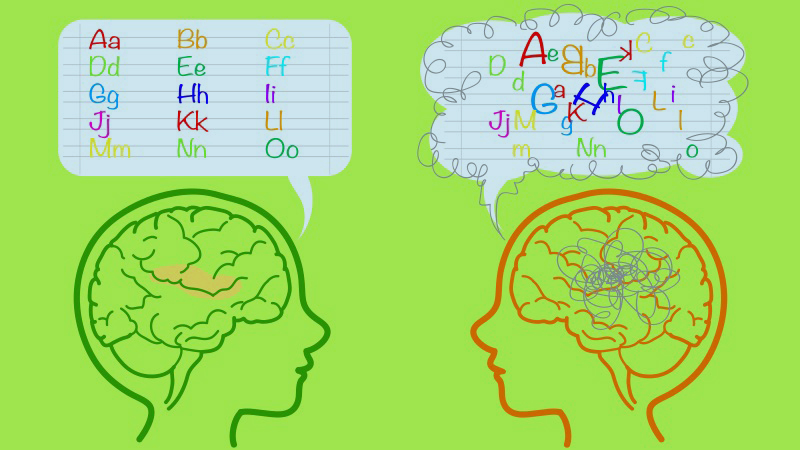
Dyslexia, or developmental dyslexia, is a learning disorder that causes difficulties with reading due to issues with identifying speech sounds and learning how those sounds relate to letters and words. They show difficulty in fluent word recognition, reading comprehension, and spelling. Although dyslexia has a 40-60% hereditary rate, the heritability remains unexplained in large parts, due to multiple genes and environmental factors playing a role.
I find it amazing how we are able to pinpoint certain genes that affect the chances of having certain mental and physical disorders. As was stated in the News Scientist article, with the ability to determine the chances of having dyslexia, or any disorder for that matter, we can better help individuals, such as children, with learning in a way that better suits their learning style. I find it amazing how far science has come, to be able to scan the genome and determine certain characteristics.
Wednesday, November 23, 2016
Autism on Campus
"Autism affects the brain's early development of social and communication skills." Although Autism affects the brain is does not end the ability to attend college. The number of Autistic students have spiked since 1990. This spike was possibly due to the programs most schools offer. Most schools offer help with dyslexia and Attention Deficit Disorders, and most recently with Autism. This program helps Autistic students graduate, and get through their classes. In order to partake in this program, there are academic requirements.
A fear many people have is that in the middle of class or an exam that an autistic student might blurt out an answer or have an issue. What worries most colleges is the social aspect as well as the academic. Most Autistic students are excited to attend college but some are also not aware of the social aspect of it. One student said, "She liked college because she heard they don't get bullied there."
Autism comes in many different forms, but the possibility of everyone attending college despite any condition.
Link:http://www.nytimes.com/2016/11/20/health/autism-spectrum-college.html