Showing posts with label Psychology. Show all posts

Friday, December 11, 2020

Does Genetics Have an Influence on Our Actions?

    In this article posted by Genetic Literacy Project the topic of whether our genetics shape our actions was discussed. It was mentioned that mental-illnesses, vulnerability, longevity, and impulsive tendencies are some-what determined by genes. The ability to analyze a fetus's brain at 20 weeks while still in the womb was mentioned; susceptibilities for conditions such as ADHD, autism, bipolar disorder, depressive disorder, and schizophrenia could be found during this stage. Next, the topic of epigenetics was mentioned, in which the tags connected to genes are analyzed. These tags are placed upon genes and are passed onto offspring. An experiment was mentioned in which two groups of mice were exposed to the smell of cherries; however, in one group the mice were shocked when they smelt the cherries. This resulted in the offspring of the shocked mice being traumatized by the smell of cherries. It was mentioned that there has not been enough research done to relate the same trend occurs in humans. Although it has been found that descendants of US Civil War prisoners are more likely to die younger in life, and Holocaust survivors offsprings having a higher level of cortisol, which is the hormone involved in stress responses. I found this article to be very informative, and I enjoyed the researches that they shared. I agree with the information presented in this study since it was backed up with research. I hope more research is done surrounding the topic of epigenetics. I find epigenetics to be very interesting, as another it connects two of my favorite areas of science: psychology and biology.

Wednesday, November 27, 2019

Social Stress Impacts Genes of Rhesus Monkeys


Scientists have long known there is a correlation between environmental factors- such as chronic stress- and the physical health of an individual. In fact,It is believed that this can actually cause a "pro-inflammatory" response. This shows that chronic stress can cause cellular/biological changes in an organism. The question the researchers at Yerke National Primate Research Center set out to answer was how long these effects can last.

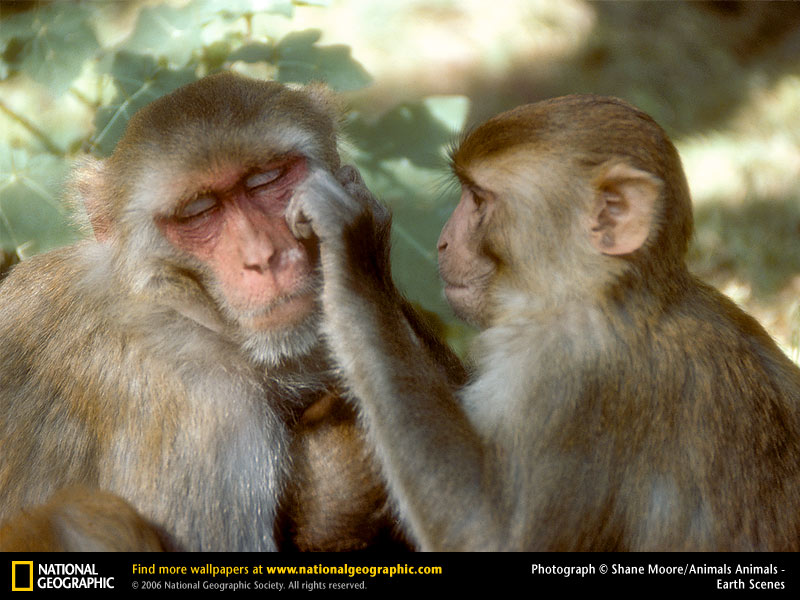
An experiment was conducted using Rhesus monkeys. The monkeys were put into groups of five with one monkey introduced at a time. This created a strict social order among the monkeys, with the monkeys who were in the group longest holding the highest social position. The monkeys in high social positions would pick and bully those of lower social statuses. After a year, the monkeys were then switched into different groups and reintroduced in a new order, thus changing the social standings of the monkeys. Some monkeys who had previously held high statuses fell lower on the totem pole, others were higher, and some stayed the same.

Three blood samples were then taken from each the monkeys. The first group was simply incubated as a control, one was treated to mimic a bacterial infection, and one was treated to mimic a viral infection. The data showed that monkeys who had been in a high social standing in both groups had a better immune responses than those who had started at a lower social standing and ended at higher one. RNA sequencing of these samples also revealed that thousands of genes within these monkeys were expressed differently depending on their social ranks.

This study shows how social pressure and the concept of "biological embedding" can have drastic effects on individuals and the expression of their genes, even beyond childhood. This is fascinating to consider, especially when trying to find more links between genetics and psychology, particularly how individuals who have been exposed to psychologically traumatic evens may be more likely to have altered gene expression resulting in a decline in health.

Article: https://www.medicalnewstoday.com/articles/326755.php#5
Related Link (video related to study): https://www.youtube.com/watch?v=OYFRICCVK4M&feature=player_embedded
Related Link (Social Structure of Primate Groups): https://www2.palomar.edu/anthro/behavior/behave_2.htm

Sunday, November 20, 2016

KNOWINGLY TAKING PLACEBO PILLS EASES PAIN

A new study is the first to demonstrate that patients who knowingly take placebos or "fake pills" for lower back pain, still resulted in a 30 percent ease in pain and 29 percent decrease in disability when compared to the control group. This study essentially redefines the effects placebo pills has on health and wellness. A paper published in the journal Pain demonstrated how those given open-label placebo pills had improvements which, superseded those of patients who only received the traditional medications for lower back pain. 


Ted Kaptchuk, director of the Program for Placebo Studies and Therapeutic Encounter at Beth Israel Deaconess Medical Center and an associate professor of medicine at Harvard medical School states, "These findings completely turn our understanding of the placebo effect on its head. This new research demonstrates that the placebo effect is not necessarily elicited by patients' conscious expectation that they are getting an active medicine, as long thought. Taking a pill in the context of a patient-clinician relationship--even if you know it's a placebo--is a ritual that changes symptoms and probably activates regions of the brain that modulate symptoms." When a patient interacts with their doctors or nurses during treatment, the psychological effect of feeling cared for, of empathy and of trust, can lead to a positive physiological effect, whether the medication is active or not.

While it shouldn't replace medications for tumors or other extreme ailments, the study shows that the placebo effect holds precedent and can to relieve symptoms, such as back pain to a degree without invoking a physiological effect on the body.


References:

    1. Beth Isreal Deaconess Medical Center. "Knowingly taking placebo pills eases pain, study finds." ScienceDaily. ScienceDaily, 14 October 2016. <www.scienccedaily.com/releases/2016/10/161014214919.htm>.

    2. Claudia Carvalho, Joaquim Machado Caetano, Lidia Cunha, Paula Rebouta, Ted J. Kaptchuk, Irving Kirsch. open-label placebo treatment in chronic low back pain. PAIN, 2016; 1 DOI: 10.1097/j.pain.0000000000000700

Thursday, April 30, 2015

Personality: It's Nature Not Nuture

After conducting recent studies, scientists have found that one's personality is dominantly determined by ones genetics, rather than environmental factors. The article states that considering Psychologists believe personality is more so influenced by a person's given environment, this information is very important.
To carry out the study, Researchers studied over 800 sets of twins, both fraternal and identical. The twins were asked a series of questions regarding how they thing of themselves in terms of personality and following this, their answers were analyzed using a highly respected psychological scale.
The information indicated that genetics play the largest roll in influencing a person's level of self control. This in turn impacted social skills, ability to learn, reaction to challenge, and idea of self purpose.
I found this article really interesting. I've always wondered about the weight and influences of nature and nurture, and have always felt myself that nature played a bigger role. Having found results contrary to what is widely believed, I hope further research is done, as this study was geared to personality in terms of one achieving success in life. I think this breakthrough will also help doctors to better treat patients in the field of psychology.

Source: http://www.telegraph.co.uk/news/science/science-news/9267147/Its-nature-not-nurture-personality-lies-in-genes-twins-study-shows.html

Monday, April 27, 2015

Genetics Behind Anxiety Disorders

Researchers at Massachusetts General Hospital move into researching the specific genetics behind anxiety disorders. The latest research has found that a specific gene is in association with anxiety traits. In individuals with these particular traits, it was found that vital neurotransmitter activity was compromised.
After studies performed with mice, it was found that the RGS2 protein, which is coded for by a specific gene is associated with fearful behavior. This theory was then tested in children twenty one months up to six years through over one hundred different families. The findings were consistent with the same sort of association in mice. The testing was extended to over seven hundred college students. The information from this study further supported the previous findings.
These findings and tests are so important considering what a serious and wide spread problem anxiety disorders are. Being someone who has Generalized Anxiety Disorder, I really look forward to how these discoveries will develop into treatment. I hope that in identifying specifics, scientists and doctors will be able to narrow treatment to target the real genetic issues. I am also always prideful in seeing more and more science discovered in association and causation of mental illnesses because it belittles the taboo association with these serious disorders.

Source: http://psychcentral.com/news/2008/03/04/genetic-disposition-for-anxiety/1997.html

Saturday, April 11, 2015

Genetics helps explain children’s motivation to learn.

Harry Potter and the Goblet of Fire

A study from Ohio State University suggests that genes may be part of the motivation equation. The study was done on more than 13,000 twins from six countries and found that that about 40-50% of of the differences in children’s motivation to learn could possibly have come from the genetics they inherited from their parents. Stephen Petrill, a professor of psychology at The Ohio State University and a co-author of the study, was surprised by these results because he originally believed that the shared environment of twins, such as family and teachers in common, was a larger factor than genetics. However, genetics and non-shared environmental factors showed the largest effect on learning motivation and the shared environment had an insignificant effect. Petrill said that the findings were pretty consistent across the different countries, even though their cultures and educational systems were different. The study involved separate studies of twins ages 9-16 in the United Kingdom, Canada, Japan, Germany, Russia and United States. The methodology and questions were slightly different in each country, but measured the similar concepts; students completed a measure of how much they enjoyed various academic activities and to rate their own  ability in different subjects. They compared how close the answers were for fraternal twins with identical twins; the amount that the identical twins' answers more closely matched than the fraternal twins', it suggested to the researchers a stronger genetic factor. 

The results that they found does not suggest any gene for how much a child likes to learn, but they interpret the data to show that it's much more complex than originally thought and that genetics may very well be an important factor. I find it interesting because many times, if a child does not like to learn or has trouble, the child is blamed. Parents, teachers, etc. sometimes treat the child as if they are just lazy and punish them in some way for not being able to motivate themselves. This study, I think, is something to work off of because everyone is different and maybe genetics really does play into learning motivation. It's not an excuse, of course, for someone actually just wanting to be lazy and not learn, but some people just don't have the capability and shouldn't be blamed for it. 

Monday, November 24, 2014

Researchers Study Connections Between Genetics and Romantic Relationships

Chinese researchers are studying the association between romantic relationships and 5-HT1A gene in young adults.

There are obvious factors which influence attraction and relationships between people, such as personality, looks, and intelligence. These researchers are trying to show that genetics may contribute to the development of romantic relationships.


Pair bonding and affective affiliation (romantic behaviors) are shown to be associated with the serotonin levels in the brain. In non-human animals, decreased serotonin via the 5-HT1A gene decreases female sexual receptivity and causes aggression towards males.

The G allele of the C-1019G polymorphism (which leads to greater expression of the 5-HT1A gene) is related to decreased comfort with close/romantic relationships.

How is this related to being in a relationship? To explore this, 579 Chinese undergraduate students were studied. Cells from hair follicles were collected and DNA was extracted.

The results indicate individuals carrying the G allele (CG/GG) of C-1019G were more likely to be single than non-G, CC carriers. This agrees with the finding that G allele carriers are less comfortable in close relationships.

Actually, G allele carriers are more likely to develop psychiatric disorders (major depression, borderline personality disorder, etc.) and neurotic personalities. All of the above can hinder the formation of relationships, as well as their quality and stability. The connection between the G allele and psychological disorders may lead to fewer dating opportunities and/or unsuccessful relationships.

The researchers believe the findings of their study offer evidence that genetics can influence social relationships.

This study is interesting because it offers even more insight about how much genetics affects our lives. There are obvious things like hair color and eye color but the influence of our genes permeates all aspects, even our relationships. This makes sense because other studies (like this one) investigate how our health, which is influenced by our genes, then influences our relationships. It offers hope to people who struggle with making personal connections that we may find a way to help them connect with others around them

Article: http://medicalxpress.com/news/2014-11-science-romantic-relationships-gene-factor.html

Sunday, October 19, 2014

Gene Found Contributing to ADHD


Attention deficit hyperactivity disorder, also known as ADHD. ADHD is a condition that includes many factors, such as difficulty sustaining attention, hyperactivity and impulsive behavior. It affects millions of children, but boys are most susceptible to ADHD than girls. According to the Centers for Disease Control and Prevention, about 9.5% of children between the ages of 3-17 years are diagnosed with ADHD. In addition, about 13.5% were boys compared to 5.4% diagnosed were girls.  Many people know that ADHD affect brain activity in individuals, but recent evidences suggest that it can be related to genetics factors.


Bruce F. Pennington, a professor of psychology at the University of Denver argues, “ …we known enough to say it is a brain-based disorder, and we have some idea about which circuits are involved and which genes.” Researchers have found that low level of dopamine in the frontal lobe is one of the likely causes of ADHD. According to Professor Pennington, “If you have a deficit in dopamine, it’s harder to concentrate on goal-orientated behavior.” A recent research has identified that environmental factors may increase the likelihood of developing ADHD, but genetic component play a larger role.  


Dr. Muenke’s group identified a gene called LPHN3 that is associated with ADHD. This is just one of the many genes that connect to ADHD. ADHD is a very complex disorder that includes many complex factors, including genetics. Individuals with LPHN3 are more susceptible to developing ADHD. As mention before, ADHD is a result of deficit of production/function of dopamine. According to Lange, “LPHN3 function causes a reduction and misplacement of dopamine-positive neurons in the ventral diencephalon and a hyperactive/impulsive motor phenotype. There is a low activity of LPHN3 in patients with ADHD. There are treatments available to help individuals with ADHD by depressing their behaviors and help increase their attention. Therefore, early diagnoses and treatment is key in treating ADHD.

Tuesday, October 14, 2014

University of Michigan Professors to Study Genetics of Drug Abuse on Rats

           The affects and aftermath of drug and alcohol abuse are extremely prevalent in modern day society. The media is shedding light on this issue on a large scale, especially in contrast to previous decades. Thus scientists are feeling inclined to study this phenomenon on a biochemical level to attempt to understand why drug abuse occurs, and ultimately how science can be a remedy for this terrible social blight. 
           Two University of Michigan professors were awarded approximately 1.5 million dollars as a grant to study drug addiction and abuse on a small scale with rats. Terry Robinson, the Elliot S. Valenstein Distinguished University Professor of Psychology and Neuroscience, and Shelly Flagel, assistant professor in the Department of Psychiatry, were given the five year grant. 


           This grant was awarded from the National Institute on Drug Abuse. The two scientists will conduct studies to find out the basis for reward seeking behavior on a neurological level. This is the primary model that researchers are thinking will mimic human behaviors that correlate with substance abuse. Furthermore, the duo are looking for a genetic explanation as to why some people might be more susceptible to drug addiciton than others, and why some people who are trying to recover relapse back into their old vices. Although rats have different responses to stimuli than humans, this model is the best representation of an emulation of human drug abuse.


Monday, September 15, 2014

Schizophrenia is Eight Different Diseases, Not One


           Emerging research has shown that Schizophrenia consists of a cluster of genes that each express a facet of the disease. Schizophrenia is a mental disorder which is characterized by weird social behavior and the inability to differentiate between reality and hallucillatory thinking. Dr. C. Robert Cloninger, professor of psychiatry and genetics at the Washington University School of Medicine in St. Louis, spearheaded the new research into Schizophrenia, emphasizing how the disorder can be devastating to the people experiencing its symptoms. He stated "We are opening a new era of psychiatric diagnosis." Additionally, "his work will allow for the development of a personalized diagnosis, opening the door to treating the cause, rather than the symptoms, or schizophrenia."


                         Above: Dr. C. Robert Cloninger discussing how several genetic factors
                                                        express Schizophrenia symptoms.

           This genetic cluster observation is illustrated by people with specific genetic profiles experiencing "word salad," while another group of people with different assortment of genes experience false noise. Furthermore, different sets of gene yield different probabilities for having the disorder. For example, one genetic set results in a nearly 95% chance of having schizophrenia, whereas another genetic profile yield a 71% chance with an early age of development at 17.
From an overall perspective, the average individual has a 1% chance of developing schizophrenia in one's lifetime.


Article: http://www.usatoday.com/story/news/nation/2014/09/15/genetic-cause-schizophrenia/15535557/

More Information: http://www.firstpost.com/living/many-types-schizophrenia-can-divided-8-classes-study-1713031.html

Friday, April 18, 2014

Exploring the genetics of "I'll do it tomorrow"


This article talks about research published in Psychological Science that suggests that Procrastination and impulsivity are genetically linked. The research question that Daniel Gustavson of the University of Colorado Boulder wanted to explore is why some people procrastinate more than others and why they seem more likely to take rash actions.
The study took 181 identical-twin pairs and 166 fraternal-twin pairs and made them complete several surveys which gauged their tendencies of procrastination and impulsive behaviors. They found that procrastination and impulsivity are not only both heritable but they also complete overlap genetically. This suggests that procrastination is an evolutionary by product of impulsivity.  
Gustavson hopes that studying more of this relationship and the mechanics behind it may lead to interventions to prevent such behavior.
I find this type of research, that overlaps genetics and psychology to be very interesting. It seems that recently, the scientific community has been exploring the evidence that suggests that psychological conditions are passed between generations. This article and one of the articles I discussed before on trauma in mice both support this notion. It is interesting to think the ramifications of this evidence. It begs the question, are we really in control of our emotions and states of mind or are they just a product of evolution and genetics? If we are not in control of emotions and their actions caused by them and they are already "preset" (and likely triggered by the environment around us), the research to learn the underpinnings of emotional actions like impulsivity and procrastination become of utmost interest.

Related Article on Genetic Influence on Human Psychological Traits: http://stormchan.org/study/src/1347441918244.pdf

Thursday, November 21, 2013

New Genetic Risk Factor Discovered for Schizophrenia and Bipolar Disorder


     A team from The Feinstein Institute for Medical Research have discovered a factor in NDST3 that is likely to lead to schizophrenia and bipolar disorder. The risk factor was isolated using DNA from scizophrenic individuals as well as healty adults. The variant changes only a single letter, but can lead to devastating psychiatric illness. Bipolar and schizophrenia have long been hypothetically linked, and this new discovery combined with others further strengthens that theory (see the second link below).

    These articles resonate with me, since an isolated case of schizophrenia occured in my ancestry. While no one in my immediate family is known to have the disease, it's nice to know that we will eventually be able to test for these defects in our progeny. They are serious conditions, so any insight into their origins and methods is cetainly useful.

http://www.sciencedaily.com/releases/2013/11/131119112815.htm
http://www.sciencedaily.com/releases/2013/08/130811150815.htm

Wednesday, October 31, 2012

The Influences of Alleles and Environment on Education

Some of the most interesting research combines approaches from different fields of study to explain certain phenomena.  In July, a study relating academic achievement to genetics was published in the Developmental Psychology Journal from the American Psychological Association.  Researchers at Florida State University were trying to see if certain genes would influence whether or not a student would graduate from high school and attend college.  The researchers studied the DAT1, DRD2, and DRD4 genes.  The DAT1 gene encodes a protein that acts as a dopamine neurotransmitter.  The DRD2 and the DRD4 genes encode proteins that acts as dopamine receptors.  Dopamine is an important chemical found in the brain that may have an effect on certain behaviors such as motivation, sleep, violence, and cognitive ability.  Improper dopamine levels may cause the development of certain conditions such as ADHD.


[caption id="" align="aligncenter" width="504" caption="Dopamine attaching to receptors."][/caption]


This study used data from the National Longitudinal Study of Adolescent Health (Add Health).  In 1995, Add Health began studying youths in middle school or high school through early adulthood (the study ended in 2008).  The participants’ DAT1, DRD2, and DRD4 genes were analyzed.  Each participant contained different alleles of the genes being studied.  An allele is the alternative form of the same gene.  The researchers found that test subjects with certain alleles obtained the highest levels of education.  However, having certain alleles does not guarantee graduation from college.  The environment (ie. financial status and prevalence of crime) plays a major factor in determining the level of education.

As a college student, it was interesting to learn that certain alleles may influence academic achievement.  Although there is not a gene for “getting good grades,” certain key aspects of learning such as motivation and attention are clearly controlled by the genes that regulate the levels of dopamine in the brain.  To benefit future students, more studies should be completed to learn about other genes that may affect learning and levels of academic achievement.


Monday, March 12, 2012

Genetic Differences in Scouting vs. Non-Scouting Bees


An article in Medical News Today, features a study on honey bees and genetic variations between scouting bees and non-scouting bees. Bees that are considered to be scouting bees are females that go out and search for food all on their own, never being told where to go. When they find one, they fly back to their colony and perform what is known as the "waggle dance" to relay the message of the new food source to the rest of the bees.

Scientists conducted an experiment to test the genetic differences between scouting and non-scouting, or foragers. The did this by enclosing bee hives in a large mesh cage so the bees could not escape and placing a specific food source outside of the hives, letting the bees get used to it. A couple days later, a new food source was added to the enclosed area in different locations than the original food source. Researchers observed which bees found the food source first and painted a colored dot on them to keep track of them.

The process of adding a new food source and marking the bees was done two more times so some bees had three dots on them. Researchers then separated the scouting bees from the non-scouting bees. Bees with two or more dots on them were considered to be scouting bees. Then, the brains were taken from the captured bees and geneticists examined the differences between gene expression between the two types of bees.

What they found was extremely interesting; 16% of the 7,500 genes in honey bees were significantly different in the two. Some include genes that regulate neurotransmitter receptors of glutamate and dopamine. Even more interesting, when non-scouting bees were treated with octopamine, a chemical that activates the dopamine receptor, they started showing behavior similar to scout bees. Alternatively, when a scout bee was given a glutamate inhibitor, it would act like a forager.

Thursday, December 8, 2011

Help a Rodent Out!

In this article scientists found first recorded signs of rats helping their fellow rat out. According to scientist, the rats were displayed empathy.  During the experiment one rat was put in a restrainer while the other rat was allowed to roam free. Scientists stated that the rat that was free seemed to get agitated when the other rat was restrained. This test was done several times. When the free rat discovered how to open the container it would act quickly to get it's companion out.