Showing posts with label birth defect. Show all posts

Monday, November 21, 2016

Zika: Researchers create powerful tool for vaccine, antiviral development

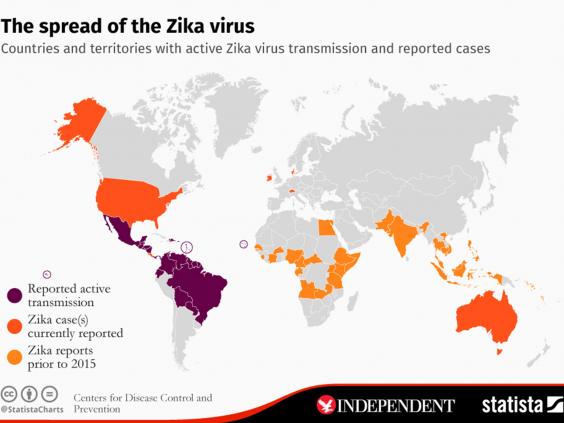
The Zika virus is a mosquito-borne member of the genus flavivirus, which includes dengue fever, yellow fever, West Nile virus, and other viruses that cause significant human diseases. The symptoms include but are not limited to: fever, rash, joint pain, muscle pain, red eyes and headache. Although not particularly deadly in most adults, the virus is extremely deadly to pregnant woman. The virus is known to cause severe birth defects. Zika reportedly causes microcephaly, and other problems that affect the eyes, hearing, and growth. Areas that are affected with Zika also have higher rates of Guillain-BarrĂ© syndrome, a rare and serious disorder of the nervous system.
Image result for where zika is most prevalentFuture Zika vaccine

Researchers from University of Texas Medical Branch (UTMB) in Galveston, Southwest University in Chongqing, China, and the University of Leuven in Belgium have come up with a powerful new tool for studying the Zika virus, as well as creating vaccines and antiviral drugs. This tool is known as a "replicon system". The replicon system creates versions of the virus that are stripped of genes that make them infectious, making them safer to work with. Replicons are portions of the viral genome that can replicate on their own, without relying on the machinery of the host cell. Thus, the replicons can be used to locate portions of the viral molecule that block production, becoming extremely effective in vaccine development.

http://www.medicalnewstoday.com/articles/314237.php
https://www.cdc.gov/zika/about/

Tuesday, October 18, 2016

One Family's Struggle With Microcephaly

In 2006, Christine Grounds gave birth to a child with microcephaly, the birth defect caused by the Zika virus that causes malformed heads and stunted brain development in children. The doctors were not entirely sure what this meant for the newborn, Nicholas Mir. This was much before the Zika outbreak that occurred this year that had spread from Brazil. Since the outbreak, the CDC estimates that there are over 2,600 pregnant women who have tested positive for Zika in the US and its territories, along with thousands more around the world. All these women may potentially give birth to children with microcephaly. The severity of microcephaly varies greatly, but one of the most difficult parts of this disorder is that is very difficult to identify until late in the pregnancy, leaving thousands of women with the agonizing choice of waiting anxiously and hoping for the best or abortion. Mrs. Grounds offered to share her experience raising Nicholas when the outbreak occurred. She describes how difficult it was in the beginning, but that Nick progressed quickly once he reached age eight. However, unlike many, Nicholas is fortunate to be able to attend an excellent private school on the Upper West Side that provides great care and has helped him get to where he is today.


Dr. Wendy K. Chung is a director of the clinical genetics program at Columbia University Medical School and she met Nicholas for testing when he was a baby, as his parents were hoping to find answers in his genetic makeup. At first, the tests were not successful because there were not enough facts and developed science, but about three years ago, Dr. Chung finally had an answer. Nicholas was autosomal recessive for the microcephaly gene, meaning both of his parents carried the recessive gene for the disorder. They had a second child before these results were discovered, assuming that it was highly unlikely for their second child to have microcephaly as well, but as it turns out, the odds were one in four.
I thought it was incredibly helpful that Christine Grounds chose to share her story about Nicholas to help others dealing with microcephaly or facing the possibility of having a child being born with microcephaly. Because is an autosomal recessive disease, pregnant parents with the Zika virus can have the genome of the father mapped out in order to see if he carries the recessive gene to further evaluate the odds of having an affected child.

Thursday, April 7, 2016

Early Fetal Abnormalities May Correct Themselves In Time


         Today in the United States, about every 4 ½ minutes a baby is born with a birth defect. This is affects 1 in every 33 babies born each year. Mothers whom have family history of genetic disorders or who are at risk of such disorders undergo chorionic villus sampling (CVS) which is carried out around 11-14 weeks of pregnancy. CVS removes and analyzes cells from the placenta, around 15-20 weeks amniocentesis can be preformed, this is when a small amount of amniotic fluid is removed and analyzed, this fluid contains cells shed by the fetus. The only downfall to getting this procedure is the 0.6% of miscarrying and once you get the results that indicate a chromosomal condition then the parents must decide whether or not to continue with the pregnancy. 

       Prof. Zernicka-Goetz’s decided to carry out this experiment with her second child at the age of 44. Zernicka-Goetz’s CVS results indicated that up to 25% of the cells in her placenta were abnormal, knowing the risk Zernicka-Goetz proceeding to continue with the pregnancy and her child was born without any disorders. Zernicka-Goetz explains that the embryo has an amazing ability to correct itself, even when half of the early stage cells are abnormal. Further research must be done in order to determine what is the exact proportion of healthy cells are required to achieve the complete repair of an embryo.

       I feel as this discovery is very beneficial to the embryonic development because it allows the opportunity for fetus to self repair itself. With the fetus being capable of fixing the abnormal cells, expecting mothers now, may not have to worry or consider abortion as a solution when there is 25% percent abnormal cells.

Click here for original source: http://www.medicalnewstoday.com/articles/308404.php

Wednesday, March 12, 2014

Link Found Between Missing DNA and Birth Defects

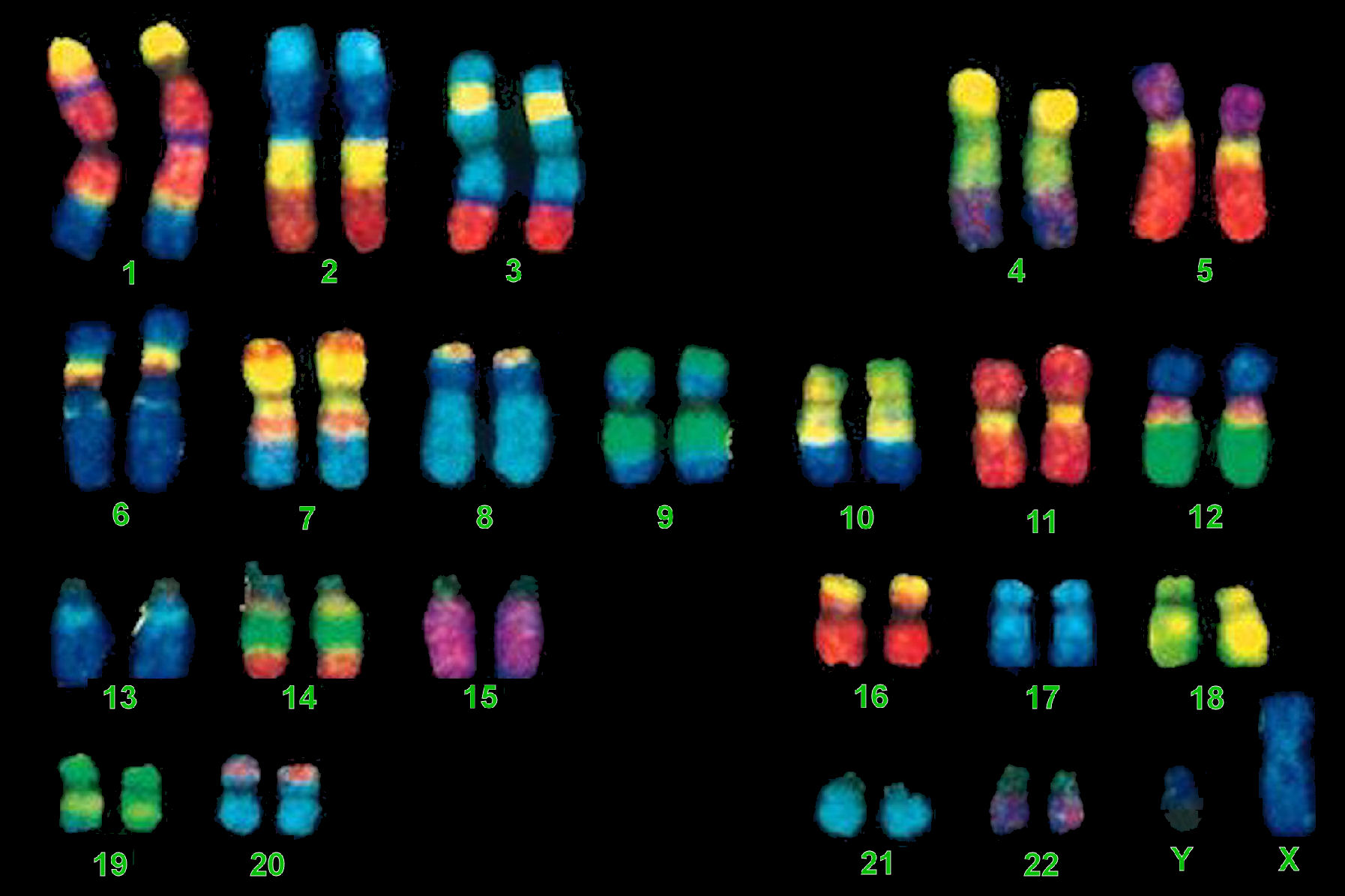
Researchers at UPenn have found a definitive link between missing portions of chromosomal DNA and a handful of severe birth defects, including cleft palette, epilepsy, and respiratory difficulties. After a 2010 report about a mother who suffered from epilepsy along with her daughter, and had lost a son to respiratory failure at birth, scientists at UPenn, led by Dr. Jeremy Wang and Dr. Jian Zhou, made a connection between the family's disabilities and an additional observation that both the mother and daughter were missing a large chunk of DNA on their X chromosome. The researchers then crossed a number of mice that showed deletions of DNA in their chromosomes to breed a generation that were missing the same chunks on their X chromosomes. They found that males did not survive birth, and females exhibited the exact same disabilities as the family in the report. To pinpoint which part of the deletion led to the defects, Dr. Wang and Dr. Zhou engineered mice that lacked the first 2/3 of the deletion and mice that lacked the final 1/3. They found that the mice missing the first 2/3 appeared to be healthy, while the mice missing the final third exhibited every defect.

Ultimately, Dr. Wang and Dr. Zhou plan to continue investigating the gene deletions in the hopes that doctors may be able to use this information in prenatal testing to help treat respiratory problems in newborns.


I think the work that Dr. Wang and Dr. Zhou have started is a huge step forward for treating a number of birth defects that affect newborns all over the world. Though the ethics of experimentation on mice can always be called into question, I think the worth of progress on understanding and curing human birth defects if far more valuable. My only question on the article is why the scientists in Italy, who originally reported the family's defects and originally noted the chromosome deletion, never made any sort of connection. Otherwise, this article poses a lot of really interesting future study, and I'm curious to see where other researchers take this knowledge.

Original UPenn article here
More information on how chromosomal deletion work here

Sunday, October 27, 2013

DNA gives more Differences within Humans.

           Human beings around the entire world are different and similar in a plethora of ways. Sometimes eye and hair colors are the same. Sometimes simple things like height, weight, or blood type are the same. Much more similarities are found in twins, triplets, and quadruplets. However, there are always differences in every human beings, whether they are twins or not. Fingerprints and footprints are definitely two things that will never-ever end up being the same between any two humans in the world - from past to present to future. Another feature of humans that will never end up being the same is DNA due to never-ending, unique combinations of genes being coded.


Now that the topic of DNA has come up, the Lawrence Berkeley National Laboratory can be mentioned where epigenomic profiling was carried out. The researchers here have figured out the genetic basis of a certain type of feature difference within the DNA coding: the face. Axel Visel was the leader for this research with a doctorate in genetics who discovered there are specific gene-leveled sculptors determining the development of the facial feature in humans which are called the transcriptional enhancers. These enhancers came to be found out from the experimentation with mice along with deletion experiments. There is no exact idea of what the purpose of these enhancers are yet but the expression of specific genes within the face development is started with these regulating sequences (transcriptional enhancers). 


Previously, enhancers were looked at by scientists but in the major places of the body: heart, brain, and organ systems, where regulation took place over thousands and thousands of base pairs. Gene expression became more precise through these enhancers controlling their target gene's expression in the development processes giving different phenotypic facial features. Over 4000 were predicted to be ongoing in the precision of facial genes from observing mice. The importance that came out of this research of defining face morphology, basically the skull, was that it provides a foundation for birth defect analysis so it could be built upon on.

Link 1: 
http://www.genengnews.com/gen-news-highlights/one-face-many-gene-level-sculptors/81249023/
Link 2: http://www.cdc.gov/ncbddd/birthdefects/cleftlip.html