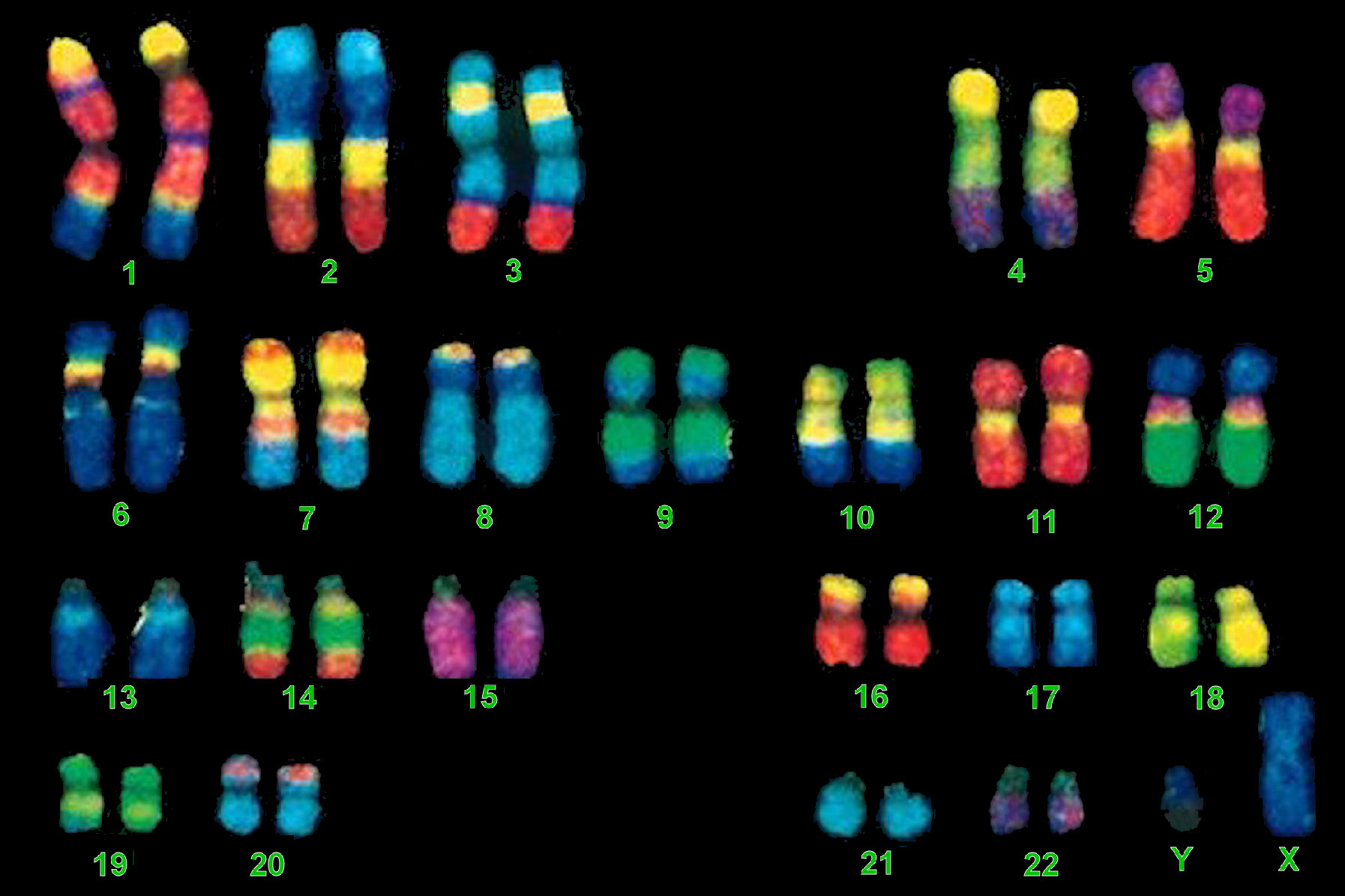
Showing posts with label chromosome. Show all posts

Sunday, December 7, 2025

Egg Cells from Skin Cells?


     In this article, scientists are working to create a human egg from an adult cell. They used a technique that combines cloning with fertilization, along with a small amount of chemical coaxing. Researchers had succeeded in producing egg cells of many other types of animals, so the hunt to produce egg and sperm of humans has been on.

    An attempt was made when the nucleus from a human egg cell was taken out and replaced with the nucleus of a skin cell, which is called somatic cell nuclear transfer. In this case, the researchers weren't trying to clone a human, but wanted to make an egg cell, which is half of the DNA of a skin cell. When done on mice, once the cloned egg was fertilized, it removed half of its chromosomes in order to take in the chromosomes of the sperm. In human eggs, this did not happen, so the researchers added roscovitine to persuade the egg to allow the chromosomes to be removed. This led to no viable eggs, since many would kick out the wrong half of chromosomes or end up with an incorrect number of chromosomes. It is theorized that it's due to the chromosomes pairing up randomly instead of with their specific other half, like in normal meiosis.

    This is still being tested in Japan, and hopefully, these trials are getting us a step closer to creating viable eggs. I think this is such an interesting idea that can help many people who would like biological children, but have reasons they wouldn't be able to. The fact that similar tests have been proven possible in other animals makes me optimistic about the probability of this becoming an option in the future.

Friday, April 18, 2025

Woolly mammoth chromosomes reconstructed using fossilized sample


Woolly mammoth chromosomes reconstructed using fossilized sample:


    A team of international scientists assembled the woolly mammoths genetic code using fossilized chromosomes. The chromosomes came from a 52,000 year old carcass that was discovered in Siberian permafrost. The animal was freeze-dried on death, which essentially preserved the 3D structure of ancient chromosomes. Which are thread-like structures containing DNA. Since the scientists show the shape of the animals chromosomes, it then allows them to assemble the DNA sequence of the extinct creatures. The researches then use computer modeling to reconstruct the full 3D chromosome structure from the fossilized data. The team saw that the woolly mammoth had 28 pairs of chromosomes and saw what key genes were responsible for hair follicle development and could help explain why mammoths are woolly and elephants now a days are not. 


    In my opinion, I think all of this research these scientists have found is very fascinating and crazy to think about. As it would be cool to have a once extinct animal to be here again blows my mind. How technology has changed, and the many advancements that were made benefits all of this newly found research. I don't exactly know how I would feel if a woolly mammoth would be alive, and put on this earth again. This feels like the movie "Jurassic Park."


Sources:


Tuesday, September 17, 2024

The Genetic Rarity of Male Calico Cats

     The article, 'Why Are Male Calico Cats So Rare', discusses the uncommon genetic abnormality of male calico or male tortoiseshell cats. So much so that the chances of a calico cat being a male is estimated to be one in three thousand. Calico cats do not describe the cat breed, but rather the feline's coat; typically a calico has a tricolor coat, white, cream, and gray or white, orange, and black, and a tortoiseshell coat has two colors black and orange marbled.  It has been found that coat color is coded in specific chromosomes referred to as a sex-linked trait. For example, both male and female felines could have an orange coat (the X chromosome carrying the black gene becomes inactivated creating orange fur) or a black coat (vice versa if the chromosome carrying the orange gene on the X chromosome becomes inactivated creating black fur) because the gene that controls both of these color patterns is found on the X chromosome. Biologically, females have two X chromosomes, while males have an X and Y chromosome. Since female felines have XX chromosomes, a female cat will easily express the mixed color pattern of both black and orange with a higher percentage of X chromosomes in their genome compared to male cats.  This results in a more apparent or visible mottled effect due to the higher "concentration" of X chromosomes in females.  Whereas, male felines with an XY chromosome, can only have a black or orange coat; unless they have a genetic abnormality that is known to increase the number of X chromosomes. Typically described as Klinefelter syndrome, a syndrome that can be observed in both humans and animals, where a male has three sex chromosomes, XXY. This XXY combination could be a result of the incomplete separation of the paternal chromosome pair during the time of fertilization. This XXY combination, likewise in humans, results in malformed sexual organs, typically resulting in male calico and tortoiseshell cats being sterile. 

    Male calico/tortoiseshell felines, meaning cats with Klinefelter syndrome, have been found to have a higher risk of developing health problems, potentially decreasing their life span when compared to the average tomcat. Some of these health problems are as listed: increased body fat, leading to diabetes, joint pain, heart disease, kidney disease, hypertension, and even certain types of cancer. 

   I chose this article topic because I have a female calico kitten, and as mentioned above, I was aware that, typically, calicos and tortoiseshell cats are females. Females can display both colors in a calico or tortoiseshell pattern since they have two X chromosomes (multiple colors/patterns of black, orange, and white, or grey, cream, and white). However, males, with only one X chromosome, do not express this mottled color pattern described above as noticeably. While I am aware that some multicolored tomcats exist, I did not realize how this was possible with the involvement of the X chromosome. Although this article does not go into the research that was conducted to support these findings, I find the information interesting, especially when I look at my female dilute calico kitty.

p.s. *from the article* Apparently, in many cultures, calico and tortoiseshell cats are coined with the nickname "money cats," as they are believed to bring money, wealth, and good luck to any families who adopt them! Which is something I have never known before!


Monday, September 16, 2024

Breeding Plants with the Genes From One Parent to Attain More Desirable Traits

    The article, 'Breeding Plants with Genes From One Parent', discusses the research done at the University of California Davis College, when Simon Chan and colleagues, such as Ravi Maruthachalam, while breeding a lab plant known as Arabidopsis, accidentally stumbled across a way to completely omit one parent's genetic information from the offspring. This finding is exponential since plants are typically diploid, they inherit two sets of chromosomes one from each parent; if a trait is desirable, the plant will pass along the gene to its offspring. However, this process could take several generations to make its mark.  Eliminating half the genome, creating haploid crops, could aid in quickening the process of breeding crop plants for desirable traits easier, and creating true homozygous offspring faster. 

    Chan and Maruthachalam modified just one protein, CENH3, found in the centromere of the plant's chromosomes. When the plants with the modified CENH3 gene were crossed with wild-type Arabidopsis, the results were plants with half the normal number of chromosomes, making a haploid plant with only genetic information being passed down from one parent, completely eliminating the other parent's genome. 

    Once replicated by another researcher, Professor Comai, used a different plant species and manipulated the same CENH3 gene and also created plants with one set of chromosomes.  However,  Comai did state that the rules related to each species and the CENH3 gene are distinct from one another.  

    The true finding related to the CENH3 gene is when the CENH3 gene is altered, the centromere of the chromosome is weakened due to the gene being removed from the DNA inside the egg before fertilization. Thus, when embryonic division occurs, the centromeres lacking the CENH3 (female genome in the egg) fail to compete with the centromeres containing CENH3 (male genome in the sperm). Therefore, the female genome is eliminated, engendering the selective depletion of weak centromeres when CENH3 is eradicated. 

I chose this article since the idea is novel.  Typically, like other sexual organisms, plants are diploid and inherit two sets of chromosomes one from each parent.  However, in this article, researchers found a way to make the offspring haploid. This is a task that seems nearly impossible to accomplish.  Although more research is needed, I like this concept since these findings are applicable and useful in today's society, especially in breeding agricultural crops such as wheat, corn, beans, etc., with the potential to feed more people more quickly if bred desirably. 


Tuesday, November 29, 2022

Rat Species Has No Y Chromosome!

Amami Spiny Rat

A team of researchers at Hokkaido University in Japan has figured out how a species of rat is able to survive and reproduce despite not having a Y chromosome. The rat species they studied was the Amami spiny rat (Tokudaia osimensis), a rodent native to the island of Amami Ìshima in southern Japan. The species, also called the Ryukyu spiny rat, is unique in that males do not have a Y chromosome and females only have one X chromosome as well. Previous attempts to study the rat have not been able to reveal how males are able to develop within the population with no Y chromosome. Typically in mammals, a gene on the Y chromosome called SRY tells the organism's body to express male genes like the SOX9 gene for testes. Not having the Y chromosome scientists were stumped at how males could develop. Lead researcher, Asato Kuroiwa, and her colleagues at Hokkaido have now discovered the answer! The secret was looking at the autosomes, non-sex chromosomes, in the rat. On chromosome 3 they found that one copy had a duplicated region next to the SOX9 gene. The duplication increases the activity of the SOX9 gene and it is able to code for testes. This duplicated region effectively replaces the SRY gene on the Y chromosome and explains how males of this species are formed. If a rat has the duplication region it acts as a proto-Y and the rat will be a male, and if the duplication region is absent, it acts as a proto-X and the rat will be a female. Further work to explore this is limited as the rat is an endangered species but the research so far has shown an amazing trait inherited by this rat population. The researchers predict the trait appeared about 2 million years ago when the Amami spiny rats diverged from their ancestors with a Y chromosome. Kuroiwa believes that a mixed population existed initially on the island but then a natural disaster like flooding or rising seas left mostly rats without the Y chromosome and over time the rats reproduced and evolved into a new species with this trait. 

Personally, this was my favorite article to read so far about genetics. I find it incredible that a species can exist without a Y chromosome and that another chromosome was able to replace its function to make males. This is a really interesting example of population evolution, genetic drift, and speciation. I hope that these rats can be studied more to learn about this unique and interesting trait. 

Tuesday, November 30, 2021

Understanding Genetic Factors that Leave People at Risk for Suicide

 Trigger Warning/Content Warning

This article discusses heavy topics like suicide. This may be a sensitive topic to some readers so please continue reading at your own risk. If you (or someone you know) are in crisis, please call the National Suicide Prevention 24-hour Lifeline at 1-800-273-TALK (8255), or contact the Crisis Text Line by texting TALK to 741741, or visit their website at https://suicidepreventionlifeline.org/


Suicide is an unfortunate epidemic that accounts for about 800,000 deaths per year. Non-fatal suicide attempts occur more than 20 times for every death by suicide. Since suicidal thoughts and behaviors can be lessened with mental health support and treatment, it is imperative that we understand the biological pathways involved so we can provide better treatment and prevention strategies. In a worldwide genome-association study, scientists scanned more than 7.5 million common variations in the DNA sequence of 550,000 people. Of that group, roughly 30,000 of them had made a suicide attempt. They discovered a region on chromosome 7 with DNA variations that increased the risk a person might attempt it.

The risk location had a strong overlap in the genetic basis for suicide attempt and psychiatric disorders like major depression. There were some overlap in the genetics associated with smoking, pain, risk-taking, sleep disturbances, and overall poorer general health. The overlap with these non-psychiatric risk factors turned out to be unchanged when adjusted for psychiatric disorders; meaning that suicide attempt is not a result of non-psychiatric disorders, but that the biology between the two factors are shared. This study lays the foundation for future research in identifying genetic risk factors in other area of the human genome. Understanding the biological pathways involved in suicide means that better treatment and prevention strategies can save others from this tragedy.


https://health.ucsd.edu/news/releases/Pages/2019-01-14-large-study-identifies-genetic-variants-linked-to-risk-tolerance-risky-behaviors.aspx

Sunday, November 5, 2017

Chromosomes Activate Genes Differently as we Age


        Researchers from UConn Health and the Jackson Laboratory for Genomic Medicine have recently discovered that human chromosomes age with us. When we are young, chromosomes are loosely coiled, allowing for thousands of sites to be open and ready to activate genes and make proteins. As we age, some sections of the chromosome curl and become more tightly coiled, making it more difficult for DNA that defends our body against disease to be accessed. 
The genomic study utilized blood samples from 75 healthy, young people (ages 22-40), and 26 samples from healthy seniors (age 65 and up). The researchers isolated immune cells from each blood sample, and looked at how the immune cells’ gene activation changed with aging. The scientists found that regions of chromosome that code for genes that develop and differentiate T-cells, which help defend against the flu, viral infections, and some cancers, are more likely to be open in young people than in seniors. They also discovered that the elderly are more likely to have open regions of chromosome that code for genes associated with cell death and inflammation. Previous studies have shown that chromosomes shrink with age, and that gene expression is affected (The Scientist). However, the discovery of differently coiled chromosomes between young people and seniors had never been seen before in genomic analysis, and is now helping researchers conduct studies in overall disease resilience in older people. I find this topic very interesting because it may lead to medical breakthroughs in the care of the elderly. It is amazing to think that by learning about how the chromosomes age we can possibly make seniors more resilient to certain diseases.

Sunday, July 30, 2017

How Temperature Can Influence Sex Changes in Bearded Dragons


Who would have thought that embryonic bearded dragons can switch their sex when the ambient temperature gets hot. These lizards have sex influencing chromosomes where if an egg is incubated at 32 degrees Celsius or below and has two Z chromosomes, then it will develop into a male. If an egg has a Z and a W chromosome, then it will develop into a female. Although, if the temperature rises above 32 degrees Celsius, then the egg with the chromosome ZZ with overturn and become a female with the chromosomes of ZW. DNA was collected from the brain and reproductive organs of the lizards by Clare Holleley, an ecologist from the Commonwealth Scientific and Industrial Research Organization in Canberra. There were three types of lizards, which includes of normal females, normal males, and females who's sex was switched from male.  Studies from the RNA indicated that two genes, JARID2 and JMJD3 had a high activity rate from the sex-reversed female lizards. Deveson, a biologist at the Garvan Institute, noticed something peculiar about the RNA translation. In the sex- reversed female lizards, the RNA section that would naturally be removed during translation, ultimately stayed and carried specific codes that would stop the translation of RNA from JARID2 and JMJD3.

Tuesday, November 22, 2016

Obesity Linked to the Biological Age of Newborns


A recent study shows that a mothers' obesity may affect the biological age of her newborn child. This study, conducted at Hasselt University in Belgium, associates a shorter telomere length (located in the cells of the newborn) with the obesity of their mother. Researchers that conducted this study used a sample of 743 mothers, ranging from the age of 17 to 44, The researchers were able to use samples of umbilical cord blood obtained from each newborn, directly after their delivery.

Biological age is essentially the number of times a cell will be able to divide in its lifetime, which is typically determined by the length of the telomeres in the cells of our bodies. Telomeres are vital to have in a person's genome, given that they protect chromosomes from degrading; they are the structures at the ends of chromosomes. Given this benefit, cells then have a more likely chance of dividing throughout their lifetime depending on the length of the telomere that ends the chromosome in which it is attempting to divide.

After observing all of the data gathered throughout this study, it remained prevalent that newborns whose mothers were not considered obese had longer telomeres versus newborns who had mothers that were indeed considered obese. In fact, only a single point increase in a mother's body mass index, or ones' weight-to-height ratio, was linked with newborns whose telomeres were shortened by about fifty base pairs considered to the average newborn's telomere length. Although it is normal for telomeres to shorten as people age, the rate at which telomeres shorten does not remain consistent between individuals. The fifty base pair shortage in these newborns is actually equal to the amount of base pairs an adult would lose on average in only a bit over a year.

Image result for telomere

According to previously done studies, the length of telomeres in adults may be associated with some age-related diseases such as cardiovascular disease, type 2 diabetes and increased mortality; however, studies on the impacts of telomere length in newborns and children still remains limited. This study also does not take into account the body mass index, or the obesity of the paternal figure, which also may play a part in the length of the telomeres. Several factors have been ruled out to lead to the length of the telomeres; however, this is being further looked into.

I am very curious to see how this study will continue, and what further findings these researchers may have. I think it would be extremely important to learn about the influence of telomere length in newborns and children, given the associated health risks in adults. I also am very curious to see what role the paternal BMI, or possible other factors, will play in the deciding of the length of the newborn's telomeres.

Wednesday, March 25, 2015

Shattered Chromosomes May Be Cause of Birth Defects

A study done by the University Medical Center Utrecht in the Netherlands observed three different families whose children suffered from abnormalities due to chromothripsis or a shattered chromosome. According to the senior author of the project, Wigard Kloosterman, this does not necessarily cause lead to a disease to occur. Although the presence of a shattered chromosome impacts reproduction through difficulties such as not getting pregnant, miscarriage, or the birth of children who have multiple birth defects. The children who were studied have abnormalities that were passed down from the mother. Even though the mothers were affected, they had genomes which had more chromosome breakage than their children. Dr. Kloosterman found that only two children had inherited a small set of the damaged chromosomes from the mother. In all three of the children the differences from the mothers results in a duplication or deletion of chromosomes which lead to their birth defects.
Genetics is a very complex study that researchers are slowly beginning to understand. There is just so much that we have yet to discover about the human genome. Chromosomes are so tiny and they control so much of our DNA. I find it so interesting that these children only inherited a small fraction from their mothers and yet they were so affected by what was passed down to them. Even that the mothers genome contained more chromosome breakage than the children's and they were unaffected is so difficult to understand. As scientists progress into further research of chromothripsis, we may have more of the answers that we need to understand birth defects.

Thursday, February 5, 2015

Chromosome Self-Destruction Saved This Woman's Life

 A woman living in Ohio had an extremely rare genetic immune disease called WHIM syndrome.  She shares this condition with only about 60 people worldwide.  The disease lowered a certain kind of the woman's white blood cells used to fight an infection that she had frequently as a child.  It isn't fatal, but it may lead to scarring, hearing loss, or different forms of cancer from some of the symptoms.  Researched linked WHIM syndrome to the CXCR4 gene that codes for cell surface protein in immune cells.  Having WHIM will cause this gene to work in overdrive and the white blood cells will get stuck instead of being released into the bloodstream.

The woman, who brought her daughters in to see a doctor at the time, found out that her daughters had contracted the condition as well.  However, the woman was perfectly fine: her white blood cells had no trace of the CXCR4 gene mutation.  How could this be?  Doctors were very interested because there is currently no cure for such a condition.  After many tests and medical investigations, scientists found a copy of chromosome 2 in the woman's white blood cells that was significantly shorter than the other.  This missing chunk of chromosome housed, coincidentally enough, the mutated CXCR4 gene.

Chromothripsis is a phenomenon observed recently in leukemia patients and in some cancer patients.  A fault in cell replication causes a chromosome to shatter itself and rearrange in a different order.  Normally, the scrambled cells die after this happens but if they do survive, it could lead to cancer.  However, the chromosome got scrambled in a blood stem cell which led the production of normal white blood cells.  Doctors who have looked into this said it may be worth looking into if people randomly get cured of their diseases.  Scientists may be able to pinpoint genetic mutations that cause serious illnesses like sickle cell anemia, take the blood stem cells out, modify the CXCR4 gene in the blood stem cells, and replace them into the patient.

This is definitely something I've never heard of.  One would think that the destruction of a chromosome would be very detrimental but apparently it can save lives.  Further research must be done on this but so far, from this article alone, this may be one of the most bizarre ways to cure a genetic mutation.  For the sake of people with life threatening genetic mutations, I hope doctors and scientists somehow find a way to manipulate genes enough to effectively get rid of the mutation altogether.

Sunday, November 16, 2014

Better Memory Performance linked to Genetic Variant

     The largest study to date of human memory using genomic data was done by the research team of IU School of Medicine, led by post-doctoral medical student Vijay K. Ramanan. This test included over 14,000 older adults. An analysis of genomic data using memory performance test was used to identify a specific location in the genome that was associated with better memory performance. According to an International research team, the results obtained can lead to finding new treatments for memory impairments (such as Alzheimer Disease).


                                        From: http://newsoffice.mit.edu/2013/discovering-hippocampal-connections

      This test involved chromosomal manipulation. There were higher performance tests of episodic memory that was associated with the DNA on chromosome 2; specifically the gene involved a G instead of the more common A nucleotide (in the gene called FASTKD2). The single genetic variant nucleotide polymorphism of SNP was found to also have a denser gray matter in the brain and a slightly larger hippocampus. These foundings were brought by Resonance Imaging Scans.

      This is a fantastic stepping stone for research on genetic variants. More research obviously needs to be done to determine whether the drug targeting the FASTKD2 gene can be used to protect against memory loss. But if these findings are verified, Alzheimer Disease can finally have a treatment associated with it.  

Article from: http://www.medicalnewstoday.com/releases/285378.php
Related article: http://www.ncbi.nlm.nih.gov/pubmed/19863254

Thursday, April 17, 2014

Identical Twins, One with Down Syndrome


      Down syndrome is a genetic disorder which is thought to be caused by the presence of an entire or part of an extra chromosome, or chromosome 21. Down syndrome is usually associated with physical growth delays, characteristic facial features and moderate intellectual disability. The average IQ of an adult with Down syndrome is around 50, which would be around the same as an 8 to 9 year old child. Down syndrome can actually be detected before birth using prenatal screening and other diagnostic tests.
       I found a very interesting article that talks about a case of identical twins born and only one of them had Down syndrome. This is very interesting because it contradicts prior beliefs in this area. The experiment conducted allowed a group of geneticists from Europe to find out how chromosomes dictate the behavior of cells inside the body. Their findings showed that when the gene expression is altered, by the addition of the extra chromosome, it is altered in consistent patterns in every chromosome, and not just with the extra chromosome. Having this opportunity to study such a strange event actually allowed us to understand more about a genetic disorder that effects so many people.

Tuesday, April 15, 2014

Researchers Create First-Ever 'Designer Chromosome' in Yeast

Researchers have now created the world's first synthetic functional chromosome in yeast. The work of this synthesis of the eukaryotic chromosome was done by researchers at NYU Langone Medical Center's Institute for Systems Genetics. This new chromosome is called SynIII and has approximately 273,871 base pairs of DNA compared to the 316,667 base pairs present in biological yeast. Researchers said certain parts of the chromosome that were considered unnecessary such as repeating segments of the DNA, junk DNA and jumping genes were all removed during the synthesis of the chromosome.
yeast The team of researchers had transferred the artificial chromosome in a living yeast cell and found that it works just like a normal chromosome. Jef Boeke, PhD, director of NYU Langone Medical Center's Institute for Systems Genetics, said, "It is the most extensively altered chromosome ever built. But the milestone that really counts is integrating it into a living yeast cell. We have shown that yeast cells carrying this synthetic chromosome are remarkably normal. They behave almost identically to wild yeast cells, only they now possess new capabilities and can do things that wild yeast cannot."
The next step in the research is to synthesize larger chromosome and maybe construct an artificial genome of an organism. The designer chromosome has a few different applications. It can be used to improve production of alcohol, butanol, and biodiesel. In Pharmaceutical industry, bugs with artificial chromosomes could produce drug components, according to the researchers.

Sunday, March 16, 2014

Genetic Differences Found in Female Athletes with ACL Injuries


              Almost everyone knows of someone who has injured their anterior cruciate ligament (ACL), as it is a very common injury in sports. However, people may not know that females are two to eight times more likely to injure their ACL than males. But, why is this true? Is it because of an anatomical or hormonal factor, or is it based on genetics?

 In a study recently performed at the American Academy of Orthopedic Surgeons, a biopsy of ruptured ACL tissue was obtained from seven male and seven female athletes. There were thirty-two differentially expressed genes isolated from the tissue, fourteen of which were not linked to the X or Y chromosome. These fourteen genes were grouped according to skeletal muscular development, function and growth. In females, altered responses in signaling pathways that regulate cartilage and tissue growth were found. Researchers believe that these findings will help determine the role of genetics in ACL structure, and the tendency toward increased injury in female compared to male athletes.

I found this article to be interesting, especially because I work with injured athletes on a daily basis, working at an athletic training room. However, I think more research needs to be done on this topic involving athletes of various ages and cultural backgrounds for the research to be considered substantial. Studies should be performed on much larger quantities of athletes, as well, as opposed to only fourteen being used in this study.


Wednesday, March 12, 2014

Link Found Between Missing DNA and Birth Defects

Researchers at UPenn have found a definitive link between missing portions of chromosomal DNA and a handful of severe birth defects, including cleft palette, epilepsy, and respiratory difficulties. After a 2010 report about a mother who suffered from epilepsy along with her daughter, and had lost a son to respiratory failure at birth, scientists at UPenn, led by Dr. Jeremy Wang and Dr. Jian Zhou, made a connection between the family's disabilities and an additional observation that both the mother and daughter were missing a large chunk of DNA on their X chromosome. The researchers then crossed a number of mice that showed deletions of DNA in their chromosomes to breed a generation that were missing the same chunks on their X chromosomes. They found that males did not survive birth, and females exhibited the exact same disabilities as the family in the report. To pinpoint which part of the deletion led to the defects, Dr. Wang and Dr. Zhou engineered mice that lacked the first 2/3 of the deletion and mice that lacked the final 1/3. They found that the mice missing the first 2/3 appeared to be healthy, while the mice missing the final third exhibited every defect.

Ultimately, Dr. Wang and Dr. Zhou plan to continue investigating the gene deletions in the hopes that doctors may be able to use this information in prenatal testing to help treat respiratory problems in newborns.


I think the work that Dr. Wang and Dr. Zhou have started is a huge step forward for treating a number of birth defects that affect newborns all over the world. Though the ethics of experimentation on mice can always be called into question, I think the worth of progress on understanding and curing human birth defects if far more valuable. My only question on the article is why the scientists in Italy, who originally reported the family's defects and originally noted the chromosome deletion, never made any sort of connection. Otherwise, this article poses a lot of really interesting future study, and I'm curious to see where other researchers take this knowledge.

Original UPenn article here
More information on how chromosomal deletion work here

Friday, November 22, 2013

X Chromosome's Role In Male Biology


It has long been assumed that the X chromosome is the "female" chromosome and the Y "male", but new research is beginning to challenge that idea. It was theorized that the shutdown of one of the X chromosomes in females slowed the evolution of the X chromosome and that these genes would be very similar across most mammals. Through research into this it was discovered that there are 144 human genes with no counterparts on the mouse and 197 mice genes with no counterpart on the human chromosome. In most cases these unshared genes, although being present on the "female" chromosome, are only expressed in males. Although this is relatively new research it would be interesting to see how this information pertains to human evolution and if it is in some way related to the "shrinking" Y chromosome.


Cells Show Signs of Faster Aging After Depression


     A study has shown an association between shorter telomeres and depression.  Researchers have reported that the length of telomeres of people who have experienced depression are significantly shorter than those who have not. Dutch researchers compared telomeres of over 2400 people with and without depression.  Telomeres act like the plastic tips that are found at the ends of shoelaces. They cap the ends of chromosomes to protect the cell's DNA from damage. Telomeres get shorter each time a cell divides, so they are useful markers for aging.


     People who have had depression have telomeres that are about 83-84 base pairs of DNA shorter.  Everyone, on average, loses 14-20 base pairs of DNA on telomeres a year. This difference is equivalent to about four to six years of advanced aging.  Other factors that effect DNA damage, such as cigarette smoking and heavy drinking, were also taken into account.  Results remained the same even after these factors were considered.  This research is significant due to the large study group used. The study, however, only showed an association between depression and telomere length but did not show anything in regards to cause and effect linkage.  It will be interesting to find out the actual cause-effect relationship.  If the shortening of the telomere can be reversed it could possibly be useful in improving the health of individuals depending on its role within the relationship.

Saturday, October 12, 2013

Prenatal tests for Down Syndrome


     Breakthroughs in new tests for prenatal screening allow for women to have more options.   New screenings are more accurate and less invasive.  They allow for screenings of any chromosomal abnormalities while avoiding the risks that amniocentesis imposes.  In the past, the decision to undergo an amniocentesis was based on risk due to the woman’s age and genetic history.  Many amnios were performed but not medically necessary, due to the lack of accurate information provided. The new advancements in screenings that are noninvasive and more accurate allow for women to make well-informed treatment decisions.


     The new screenings test the fetal DNA that is found in the mother’s blood.  These tests provide results that detect almost all cases of Down syndrome and result in a false positive result of less than 1% of all cases.  Which is significantly less than older tests.  Noninvasive test results that are positive require an amniocentesis to confirm the existence of Down syndrome.  


     This new noninvasive screening test leads to the possibility of treating a fetus with chromosomal abnormalities prior to birth.  Prenatal treatment such as this, would hopefully allow for the minimization of neurological effects caused by the detected disease.  The developments in prenatal testing and treatment are relatively new and still being tested.  Hopefully within the near future, availability for screening such as this will become more affordable.  It is exciting that such a breakthrough could allow for the discovery of treatments for genetic diseases prior to birth.

http://well.blogs.nytimes.com/2013/10/07/breakthroughs-in-prenatal-screening/?_r=0
http://health.nytimes.com/health/guides/test/amniocentesis/overview.html?inline=nyt-classifier

Monday, November 19, 2012

The Genetics of Sexual Orientation

In March of 2012, the blog 23andMe began surveying its customers for a study on the genetics of sexual orientation. Although this topic is very controversial, the researchers decided to attempt the study because it was highly requested by 23andMe customers and also because this area of genetics has not been well studied. The study consisted of a survey that asked people how they identified themselves: 5% said purely homosexual, 74% said purely heterosexual. The remainder either identified as mostly/somewhat homosexual, mostly/somewhat heterosexual, or bisexual. Each participant was then asked about their attitudes towards sexuality through a number of questions. A complete and detailed explanation of the study can be found here.

The research has not found a "gay gene" or any variation that can be associated with homosexuality. Even though some studies have shown that the Xq28 band on the X chromosome may be a possible candidate that is associated with homosexuality, the researchers could not find any link between the two. So far, more than 24,000 people have been surveyed, making it the largest genome-wide association study of sexual orientation ever; but the blog is still accepting surveys from customers. If you wish to partake in this study, you can get an account with 23andMe here. Then, click on the link in the article to get to the survey.

While the goal of this study is to be completely objective, the researchers are hoping that a larger sample size will help to clear up the role of suggestive genetic associations. I believe that this may be good news for the homosexual population because it would allow them to say that it is who they truly are and it is something that is not by choice. Unfortunately, I also believe that anti-homosexual groups will use this to say that a "cure" can be created for this "disease." Whatever the outcome is, it is interesting to see genetics may play a role in current social controversies.