Showing posts with label down syndrome. Show all posts

Friday, August 4, 2023

Down Syndrome and Genetics

 An external file that holds a picture, illustration, etc.
Object name is maedica-12-210-g357.jpg

Down syndrome is a genetic disorder that can be characterized by distinct physical traits and cognitive disability. The mapping for the phenotypes is specific to chromosome 21. There are three cytogenetic forms of down syndrome which include, free trisomy 21, mosaic trisomy 21, and robertsonian translocation trisomy 21. Half of the patients with Down Syndrome do have congenital heart disease. Congenital heart disease could be presented at birth and can affect the structure of the baby's heart. In the picture shown above, it shows that there is an extra chromosome in chromosome 21. It is know that the first report of down syndrome was in 1894 and the correlation between the atrioventricular septal defects and down syndrome was suggested 25 years later. 

Wednesday, September 23, 2015

Down Syndrome better detected in DNA blood test than "standard methods?"

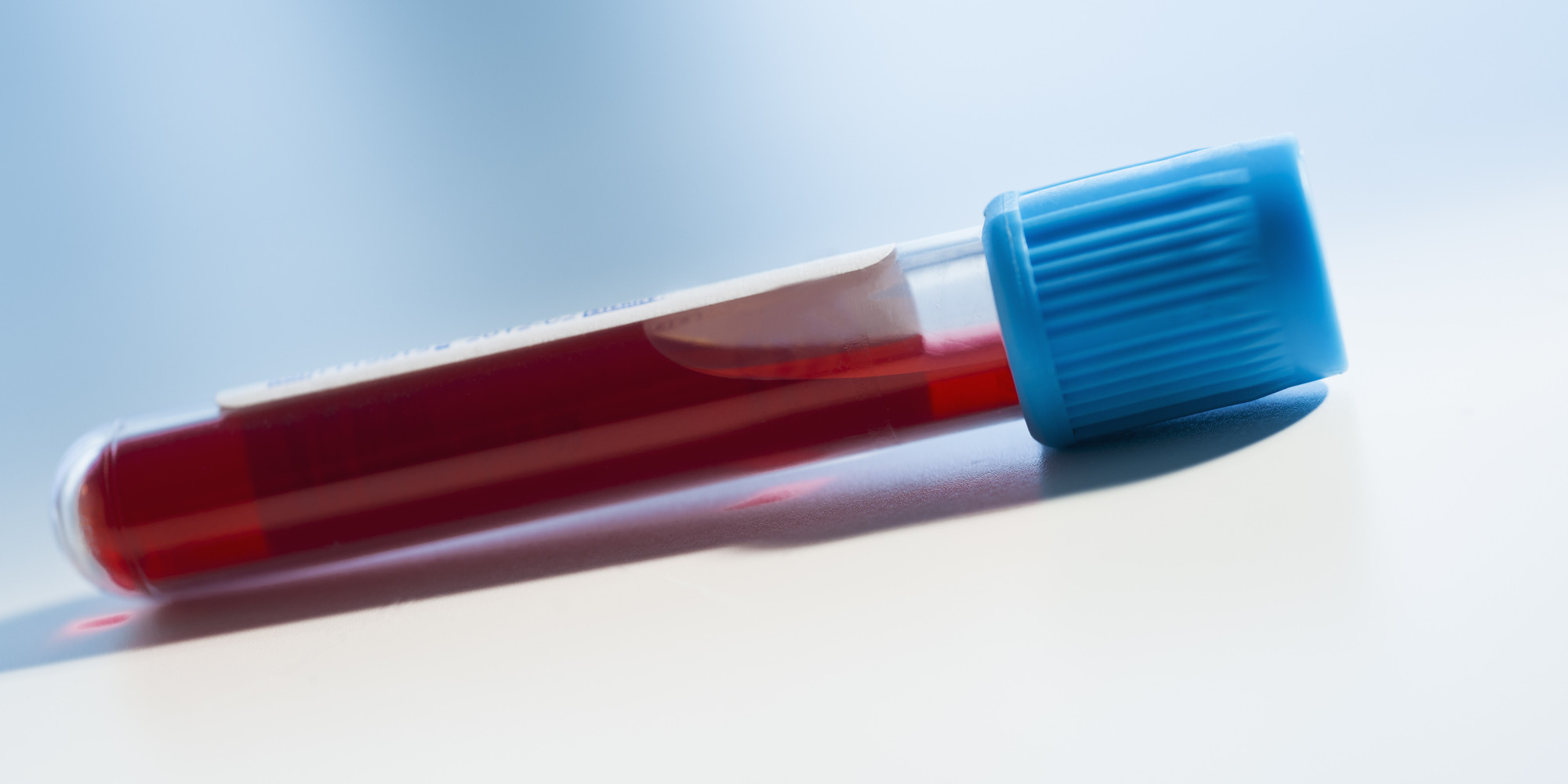
Blood in a test tube


 Dr. Mary Norton (UCSF) conducted a study of about 16,000 pregnant women and found that a cell-free DNA blood test performed at about 10-14 weeks gestation was able to diagnose Down syndrome more accurately than the standard screening methods. This test was also more effective in diagnosing Edwards syndrome and Patau syndrome, than the standard methods.
 In the United States alone, down syndrome is the most common genetic condition and it affects nearly 1 in every 700 babies born. Down syndrome occurs when an extra chromosome 21 is created and is copied in the cells through the body. As we know there are characteristics from this extra chromosome like flattened fatal features, reduced muscle tone, upward slanting eyes and small hands and feet.
  All pregnant women are offered testing and screenings for Down syndrome. During the first trimester, a test of both protein levels and hormones in the woman's blood are combined and to check for chromosomal abnormality linkage along with an ultrasound that measures the baby's neck tissue for increased fluid build up that could result in abnormalities. The results of the test and the ultrasound are compared with the mother's age to determine the risk of the baby having down syndrome.
  Pregnant women who are at a high risk of having a baby with down syndrome are recommnded to have the cell-free fetal DNA (cfDNA) test. This consists of a small amount of fetal DNA taken from the pregnant woman's blood, to detect any copies of chromosome 21. Dr. Norton and her team have said the cfDNA test has proved itself to be highly accurate in HIGH-risk women, however for the lower-risk women, the results are not as clear.
  For the cfDNA test, Dr. Norton and her team had 18,955 pregnant women from around age 30 from 35 different medical centers in over six countries. About 24% of these women were over 35, which increases the risk of down syndrome, giving the other 76% a lower risk. during the 10-14 week gestation, each woman was given the first trimester combined test AND the cfDNA test. Out of the 18,955, the team was able to get the test results and monitor pregnancy outcomes for 15,841 of the women.
   The team found that the cfDNA test was able to identify 38 cases of down syndrome while the first trimester test only detected 30 out of 38 cases. It was also learned that the cfDNA resulted in nine false-positive results while the first trimester combined test showed 854. There was also the detection in Edwards syndrome and Patau syndrome in the cfDNA test which was not as accurately found in the first trimester combined test.
  The result of the cfDNA test in women with a lower risk will lead to fewer false-positive results than the standard screening which in the overall result, there can be fewer invasive tests and related miscarriages, but health care providers and pregnant women themselves do need to be aware of the downfalls of the cfDNA testing much like any new study. The normal screening will capture a wider range of abnormalities.
I found this article to be really interesting. I think it is great that they are able to use blood tests rather than more invasive testing methods because it can be more comfortable and save more lives. The only downside to this like the article mentioned was that this blood test is not able to pick up a lot of other diseases or genetic mutations that the standard methods are able to identify. Maybe in the future that will be an advancement to look for!

Original article
Related article

Sunday, April 12, 2015

'Major Advance' a New Test for Down Syndrome

     A DNA-based blood test has been shown to be more effective in detecting Down syndrome in unborn children, in comparison to other screening methods.  The test called 'Major Advance' was shown to have perfect accuracy in all 38 women whose children inherited the disorder.  Standard screening methods only detected Down syndrome in 30 out of 38 mothers.  The blood test looks for patterns of various substances in the mothers blood that are associated with the chromosomal problems linked to Down syndrome.  Ultrasound examinations should still be conducted to see any indications of birth defects.
     The new clinical trial followed more than 15,000 women with an average age of 31.  It has been found that older women are at a higher risk for birth defects.  The DNA test also had a much lower rate of false-positive results.  Even though there are many positives to this new method, there are some drawbacks. It does not work properly for pregnant women who do not have enough fetal DNA floating in their bloodstream.  Obese women specifically fall into this category of little free floating fetal DNA.  The test can also overlook any other birth defects which traditional screening techniques would normally pick up.
     I feel that this new method could really be the new favorable way of detecting birth defects.  Most mothers do not want a needle in their uterus.  The blood test might be easier and more practical for detecting problems.


Original Article

Tuesday, April 7, 2015

A More Accurate Way for Detecting Down Syndrome

     Dr. Mary Norton, professor of clinical obstetrics and gynecology at the University of California-San Francisco, led the study revealing how blood tests are a more accurate way to detect two rarer chromosomal abnormalities - Edwards syndrome and Patau syndrome - than conventional techniques. According to Dr. Norton and colleagues, the cfDNA test has proved highly accurate in detecting Down syndrome in high-risk pregnant women, but its effectiveness among pregnant women at lower risk is unclear.
     This study involved 18,955 pregnant women between the ages of 30-35. Between the tenth and fourteenth week the women received both the first trimester combined test (conventional method) and the cfDNA test. Among the women, 38 cases of Down Syndrome were found, and the cfDNA test correctly identified all of them. The first trimester combined test only identified 3o cases. Researches also found that the cfDNA tested showed significantly fewer false-positive results than the first trimester combined test. The team also found the cfDNA test was more accurate than the standard test for identifying Edwards syndrome (trisomy 18) and Patau syndrome (trisomy 13). It identified nine out of ten cases of Edwards syndrome with 1 false positive, while standard screening identified eight cases with 49 false-positives. For Patau syndrome, 1 false-positive was given and there were 28 for standard screening. 
     This type of new screening using the cfDNA test is incredible and should become the regular screening process for every pregnant woman since it is more accurate. With this advancement, hopefully we will have better control and probability outcomes related to Down syndrome. 

Saturday, April 4, 2015

Testing for Down Syndrome: DNA Blood Test is More Accurate than Standard Tests

Down syndrome is a genetic disorder than results from trisomy 21, meaning that there is an extra copy of chromosome 21. Unfortunately, this condition is not rare as 1 in 700 children are diagnosed with Down syndrome making it the most common genetic disorder. The classic characteristics exhibited by individuals with Down syndrome include flattened facial features, reduced muscle tone, upward slanting eyes, small hands, and small feet. As of now the prenatal test that screens for this condition involves measuring levels of proteins and hormones in the mother’s blood as well as having an ultrasound done in order to measure the amount of fluid accumulating around the baby’s neck. These two tests together are called the first trimester combined test. However, for high risk mothers the cell-free fetal DNA (cfDNA) test is used to test for Down syndrome. This test takes the small amount of fetal DNA floating in the mother’s blood and looks to see if trisomy 21 is present. It has been proven to be highly effective at detecting Down syndrome in women who are at high risk of having a child with the condition, but its effectiveness at diagnosing Down syndrome for lower risk women is unknown. 

A study to determine how effective the cfDNA test is compared to the older test was completed by researchers at UCSF. The study originally had 18,955 participants, but after the two tests (cfDNA test and the first trimester combined test) were administered to the participants, who were between 10-14 weeks pregnant, results and observations of pregnancy outcomes were only collected for 15,841 women.  

Of the 38 cases of Down syndrome found in these fetuses the cfDNA test identified 100% of them correctly, whereas the first trimester combined test only identified 30 of the 38 cases. The cfDNA test was also much better at producing less false positive results than the first trimester combined test. Another triumph of the cfDNA test was that it determined the presence of two other genetic disorders, Edwards syndrome and Patau syndrome more accurately than the regular test.

While this test may lead to fewer false positives and as a result less invasive procedures, which could cause miscarriages it also has drawbacks. In the study, this test was not able to be used for pregnant women that had immeasurable amounts of fetal DNA in their blood. Also, it some cases women’s results could not be interpreted. Some of these women who could not be evaluated may have had babies with Down syndrome. As a result, the detection rates of the cfDNA test may have been lowered if these women were included in the study.

I think that this is an interesting concept and that it could be useful in some cases. If it could lead to fewer invasive procedures and ultimately less miscarriages that would be great. However, it seems that it only works for some women and could only be used in certain situations. For the women that can use the test I think it is great because it seems to work much better than the traditional testing. I think more research needs to be done on this test to see if the same results are obtained.


Tuesday, February 17, 2015

New Look on Life

     A research team from the University of Houston College of Optometry has designed a new strategy for prescribing glasses to individuals with Down syndrome. This strategy involves a newly constructed computer simulation program that fully examines the eyes of the individual. With this extensive examination, the individual's glasses can maximize their ability to see. In order for the strategy to be developed, the researchers needed to identify some of the physical defects Down syndrome does to the eyes. Also, the researchers needed to identify the genes responsible for causing these defects, especially the ones that contribute to eye development and function. The optical defects include "poor focusing abilities, misalignment of the eyes, and reduced visual acuity". Because of these effects, along with the intellectual disabilities, determining an accurate perscription is difficult. The researchers understand this difficulty, which is why they designed the new computer simulation. Their hope is to implement the system and distribute it across the country. In the future, the researchers hope this system will help patients with Down syndrome see better; thus, making them more independent. The new independence will allow these patients to live happier lives as well as make Down syndrome a little easier to live with.
     It is my hope that this system, or something like it, becomes a huge success. I know that people who suffer from Down syndrome do not like to feel dependent on others. With these new glasses, patients can have a sense of independence, and they can begin to live their lives on their own terms. I wish more research was done in this population of people to help them live more fulfilling lives.


Saturday, October 25, 2014

Understanding Genetics of Congenital Heart Defects through Individuals with Down Syndrome


          Down syndrome is the most common chromosome abnormality which there is a partial or full third copy of Chromosome 21. One of the unnoticed risks that individuals with Down syndrome experience is a high chance of congenital heart defects. Although half of those who have Down syndrome have structurally normal hearts it is still noticeably a high risk for one with Down syndrome to have a congenital heart defect.  Researchers at Emory University School of Medicine evaluated the changes in genes involved on and off of Chromosome 21 which are involved in abnormal heart development.  Their findings included that Down syndrome infants with congenital heart defects were more likely to have rare, large genetic deletions. The deletions which were observed tended to involve genes which affected cilia. The findings suggest that for those with Down syndrome the risk for congenital heart defects can come from several genes and environmental factors, in addition to the substantial risk from the extra chromosome 21.

Michael Zwick, PhD, associate professor of human genetics and pediatrics at Emory, has hopes that "Studying congenital heart defects in the 'at risk' Down syndrome population can make it possible to reveal genes that impact the risk of heart defects in all children, including those with typical number of chromosomes." Other than discovering the genes that affect congenital heart defects Zwick also hopes to perform more research on those with Down syndrome with hopes to establish what effects alterations in Chromosome 21  has on other organs in the body.
The risk of AVSD is higher in children with Down syndrome. An atrioventricular septal defect (AVSD) means that the central region of the heart separating the atria from the ventricles has failed to form properly.


This article was particularly interesting to me because I had a basic understanding of Down syndrome and was interested to learn more. I knew the mental disabilities which often accompany it but was uncertain what other changes were present in those who have Down syndrome. The article was interesting and educational for me as I was not familiar with Down Syndrome or congenital heart defects. 

Article: http://www.sciencedaily.com/releases/2014/10/141025152706.htm
Related Article: http://loonylabs.org/2014/10/24/congenital-heart-defects/

Monday, April 21, 2014

A Case of Identical twins - not really identical?

According to the LA Times, a pair of identical twins fetuses were discovered to be not exactly identical. While they had the same exact DNA, for some reason, unknown to researchers, one of the twins had an extra chromosome (which would cause down syndrome) and the other one did not. Since identical twins are supposed to have the same exact 3 billion base pairs of DNA, it has become a mystery to scientist on how only one of the twins was affected. Due to this discovery being while the twins were still in the womb, the decision was made for them to be aborted. Although a tragic situation, this opens up the research field for scientists to try and understand how something like that could happen. 


While I can't even imagine what this family must have went through and what they had to consider, I am deeply saddened that they made the decision to abort the pregnancy. It is a lot of work to raise twins, let alone to raise twins with one of them having a mental illness. I can understand and respect the fact that for that couple they felt that it would be too much. As far as the scientific side of this situation, I am intrigued that something like this could even happen. I'm sure that scientists will be looking into this and try to figure out how this could even be possible. The field of genetics will keep expanding with new situations like these constantly being discovered.


Thursday, April 17, 2014

Identical Twins, One with Down Syndrome


      Down syndrome is a genetic disorder which is thought to be caused by the presence of an entire or part of an extra chromosome, or chromosome 21. Down syndrome is usually associated with physical growth delays, characteristic facial features and moderate intellectual disability. The average IQ of an adult with Down syndrome is around 50, which would be around the same as an 8 to 9 year old child. Down syndrome can actually be detected before birth using prenatal screening and other diagnostic tests.
       I found a very interesting article that talks about a case of identical twins born and only one of them had Down syndrome. This is very interesting because it contradicts prior beliefs in this area. The experiment conducted allowed a group of geneticists from Europe to find out how chromosomes dictate the behavior of cells inside the body. Their findings showed that when the gene expression is altered, by the addition of the extra chromosome, it is altered in consistent patterns in every chromosome, and not just with the extra chromosome. Having this opportunity to study such a strange event actually allowed us to understand more about a genetic disorder that effects so many people.

Sunday, February 16, 2014

New Drugs May Transform Downs Sydrome

     The article from Scientific America talks about how geneticist, Roger Reeves and his team from Johns Hopkins University have conducted research that may lead towards pharmacological treatments for Down syndrome. Down syndrome is a genetic condition that is caused by an extra copy of chromosome 21 and the over expression of several genes on that chromosome which cause developmental delay leading to impaired learning, memory, and motor skills. Another characteristic of Down syndrome is that the cerebellum is is found to be 40% and is responsible for motor functions, motor learning, and balance.
     Down syndrome was initially thought to be incurable until Reeves and his team began experimenting on mice. They injected the mice with a chemical that stimulates an important neurodevelopmental pathway which stimulates cerebellum growth. Once doing this they found that they had not only "fixed" the cerebellum in mice but three months later they were able to complete a water maze. Such a task would usually thought to be predominantly controlled by the hippocampus so the researchers are still unsure whether they "inadvertently repaired" the hippocampus or if the cerebellum is actually responsible for more than what has been previously thought. 
     This type of treatment given to humans is thought to allow those with Down syndrome to live more independent lives. I think that these results are very exciting not only from a genetics standpoint and those who are affected by Downs but from the viewpoint that there is a hope of finding "cures" or treatments for other similar disabilities. Despite the excitement, I think we also need to consider being cautious in our evaluations of this research because sometimes research from animals fail to translate over to humans.

Article Link: http://www.scientificamerican.com/article/new-drugs-may-transform-downs-syndrome/

Info on Down syndrome: http://www.ndss.org/Down-Syndrome/What-Is-Down-Syndrome/


Saturday, October 12, 2013

Prenatal tests for Down Syndrome


     Breakthroughs in new tests for prenatal screening allow for women to have more options.   New screenings are more accurate and less invasive.  They allow for screenings of any chromosomal abnormalities while avoiding the risks that amniocentesis imposes.  In the past, the decision to undergo an amniocentesis was based on risk due to the woman’s age and genetic history.  Many amnios were performed but not medically necessary, due to the lack of accurate information provided. The new advancements in screenings that are noninvasive and more accurate allow for women to make well-informed treatment decisions.


     The new screenings test the fetal DNA that is found in the mother’s blood.  These tests provide results that detect almost all cases of Down syndrome and result in a false positive result of less than 1% of all cases.  Which is significantly less than older tests.  Noninvasive test results that are positive require an amniocentesis to confirm the existence of Down syndrome.  


     This new noninvasive screening test leads to the possibility of treating a fetus with chromosomal abnormalities prior to birth.  Prenatal treatment such as this, would hopefully allow for the minimization of neurological effects caused by the detected disease.  The developments in prenatal testing and treatment are relatively new and still being tested.  Hopefully within the near future, availability for screening such as this will become more affordable.  It is exciting that such a breakthrough could allow for the discovery of treatments for genetic diseases prior to birth.

http://well.blogs.nytimes.com/2013/10/07/breakthroughs-in-prenatal-screening/?_r=0
http://health.nytimes.com/health/guides/test/amniocentesis/overview.html?inline=nyt-classifier

Thursday, April 11, 2013

Lack of Protein Relates to Alzheimer's disease and Down syndrome


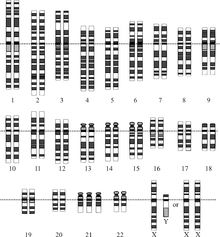
[caption id="attachment_7761" align="alignright" width="257" caption="Down syndrome: karyotype and affected child"][/caption]

In the article, Protein
Linked to Development Problems
,
it explains that mice with Alzheimer’s
disease and Down syndrome are both missing a protein called SNX27. Mice with
Down syndrome produce an extra copy of chromosome 21. Chromosome 21 does not
directly control the production of SNX27, but it does produce miR-155. miR-155
is a regulator that prevents the production of SNX27. The lack of SNX27
prevents the neurons from working properly in the brain. This discovery
partially explains the effects of Down syndrome. Discoveries like this can also
help to discover ways for treating people with Down syndrome. When scientists
tried inserting SNX27 into mice that lacked the protein, they found that their
brain function improved. In an article in Science Daily, it is said that:

"Everything goes back to normal after SNX27 treatment.
It's amazing -- first we see the glutamate receptors come back, then memory
deficit is repaired in our Down syndrome mice," said Xin Wang, a graduate
student in Xu's lab and first author of the study

Finding a way to help people with Down syndrome improve
their brain function will change the lives of many people. Hopefully it may
soon be possible to reverse the effects of Down syndrome through genetic
treatments.

Friday, November 9, 2012

Extra Chromosome 21 Removed from Down Syndrome Cell Line

Scientists at the University of Washington have successfully removed the extra copy of chromosome 21 in cell cultures taken from a person with Down syndrome. A trimosy, which is having three copies of a chromosome, accounts for one fourth of pregnancy loss from miscarriages. Many diseases can also occur from a trimosy such as Edwards syndrome (trimosy 18), Patau syndrome (trimosy 13), and the most common in live births being Down syndrome (trimosy 21). The researchers used an adeno-associated virus to deliver a foreign gene TKNEO to chromosome 21. When grown under conditions that went against TKNEO, the cells best chance for survival was to lose the extra chromosome, which resulted in the deletion of TKNEO.


This method is not a treatment for Down syndrome but could possibly lead to cell therapies for blood-forming disorders that accompany Down syndrome. For example, patients with Down syndrome leukemia could have the trimosy corrected in lab-cultered cells  and then receive a transplant of their own stem cells without the extra chromosome. By being able to generate stem cells without trimosy 21, scientists may be able to get a better understanding of how problems associated with Down syndrome originate. The formation of trisomies is also a problem in regenerative medicine research using stem cells, and this new approach could prevent this from happening. One of the negative things that could result from gene therapy is gene toxicity. By removing a chromosome, there is a possibility that the genetic cody could break or rearrange, but researchers do not think that this method will result in that.

This removal of human trisomy could have both clinical and research applications. It gave researchers a better understanding and could have the potential to make many medical advancements when it comes to gene therapy. With trisomy being such a big problem in pregnancy loss and life long diseases, any information and discoveries could make such a difference in the medical world. It is amazing to see the ability of gene therapy and the results that can come from it.