Showing posts with label DNA blood test. Show all posts

Wednesday, February 24, 2016

Free-Floating DNA


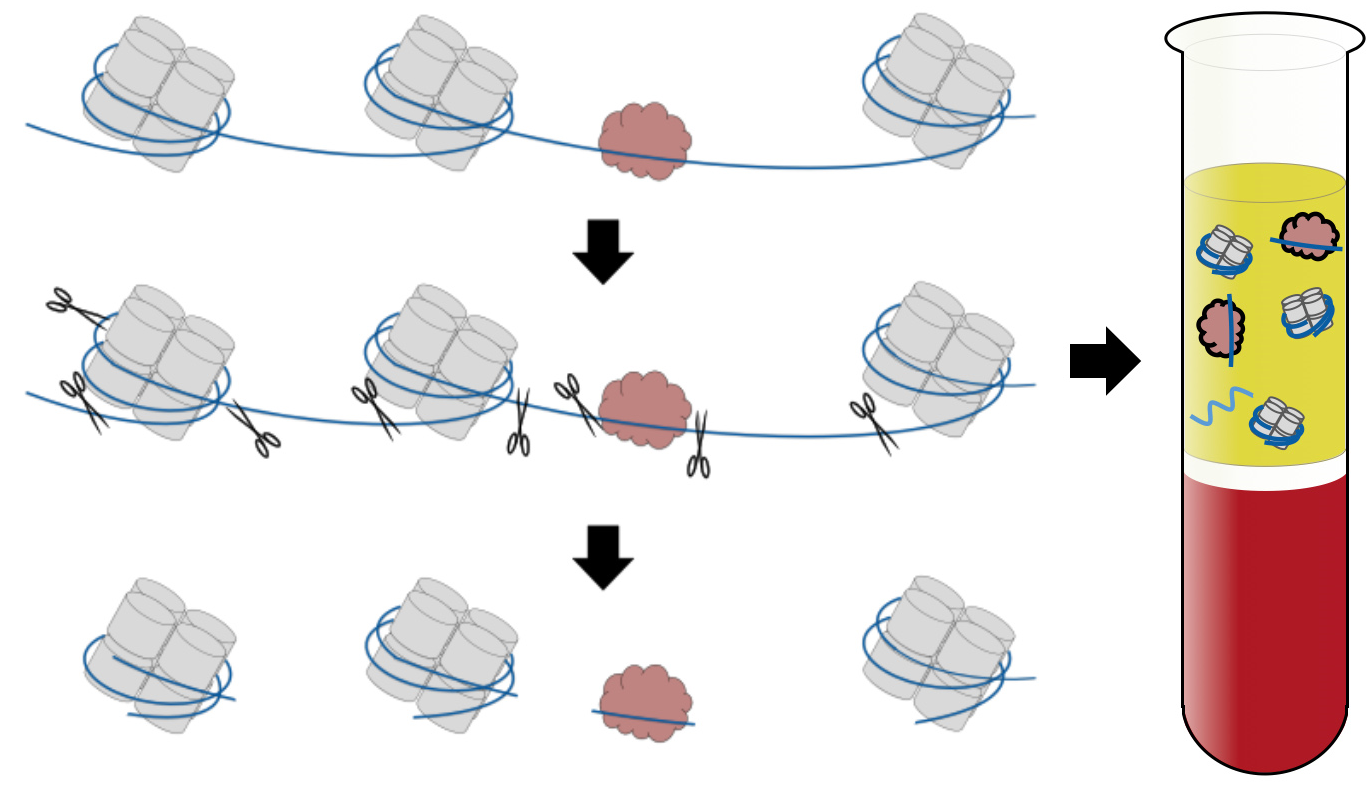
Free-floating DNA is when a cell dies, enzymes cut their DNA into fragments that leak into the bloodstream and other bodily fluids. A new method with this is to collect the DNA and find a way to diagnosis, treat, and manage many health conditions that lead to an abnormal increase in cell death and cell-free DNA, including cancer with a simple blood draw. Two test which have been done are; a test is in a cancer patient’s blood to study for cancer-specific mutations, as a way of assessing reactions to treatment. Another test in an organ transplant receiver, where growing quantities of DNA remains from the donor can be an early sign of rejection.

Another test was put forth, to investigate the blood of healthy individuals for cell-free DNA, and then looked at a map of the human genome to outline where each fragment came from. Most of the cell-free DNA came from areas in or around nucleosomes. Next they looked at the patterns of nucleosomes in different types of cells. They found that all the healthy subjects produced cell-free DNA that mostly came from nucleosomes found in blood cells. Except when they looked at cell-free DNA from citizens with advanced cancer, the map changed. for example, a patient with lung cancer, was found that the cell-free DNA matched a different pattern , indicating a sort of lung cancer cell. With this, the scientists matched cell-free DNA in additional cancer patients to the forms of cancer they had. This may be able to be used to identify the location of difficult hiding cancers. This technique can open the doors many different aspects with clues to other disease; free-floating genes shed from the heart might revel damage to a heart attack and cell-free DNA from neurons nay signal a stroke.

If all this can be perfected and brought to a clinical trail the way we view genes today may change. Being able to see many different gene maps in people with cancer and so on and being able to indicate where the problem is soon how to treat it. But location is a problem which will be diminished, and doctors will be able to assess a patients' needs easier and seeing which part is damaged.

Wednesday, September 23, 2015

Down Syndrome better detected in DNA blood test than "standard methods?"

Blood in a test tube


 Dr. Mary Norton (UCSF) conducted a study of about 16,000 pregnant women and found that a cell-free DNA blood test performed at about 10-14 weeks gestation was able to diagnose Down syndrome more accurately than the standard screening methods. This test was also more effective in diagnosing Edwards syndrome and Patau syndrome, than the standard methods.
 In the United States alone, down syndrome is the most common genetic condition and it affects nearly 1 in every 700 babies born. Down syndrome occurs when an extra chromosome 21 is created and is copied in the cells through the body. As we know there are characteristics from this extra chromosome like flattened fatal features, reduced muscle tone, upward slanting eyes and small hands and feet.
  All pregnant women are offered testing and screenings for Down syndrome. During the first trimester, a test of both protein levels and hormones in the woman's blood are combined and to check for chromosomal abnormality linkage along with an ultrasound that measures the baby's neck tissue for increased fluid build up that could result in abnormalities. The results of the test and the ultrasound are compared with the mother's age to determine the risk of the baby having down syndrome.
  Pregnant women who are at a high risk of having a baby with down syndrome are recommnded to have the cell-free fetal DNA (cfDNA) test. This consists of a small amount of fetal DNA taken from the pregnant woman's blood, to detect any copies of chromosome 21. Dr. Norton and her team have said the cfDNA test has proved itself to be highly accurate in HIGH-risk women, however for the lower-risk women, the results are not as clear.
  For the cfDNA test, Dr. Norton and her team had 18,955 pregnant women from around age 30 from 35 different medical centers in over six countries. About 24% of these women were over 35, which increases the risk of down syndrome, giving the other 76% a lower risk. during the 10-14 week gestation, each woman was given the first trimester combined test AND the cfDNA test. Out of the 18,955, the team was able to get the test results and monitor pregnancy outcomes for 15,841 of the women.
   The team found that the cfDNA test was able to identify 38 cases of down syndrome while the first trimester test only detected 30 out of 38 cases. It was also learned that the cfDNA resulted in nine false-positive results while the first trimester combined test showed 854. There was also the detection in Edwards syndrome and Patau syndrome in the cfDNA test which was not as accurately found in the first trimester combined test.
  The result of the cfDNA test in women with a lower risk will lead to fewer false-positive results than the standard screening which in the overall result, there can be fewer invasive tests and related miscarriages, but health care providers and pregnant women themselves do need to be aware of the downfalls of the cfDNA testing much like any new study. The normal screening will capture a wider range of abnormalities.
I found this article to be really interesting. I think it is great that they are able to use blood tests rather than more invasive testing methods because it can be more comfortable and save more lives. The only downside to this like the article mentioned was that this blood test is not able to pick up a lot of other diseases or genetic mutations that the standard methods are able to identify. Maybe in the future that will be an advancement to look for!

Original article
Related article