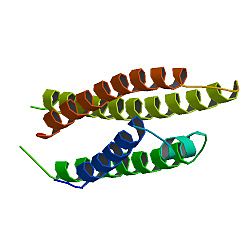
CRISPR technology has been used in many novel ways in modern genetic research through its ability to modify the DNA of living organisms. By utilizing two different gene editing methods, researchers at ETH Zurich have found a way to investigate how genetic mutations relate to cancer. Using CRISPR, the researchers modified the EGFR gene in two human cell lines in more than 50,000 different variations to create mutated cells which they tested. This was achieved by first modifying the base pair sequence in the genes using base editing, which allows for the replacement of cytosine with thymine and adenine with guanine. Prime editing, a less reliable technique that can swap any DNA base, was then used afterwards to finish the base pair replacement.
The researchers found that there were ten formerly uncertain variants which now have evidence suggesting that they are significant to cancer, either in its onset or its resilience. They also found a mechanism by which the EGFR gene could cause cancer. Lastly, they found six new variants that have never been observed that could play a role in cancer.
The research described above has only scratched the surface of the potential this new method has. The variants in all other genes are now at researchers' disposal to be decoded and analyzed using this method, and could lead to further understanding in the fields of genetics and oncology as a whole.
Wednesday, November 13, 2024
Detecting Cancer Risk in Gene Variants Using CRISPR
Friday, November 24, 2023
Genetics and Human Cranial Vault Shape: A Reevaluation
The human skull, a complex structure that protects the brain. The question lies on what genetic factor dictates cranial morphology? New shocking evidence was found by researchers at the University of Pittsburgh and KU Leuven that 30 regions of the genome are associated with the shape and structure of the brain. More importantly, 29 of these are new findings that weren't reported prior. Prior research of genes flourished results in rare human conditions. However, lack of awareness was shown on the genetic basis for typical features of the general public. This awareness will produce enrich results. In addition, the following suggestions paleoanthropology studies, implementing different measures to describe vault shape, and variants in gene association.
Among the following suggestions, variants in gene association sheds light on the bigger picture. A discovery of the strong association near genes can dictate different results in formation of the head and skull. This relates to two variants near the gene RUNX2 that could coordinate development of the bone structure of the skull, or having global effects of the cranial vault. Another aspect is three variants BMP2, BBS9 and ZIC2 corresponding to Craniosynostosis. These variants suggest genes could aid in the development.
Overall, the human skull is a complex structure. It's clear that unlocking the human genome is a trip down the rabbit hole. As new technologies and methods immerse, more luck in understanding the secrets to be found within the genome that impact the cranial vault.
Thursday, August 3, 2023
Genetic Differences in Digestion Between Andean Populations
Monday, December 5, 2022
COVID-19 and Loss of Smell
Many individuals diagnosed with COVID-19 typically also suffer from the loss of taste or smell. According to an article, researchers have now pinpointed the genetic variants in humans suffering from losing different senses. A study was conducted with nearly 70,000 adults with COVID-19 and found that individuals with specific genetic mishaps on chromosome 4 were eleven percent more likely to lose the ability of their senses, whether taste or smell, than those individuals without the changes on their chromosome. The two genes, UGT2A1, and UGT2A2, help humans smell and happen to reside in the region of chromosome 4 that is linked to sensory loss during infection, found by Janie Shelton of 23andMe. Both of these genes make enzymes that metabolize substances called odorants, producing distinctive smells.
For me, when I had covid, I lost my sense of smell, and I know a few other individuals and family members who have as well. I also do remember that news reports did suggest that one of the symptoms of COVID-19 is losing the sense of smell but I never heard of anyone loosing their sense of taste. When being sick many people loose their sense of taste especially if one has a sore throat. I believe more research may have to go into this study to se exactly how we loose our smell or taste for some individuals.
Wednesday, February 17, 2021
New Mutations being created due to Coronavirus Variants
Tuesday, October 4, 2016
Genes underlying dogs' social ability revealed
Wednesday, April 13, 2016
Inherited gene changes take years off life expectancy
APOE gene has been linked to Alzheimer's dementia, high cholesterol, and coronary disease risk. The CHRNA3/5 gene is associated with an increased risk of lung cancer, nicotine dependence, and respiratory problems in smokers. Apparently These variants are pretty common in the population, as more than two-thirds of us will inherit a single copy of one of these DNA changes. And 3 in 1,000 people will inherit two copies of both variants. The variants have age and sex related effects on lifespan. The variant linked to Alzheimer's has a greater impact on older women, while the variation associated with lung disease influences middle-aged men more.
"Although the effect of these genetic variants on lifespan is surprisingly large, it is important to remember that this is only part of the story. Lifestyle has the greatest impact on how long we live and that is under our control." (Peter Joshi)
Original source: http://www.nature.com/ncomms/2016/160331/ncomms11174/full/ncomms11174.html
Related source: http://www.eurekalert.org/pub_releases/2016-03/uoe-igc033016.php
Sunday, November 30, 2014
Good Memories Linked to Genes
From: http://en.wikipedia.org/wiki/Apolipoprotein_E
The researchers utilized five different studies based at the University previously mentioned. Because of the numerous colleagues involved, the researchers were able to analyze results from over 30000 people over the age of 45. The participants had to undergo a memory test. this memory test included short responses after reading a passage and also word memory questions. The results obtained showed that the lower scores the participants received on the memory test also had variants near the gene Apolipoprotein E and other kinds of genes. The researchers also mention that this gene comes with increased risk of Alzheimer's and Dementia. This could potentially be an early indicator to other response diseases.
This articles was very interesting to me. If the gene could be assessed at an earlier age in people, the problems of Alzheimer's can be minimized. Memory is a very important process in the human body, further studies is needed.
Article: http://www.medicalnewstoday.com/articles/286106.php
Related Article: http://www.nature.com/nrneurol/journal/v9/n2/full/nrneurol.2012.263.html
Sunday, November 16, 2014
Better Memory Performance linked to Genetic Variant
From: http://newsoffice.mit.edu/2013/discovering-hippocampal-connections
This test involved chromosomal manipulation. There were higher performance tests of episodic memory that was associated with the DNA on chromosome 2; specifically the gene involved a G instead of the more common A nucleotide (in the gene called FASTKD2). The single genetic variant nucleotide polymorphism of SNP was found to also have a denser gray matter in the brain and a slightly larger hippocampus. These foundings were brought by Resonance Imaging Scans.
This is a fantastic stepping stone for research on genetic variants. More research obviously needs to be done to determine whether the drug targeting the FASTKD2 gene can be used to protect against memory loss. But if these findings are verified, Alzheimer Disease can finally have a treatment associated with it.
Article from: http://www.medicalnewstoday.com/releases/285378.php
Related article: http://www.ncbi.nlm.nih.gov/pubmed/19863254
Thursday, May 1, 2014
Kids' genetic risk for obesity increases with age
Researchers at University College London have been studying genes and their role in childhood obesity. Their study involved looking at different genetic variants in pairs of twins, ages four and ten. Body-mass index was also studied for kids of both ages. According to their research, the genetic variants rose over the years, growing from 43% in children of age 4 to 82% in children of age 10. These results show that "genetic predisposition to obesity is increasingly expressed throughout childhood," co-leader Clare Llewellyn states.This study brings hope that childhood obesity may be able to be reduced if intervention occurs at a young enough age. The link below lists some tips for overweight children, that will help with their weight-loss goals.
http://www.webmd.com/parenting/raising-fit-kids/move/kids-exercise-tips