Showing posts with label dementia. Show all posts

Friday, February 12, 2021

People With Dementia are likely to get Coronavirus


This article from New York Times explains the recent study that has shown that people with dementia are more prone to get infected with COVID-19 because of their old age, living in nursing homes, and people with conditions such as asthma, diabetes, cardiovascular disease, etc; which are all known risk factors pertaining to COVID-19. As the study suggested, people who are around the elderly need to be more aware of their surroundings and be responsible to make certain that they are wearing masks and keeping a safe distance. 

The data collected for the study was based hospital records was based on 61.9 million electronic health records from demographics of 18 and older within the United States. According to Deccan Herald, the researchers who obtained these medical records had to adjust their data to count for the risk factors being old age, living in the nursing home, obesity, etc before they were able to determine that Americans with dementia were more likely to contract the virus than people without. When the study was concluded, it showed that Black people with dementia had a higher risk of getting COVID-19 than White people. The vulnerability that is causing this might include physiological and cognitive factors. 

I think that it is even more critical now to follow all the guidelines that have been recommended by the Center for Disease Control and Prevention (CDC) in order to maintain and reduce the widespread of COVID-19 because it is affecting the elderly.  

Wednesday, November 13, 2019

Gene Mutation Could Help Prevent Dementia in Alzheimer's Patients

Alzheimer's is neurodegenerative disease that leads to cell and tissue death to the brain. Over time the brain shrinks and almost all functions of the brain are affected. The cell death and tissue loss seems to be due to plaque and nerve tangles in the brain. Alzheimer's is the most common cause for dementia, which has a range of symptoms including memory loss, lower performance of daily activities, and issues communication. One woman was found to have a gene that prevented dementia for years even though her brain was affected with Alzheimer's. This woman was part of a population that had an increased risk of early-onset Alzheimer's because she carried the E280A mutation of a gene called Presenilin 1, yet she did not develop dementia like the rest of the people carrying this mutation. An analysis showed that Alzheimer's had affected her brain, yet dementia didn't start to set in until her 70s. An in depth genetic analysis was done and revealed that she had another mutation called the "Christchurch" mutation in the APOE3 gene. Only about 6% of the population with the E280A mutation, also had the "Christchurch" mutation. The difference, though, was that she had a double copy of this mutation compared to the others who only had one copy. This double copy of the mutation seemed to be some type of genetic barrier against dementia by slowing down its development, even if the brain has already been affected by Alzheimer's. More research needs to be done to see how this mutation actually stunts the development of dementia for a while, but this mutation could be a key for treating Alzheimer's patients.
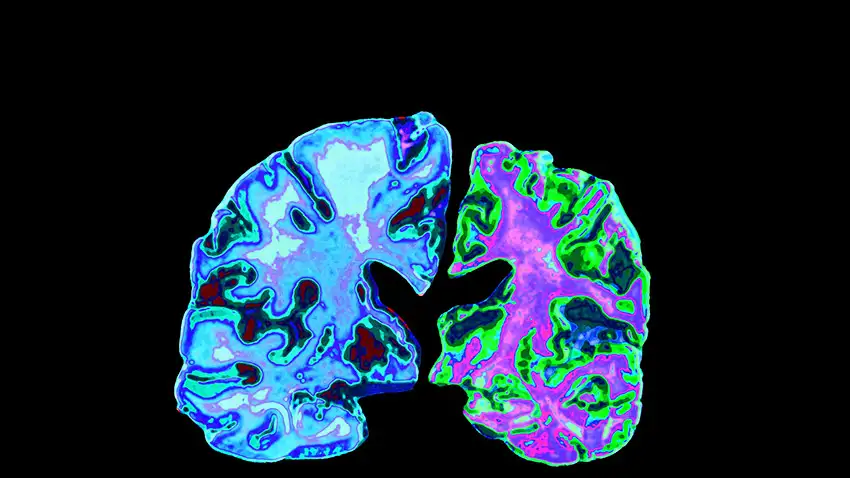
Brain Tissue
Alzheimer's affects a lot of people, especially people that are older. Once it is diagnosed there isn't a lot that can be done to slow down or stop the development of dementia. This gene mutation could be the key for developing a treatment for people that have been diagnosed with Alzheimer's, and slow down the development of dementia.

Links:

Related Article:

Tuesday, November 12, 2019

Genetic mutation prevents Alzheimer’s Disease

Genetic mutation prevents Alzheimer’s Disease
Alzheimer’s Disease is a degenerative disease of the brain associated with the build up of amyloid-beta
protein deposits. Although not genetically inherited, some individuals are predisposed to developing the
disease if they carry the E280A mutation of the Presenilin (PSEN1) gene. In a unique case, an individual
female in her 40s was identified as being a carrier for E280A so her condition was monitored as she aged.
The E280A mutation causes the onset of Alzheimer's Disease and dementia to begin at a younger age.
However, this individual, despite developing signs of dementia in her brain, remained unaffected by the
disease until her 70s. The cause for this was found to be yet another genetic mutation. The individual
carried the mutation, known as “christchurh” in the APOE3 gene, to be even more specific, she carried
two of these mutations, unlike most individuals who carry one (if they carry it at all). More research is
being conducted about the mutation and its possibilities in treating Alzheimer's Disease.
I think it is a very unique case that was meant to be discovered. Alzheimer’s is a fatal and heart
wrenching disease that still requires many more years of research to unwrap its entirety. 
Related article: https://www.alzforum.org/news/research-news/can-apoe-mutation-halt-alzheimers-disease

Sunday, September 29, 2019

What are Genetic and Lifestyle Risks associated with Dementia

Experts are hoping to intervene in the lives of those afflicted with dementia before they have even faced a diagnosis. They hope to do this by encouraging changes to the lifestyles of those who may develop the condition.

Experts believe that dementia is brought on by both genetic and environmental factors. The genetic factors include genes passed from the mother and father of an individual while environmental factors are lifestyle choices such as smoking, diet and exercise. Since the genes that cause dementia are not modifiable, researchers hope that positive changes in lifestyle can decrease the possibility of developing dementia. A recent study in JAMA explores the extent of each factor on dementia. The study used information from a UK based biobank. A biobank holds health information about individuals including disease history and lifestyle choices. The study looked at 20,000 individuals aged 60 or older. Using pre-set lifestyle choices the researchers gave each individual a score in which a higher score denoted a "better" or healthier lifestyle. There can be errors with this method of scoring such as only accounting for specific factors and being unable to distinguish which factors have an effect on the results. Similarly a genetic risk score was created by looking for gene variants strongly associated with patients who have Alzheimer's. Together these numbers created the polygenic risk score.

It was found that while both factors have an effect on the development of dementia, they work independently of each other. Individuals who came up with a bad score for both genetic and lifestyle factors had a risk of developing dementia two and a half  times higher than those with better scores. This study does not prove that lifestyle choices are the cause of dementia but only that they may influence the development.

I believe that more studies should be conducted to look further into the relationship between lifestyle and dementia. This way high risk patients can start to make changes early in life and possibly delay the onset of the dementia. This would give them and their families more time to enjoy each others company.

Original Article: https://www.health.harvard.edu/blog/your-risk-of-dementia-do-lifestyle-and-genetics-matter-2019091317671

Research: https://jamanetwork.com/journals/jama/article-abstract/2738355


Tuesday, February 19, 2019

Can exercise combat Alzheimers?

Over the years numerous studies have shown that exercise not only improves our overall health, but also our memory and cognitive skills as a whole. How is this exactly?
Neuroscientists have figured out that the strength of our synapses is dependent on how we live our lives. Between sleep, diet, stress, and more, the stronger the connections, the stronger our memories and cognitive function. Not surprisingly, dementia/Alzheimers is a product from changes of energy usage in our brain cells. A study published by Nature Medicine explained how exercise protects our brains on a molecular level through the hormone irisin. Irisin is a hormone secreted in our muscles to the brain during exercise that starts biochemical reactions related to energy metabolism. Analyses of diseased and normal brain tissues taken from brain banks showed low to nonexistent concentrations of irisin in those who died with dementia and vice versa. However, scientists looked to mice for more information.

Mice bred with dementia were injected with irisin and performed better on memory tests than healthy mice injected with a beta amyloid inhibitor (creating dementia). Their synapses functions were mirror images to their performance during the tests. A more important test involving direct exercise: mice worked out for 5 weeks (running and swimming) with some mice injected with the inhibitor before hand. The healthy mice performed well on memory tests even after being exposed to the inhibitor post workout. However, the previously effected mice performed just as badly on the tests as the dementia effected mice from the experiment before.
Researchers are not 100% sure how much irisin effects humans, but know enough based off of their experience with lab mice, that exercise plays a prominent role is fighting or postponing dementia/Alzheimers.

Opinion: I find it amazing that irisin was not found until 2012 and we are just figuring out that maybe around 30 minutes of daily exercise is not just good for loosing weight, but cognitive function. Hopefully more research on humans is done soon, so we can all stay active for better reasons. This might even push the middle school kids harder during gym class.

Saturday, February 2, 2019

Possible Hope for Dementia

An article in the New York Times states that there is promise in reducing the risk in dementia.  The study has stated that patients (over the age of 50 and do not have diabetes or history of a stroke) who are being treated with hypertension are less likely to show early warning signs in dementia such as memory loss.  The study was published in the Journal of the American Medical Association and is now the first large scale randomized trial that shows promise to combating early stage Alzheimer's and dementia.

The treatment shows promise due to the overwhelming number of applicable patients due to the fact that more than 75% of people over the age of 65 are affected with hypertension.  The research through SPRINT started in 2010 involving more than 9000 "racially and ethnically diverse people" who were all independent and did not need assistance in daily living.  The study is still going on and is not complete yet due to the fact that the risk of dementia increases with age and they would like to narrow studies to age 80 and older.


Thursday, November 22, 2018

Chronic Traumatic Encephalopathy Influenced by a Genetic Variation


A recent research has indicated that a genetic variation has an effect on the likelihood of developing severe chronic traumatic encephalopathy (CTE).  CTE is a neurodegenerative disease found in people who have had multiple head injuries.  Often, it gets worse over time and can result in dementia.  This is very frequent in athletes of contact sports, including boxing, football, wrestling, hockey, rugby, and soccer.  This could be the reason why some individuals present with severe CTE symptoms whereas others are less influenced even though they all suffered similar levels of head trauma.  The research was conducted by scientists from Boston University School of Medicine and the VA Boston healthcare System.  86 brains with evidence of CTE but no other pathology donated from former contact sport athletes were studied for genetic variation in TMEM106B, a gene thought to be involved in the brain’s inflammation system.  In athletes with CTE, this variation predicted increased CTE pathology and brain inflammation.  Moreover, it also increased the likelihood of dementia development by 2.5 times.

I think that being able to have a way to predict which individuals have a greater risk to develop severe CTE pathology and dementia is positive news.  It can also possibly help us understand the disease mechanism underlying CTE, providing us with targets in the mechanism to aim for in developing treatments as well.


For additional information, refer to the original article.


For additional information, click the link of the study in variation in TMEM106B in chronic traumatic encephalopathy.

Monday, November 5, 2018

Why do some people get CTE? It may be in their genes

Studies have been conducted on those with CTE and though most people believe the cause of the disease is from repeated hits to the heads, scientists are starting to believe there might be a genetic reason that it affects people differently. The gene TMEM106B may influence why some people develop more severe forms of the disease than others. Scientists argued that among patients with the disease, those with a genetic mutation were 2.5 times more likely to develop dementia. In a study, scientists studied 86 football players who had CTE and compared them to 376 people who did not have CTE. They found that people who had CTE and those who had the gene variant had lower amounts of tau and reduced inflammation in the brain, both of which contribute to the disease.
The studies are still in the early stages, so they have a long way to go before they can be published and considered true, but the fact that they are starting to find reasons people act differently with the same disease is amazing.These findings could help so many people, and eventually could probably go beyond the scope of just CTE and help treat dementia and Alzheimer's disease. Finding out what causes this disease to develop into dementia could be a stepping stone to figuring out what causes dementia, and hopefully could create a cure or treatment to slow the process.


https://www.cnn.com/2018/11/03/health/genetic-cte-severity-study/index.html
https://concussionfoundation.org/CTE-resources/what-is-CTE

Friday, April 7, 2017

A Cup of Tea can Keep the Dementia Away


        It has been recently discovered that consuming a cup of tea daily will decrease the risk of cognitive decline in the elder years. Research led by Assistant Professor Feng Lei at National University of Singapore's Yong Loo Lin School of Medicine, reported a 50% decrease in normal individuals. This was pretty low compared to individuals who carry the APOE e4 gene whose percent decrease went up by 85%. APOE e4 is a gene that puts people genetically at a higher risk for developing Alzheimer's disease.
       The benefits of tea consumption come from the tea leaves themselves. There are bioactive compounds in the leaves that demonstrate anti-inflammatory and antioxidant advantages. Some other compounds help protect the brain from vascular damage and from degeneration, thus preventing diseases like Dementia.  This is new and exciting news in the medical community and further research is being done to help support these findings.

Thursday, November 24, 2016

We cant get rid of Alzheimers yet, but we can keep trying.

Alzheimer's is probably one of the worst diseases anyone can deal with. Although we have yet to find a treatment for Alzheimer's, we can keep trying until we find something. Solanezumab was an experimental Alzheimers drug that promised to slow down the deterioration of thinking and memory, which failed in a large Eli Lilly clinical trial. This was very upsetting to those that were hoping to be treated. The drug was prescribed to those that had mild dementia, the drug was supposed to detect it early on and try to slow down the symptoms. People that develop Alzheimer's sometimes do not show any symptoms. Testing a drug on people that have developed a disease before showing symptoms is challenging and costly.

Image result for normal brain and alzheimer's brain amyloid buildup
Solanezumab has also failed in two big clinical trials involving patients with mild or moderate Alzheimers. When Lily reported that the results of those trials , it showed that the drug did have an effect in some patients with mild symptoms. So then they started another trial with 2, 100 patients with mild dementia due to Alzheimer's.

Dr. Eric Reiman, executive director of the Banner Alzheimers Institute raised questions about the drug, he wondered whether Lilly's dose was high enough,whether the researchers were attacking the right form of amyloid, and whether they were treating the patients too late in the disease process. I agree with Dr.Reiman on this, in order for us to attack a disease such as Alzheimer's, we must do research from every angle possible. The treatment for Alzheimer's is probably very close by, but we are just looking in the wrong places. They can start off by fully understanding Alzheimer's from top to bottom, and one of the main causes which are amyloid buildup, which is the buildup of proteins in the brain. We can work on a drug that tries to deteriorate amyloid buildup as it begins to develop in the brain.

Monday, November 30, 2015

DNA repair protein BRCA1 implicated in cognitive function and dementia

DNA repair protein BRCA1 implicated in cognitive function and dementia


Researchers at Gladstone Institutes have found compelling new evidence of the BRCA1's involvement with cognitive function and dementia. BRCA1's known function is in DNA repair, which is why it is a key player in breast and ovarian cancer risks because a mutation would equate to flawed functioning of the gene. Researchers were shocked to find BRCA1's role in the neurons where cells do not divide. The gene typically mends double strand breaks in damaged cells so it can have this function in the brain when neurons become damaged just from intense brain activity. The cycle of damage and repair supposedly strengthens neural connections and memory. BRCA1's function in neurons was studied in mice which had lower levels of BRCA1. The mice were found to have DNA damage, memory/learning deficits and neuronal shrinkage. These symptoms are very similar Alzheimer's, so researchers also studied the BRCA1 levels in post-mortem brains of Alzheimer's patients. Not only were the BRCA1 levels reduced 60-75% from normal levels, but it was also found that amyloid-beta proteins (accumulate in Alzheimer's patients' brains) depletes BRCA1. Now, researchers are looking at whether or not an increase in BRCA1 levels can alleviate neurodegeneration and other cognitive issues in mice. 

I find this critical research in the field of genetics and neurology because it can lead us to finding answers on alleviating the symptoms of Alzheimer's, which typically causes a lot of emotional stress from a patient's loved ones. It has been unfortunate that scientists cannot stop the progression of the disease, but now it is possible for progress in this field to be made. 

Saturday, September 19, 2015

Alzheimer's May Have Been Transmitted via Human Growth Hormone

Alzheimer's is a form of dementia that affects memory, thinking, and behavior. The human brain is composed of neurons, nerves, and many connection networks. Together, all of these parts of the brain work together like a factory. Alzheimer's prohibits the brain from acting and performing in this systematic and connected way.  Symptoms of this disease start with memory loss and confusion, and later lead to disorientation, changes in mood and behavior, unfounded suspiscions about family and friends, difficulty speaking, swallowing, and walking.

There is question as to whether there is a connection between human growth hormone and Alzheimer's transmission between humans.  Professor John Collinge noticed the relative connection as he extracted growth hormone from the pituitary gland of eight deceased patients; all of which had injected growth hormone as a child. It was found that all eight patients had contracted Creutzfeldt-Jakob Disease (CJD) via the hormone and died.  It was confirmed that none of the patients were carriers of known genes for Alzheimer's.  However, autopsies revealed that six of the eight patients had amyloid plaques, which are seen in patients with Alzheimer's.  To rule out the idea that CJD had a connection to amyloid proteins, a study was done on 116 deceased patients that died of CJD, but did not receive growth hormone. None of the deceased patients with CJD had any signs of the amyloid protein.  This meant that there was no connection between having CJD and amyloid proteins.  There was also no presence of tau tangles (proteins that are indicators of Alzheimer's).  However, researchers found that in people who died of Alzheimer's, there was presence of amyloid proteins. 

In my opinion, I believe there is an underlying connection between Alzheimer's and the human growth hormone.  In the article, it spoke of a study recently conducted that injected human amyloid brain material into the brains of mice.  This material remained dormant in the mouse's brain, but later on regained the ability to cause disease.  This shows that even though the amyloid protein remains inactive and basically "hides", it is still there and can cause disease later on in the organism's life.  I feel that this may be the case for humans.  For example in the case of the eight donors that had growth hormone extracted from their brains, they died of CJD which made it impossible to see if they contracted Alzheimer's later on in their lifetime.  Professor John Collinge definitely sparked a fire for Alzheimer's research to progress.

Monday, March 30, 2015

Possible Cure for Early Alzheimer's


Researchers at John Hopkins University found that a drug used to treat patients with epilepsy can actually calm down the brain of patients that have early signs of Alzheimer's. Recent research backs up previously published works by the John Hopkins' team that the drug has advantages. Animal studies have been done and a plan for long-term clinical trials is in place to see how the drug will affect human brains. 
Certain studies have shown that small amounts of atypical antiepileptic levetiracetam lowers the affects of Alzheimer's dementia. 84 people were studied and out of them 17 were healthy and the rest had pre-dementia. All were over the age of 55. In a double-blind trial some patients were given a placebo and some were given small doses of the drug. Low doses showed positive results in lessening memory loss. 

This article is so interesting because Alzheimer's affects many people. Finding a possible cure is amazing because then people would not have to suffer through the disease. Just knowing that grandparents and even parents would not lose their memory and not forget the ones they love is a great thing. With the way this research is going I think many positive outcomes will become available in the near future. 

Monday, December 8, 2014

Could the Key to Good Memory be Found in Our Genes?


This study was conducted by Professor Ian Deary of the University of Edinburgh in the UK. His goal was to find small genetic variants that contribute to memory. Data was collected from previous studies and 30,000 patients over the age of 45 were dementia free for the experiment. Low memory scores were associated with a gene called Apolipoprotein E. Previous research has linked this gene to increased cases of dementia. A mutation in the gene involved with immune responses played a role as well. Scientists hope to conduct further studies accounting for age and how the immune system lacking contributes as well.

This study interested me greatly, considering how often Alzheimer's and other memory related health issues occur in humans. Patients that have these problems are truly helpless at a certain stage, and if more is known about how you can receive this the chances of receiving them could be much less frequent and even save lives. Prevention could also take place, another way to avoid suffering from memory related issues.

Main Article: http://www.medicalnewstoday.com/articles/286106.php

Saturday, December 6, 2014

The Genomic Key to Memory


Have you ever thought that your short-term memory was just really bad? Forgetting the name of someone you just met or where you put your keys are common slips in memory that haunt most of us at some point in our lives. For certain individuals these issues will continue to progress with age and lead to signs of detrimental conditions such as Alzheimer's disease. A new study led by Prof. Ian Deary of the University of Edinburgh in the UK identifies specific genes that are linked to poorer memory in life. This was the first international study that found a link between common genetic variants and the ability to recall lists of words and stories.


The study used data from five studies conducted at the University of Edinburgh: the Lothian Birth Cohort 1921 and 1936. Altogether these made up the Cohorts for Heart and Aging Research in Genomic Epidemiology Consortium, which analyzed data from 30,000 individuals over the age of 45. The participants, all free of dementia, underwent memory tests that involved recalling words and stories after an assigned time period. It was found that individuals with certain genetic variants had signs of early Alzheimer’s in their brain tissue. The researchers analyzed the results with personal genome data to determine genetic variants and changes that were inked to lower memory.The results show that individuals with lower overall scores had variants near a gene called Apolipoprotein E and other gene involved with immune responses. It should be noted that previous research indicated that some forms of Apolipoprotein E are linked with increased risk of dementia, including Alzheimer's. The researchers also checked 725 postmortem brain tissue samples and determined that individuals with the genetic variants that related to poorer test scores were more likely to have signs of early Alzheimer's disease.

The genetic variants associated with memory performance also predicted altered levels of expression of certain genes in the hippocampus, a key region of the brain for the consolidation of information. This really is an interesting study for me because I do feel like I have really bad memory, and I’m young. I don’t personally have any relatives that suffer from diseases such as Alzheimer’s but the fact that the genes associated with it can be identified can lead to revolutions in the medical aspect. This can help lead the path to new preventative medicines. The data from this study from the memory test can be used in future studies as well.

Tuesday, December 2, 2014

Genes Could be the Key to a Good Memory

A study was conducted to find a connection between genetic variants and the ability to remember stories and lists. This study is the first of its kind.


The researchers had participants who were all free of dementia take memory tests. The tests consisted of remembering stories and words after a certain period of time.

The researchers analyzed the results of the tests in conjunction with individual genome information. They then determined which genetic variants were linked with lower memory test scores. The results for individuals who possessed certain genetic variants showed early signs of Alzheimer’s disease.

The individuals found to have lower scores were found to have variants near the Apolipoprotein E gene, which is involved in immunity. Some previous research has shown that a number of forms of Apolipoprotein E are connected to a higher risk for dementia and related diseases.

The researchers also studied over 700 postmortem brain tissue samples. After studying the samples, they determined that individuals with the genetic variants studied in this experiment were more likely to have signs of Alzheimer’s.


They hope that their discoveries can help scientists understand the link between genes, immune systems, and memory loss due to age.

This article was interesting to read but not surprising to me. It's clear that our genes affect nearly everything about us, so it always seemed likely that genes would affect memory and aging as well. Hopefully, this helps scientists and clinical professionals better understand the exact sources of problems to either fix them or help improve treatment options for aging patients.

Article: http://www.medicalnewstoday.com/articles/286106.php
Secondary Link: http://www.medicalnewstoday.com/articles/265432.php

Sunday, November 30, 2014

Good Memories Linked to Genes

         Have you ever found it difficult to recollect a certain memory, for example like a name of someone you just met? A new study indicates that there are specific genes that are linked to poor memory capabilities. Professor Ian Deary of the University of Edinburgh in the UK, along with many respectable colleagues that range from France to the US have conducted this experiment.

                                                 From: http://en.wikipedia.org/wiki/Apolipoprotein_E
     
          The researchers utilized five different studies based at the University previously mentioned. Because of the numerous colleagues involved, the researchers were able to analyze results from over 30000 people over the age of 45. The participants had to undergo a memory test. this memory test included short responses after reading a passage and also word memory questions. The results obtained showed that the lower scores the participants received on the memory test also had variants near the gene Apolipoprotein E and other kinds of genes. The researchers also mention that this gene comes with increased risk of Alzheimer's and Dementia. This could potentially be an early indicator to other response diseases.

         This articles was very interesting to me. If the gene could be assessed at an earlier age in people, the problems of Alzheimer's can be minimized. Memory is a very important process in the human body, further studies is needed.

Article: http://www.medicalnewstoday.com/articles/286106.php
Related Article: http://www.nature.com/nrneurol/journal/v9/n2/full/nrneurol.2012.263.html

Tuesday, November 25, 2014

Researchers Find Genetic Linkage to Memory

Researchers of a study have found that a gene that can cause dementia also can impair memory ability.  In the study of 30,000 people that did not have dementia, each person was put through multiple memory tests and each person's entire genome was sequenced.  The Apolipoprotein E gene was linked to poor memory, especially the older participants.  There were also two other genetic linkages to the immune system that also affect the ability to recall word lists.

This huge study of 30,000 people is unprecedented, so more research is needed to confirm the genetic linkages.


This research will help pave the way for people to take preventative action if they are susceptible to memory loss and/or dementia.   In addition, the inheritability of memory function can be more closely researched.

Thursday, April 17, 2014

Slowing Down Alzheimer's Disease


Alzheimer's Disease is the most common form of dementia that causes problems with memory, thinking and behavior. It is challenging to study because its onset can range from different ages. The majority of people with Alzheimer's are 65 and older, but younger-onset can appear in someone who is in their 40s or 50s. Since there is no cure for this disease, scientists have been focused on better ways to treat and manage Alzheimer's progression. The researchers at the University of Texas Medical Branch at Galveston have been focusing their studies towards tau protein, which is involved in stabilizing microtubules and acts as a brain cell's transportation system for carrying nutrients in and waste out. Without this protein, neuron cells will die off. Studies have shown that in many forms of Alzheimer's the tau protein begins to display irregular cell functioning. This dysfunctional behavior results in the accumulation of the protein which results in a toxic formation of tau oligomers. Researchers found in studies using rats with tau related dementia that by removing these tau oligomers with a tau oligomer-specific monoclonal antibody (TOMA), they could improve functioning and performance on tests. It does this by sticking to the oligomeric tau but leaves the tau protein intact. This could provide a way to vaccinate against this degenerative disease, by prohibiting the spreading of tau oligomers.

Wednesday, April 9, 2014

Physical Activity is Beneficial for Late-life Cognition

In a study conducted at the University of Eastern Finland, it was found that those individuals who engage themselves in any form of physical activity at least twice a week had a lower risk of dementia than individuals who were less active. Individuals continuing physical activity after midlife were also found to lower their risk of dementia as well. Leisure-time physical activity (LTPA) has always been important to one's ones in general, especially, their cardiovascular health. The correlation between LTPA and lowering the risk of dementia was seen to be particularly strong among overweight and obese individuals.

Since the sample size was relatively small, I would like to definitely see some more studies conducted to confirm this correlation being made. More information about dementia can be read from WebMD.