Showing posts with label memory loss. Show all posts

Wednesday, October 23, 2019

LSD1 Gene Might be the Key to Treating Memory Issues in Schizophrenic Patients


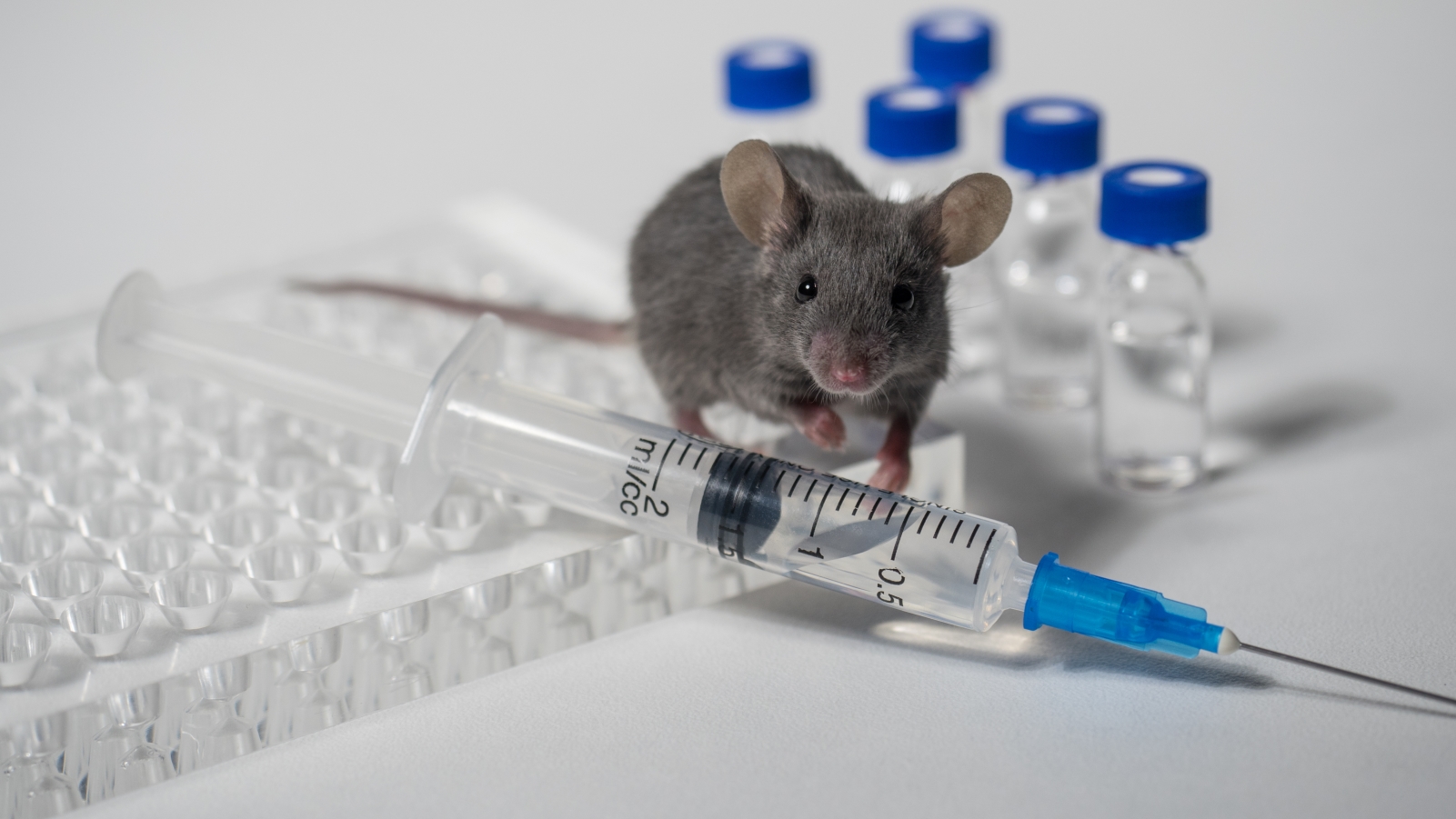
Schizophrenia is a neurodevelopmental disorder that has symptoms such as paranoia, auditory hallucinations, delusions, reduced speaking, movement disorders, and memory issues. Antipsychotic medications have been used to treat paranoia, delusions, and hallucinations, but there hasn't been anything to help patients dealing with memory problems. The SETD1A gene was the focus of this study. Mutations in this gene are associated with schizophrenia. Mice that had the SETD1A gene that produced half as much protein as usual, were studied and the exhibited memory problems. The neurons of these mice showed short and stunted neural branches, causing poor connections between neurons. These connections are important to memory, so poor connections can cause issues. Researchers first attempted to manipulate the SETD1A gene in order to try and fix it. This caused some problems because the SETD1A gene seemed to play a role in other genes expressions, meaning if it is manipulated, other genes might turn on or off. Another gene was then studied, the LSD1 gene. When this gene was turned off, the harmful affects of the SETD1A gene was nullified. By giving the mice an LSD1 inhibitor, their memory was able to improve and their axons also grew. With these findings, personalized treatments for people with SETD1A mutations may be produced in order to help their memory improve.
Big data can make lab-mice studies more relevant to humans ...

Memory issues can cause a lot of stress in peoples lives. It can put a strain on relationships and make it difficult to keep a job. A lot of people with schizophrenia might feel disconnected from everyone around them due to these problems. It's amazing to see that there might be new treatments in development to help them. This can really help improve their lives, making them feel happier and fulfilled.

Link:
https://www.sciencedaily.com/releases/2019/10/191009132401.htm

Related Article:
https://www.nimh.nih.gov/health/topics/schizophrenia/index.shtml


Sunday, July 7, 2019

A NEAT Discovery About Memory

Memory in older adults and elderly begins to diminish and scientists previously have failed to understand why. A recent study at the University of Alabama uncovered a non-coding piece of RNA known as NEAT1 which plays a role in memory formation. Coding parts of RNA send messages throughout the cell as proteins while non-coding parts also hold instructions but they have never been completely understood. Scientists have found that “NEAT1 is a tissue-specific, non-coding RNA… most associated with learning and memory.” More specifically, it regulates memory formation.

Learning is more difficult when NEAT1 is active “but when presented with an outside learning experience, it turns off, allowing the brain to learn from the outside stimulus.” Researchers explain this similarly to how a car won’t move when the engine is on and the breaks are being used. It isn’t until the breaks are off that the car will move. 
Doctors wondered if since NEAT1 plays a role in the formation of memories, perhaps they also interact with the decline of memory seen in adults and the elderly. NEAT1 interacts with a gene called c-FOS and their interactions increase with an aging brain, meaning that NEAT1 disrupts memory formation in aging brains. 

In order to test this, researchers used tools to turn off NEAT1 in mice and “With NEAT1 off, the mice demonstrated normal abilities in learning and memory.” Another experiment showed that when the levels of NEAT1 were increased in younger mice, their ability to learn and form memories decreased. 

This research is not only a huge breakthrough for the understanding of memory loss with increasing age but also a very big discovery for the impacts of non-coding RNA. I think it is impressive that scientists were able to find this specific section of RNA and were able to discover its association with memory. This information could play a key role in developing a medication to decrease memory loss. Perhaps in the years to come, CRISPR could remove this non-coding area of RNA all together, fixing the problem of memory loss. 

https://www.sciencedaily.com/releases/2019/07/190702152813.htm

Monday, December 1, 2014

 Genetics Could Help You Next Time You Forget Your  Anniversary


     We can all admit we have forgotten an important date or event at one point in time or another.  I know some have even spent a night or so sleeping on the couch after trying to explain how you might have forgotten such an important thing.  International scientists and Boston University school of medicine researchers have linked memory loss to two genes.  There is a possibility that memory loss could be inherited from your family gene pool.  They tested over 30,000 people using different memory tests and mapped their whole genome.  Ones with low memory scores were then analyzed to isolate possible gene differences.  Important to note that none of the people had dementia. Interesting to see if there is a possibly treatment in the future to improve memory based on these findings.  Imagine a pill that could help you study for an important test. Researchers agree that more testing is needed though to find more definitive proof though. Next time you are in trouble for forgetting something important, you can point out that crazy uncle that talks to himself in the corner and blame your family gene pool and not the beer.

http://www.dnaindia.com/health/report-scientists-shed-new-light-on-how-memory-loss-is-inherited-203872http://medicalxpress.com/news/2014-11-clues-memory-international-genetic.html                                                                                                                                                                 http://medicalxpress.com/news/2014-11-clues-memory-international-genetic.html


Thursday, November 20, 2014

Scientists Prevent Memory Problems Caused by Sleep Deprivation

The hippocampus of a mouse glows green after the neurons are excited by cAMP trigger receptors.
     On November 18, 2014, scientists from the University of Pennsylvania found that a particular set of cells that are located in the hippocampus part of the brain may be responsible for memory issues after an extended amount of sleep loss.  Being that sleep is the most critical period of memory consolidation it has been pojected that lack of sleep may be linked to an extended amount of memory loss due to lack of sleep and memory consolidation.  Robbert Havekes is the lead author of this study conducted in the associated lab of Ted Abel, the study's senior author and Brush Family Professor of Biology in Penn;s School of Arts and Sciences.  Ultimately, Abel's lab published a study in Nature identifying the pathways of AMP and cAMP play a key role in sleep-loss associated with memory issues.  The reason why excitatory neurons were singled out was because of the importance these pathways have in transmitting signals in the brain, as well as their function rely on cAMP signaling.

     To conduct this experiment, mice were used as the test animal and were injected with a non-pathogenic virus that harbored the gene encoding receptor for the protein octopamine.  Octopamine triggers the cAMP pathway in fruit flies but is not naturally found in the brains of mice. Furthermore, after the hippocampus in mice were injected with the non-pathogenic virus, the team confirmed that the only excitatory hippocampal neurons expressed the receptor and that they could selectively increase cAMP levels in the cells that were injected with the octopamine.  Therefore, Havekes concluded that these data display that memory loss due to sleep deprivation is dependent on misregulated cAMP signaling in the excited neurons of the hippocampus.

     I found this article to be quite enticing because I typically do not obtain much sleep each night due to the urge to get extended amount of work done.  Additionally, those who attend Medical School or graduate programs typically do not obtain much sleep from the countless hours spent studying or doing homework, thus does this mean down the line that the individuals who decided to further their education result in a significant chance of lossing their memory?  A very scary thought!

Main article: http://www.sciencedaily.com/releases/2014/11/141118182458.htm

Thursday, April 17, 2014

Slowing Down Alzheimer's Disease


Alzheimer's Disease is the most common form of dementia that causes problems with memory, thinking and behavior. It is challenging to study because its onset can range from different ages. The majority of people with Alzheimer's are 65 and older, but younger-onset can appear in someone who is in their 40s or 50s. Since there is no cure for this disease, scientists have been focused on better ways to treat and manage Alzheimer's progression. The researchers at the University of Texas Medical Branch at Galveston have been focusing their studies towards tau protein, which is involved in stabilizing microtubules and acts as a brain cell's transportation system for carrying nutrients in and waste out. Without this protein, neuron cells will die off. Studies have shown that in many forms of Alzheimer's the tau protein begins to display irregular cell functioning. This dysfunctional behavior results in the accumulation of the protein which results in a toxic formation of tau oligomers. Researchers found in studies using rats with tau related dementia that by removing these tau oligomers with a tau oligomer-specific monoclonal antibody (TOMA), they could improve functioning and performance on tests. It does this by sticking to the oligomeric tau but leaves the tau protein intact. This could provide a way to vaccinate against this degenerative disease, by prohibiting the spreading of tau oligomers.

Tuesday, March 25, 2014

Memory Lapses


        Scientists have found a link between genetics and the common short-term memory loss. Everyone has memory lapses, but scientists found some had lapses more often than others. Short term memory and action are mainly controlled by the DRD2 gene. The gene directs action and if there is a mishap then a memory lapse may occur. DRD2 comes in 2 forms, both with single letter difference in their coding from each other. Scientists noticed that when taking samples of 500 men and women’s saliva they found one-fourth had the Cytosine variant, while the other three-fourths carried the Thymine variant. They asked the subjects to keep a log of how often these lapses occur over a period of time, and the results showed that those with the Thymine variant had a clear lead in number of incidents. They found that the increased chance of memory lapses found in the Thymine variant subjects followed suit with several other known experiments and their findings. To read other causes of memory loss, go here.

        I believe this article was solid in its foundation and findings. The scientists mention that when comparing data results with other experiments in the same field the findings matched to a great extent. I think that when experiments have results this solid it makes for a great source for further testing and progress in the field.

Sunday, November 3, 2013

Gene Found to Increase Risk of Mental Decline after Heart Surgery


In a recent research study presented on USNews.com, a gene has been discovered to increase the possibility of experiencing mental decline after heart surgery.  It has been calculated that between 30-50% of people who had heart surgery showed a decrease in mental health after the surgery.  The reason for this decline in mental function hasn’t been known until now.  It has been thought that it was a side effect of the surgery and anesthesia or a neurological disorder the patients had prior to the surgery.  The gene responsible for the decrease in mental function after heart surgery is the APOE4 gene.  The APOE4 gene stands for apolipoprotein E4 and this gene is involved with cholesterol metabolism and inflammation.  Also, the APOE4 gene has been linked to an increased risk of developing Alzheimer’s.  The scientists made this discovery after assessing the mental capabilities of 233 elderly, white patients before heart surgery and 5 years later after the surgery.  The results of the study concluded that those elderly with the APOE4 gene had long-term memory loss, attention problems, and difficulty understanding spoken or written words five years after having heart surgery.  Dr. Karsten Bartels, who was involved with the study, summarized the findings by stating “Our findings suggest that the long-term cognitive decline previously seen after surgery is related more to the patient’s genetic makeup than to the surgery itself.”  He even went on to say that if doctors know patients have the APOE4 gene, they can make the necessary precautions to protect the patient’s brain after surgery as well as helping their patients make better-informed decisions knowing the risk of having decreased mental function after heart surgery.  The findings of this study were recently presented at the annual meeting of the American Society of Anesthesiologists in San Francisco and have not yet been published in a peer-reviewed medical journal.  
            I thought that this article was extremely interesting and very important.  I had no clue that a gene could increase the risk of developing a decrease in mental function after heart surgery.  If anything, I would think that the surgery itself or the anesthesia would have been the cause of the mental decline in patients.  The importance of this discovery is that doctors can now first find out if their patients possess the APOE4 gene and then can assess the patient’s risk of developing cognitive problems after surgery.  Also, doctors can help patients make better-informed decisions regarding surgery and possibly seek alternative surgeries or treatments that can avoid the chance of developing cognitive problems later on.  Plus, this study finding can help doctors develop strategies or methods to protect their patient’s brain after surgery especially if heart surgery is the option a patient has.  One question that came to mind while reading this article was how are people of different races affected after heart surgery if they do possess the APOE4 gene?  The article stated that the study was conducted on 233 elderly, white patients, but do people of other races experience mental decline after heart surgery as well?