Showing posts with label humans. Show all posts

Wednesday, March 6, 2024

All Element May Be Why Humans and Other Apes Lack Tails

 A small piece of repetitive DNA called an Alu element may be what stole our tails. In the article by ScienceNews, they talk about the genetic change that may have caused humans and apes to lack a tail genetically. Alu elements are called “genetic parasites”, transposing, and jumping genes but they are not the parasites we know. The DNA gets inserted into the host’s DNA and can become permanent parts of the genetic code. Transposons are now believed to be a critical role in our evolution, and are possibly also linked to the placenta and immune system. 140 genes involving vertebrae tails development were analyzed and a piece of DNA on the tbxt gene differed between monkeys and apes. They tested this hypothesis in mice by genetically engineering shorter Tamils or none at all by altering the tbxt gene. Some mice even had spinal cord defects, also leading to a possible connection between spinal bifida. There are several other genes that may have Alu elements scattered throughout that have not been studied or discovered yet.

Imagine our daily lives if we still had tails like some of our ancestors. It wouldn’t be a much different world if we never lost that phenotypic trait and it was never not normal, but I am interested to see if they will do more research into the spinal cord abnormalities and the possibility that these elements can be the cause of these birth defects. Imagine how many other genes in our species as well as other species have been affected by these jumping genes…


Sources:

De Jesús, E. G. (2024, March 1). A genetic parasite may explain why humans and other apes lack tails. Science News. https://www.sciencenews.org/article/genetic-parasite-humans-apes-tail-loss-evolution

Deininger, P. L. (2011, January 1). Alu elements: know the SINEs. GenomeBiology.com (London. Print). https://doi.org/10.1186/gb-2011-12-12-236


Monday, December 14, 2020

Scientists raid DNA to explore Vikings’ genetic roots


Vikings were always known as warriors who plundered the coastline. However our culture portrays Vikings in movies are fictional. There was  DNA studies recently revealing the true genetic diversity of Vikings which the evidence suggested that they were a more powerful group of traders and explorers. The genetic data gathered from 442 humans whose remains were around 2400 B.C. to 1600 A.D buried in areas where Vikings were known to have been. Some places they were located at were Greenland and  Scandinavia with artifacts such coins, weapons, and entire boats. The DNA showed that they were a diverse group with ancestry from hunter, gathers, farmers, and populations from Eurasia. The analysis also showed that they didn’t interact as much within the Scandinavian region as much as they did outside. Which means they were more intimate with a broad range of people encountered in far travels. They found remains in Scotland with Vikings swords and equipment yet were not genetically connected to Scandinavia. What the DNA study does not resolve is the question of how the Viking phenomenon began. However with the confirmation of 442 Viking era humans that were genetically diverse, researchers can now search for Viking roots now. I think this article was very interesting because it shows in whole how human genetics can spread. As well as it spreads even after that era is done.  

Links:

https://www.nationalgeographic.com/history/2020/09/scientists-raid-viking-dna-explore-genetic-roots/ 


Saturday, November 21, 2020

old dogs and aging


Dogs go through stages of life just as humans do. In this article, Scientists have come across similarities between the two species. They are useful in studying human aging because dogs are similar to humans in many important ways, such as how they act at a young and old age, and what happens within their DNA as they get older. A study in Vienna was done with border collies and they show the dogs took part in a touchscreen experiment at the University of Veterinary Medicine, which found that older dogs benefit from mind games and other brain exercises. Lab tests can tell how old a human is by the pattern of methylation, the same for dogs. The dog aging project is collecting genetic and other information from a vast number of pet dogs. They suffer a lot of similar ailments such as obesity, arthritis, hypothyroidism, and diabetes. 

https://www.nytimes.com/2020/11/09/science/dogs-aging-behavior.html?searchResultPosition=1

https://www.nih.gov/news-events/news-releases/nih-researchers-reframe-dog-human-aging-comparisons


Friday, November 29, 2019

Long Strand of Neanderthal DNA Found in Melanesian People


DNA from extinct species of hominids has always been found in the modern human genome, inherited from our ancient human ancestors. However, these pieces of ancient DNA have always been found in small sections, focusing on single-nucleotide substitution reactions and short sequences surrounding those. Now, long strands of neanderthal DNA have been found in the genomes of humans from Melanesia. 

Almost all humans who's primary ancestry comes from outside Africa carry neanderthal DNA- those from south-east Asia may also have DNA from a group of ancient humans known as denisovans. Populations in Melanesia have been identified as having the highest percentage of long strands of ancient DNA from these ancient humans, with neanderthal DNA on chromosome 8 and denisovan DNA on chromosome 16.

These strands are the result of deletion and addition reactions, which obviously have a much larger effect on the genome than substitution reactions. They are also focusing on duplication mutations, which actually allows the original sequence to be maintained in it's original form. 

While it would seem these genes have been selected by evolution overtime, it is still unknown what many of them actually do. This is hard to study as they are human specific genes, so there can be no accurate animal tests run on them. Additionally, due to the amount of mutations that have occurred in them overtime, its hard to get an accurate idea of what they were like in their original form.

Article: https://www.newscientist.com/article/2220381-long-strand-of-dna-from-neanderthals-found-in-people-from-melanesia

Thursday, November 14, 2019

Immune System Boosted by Extinct Humans' Gene

An extinct species of humans called Denisovans may have passed on genes to modern humans that helped our immune system become stronger and more adaptable. A gene variant from the Denisovans, boosted the immune system and increased inflammatory response to pathogens. Previous studies have found collections of gene variants that may have helped extinct humans handle altitude better and resist certain viruses, but it was unclear if any of these variants were functional. This study is the first to pinpoint one functional variant that had a benefit to the human immune system. The study also involved families where a child had severe autoimmune or inflammatory responses. Four families had this gene mutation and their immune cells produced stronger inflammatory responses that those from individuals without this mutation. This mutation was found in high amounts through a few populations which suggests that there is a selective advantage to having this mutation. Mice were also tested with this gene variant. Those with the variant had a stronger immune response when exposed to a Coxsackie virus strain, compared to mice without this gene variant. This shows that the Denisovan gene variant boosts the immune response to certain types of viruses.

Researchers identify a Neanderthal-Denisovan hybrid | The ...

It's interesting to see how extinct human species have affected the evolution of modern humans. The interbreeding of extinct humans have really shaped modern humans today and it's cool too see these similarities. Humans have so many different traits and seeing where these traits evolved from is interesting.

Link:
https://www.usnews.com/news/health-news/articles/2019-09-23/extinct-human-species-passed-on-powerful-immune-system-gene

Related Article:
https://www.history.com/topics/pre-history/denisovans

Friday, May 3, 2019

The First Denisovan Fossil From Outside Siberia Has Been Found in China


In 2016, Jean-Jacques Hublin, paleoanthropologist and director of the Department of Human Evolution at the Max Planck Institute of Evolutionary Anthropology in Leipzig, Germany, was emailed by archaeologist Dongju Zhang about a highly unusual hominin mandible found in a cave on the Tibetan Plateau in Xiahe, China. The photos she attached stunned Hublin. This fossil was quite complete and clearly nonmodern. It wasn’t long after that they met in Leipzig and began planning their collaboration and recruiting a team of specialists for a study on this strange fossil.

On May 1st of this year, Hublin, Zhang, and their team published the results of their study in the journal Nature. Their analysis confirmed that it belonged to the mysterious branch of hominins known as Denisovans, which were first identified in 2010. Never before had a bone fragment from a Denisovan been found outside a single cave in the Altai Mountains of Siberia.

Moreover, this is the most complete fossil of one ever discovered, as all the previous ones, including the recently uncovered skull piece I reported on in an earlier article, have been small and fragmented. The Xiahe jaw will help scientists tremendously, as now they will have a reference specimen to compare currently unidentified fossils to. Until this point, the anatomy of Homo denisova has been almost entirely unknown and speculative. This finding will thankfully add another eye-opening piece to the puzzle.

Hublin and his team were able to identify the fossil as Denisovan thanks to the work of his PhD student, Frido Welker, who had figured out that ancient proteins can be preserved much longer than ancient DNA, and therefore they could be used to map hominin groups in the absence of the latter material. Genome sequencing of Denisovans and their famous “sister” hominin, Neandertals, allowed the researchers to suppose the structure of these proteins and subsequently flesh out the separate branches. In the case of the Xiahe jaw, there was no ancient DNA, but the teeth yielded some proteins. These were then analyzed and matched using the aforementioned technique. The results were clear, this Tibetan fossil was a Denisovan.

Monday, April 29, 2019

The First Confirmed Hominin Hybrid Has Been Discovered


Denisova 11, as she is called, was an approximately 13-year-old girl who lived around 90,000 years ago in the Altai Mountains of Siberia. What is so fascinating about this girl is that she is clear evidence for interbreeding between species in the genus Homo (humans). She is indeed about half Denisovan and half Neandertal, two early members of the genus that are related to Homo sapiens.

Viviane Slon, a researcher at the Max Planck Institute in Leipzig, Germany, performed DNA analysis six times on Denisova 11's piece of limb bone that had been found. She simply could not believe the results of the analysis the first time and had thought she made a mistake. However, each successive test came to the same conclusion. This young girl had a Neandertal mother and a Denisovan father. Moreover, they discovered that her father in fact had a Neandertal ancestor of his own. This was further confirmation of how common hybridization must have been in early hominins.

So far, only Denisova 11 and four other individuals belonging to the species Homo denisova have been uncovered by the bone fragments that they left behind in a single cave in the Altai Mountain range. As I have previously reported, the species was first identified in 2010, when DNA sequencing of the toe bone of an individual called Denisova 3 led scientists to confirm the existence of an entirely new group of humans.

Svante Pääbo, the director of the Max Planck Institute of Evolutionary Anthropology, has stated that due to the fact that Neandertals originated in western Eurasia and that Denisovans originated in the east, they likely did not meet very often. But based on these latest findings, Pääbo and many other scientists now believe that when the two species did come face to face, mating between them was far more common than was ever previously thought.

The idea that Denisovans, Neandertals, and Homo sapiens were producing hybrids for possibly hundreds of thousands of years is supported by genetic studies of modern populations. The DNA of people living in Europe and Asia today is on average 2% Neandertal. The DNA of people living in Melanesia today is on average 5% Denisovan, with other varying amounts found in the rest of southeast Asia and Oceania.

The genomes of all these humans studied, ancient and modern, reveal that hybrids were not uncommon throughout our shared history on this planet.

Sunday, April 21, 2019

Scientists Find the First Confirmed Denisovan Skull Fragment

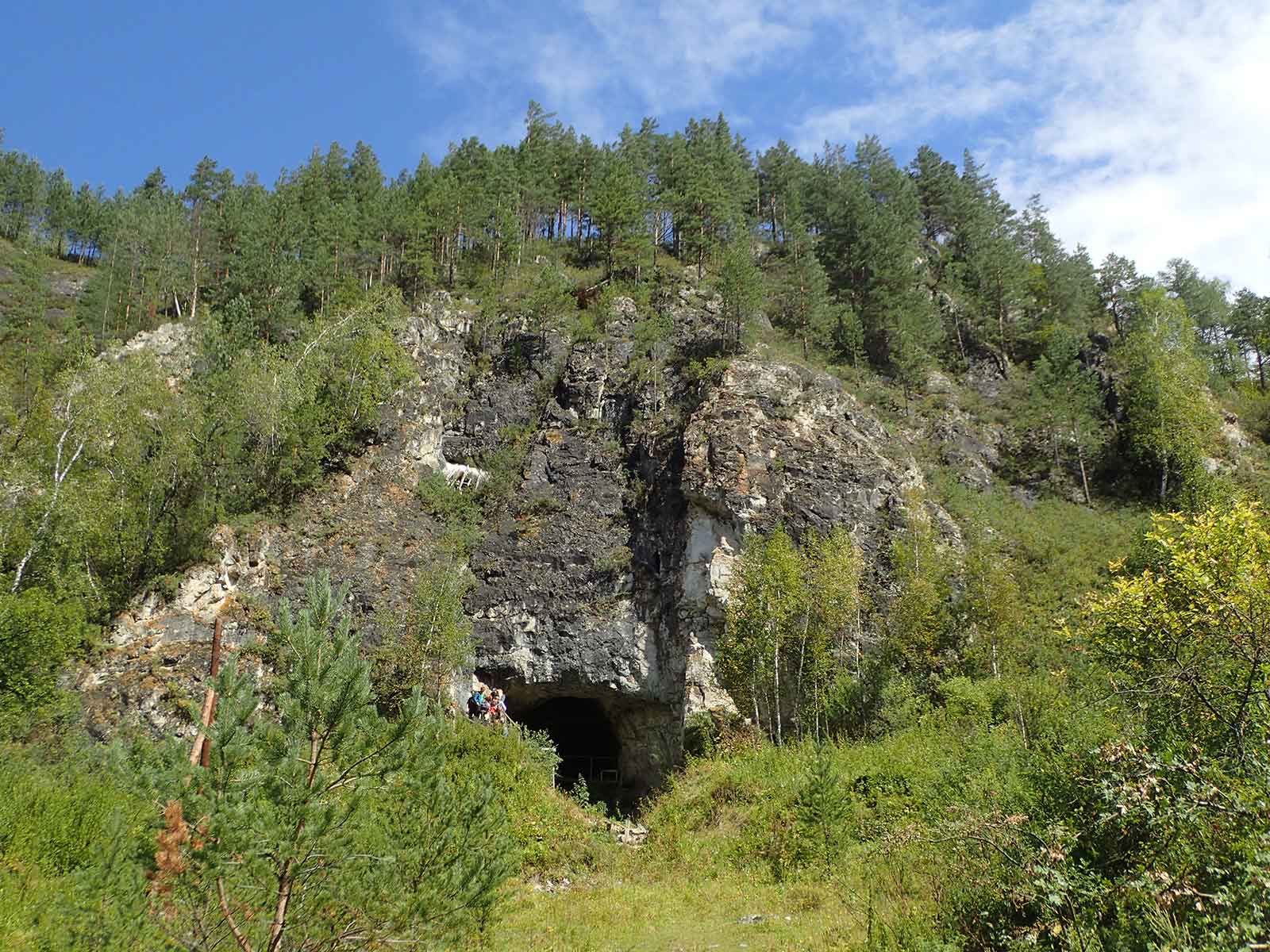
Denisova Cave, Altai Mtns., Siberia
Within a cave in the Altai Mountains of Siberia, a piece of a skull that made up the back of a parietal bone was discovered. Using DNA analysis techniques, researchers have confirmed that this bone fragment is in fact part of an individual who belong to the species Homo denisova. These archaic humans are more casually called Denisovans, and they are closely related to Neandertals (Homo neanderthalensis) - the both which are somewhat less closely related to our species, Homo sapiens. This bone fragment belongs to only one of five separate Denisovan individuals that have been discovered yet, all within the same cave in Siberia.

While its DNA has been confidently identified, the true age is unknown because it is too old to radiocarbon date. Additionally, this fragment is quite small and too incomplete, and so it cannot be used to determine whether other hominin skeleton fragments found are Denisovan or not. The only way these can also be identified is through DNA analysis, which is often difficult to do on samples so ancient.

With the sequencing of both the Neandertal and the Denisovan genomes, in 2010 paleogeneticist Svante Pääbo and his team were about to make an astounding discovery about modern people across the globe when they compared their DNA to these archaic humans. They found that 2.5% of the DNA of modern Europeans and Asians has been inherited from Neandertals, and that around an additional 5% of the DNA of modern Melanesians has been inherited from Denisovans. This was clear evidence that our ancestors had socialized and interbred with other species of humans living at the same time in prehistory.

Today, anthropologists and geneticists are still waiting to find a more complete portion of a Denisovan skeleton. The hominin’s genome has much to say about who it was but seeing a complete skeleton will allow the world to visualize them. This can provide many other clues to how they lived and acclimated to their world. For now, they will have to continue to rely on the few Denisovan skeletal fragments unearthed in Siberia.

Saturday, April 20, 2019

Three Distinct Denisovan Lineages Have Been Revealed

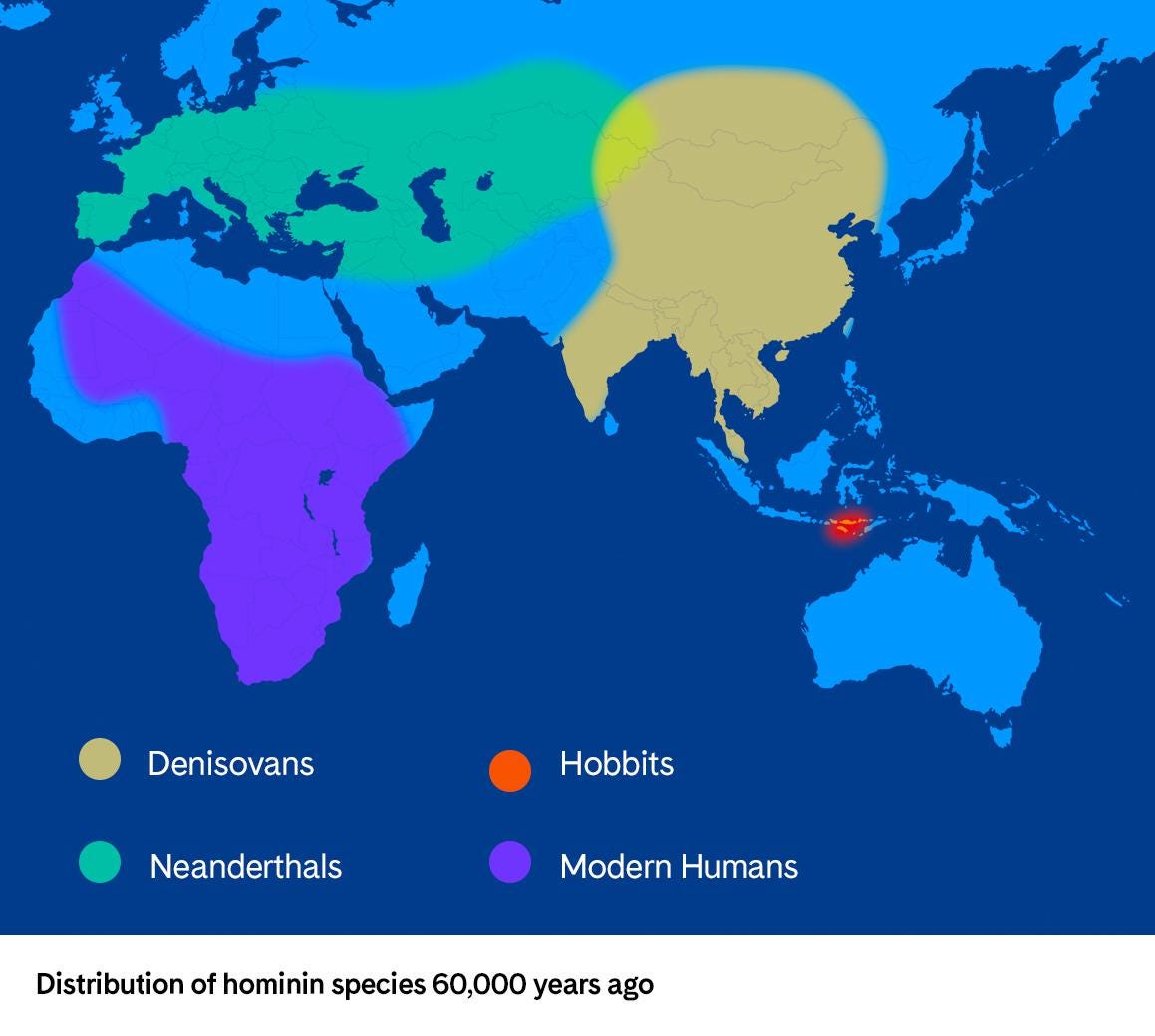
Map of four different species of the genus Homo, "Humans"
A new study has proven that the hominins discovered in 2010 that we have been referring to as Denisovans have much greater genetic diversity than scientists previously thought, constituting three separate lineages. One of these groups is so different from the other two, it could be considered a new species entirely.

An international team of researchers has analyzed the genomes of 161 modern humans from islands across Southeast Asia and New Guinea and have concluded that they have DNA that has been inherited from independent and diverse populations of Denisovans. It was in 2018 that it was first uncovered that more than one lineage existed. Now we know that the family tree of Homo denisova is increasingly complex.

Drawing on modern people’s DNA, the scientists realized that these hominins interbred with their Homo sapiens cousins in two different waves. The two interbreeding events have created distinct genetic patterns that can still be identified in the people of Oceania and East Asia today.

The specimens that were found in a cave in Siberia’s Altai Mountains are the only Denisovan skeletal fragments known to science. The lineage of these individuals is being called D0, while the other two are D1 and D2. The group that is closely related to the Altai line has DNA that is found in modern East Asians. The other group – more recently discovered – is very divergent from the Altai line and its DNA is found across modern Oceania and much of Asia. In fact, it is as genetically dissimilar to the Altai Denisovans as it is to Neandertals.

Thus, many scientists are calling for this group to be given their own name, as they may truly comprise a separate species from Homo denisova. Moreover, based on their analysis, the researchers propose that interbreeding between Homo sapiens and Homo denisova took place as recently as 15,000 years ago. If this date is accurate, the implications are shocking. This would mean that Denisovans are the last hominin species related to modern humans known to have died out.

Wednesday, November 15, 2017

Why are dogs friendly?


If you're a dog person, you'll understand. Dogs get excited the second you walk through the door from being away for a minimum of a half hour or when you meet your friend's dog for the first time. They welcome you with the cutest tail wag and most adorable puppy-dog eyes that is so irresistible and leaves you saying "Awww" aloud. Whether you're coming home to your dog, adopting a new dog, or meeting a dog for the first time, the experience is all the same every time; you're greeted with love and affection. In this article, "What makes dogs so friendly? Study finds genetic link to super-outgoing people," researchers have proven that dogs are hypersocial compared to wolves, but also further researched what makes them that way. Is it genetics? Seemed like a long shot, but it was worth a try. Researchers have compared domesticated dogs and humans with Williams-Beuren syndrome, which is a developmental disorder that affects different parts of the body by the deletion of part of chromosome 7 and one of the many characteristics of this disorder is that it makes a person very trusting and overly friendly. In this article, they made this connection to dogs because this DNA was found in dog chromosome 6 and could be the responsible for dogs' friendliness. As the study continued, between wolves and dogs, the results showed that hypersocial dogs had more DNA disruptions than the wolves. The article stated, "disruption on a gene for a protein called GTF21, which regulates the activity of other genes, was associated with the most social dogs." If the gene lacked changes, it would lead to "aloof, wooflike bahavior." Other experts found this study very fascinating and believe that further research is needed.
I found this article very interesting to read, not only because I'm a huge dog person, but because I never knew that dogs and humans shared the same genes for social behaviors. Now that I have read this article, I look at my 4 dogs and I'm grateful that they are so friendly and happy to see me come home. I'm glad that they made this connection because it gives a person, who might be afraid of dogs, a little more security that dogs are friendly and that they aren't so different from humans after all. This study brings us to a closer relationship with our pets. I've come to realize that dogs aren't so different from humans. I believe that this study takes a step forward for researchers to understand more about the genes of social behaviors between humans and domesticated pets.


http://www.sciencemag.org/news/2017/07/what-makes-dogs-so-friendly-study-finds-genetic-link-super-outgoing-people
https://williams-syndrome.org/what-is-williams-syndrome

Monday, May 1, 2017

Our DNA is Everywhere


Researchers have found a new way to study early human species without looking for fossils. By searching in places early human species such as Neanderthals and Denisovans resided, soil samples can be taken from sediments in those places and their DNA can actually be found there. DNA can be found from many different organisms in almost any soil or water sample. Specifically for this study, researchers searched in sediments from cool caves and in permafrost. These two locations help the DNA stay in tact longer, so there is a good chance that in tact DNA will be found there. These researchers did in fact find DNA in the soil samples they collect and are positive the samples are from Neanderthals or Denisovans. The DNA they collected had the same characteristics as the known characteristics of DNA from Neanderthals and Denisovans. This new technique can helps us get a better understanding of how, when, and where our ancestors migrated.

https://www.newscientist.com/article/2129259-mud-dna-means-we-can-detect-ancient-humans-even-without-fossils/
http://science.sciencemag.org/content/early/2017/04/26/science.aam9695

Monday, April 17, 2017

How closely are we related to Spongebob?

https://www.sciencedaily.com/releases/2017/04/170411104532.htm

Image result for humans vs spongebob

Scientists have revealed that gene regulation by histones is one of the major effects of evolutionary diversity in organisms ranging from the sponge to humans. The regulation of genes is controlled by the histones that wrap the DNA inside the nucleus. These histones determine whether or not a gene is going to be turned on or off. At the University of Queensland in Australia, a study consisted of Great Barrier Reef sponges and genetic testing was preformed on the histones to see if the genetic marks are the same as in more complex organisms. The common ancestor for the sponge and human is long extinct, but this connection determines that this genetic component is important for evolution and diversity amongst simple to complex organisms.
In my opinion, this study is important to understanding evolutionary drives in ecosystems. Finding a common link in gene expression between two very different organisms is a large step for evolutionary science.

Sunday, December 11, 2016

Tibetan Mastiffs Can Survive Extreme Conditions Thanks to the Wolves

Tibetan mastiffs are a very interesting breed; they can survive in "thin, frigid mountain air," whereas most people and animals cannot. Researchers believe that they may have inherited this tolerance from breeding with wolves over 20,000 years ago. The "ancient" wolves were already able to live at heights like the mastiffs do now. Researchers also noted that Tibetan people have a trait similar to this from breeding with "Denisovans," which are a group of extinct humans. Researchers find this study very interesting because they are able to compare it to the changes in humans as well.

The study adds to growing evidence that such ancient mating events have sometimes played a vital role in the adaptation of modern species to their environments, the scientists say.

“It’s a very cool discovery … which turns out to be a mirror of what’s going on with the humans [there],” says Elaine Ostrander, a geneticist at the National Institutes of Health in Bethesda, Maryland, who was not involved with the study.

Researchers think that a dog breed from China traveled to the Tibetan Plateau about 24,000 ago. They adapted over this time to the icy climate, and formed into the hairy, large dogs we see today. In order to survive these temperatures, the dogs, along with the Tibetan people, produce less hemoglobin. Hemoglobin is the protein that carries oxygen in red blood cells. A variation of the gene, EPAS1, is what aids this adaptation. This variant helps reduce the chance of a clot or stroke when red blood cells try to make up for lack of oxygen.

The study shows that the gray wolves may have been the source for this variant. To test this prediction, researchers tested DNA segments from 29 different gray wolves. They noticed that the mastiffs were closely related to Chinese dogs more than they were to the gray wolves. Two other genetic areas in mastiffs were uncovered in the gray wolves as well.

This is definitely a very interesting article. This study reveals how people and animals have adapted to live in more extreme clients. The fact that both humans and the mastiffs have similar variants of the gene is very extraordinary in the world of genetics.

http://www.medicinenet.com/hemoglobin/article.htm
http://www.sciencemag.org/news/2016/12/tibetan-dogs-can-survive-high-altitudes-thanks-ancient-breeding-wolves

Monday, November 21, 2016

Studies on Human Genome Determine Why There is Little Neanderthal DNA in Modern Day Humans

Modern-day humans contain up to 4% of NeanderthalDNA in their genome. They shared a common ancestor with Neanderthals up until about half a million years ago. Humans and Neanderthals started to interbreed tens of thousands of years ago, producing human-Neanderthal hybrids. Over time, the prevalence of Neanderthal DNA has steadily decreased over human generations until it has reached its current amount.

The reasons as to why scientists believe this interbreeding occurred and why Neanderthals do not exist to this day is because of the small population sizes of Neanderthals. Because they originally tended to live in harsher climates than humans, population sizes were smaller to cope with the extreme conditions. This resulted in a higher amount of interbreeding in Neanderthal populations, leading to less gene variation and a lower chance of natural selection.


The scientists of this study used mathematical equations to predict how allele frequencies of Neanderthal DNA inthe human genome changed over time. They suspect that while the chosen alleles may be neutral in Neanderthals, they may pose a greater threat to hybrids, resulting in high mortality rates. Therefore, offspring of any surviving hybrids would have a greater chance of survival if the hybrid parent mated with a human, decreasing the amount of harmful Neanderthal DNA in the offspring. This repetition of surviving hybrids mating with humans, and the resulting offspring also mating with humans, lowered the frequency of Neanderthal alleles in generations over time. When the hybrids reproduced with humans, there was greater gene flow and any disadvantages from the Neanderthal DNA could be effectively bred out over time. The breeding habits and survival rates of different generations of hybrids and their offspring would result in the varying degrees of prevalence of Neanderthal DNA in modern day humans. This study is important in understanding the origins of modern-day humans and how we came to be.

Tuesday, October 4, 2016

Genes underlying dogs' social ability revealed

Dogs were the first animal to be domesticated by humans, and it may have been as early as 16,000 years ago. In these thousands of years spent together, both species have co evolved and changed their relationship from what it started out as.  Dogs were first domesticated by early humans to serve as a wet nurse and help care for young babies while the parents were off hunting and gathering.  Since then, dogs have developed much better abilities to communicate and cooperate with humans.  Dogs often times come to humans for help, whereas their ancestral wolf would rather find solutions on its own.  A new study published in Scientific Reports searched for any relationship between this change in behavior and the genetic makeup of the dogs.
human and puppy bonding together
The study observed 500 beagles with previous experience around humans, and then presented the beagles with a problem. The problem was to open a sealed container that has food in it, and when they accepted it was too difficult, they observed if the beagles turned to human contact to solve the problem.  Of the 500 beagles studied, 200 of them were selected to have their DNA studied using a genome-wide association study (GWAS). The GWAS is able to find out if a particular gene variant is present in the dogs who exhibit a specific trait. A direct correlation was found using this method which determined that there actually were gene variants for the dogs who seeked human contact. Further support for this hypothesis would be if they performed this experiment on different dog breeds and still got similar results.

Wednesday, September 21, 2016

How We Got Here: DNA Points to a Single Migration From Africa

The question of where humans came from has been one of the biggest in science for years. Three separate teams of geneticists from different places, all sampling different people, sequenced the genomes of 787 people from hundreds of different populations and found that all humans came from a single population from Africa between 50,000 and 80,000 years ago. The genomes were taken from a variety of people from every continent and were examined separately to finally come up with the same conclusion as to where people came from. Before now, there were very few sequenced genomes from people outside of population centers like China and Europe, but this new data with genomes from indigenous populations adds great value to our understanding of human DNA. 


The first team was Dr. Willerslev and a few colleagues who first sequenced the genome from a century-old lock of hair of an Aboriginal Australian. The results raised many questions, so the group joined David W. Lambert and the University of Oxford to obtain DNA from people from Papua New Guinea and from Aboriginal Australians to sequence. Mait Metspalu from the Estonian Biocentre sequenced genomes mostly from populations from Europe and Asia.  David Reich and his team from Harvard Medical School formed their database of genomes from people from all six inhabited continents. All coming up with the same results, the teams each established that there was an exodus from Africa 80,000 to 50,000 years ago, resulting in the populations we have today. There is also evidence of other groups migrating from Africa much earlier than 80,000 years ago, but these groups have since disappeared, having been wiped out by others who came after them who were stronger in number or in technology. 

Thursday, April 14, 2016

Some Cultures Hardwired for Vegetarian Diet

       Ever heard of the expression "you are what you eat," well in this study, scientists compared the genetic make up of individuals who have a lineage of vegetarianism to those who eat red meat daily. Scientists discovered the gene that is affected by vegetarianism is called s66698963 found in the FADS2 gene.

The scientists compared genomes to those from Kansans who love red meat, to those from Pune India who have a long history of vegetarians. When searching for the genetic mutation throughout other cultures and populations, researchers found the mutation has spread from South America, Northern Europe, and other similar locations.

Although researchers found the spreading of the mutation, they also discovered the deletion of the mutation in Northern Canada, Greenland, and Alaska this mutation became maladaptive. Results explain there is no Paleo diet out there for anyone. Instead, you can now thank your ancestors for your eating habits and diet patterns.

I found this article extremely interesting due to the fact that I was raised into a meat eating family but since my heritage's primary diet consists of seafood and shellfish my diet for the last 10 years have consisted of a strict pescatarian diet. I never imagined that the diets of my ancestors would have such a strong influence on my diet today.

Click here for original source: http://news.discovery.com/human/genetics/some-cultures-are-hardwired-for-vegetarian-diet-160329.htm

Dumbo May Hold The Key To Treating Cancer Better In Humans


Elephants are known for their majestic size and resilience, but also for their long lives. In fact, elephants live longer than any other land mammal, except for man, only beating them by less than a decade. However, elephants have 100 times more cells than humans do. This provides ample opportunity for cancer-causing mutations to occur. However, only 5% of elephants die of cancer, whereas up to 25% of humans do. This lead to the hypothesis that elephants’ bodies must have evolved a way to suppress cancer. 

Scientists analyzed the DNA of both African and Asian elephants and discovered that both species had 20 copies of P53 gene, which is known to have tumor-suppressing qualities. In comparison, humans only have one copy of the P53 gene. Moreover, the genes of elephants’ smaller ancestors showed only a few copies of the P53 gene. This implies that as elephants evolved, their genetic code developed more copies of the P53 gene. However, although this is an interesting discovery, it does not answer all of scientists’ questions about the P53 gene.

 I think that it is awesome that medical scientists may find cancer-fighting tactics from other members of the animal kingdom! Since it seems that the high amount of P53 gene in elephants is coordinated with their large size, it makes me wonder if this relationship of having natural cancer-fighting abilities transfers over to the genomes of other large mammals, such as whales. If that is the case, then those animals should be looked at too, since they may have their own ways of combatting cancer that could be useful in humans.


Tuesday, April 12, 2016

Genetic Elements That Drive Regeneration Uncovered

There are many various species that have genes that can enable the healing or even the regrowth of missing limbs. If humans looked back on the evolutionary tree of life back to the roots, you would see that we share a common ancestor that possess regenerative properties for lost body parts. Humans lost this special power through the course of millions of years of evolution. Two species that still possess this property are salamanders and zebrafish. Researchers have been studying these species and making a list of all the genes that allows animals to regenerate a tail or repair damaged tissue. They have discovered that humans have counterparts to these genes and they believe that the genes themselves may not be the key to the regeneration process, but in the sequences that activate these genes when an injury occurs. A study at Duke University discovered that “tissue regeneration enhancer elements”, called TREEs, are sequences that activate genes at the site of injuries. Researchers have found many genes in various animals that promote regeneration. One in particular is a molecule called neuregulin 1. This molecule has been found to help repair and regenerate heart muscle cells and even regenerate a missing fin. Dr. Kenneth Poss of Duke University School of Medicine has led studies specifically trying to see what activates these genes, what keeps them running while the regeneration process is being undergone, and what deactivates them when the process is complete.

The first thing they looked for in their research was the genes in zebrafish that allows them to regenerate a fin or heart cells. They found a gene called leptin b that controls those processes in these fish. The sequence of leptin b was surrounded by roughly 150,000 base pairs at around 7,000 base pairs away, an enhancer element was found. This enhancer was cut down to its bare minimum required to function properly. They found that the element could be separated into two parts, one for heart repair and the other for repairing a fin. They took these two sequences and fused them to fibroblast growth factor and neuregulin 1. What they saw was that zebrafish had superior regenerative responses to injury. Lastly they tested to see if these TREEs could be effective in mammals. They tested mice. They found evidence that shows that there is a definite possibility for mammals to possess regenerative properties for damaged tissues or maybe even repair and regrow a missing limb.

Regeneration is a really interesting ability. It is amazing that some species possess the ability to regrow a fin or body part after an injury. I think research should be continued on regeneration. In particular, research should be done to see if it is possible for people to possess this ability. It would be amazing if one-day humans could be able to regrow a limb. There are many tragedies that happen throughout the world such as car accidents, shark attacks, war injuries, etc. and it would be great if we could uncover the mysteries behind regeneration so that people can repair their own injuries.


Links: