Monday, November 18, 2024
Ancient DNA unveils a mew line of Neandertals!
This discovery of a new Neanderthal lineage is excellent for genetics as it helps supply new understandings of the Neanderthal's population dynamics and evolutionary history. The study reveals that Neanderthals had a complex evolutionary history, which can be hypothesized to include local extinctions and migrations like those of the homo sapiens. As stated earlier, Thorin DNA had an unusually high percentage of identical gene variants, meaning that gene flow rarely occurred. This lack of gene flow indicates that this line of Neanderthals was a small population that mated among close relatives. This genetic information of a lack of gene flow within Thorfin's DNA helps support the scenario of this Neanderthal lineage splitting apart around 105,000 years ago, which survived by mating within its small population for roughly 50,000 years.
In my opinion, This discovery of a new Neanderthal lineage is a fantastic step forward in researching the diversity of different Neanderthal cultures and languages. As with the discovery of Thorin's lineage, what is to say that there aren't any other distinct lineages of Neandertals that haven't been found? Additionally, researchers can also relook at other found Neandertal remains and potentially uncover more distinct lineages, such as Thorins, which will allow us to further our understanding of human evolution and the dynamics of prehistoric populations. WEBSITES https://www.sciencenews.org/article/ancient-dna-unveils-unknown-neandertals
https://www.discovermagazine.com/the-sciences/new-neanderthal-lineage-from-100-000-years-ago-helps-explain-their
Wednesday, August 2, 2023
Dupuytren's Contracture
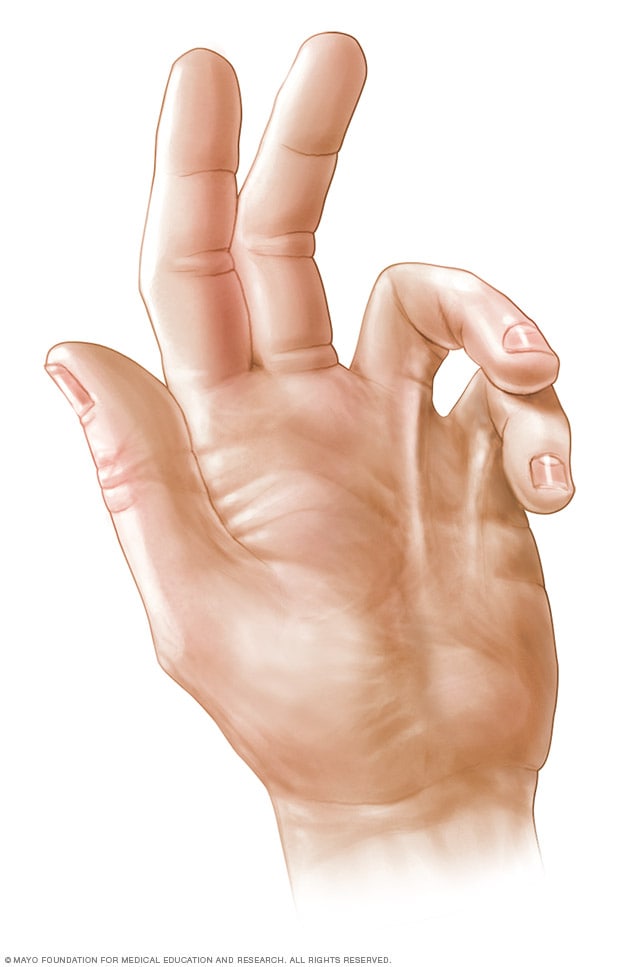
Researchers in the Department of Physiology and Pharmacology at the Karolinska Institute in Sweden conducted a study on Dupuytren's contracture, also known as the "Viking disease". This disease mostly affects aging northern European men, and this study discovered that the prevalence of Dupuytren’s contracture is strongly linked to genetic variants inherited from Neanderthal ancestors. Dupuytren’s contracture has been affecting up to 30% of men over 60 in Northern Europe, by causing their fingers to lock in a bent position which is usually a result of a lump in their palm.
The study analyzed data from almost 8,000 affected individuals, and found 61 potent genetic risk factors that lead to the condition flaring up. Out of 61 potent risk factors, three of them are a result of genes that originate from the DNA of Neanderthals. The meeting between Neanderthals and modern humans continues to influence health outcomes to this day, particularly in certain populations in Northern Europe. The region was home to a lot of Vikings some centuries past, but lead researcher Hugo Zeberg stated that the connection between Neanderthals and Vikings should not be exaggerated.
Monday, November 28, 2022
DNA and the impact it has on COVID-19
Since the beginning of the pandemic, the mercurial nature of the coronavirus has been on display. Some people may receive mild, cold-like illnesses or even have no symptoms at all, while other people become very ill and may die from COVID-19. It is hard to predict who may succumb to this problem, but according to an article researchers are searching for genetic clues that may lead to answers. Some studies that have recently been tested, have found that versions of genes inherited from Neandertals may protect against COVID-19, while other genetic heirlooms passed down from Neandertals can up the risk of the disease and severity. An international study was conducted to examine and study DNA from more than 28,000 COVID-19 patients and almost 600,000 people who had not been infected that confirmed their inheritance from Neandertals is involved in COVID-19 susceptibility. This study had also confirmed a previous finding that people with type O blood may have some protection against getting infected, but exactly what accounts for the protection is still not known. People with rare variants in a gene called toll-like receptor 7 or TLR7 are5.3 times more likely to get severe COVID-19 than those who don’t have the variants. TLR&’s protein is involved in signaling the immune system that a virus has invaded.
This article was very interesting to read. It made me question if my relatives are descendants of Neandertals or not. Although this article was very interesting, I still believe researchers need to research more on this topic as COVID-19 seems to be a virus that will unfortunately never go away, and possibly find better solutions to protect ourselves from this disease better.
Wednesday, March 30, 2022
Early Humans in Europe Mated with Neandertals Surprisingly Frequently
An article from Science News talks about how DNA analysis of some of the oldest human remains in Europe showed that inbreeding between Homo Sapiens and Neandertals was more common than previously thought. Neandertals were found to have to contributed about 3 to 4 percent of DNA found in H. Sapien remains found in Bulgaria. A skull found in the Czech Republic had 2 precent of Neandertal DNA as well. It is now believed that ancient humans actually got a large amount of DNA from the Neandertal population before it went extinct. The migration of human populations that did not have any ancestry with the Neandertals diluted the Neandertal DNA from the human gene pool.
I find this incredibly fascinating that a species deemed "inferior" actually contributed to the gene pool of early humans, and that these species interbred with one another. I also think that it is very interesting that scientists are able to determine that these ancient DNA samples contain such a small portion of Neandertal DNA and determine roughly how many generations away the individual was from a Neandertal.
More information here
Monday, April 29, 2019
The First Confirmed Hominin Hybrid Has Been Discovered
Denisova 11, as she is called, was an approximately 13-year-old girl who lived around 90,000 years ago in the Altai Mountains of Siberia. What is so fascinating about this girl is that she is clear evidence for interbreeding between species in the genus Homo (humans). She is indeed about half Denisovan and half Neandertal, two early members of the genus that are related to Homo sapiens.
Viviane Slon, a researcher at the Max Planck Institute in Leipzig, Germany, performed DNA analysis six times on Denisova 11's piece of limb bone that had been found. She simply could not believe the results of the analysis the first time and had thought she made a mistake. However, each successive test came to the same conclusion. This young girl had a Neandertal mother and a Denisovan father. Moreover, they discovered that her father in fact had a Neandertal ancestor of his own. This was further confirmation of how common hybridization must have been in early hominins.
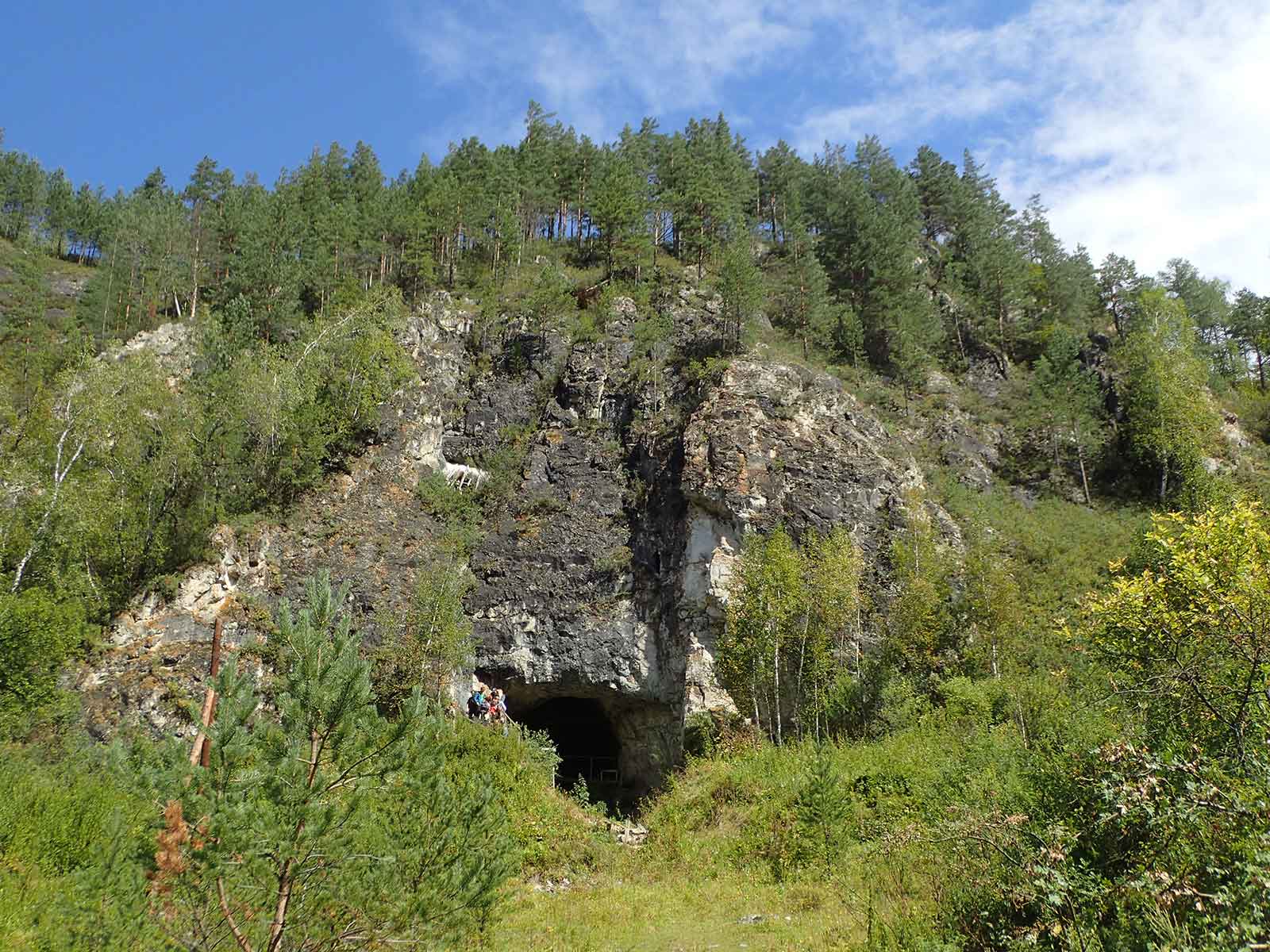
So far, only Denisova 11 and four other individuals belonging to the species Homo denisova have been uncovered by the bone fragments that they left behind in a single cave in the Altai Mountain range. As I have previously reported, the species was first identified in 2010, when DNA sequencing of the toe bone of an individual called Denisova 3 led scientists to confirm the existence of an entirely new group of humans.
Svante Pääbo, the director of the Max Planck Institute of Evolutionary Anthropology, has stated that due to the fact that Neandertals originated in western Eurasia and that Denisovans originated in the east, they likely did not meet very often. But based on these latest findings, Pääbo and many other scientists now believe that when the two species did come face to face, mating between them was far more common than was ever previously thought.
The idea that Denisovans, Neandertals, and Homo sapiens were producing hybrids for possibly hundreds of thousands of years is supported by genetic studies of modern populations. The DNA of people living in Europe and Asia today is on average 2% Neandertal. The DNA of people living in Melanesia today is on average 5% Denisovan, with other varying amounts found in the rest of southeast Asia and Oceania.
The genomes of all these humans studied, ancient and modern, reveal that hybrids were not uncommon throughout our shared history on this planet.
Sunday, April 21, 2019
Scientists Find the First Confirmed Denisovan Skull Fragment
![]() |
| Denisova Cave, Altai Mtns., Siberia |
While its DNA has been confidently identified, the true age is unknown because it is too old to radiocarbon date. Additionally, this fragment is quite small and too incomplete, and so it cannot be used to determine whether other hominin skeleton fragments found are Denisovan or not. The only way these can also be identified is through DNA analysis, which is often difficult to do on samples so ancient.
With the sequencing of both the Neandertal and the Denisovan genomes, in 2010 paleogeneticist Svante Pääbo and his team were about to make an astounding discovery about modern people across the globe when they compared their DNA to these archaic humans. They found that 2.5% of the DNA of modern Europeans and Asians has been inherited from Neandertals, and that around an additional 5% of the DNA of modern Melanesians has been inherited from Denisovans. This was clear evidence that our ancestors had socialized and interbred with other species of humans living at the same time in prehistory.
Today, anthropologists and geneticists are still waiting to find a more complete portion of a Denisovan skeleton. The hominin’s genome has much to say about who it was but seeing a complete skeleton will allow the world to visualize them. This can provide many other clues to how they lived and acclimated to their world. For now, they will have to continue to rely on the few Denisovan skeletal fragments unearthed in Siberia.
Saturday, April 20, 2019
Three Distinct Denisovan Lineages Have Been Revealed
![]() |
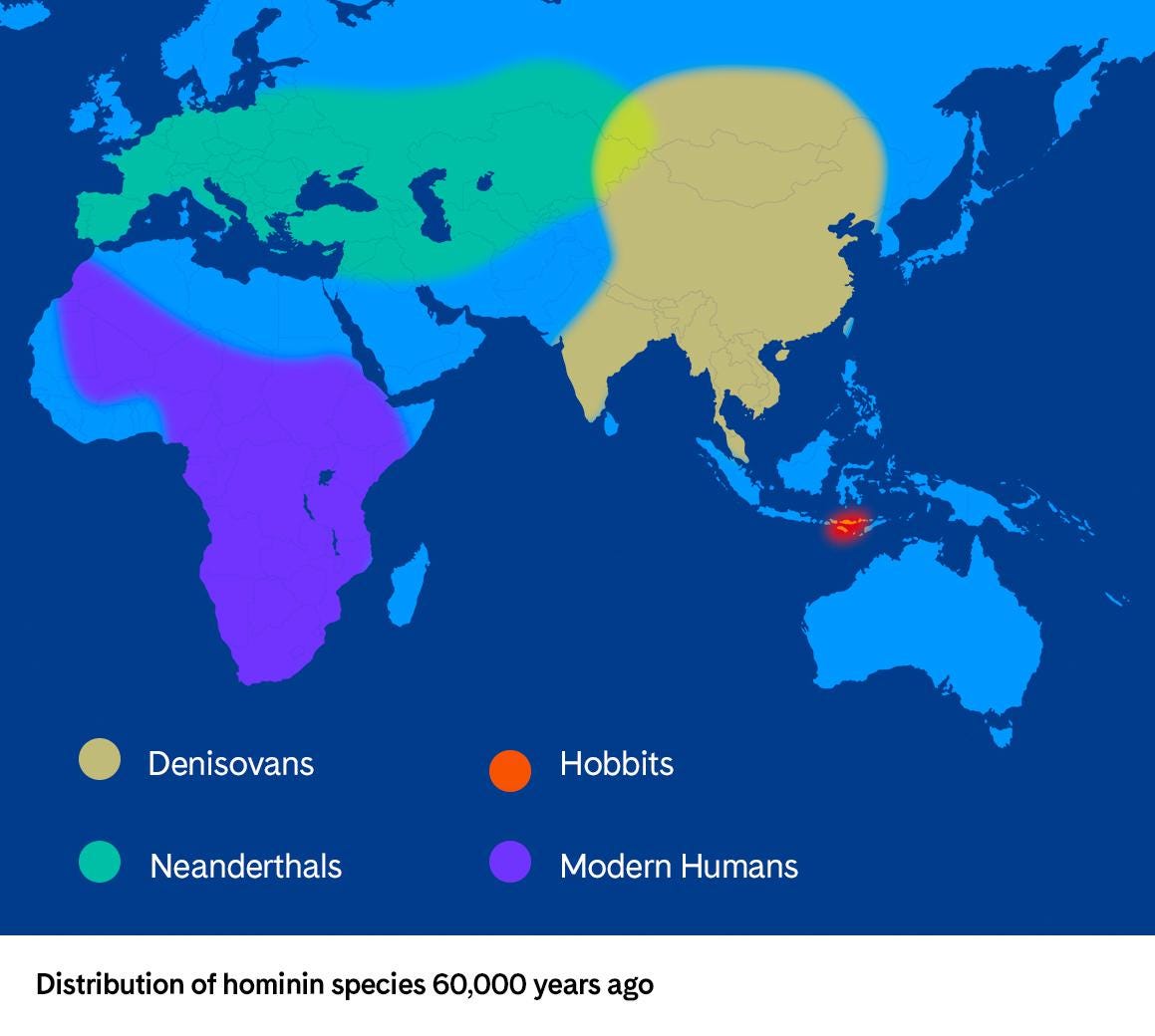
| Map of four different species of the genus Homo, "Humans" |
Drawing on modern people’s DNA, the scientists realized that these hominins interbred with their Homo sapiens cousins in two different waves. The two interbreeding events have created distinct genetic patterns that can still be identified in the people of Oceania and East Asia today.
The specimens that were found in a cave in Siberia’s Altai Mountains are the only Denisovan skeletal fragments known to science. The lineage of these individuals is being called D0, while the other two are D1 and D2. The group that is closely related to the Altai line has DNA that is found in modern East Asians. The other group – more recently discovered – is very divergent from the Altai line and its DNA is found across modern Oceania and much of Asia. In fact, it is as genetically dissimilar to the Altai Denisovans as it is to Neandertals.
Thus, many scientists are calling for this group to be given their own name, as they may truly comprise a separate species from Homo denisova. Moreover, based on their analysis, the researchers propose that interbreeding between Homo sapiens and Homo denisova took place as recently as 15,000 years ago. If this date is accurate, the implications are shocking. This would mean that Denisovans are the last hominin species related to modern humans known to have died out.
Monday, April 17, 2017
Dental plaque leads to news about Neanderthal diet
Research done by Laura Weyrich, a microbiologist at the University of Adelaide in Australia, has shown that plaque found in fossilized teeth proves that Neanderthal diets were a wide range of things. DNA was recovered from calcified plaque on teeth from four Neanderthal individuals. Two groups were found, one from the grasslands and one in the forests. The DNA from the individuals around the grasslands proved to eat woolly rhinoceros and wild sheep and the DNA from forests showed to eat moss, mushrooms and pine nuts. This shows that Neanderthals were neither vegetarian or herbivores. Also found in the DNA were materials from trees that act as aspirin. Any information found in fossils is truly amazing. To further our knowledge on the cavemen, helps us understand evolution and how we are today. This article shows that the Neanderthals were very smart, and knew about medicine way before we thought they did. This is a major break through for us.
Article: https://www.sciencenews.org/blog/science-ticker/ancient-dental-plaque-tells-tales-neandertal-diet-and-disease
Related article: http://www.pnas.org/content/108/2/486.full.pdf
Saturday, December 3, 2016
Neandertal DNA May Have Helped Europeans Survive
The change in immune response that those of European descent obtained can not yet be tracked back to the specific outbreak, but it is known that Neandertal DNA helped those of European descent survive tuberculosis due to the lowered immune response. The overactive immune systems of people of African descent can provide an explanation for why African Americans are at a much greater risk for autoimmune diseases when compared to white Americans. This research shows the need for more radical diversity in genetic studies since 80% of participants in genome-wide association studies are of European descent.
Tuesday, November 1, 2016
Evidence For Possible Unknown Human Relative Found in Modern Human DNA
We all know that the Neanderthals and Denisovans are the closest relatives to the Homo sapiens (Modern Human) species. However, genetic evidence in Melanesians (Aboriginal Australians, and natives in New Guinea and neighboring islands) hint that there is a possible third extinct hominid relative.

While many Neanderthal fossils were found in Europe and Asia, and the Denisovans were discovered from DNA from a finger bone and teeth found in a cave in Siberia, the third possible extinct hominid DNA may been preserved in human DNA, and not in fossil evidence, as reported by statistical geneticist Robert Bohlender on October 20 at the annual American Society of Human Genetics meeting. In 2012, a research team suggested that there were also people in Africa carrying DNA from an extinct hominid ancestor. Less than a decade ago, it was even discovered that early humans mixed with other hominid species. Bohlender and his research team concluded that a third hominid group may have bred with the human ancestors of the Melanesians.
Eske Willerslev and his research team also came to a similar conclusion. They conducted an experiment in which they collected saliva samples from volunteers for DNA sequencing. The DNA examined was from 83 Aboriginal Australians and 25 natives from Papua New Guinea highlands. The researchers found Denisovan-like DNA, but was found to be different and possibly from another hominid species. Willerslev speculates that this DNA can be from Homo erectus or from the extinct Hobbits hominid species, but he is not a hundred percent sure.
According to evolutionary geneticist Mattias Jakobsson, researchers don't know much about the Denisovan's genetic diversity. He believes that it was possible that a different branch of Denisovans could have been the group that mated with the Melanesians' ancestors. There geneticists like Elizabeth Blue, that believe that the genetic evidence found from Neanderthals and Denisovans is limited. Denisovans may have been spread around the world and have had genetic diversity. If they weren't however, then the genetic evidence could have come from another extinct species.
I think that it's fascinating how evolutionary evidence could be found in modern human DNA, and not just in fossils. I hope that after further research, scientists would be able to confirm if this genetic evidence came from another distinct hominid species or just another branch of Denisovans. I also think that this evidence can help us learn more about human evolutionary history, along with that of other hominids.
Links:
https://www.sciencenews.org/article/dna-data-offer-evidence-unknown-extinct-human-relative
http://www.nature.com/nature/journal/v538/n7624/full/nature18299.html?cookies=accepted
https://ep70.eventpilot.us/web/page.php?page=IntHtml&project=ASHG16&id=160122719