Showing posts with label hereditary. Show all posts

Wednesday, November 26, 2025

Behaviors in Sex Could be Linked to Genetics: Taboo Edition

 Drain C. 

Genetics, Stockton University

https://www.glamour.com/story/are-kinks-hereditary 

Rumors have surfaced that sexual kinks are due to environment, trauma and genetics, but there are not nearly enough studies on the topic because it is still a touchy or taboo subject. This is ultimately an extremely fascinating outlook on sex playing a role in genetics. People assume that when they hear "kinks are hereditary" they always take it to extremes by saying their kinks are a direct link to their parents' kinks. Not many people want to think about what kind of kinky sex their parents are having that could result in a heritable kink.  People want to automatically assume that because they like a specific kink, that it directly comes from their parents and that they enjoy that kink too, but that is not necessarily the case. It is more so the physical traits that are inherited that may play a role in liking specific kinks. For example: nipple sensitivity and pain tolerance levels are both a genetic factor that are often incorporated into kink. Just because a specific physical trait is passed down from a parent, does not directly correlate to them utilizing that trait during sex. Personality traits are also related to sex and kink, for example those with outgoing personalities may be into participating in group sex, but as previously stated there needs to be more studies actually done. 


https://archive.is/20231005201102/https://www.nytimes.com/2019/08/29/opinion/genetics-sexual-orientation-study.html

In addition to kink not being too heavily studied in genetics, sexuality is another that is talked about but not fully studied. Sexual preference has also been argued or rumored to be affiliated with genetics. This one can be semi-traced back. Scientists do not want to delve too deeply into the genetic study of whether or not there is a "gay gene" because people may utilize bigotry when it comes to erasing or "correcting" said gene. There also may not be one direct gene, there could be multiple, in different locations, for different types. For example: women liking women may present different than men liking men, and habitual same sex flings may appear differently than occasional same sex flings. But like most things in science, there is a spectrum and no set binary when it comes to the complexities of sex. Because sex and gender are already complex binaries, of course everything affiliated with it will also be complex. There may not be a defined single answer on whether or not liking someone of the same sex is deemed genetic. 

Although both of these articles are opinion pieces, it is important to think about genetics and sex in a different light. If everything taboo stays taboo, there will never be any real studies done to further the advancements of knowledge. 


Monday, April 21, 2025

Hereditary cancer, can it be prevented?


    In a recent article posted on Veritas, the Veritas Scientific Department discussed the study of hereditary diseases, including cancer, and whether they are preventable. They stated that :
"During their lifetime, 1 out of every 3 people will suffer from some type of cancer. Of the total number of cases, between 5 and 10 percent are hereditary." (Veritas Scientific Department, 2025).

    This statistic showed that it is very common for people to develop some kind of cancer in their lifetime, and 5 to 10 percent is hereditary. Therefore, it is crucial to find a way to predict and maybe prevent the chance of developing cancer due to heredity. The article introduced a method called multigene panels, which is used for genetic studies in families with suspected hereditary cancer syndrome.

    But before diving into the multigene panels, the author breaks the topic down to the origin of cancer, whether it is sporadic or hereditary. Sporadic cancer is due to a genetic alteration that is not hereditary. After being able to understand the origin of the cancer, the scientists can use a unique process to conduct a genetic study in families with suspected hereditary cancer syndrome. In an effort to find a way to predict hereditary diseases, scientists have developed a test called multigene panels to predict hereditary cancer. This process utilized the Next Generation Sequencing, an advanced biotechnology also known as NGS. 

    The information the test provides is valuable because it can allow us to take numerous preventative measures to reduce the risk of developing cancer. In some cases, clinical guidelines by specialists indicate management and follow-up measures for individuals at risk. If you suspect yourself with chances of having hereditary cancer, it is important to gather as much information on those affected (age at diagnosis, specific type of cancer, and its evolution) and go to a physician or genetic counselor as they will be the best resource to determine risk and assess for the need of genetic testing. 

WORKS CITED

Veritas Scientific Department (2025). Hereditary cancer, can it be prevented? Veritashttps://www.veritasint.com/blog/en/hereditary-cancer-can-it-be-prevented/

Cancer Research UK (2024). Inherited genes and cancer types. https://www.cancerresearchuk.org/about-cancer/causes-of-cancer/inherited-cancer-genes-and-increased-cancer-risk/inherited-genes-and-cancer-types


Monday, October 23, 2023

Genetic Study On Suicide Sheds Light On At Risk Populations

Recent genome-wide association studies (GWASs) have shown that there are 12 gene variants across diverse ethnic backgrounds that may be linked to an increased risk of attempting suicide. These genes were linked to other detrimental health conditions such as lung and heart disease, chronic pain, depression, bipolar disorder, and attention-deficit/hyperactivity disorder (ADHD) among many others. A cumulative effect of both mental and physical conditions was found to increase the odds of someone attempting suicide; however, because someone has any number of these conditions does not mean that they would attempt suicide, just that they are considered more at risk. These genes were also found to have other functions such as repairing damaged DNA, managing cellular stress, and communicating with the immune system, which makes sense as these processes are targets of antipsychotic and antidepressant drugs and are highly expressed in the brain in general. The study also found that those that have family members that have attempted suicide are at a higher risk as well. Overall, this study provides insight on what genes could be analyzed to assess risk of suicide attempt could open new avenues for treating those at risk.

While there is little doubt that those with mental disorders would be at a higher risk of attempting suicide, one must consider if the genes are all there is to blame. With tragic global news more widely available than ever, and non-genetic stimuli than ever contributing to increases in ADHD diagnoses, one must consider the affect of environmental factors, including others not mentioned. While genetic sequencing could provide additional insight to who may be at risk, it would be irresponsible to medicate someone who may exhibit genetic risk factors if they are perfectly healthy otherwise. I believe genetic sequencing could be used to determine risk, but mental evaluations should be periodically conducted to ensure that otherwise healthy people are not being excessively medicated.


https://www.usnews.com/news/health-news/articles/2023-10-04/largest-ever-study-of-suicide-genetics-gives-clues-to-whos-at-risk

https://ajp.psychiatryonline.org/doi/10.1176/appi.ajp.21121266

Wednesday, August 2, 2023

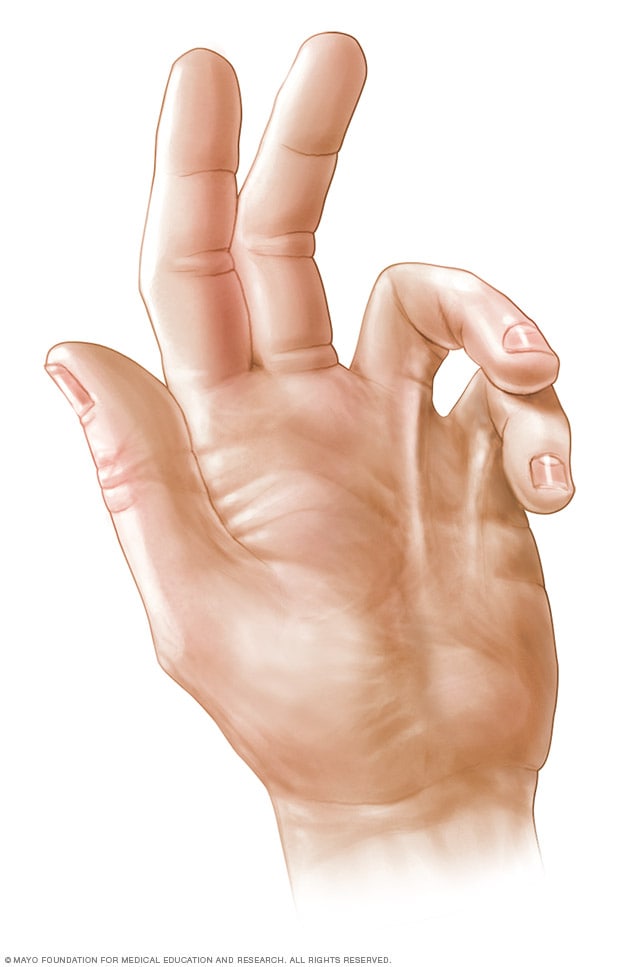
Dupuytren's Contracture

Researchers in the Department of Physiology and Pharmacology at the Karolinska Institute in Sweden conducted a study on Dupuytren's contracture, also known as the "Viking disease". This disease mostly affects aging northern European men, and this study discovered that the prevalence of Dupuytren’s contracture is strongly linked to genetic variants inherited from Neanderthal ancestors. Dupuytren’s contracture has been affecting up to 30% of men over 60 in Northern Europe, by causing their fingers to lock in a bent position which is usually a result of a lump in their palm.

The study analyzed data from almost 8,000 affected individuals, and found 61 potent genetic risk factors that lead to the condition flaring up. Out of 61 potent risk factors, three of them are a result of genes that originate from the DNA of Neanderthals. The meeting between Neanderthals and modern humans continues to influence health outcomes to this day, particularly in certain populations in Northern Europe. The region was home to a lot of Vikings some centuries past, but lead researcher Hugo Zeberg stated that the connection between Neanderthals and Vikings should not be exaggerated.


Monday, November 15, 2021

The 15 Genes that Can Cause Bipolar Disorder

 Bipolar disorder (BP) is a mental health disorder that impacts one’s mood, energy, and every day functions. There are three main types of bipolar disorder which are Bipolar I, Bipolar II, and Cyclothymia. All of these types include mood shift, high/low energy levels, irritability, and  manic episodes. This disorder can be heritable and be passed down from generation to generation. There are different genes that make up BP. 

In the article “Genome-wide association study of more than 40,0000 bipolar disorder cases provide new insight not the underlying  biology,” a study was conducted to determine which genes are found in people living with bipolar disorder. After studying over 40,000 people with (BP) they were able to identify that there are 64 genomic loci connected to the disorder.  From the loci, 15 specific genders were determined including HTR6, MCHR1,DCLK3, and FURIN. The research team was also able to specifically identify the certain genes of each type of BP with some being the same and others being different. Being able to identify the genes that can cause BP can further help understand the genetic component associate with it as well s ways to help people dealing with the disorder.    

https://www.nature.com/articles/s41588-021-00857-4 

https://www.nimh.nih.gov/health/topics/bipolar-disorder

Friday, November 23, 2018

New Gene Affecting A Disease Causing Hair Loss


Hypotrichosis simplex is a rare form of hereditary hair loss without other abnormalities.  Affected individuals typically show normal hair at birth, but experience hair loss and thinning of the hair shaft that starts during early childhood and progresses with age.  Hypotrichosis simplex can be divided into 2 forms: the scalp-limited form and the generalized form, in which all body hair is affected.  The progressive thinning of the hair shaft is a typical feature of androgenetic alopecia, a common form of hair loss in both men and women.  Hypotrichosis simplex can be inherited either as an autosomal dominant or autosomal recessive trait.  To date, there is no treatment for this condition.

Currently, few genes have been known that casually correlate to the disease.  However, a group of German and Swiss researchers, under the Institute of Human Genetics of the University Hospital of Bonn, have recently learned of an additional gene contributing to this hair loss disease.  After studying three ancestrally different families, the individuals affected with hair loss symptoms were found to have mutations for a gene encoding for lanosterol synthase (LSS).  This enzyme has a responsibility involved in cholesterol metabolism.  A mutated LSS gene causes an alternative metabolic pathway for cholesterol, playing an important role in the hair follicle.

LSS enzymes are found in the hair follicle cells, in which the hair roots develop in the follicle.  A normal LSS gene has the enzymes situated in a system of very fine channels in the follicle cells, the endoplasmic reticulum.  A mutated LSS gene situates the enzymes in the endoplasmic reticulum, but it also has the enzymes outside into the cytosol as well.  This causes a malfunction leading to hair falling out.

Of course, much more work is still left to be done and there are still a lot unknown to us about this disease and its why’s and how’s, in my opinion.  But I think this study is an important step and there is now one less gene to be decoded to solve and complete this puzzle for the biological basis of this disease.  Ultimately, the goal is to find ways to treat hypotrichosis simplex and prevent abnormal hair loss, whether it be just one way or other ways.  And a way to reach that goal is by improving the diagnosis of this rare disease find the contributors.


For additional information, refer to the original article.

For additional information, click the link of the journal from the American Journal of Human Genetics.

Thursday, November 23, 2017

You're only smart because of genetics!


The article, "Genes don't just influence your IQ - they determine how well you do in school", mentioned that there have been previous studies on how a person's IQ is highly influenced by genetic factors and what genes played a role. This new study focused more on the performance in school and if a child's drive to learn is genetically linked. Researchers of King's College London analyzed 83 different traits from more than 11,000 pairs of twins (identical and fraternal) born in the United Kingdom between 1994 and 1996. In order to measure this study, twins and their parents filled out a questionnaire based on health, how much each individual liked school, and how hard they worked in school. Afterwards, researchers collected data on how well each individual did on a standardized exam called General Certificate of Secondary Education (GCSE) exam. It was found that 9 general groups of traits that were highly heritable, but the researchers still don't know what specific genes are the influence factors. It's difficult to pinpoint what genes because there are hundreds of genes acting together. Future studies will hopefully be able to identify these genes, which would help diagnose and treat learning disabilities. It is predicted that a similar study in less-developed countries will differ significantly because the children don't have equal access to education and academic achievement is "shaped more by opportunities than genetics." Stated in the article, it is important to understand why children differ in academic achievements because everyone differs in the way they learn and their drive for learning. This allows school districts to personalize classrooms for children to learn in different ways that best fits their personalities.
I loved reading this article because I have 3-year experience working at a childcare facility and I got to see in front of my eyes how different every child learns. Their drive to learn is fueled by either hands-on, demonstration, visual, listening, enthusiasm, games, one-on-one, etc. I also noticed that some learn faster than others. I was always the extra teacher in the room, who was assigned to work with a child one-on-one and I learned that they were more encouraged when I was enthusiastic and when I gave them a "good job" or a high five after they completed a task. As I looked around the room, all the kids would be at various learning stations; some would be at the iPads playing learning games, some played bingo with shapes, and some did worksheets. Every child learns differently and they should have the access to a more personalized education that assists their learning in ways that will allow them to succeed in school.


http://www.sciencemag.org/news/2014/10/genes-dont-just-influence-your-iq-they-determine-how-well-you-do-school
https://www.ncbi.nlm.nih.gov/pubmed/9242404