Showing posts with label Immunity. Show all posts

Tuesday, November 28, 2023

Black Death Genes and Increasing Autoimmune Disorders

FOOD FOR THOUGHT:

 Genes that once protected our bodies during the Black Death, may now be increasing autoimmune disorders...


    An article from Harvard Medical School (HMS) details how genes that once protected our bodies during the Black Death in the 14th century, may now be increasing the prevalence of autoimmune diseases. Researchers have extracted the DNA of people who died during the time of the Black Death, and are using that to compare against the DNA of those who have lived through the COVID-19 pandemic (our time). From this data, they were able to deduce the fact that survivors of each pandemic carried genes that made them immune to the disease. This makes sense, considering the "survival of the fittest" philosophy introduced by Darwin, and due to evolutionary circumstances, it would make sense that those who survived one instance of a deadly disease could presumably survive another. The bacterium Yersinia pestis was known to cause the Black Death as it spread from animals to humans, and plays a role now, centuries later. The relevance comes into play with autoimmune disorders: those alive during our time with autoimmune diseases are more likely to carry those same infection-fighting genes that helped people survive the Black Death -- crazy right?

    This was a very fascinating article and it is interesting to see how the genes have been passed on evolutionarily through time. Not only that, but the human body has me awestruck. The things that it is capable of, such as passing on these genes that can prevent disease is so interesting to me. Furthermore, as someone with an autoimmune disease, I can't help but to wonder if I carry these same genes as well. I think it would be really fascinating to have my DNA extracted and compared to that of someone who survived the time of the Black Death, that way I could truly see if I am impacted by this phenomena. Selective pressures and immunity are quite interesting to me and I could see myself taking a deeper look into this topic in the future!


LINKS:

1. https://www.health.harvard.edu/blog/genes-protective-during-the-black-death-may-now-be-increasing-autoimmune-disorders-202212012859 

2. https://www.nature.com/articles/s41586-022-05349-x


Friday, April 8, 2022

How Can Plants Protect Themselves From Pathogens in Rain


    A recent study has revealed that when plants are exposed to rain, hair-like structures on the leaf surface called trichomes recognize the rain as a risk factor for causing disease and activate their immune system to prevent infections. These findings could contribute to the development of methods to protect plants from infectious diseases caused by rain.

    Although water is one of the key essentials for majority of plant life, there are also bacteria that come from these water sources which can harm the plants. Raindrops can contain pathogens, like bacteria, filamentous fungi, and viruses, which can cause disease in plants. Plants have their own immune systems, so when these plants detect pathogens, they express immune-related genes to prevent themselves from being infected. 

    A research team led by Professor Yasuomi Tada and assistant Professor Mika Nomoto of Nagoya University conducted a study using seedlings from Arabidopsis thaliana (common name: thale cress). They found that Ca2+ levels around the trichomes on leaf surfaces increase. 

    Professor Tada says that their findings may be able to artificially improve plants' defensive capabilities against diseases at any time and for any length of time.

Related Article: https://pubmed.ncbi.nlm.nih.gov/15085136/

Tuesday, August 3, 2021

HIV: Defeated Naturally By A Human's Immune System

 This HIV/AIDS Specialist Explains Its Similarities — And Differences — To  COVID-19

In this article, it discusses multiple cases of people who naturally cured their own HIV. In the past, there has been two cases where people have been cured of HIV when receiving a bone marrow transplant, but now we have seen someone cure it with their own immune system. A patient who had the virus, eventually showed no functional HIV copies in any of their cells, even though they still had some nonfunctional copies of the virus, it suggests that some people's immune systems can eliminate the virus on its own like usual. Another patient, only had one functional copy out of 1 billion blood cells, and it was stuck in a genetic prison, which can hold the key to controlling the virus because they did not need antiretroviral drugs. In understanding the extensive nature of this, the first patient had undetectable levels of the virus without drugs for 24 years.

Studying their immune systems on how it fights the virus, could change all treatments of HIV as we know it and could lead us to cure, but it is still a huge question right now.

Links:

https://www.sciencenews.org/article/hiv-immune-system-elite-controllers

https://www.cdc.gov/hiv/basics/whatishiv.html


Friday, April 16, 2021

A person's immune system beat HIV


It was recently discovered that small number of people are able to naturally cure themselves of an HIV infection. A person referred to as EC2, once had HIV but showed no functional copies of the virus in the 1.5 billion cells analyzed. However, EC2 did still have some nonfunctional copies of HIV left behind. In another person labeled EC1, only 1 of 1 billion cells contained functional copies of HIV. These two people are referred to as "elite controllers" and they are some of the few people to have kept the HIV under control without medication. It has been difficult for researchers to determine the mechanism for how the elite controllers keep functional HIV copies at a minimum. Studies indicate that elite controllers have a genetic variant in their immune system that contributes to their control of viruses. Researchers then inserted the functional HIV into DNA from 64 elite controllers and 41 HIV-infected participants on antiretroviral drugs. The DNA from elite controllers maintained low levels of functional HIV for a median of 9 years. It has been hypothesized that elite controllers were rather lucky when first being infected with HIV because it was stored in the heterochromatin. Therefore, the HIV was most likely to stay inert and not replicate rapidly as if it were in other parts of the human genome. Overall, the suspicion is that the elite controllers' immune system first destroys cells producing functional HIV, which then leaves only fragments of HIV, which is then stored in heterochromatin for containment. The exact mechanism for this process is still under investigation. 

References 

C. Jiang et al. Distinct viral reservoirs in individuals with spontaneous control of HIV-1. Nature. August 26, 2020. doi: 10.1038/s41586-020-2651-8

Saey, T. H. (2021, January 30). In a first, a person's immune system fought HIV - and won. Retrieved from https://www.sciencenews.org/article/hiv-immune-system-elite-controllers

Wednesday, December 11, 2019

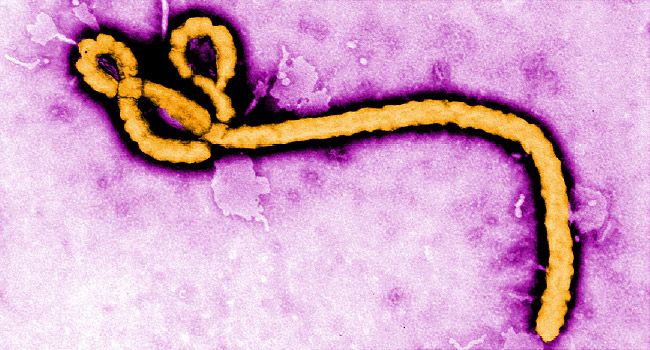
Ebola Rendered Useless when Genetically Modified

Image result for ebola virus"

The Ebola virus is notorious for being one of the most deadly viruses in the modern world. Akin to many other epidemic-causing pathogens, the Ebola virus has resulted in the deaths in over 11,000 individuals, primarily in West Africa. However, cases of this deadly virus have been documented all over the world, including 66 cases in America and over 3,000 cases in Europe.

Researchers at the Center for Microbial Pathogenesis at Georgia State University performed a study in an attempt to incapacitate Ebola in response to the growing threat of the disease. The team genetically altered a sample of Ebola, specifically changing the VP35 protein. This protein allows Ebola to fight off any early immune responses the host organism may enact. This mutated virus was not only safe for the team to work with, but is also completely ineffective. Additionally, when monkeys who had first been exposed to the mutated version of the virus were later exposed to the wild-type virus, they exhibited immunity to it.

This study is fascinating because it introduces a potential "vaccine" for the Ebola virus. With further animal and human testing, this discovery could be huge. Applications of this mutated virus would be life-changing in areas heavily affected by Ebola, and could hopefully lead to eradication of the disease as a whole.

Article: https://www.usnews.com/news/health-news/articles/2019-09-18/tiny-genetic-tweak-may-stop-ebola-virus-in-its-tracks
Related Website (Paper on the function of VP35): https://www.ncbi.nlm.nih.gov/pmc/articles/PMC3061251/

Thursday, November 14, 2019

Immune System Boosted by Extinct Humans' Gene

An extinct species of humans called Denisovans may have passed on genes to modern humans that helped our immune system become stronger and more adaptable. A gene variant from the Denisovans, boosted the immune system and increased inflammatory response to pathogens. Previous studies have found collections of gene variants that may have helped extinct humans handle altitude better and resist certain viruses, but it was unclear if any of these variants were functional. This study is the first to pinpoint one functional variant that had a benefit to the human immune system. The study also involved families where a child had severe autoimmune or inflammatory responses. Four families had this gene mutation and their immune cells produced stronger inflammatory responses that those from individuals without this mutation. This mutation was found in high amounts through a few populations which suggests that there is a selective advantage to having this mutation. Mice were also tested with this gene variant. Those with the variant had a stronger immune response when exposed to a Coxsackie virus strain, compared to mice without this gene variant. This shows that the Denisovan gene variant boosts the immune response to certain types of viruses.

Researchers identify a Neanderthal-Denisovan hybrid | The ...

It's interesting to see how extinct human species have affected the evolution of modern humans. The interbreeding of extinct humans have really shaped modern humans today and it's cool too see these similarities. Humans have so many different traits and seeing where these traits evolved from is interesting.

Link:
https://www.usnews.com/news/health-news/articles/2019-09-23/extinct-human-species-passed-on-powerful-immune-system-gene

Related Article:
https://www.history.com/topics/pre-history/denisovans

Tuesday, November 21, 2017

Genetics influences Immunity


A new study in London has developed and the results show that nearly 3/4 immune traits are influenced by genes. The author of "Genetics play a significant role in immunity" talks about the research in a little more detail. 497 adult female twins were involved and 23,000 immune traits were analyzed. I found it interesting that more adaptive immune traits are influenced most by genetics. The study also focused on the "importance of environmental influences" to strengthen one's immunity. I agree with a statement in the article that this research could help us understand the immune system better and how our body interacts with various environmental factors. This will lead to an increase in future research on treatments for autoimmune diseases. Everyone reacts differently when they get sick and the responses are more individualized towards fighting an infection.
I could only imagine how exciting this discovery is for health care researchers. A way to prevent certain autoimmune diseases will provide an increase in efficient patient outcomes. For someone who gets sick very often due to a weak immune system, I found this article very captivating. I was intrigued to know if my likeliness of getting sick is due to genetics and how this research will improve the future of health care. I believe that this discovery encourages us to improve our diet and strengthen our immunity in order to avoid getting ill. I feel that there should be further research because this could help our health and wellness in the future.


https://www.sciencedaily.com/releases/2017/01/170105082755.htm
https://www.health.harvard.edu/staying-healthy/how-to-boost-your-immune-system

Tuesday, April 4, 2017

Novel drug delivery beats swine flu at gene level


Scientists found a new approach to deliver anti-viral RNAi to target cells against the H1N1 influenza virus. This new method proposed by scientists involves focus on training the human body to produce interferons faster. Scientists are suggesting to use hybrid spherical microcontainers that contain antiviral RNAs to activate the cell immune system. During their study, they used short interfering RNA with microcontainers to interact with the matrix RNA of the influenza virus and found that it lead to the degradation of the viral RNA. By doing this, the viral gene expression is reduced and enhancing the body's immunity against the influenza virus. After their first study by using this new method, tests showed that there was a drop of about 80% in the amount of virus proteins. It seems that scientists are getting closer and closer to the solutions to neutralize viruses like the H1N1 virus.

Wednesday, April 13, 2016

Genetic Diversity Helps to Limit Infectious Disease

Newly found research by the University of Exeter have found that genetic diversity has helped reduce the risk of spreading diseases by limiting parasite evolution.

Even though this study is not new, the answer to why this happens was newly founded. Researchers used a virus that infected and killed bacteria. By using this virus, they could study the effects host diversity had on disease spread. The bacteria defended themselves by using a defense system that they have called CRISPR-Cas. CRISPR-Cas captures random DNA fragments from the virus, thus creating a ‘genetic memory’ of some sort. Now because each bacteria will copy different DNA fragments from the virus, this causes a diversity of bacteria to be formed.

In order for the researchers to see if and why diversity limits the spread of disease, they isolated individual bacteria and grew them in monoculture or mixed them together with other bacteria of diverse populations before exposing them to the virus. The virus spread on the monocultures because the virus was eventually able to outgrow and overcome the CRISPR-Cas immunity. The mixed populations were able to overcome the virus and the virus eventually went extinct; this is because the bacteria had a much larger diversity and were able to overcome the virus all together by herd immunity.

Dr. Stineke van Houte recalls: "Viruses could spread on monocultures but when the individual bacteria were mixed together, the virus went extinct very rapidly. This revealed a strong monoculture effect in our experimental system."


I think this article was very interesting in proving that different variations of bacteria can overcome a virus when they are mixed together. This shows that diversity is good when it comes to bacteria but it could also become harmful if they are harmful bacteria. The mixture of bacteria were able to survive because they were able to increase the immunity of the population as a whole.

Wednesday, November 11, 2015

HPV Vaccine Myths

                                Human Papillomavirus under a microscope

The human papillomavirus, or HPV, is a sexually transmitted infection that almost all sexually active people will get once or more at some point in their lives. HPV causes an infection that mostly go away in about two years but can definitely cause a lifelong problem such as cancer in the oral, vaginal, anal, cervical, or penile regions, and can even cause genital wart to form. Scientists have made a vaccine that can mild the effects of the virus if ever contacted. The vaccinations are given to boys and girls as soon as they go into puberty or at the age of 11 and 12. That way, these boys and girls can be already be exposed to a mild version of the virus before they become sexually active. The vaccine comes in three doses and all of them should have been administered before the people reach adulthood.

The article talks about how the administration of the HPV vaccine has not been enforced on a timely basis. A research has been done that shows that many teenagers and adults will become sexually active before their doses of the HPV vaccine have been administered. This leads to the contact of HPV before it was able to be prevented. Doctors are now pushing for the timely administration of the vaccine before the person becomes sexually active and during the time that they are sexually active.

This is a good decision by physicians to push the timely administration of the vaccine. HPV is not treatable but it can be prevented by vaccination. Parents are now starting to realize the importance of the HPV vaccine in their child's sexual life.

Saturday, November 29, 2014

Is There a Potential Cure for HIV?

It all started with the “Berlin Patient” in 2007. Timothy Brown was cured of HIV when given the stem cells of another patient who was naturally immune to the disease. When this happened two companies, Sangoma and Calimmune, took the opportunity to attempt to recreate the natural immunity to HIV in a lab. This natural immunity occurs because of a gene mutation on the CCR5 gene which is located on CD4 T-cells. When this gene is disable HIV cannot attack the T-cells.


Sangamo was the first to attempt the recreation in 2009. Lead by Carl June from the University of Pennsylvania, a team of researchers and doctors removed CD4 T-cells from patients with HIV. The study then focused on disabling the CCR5 gene alleles and then returning the modified cells to the patient. It was stated that this did no harm to the patients and the altered genes had a half-life of 48 day, which is expected because “…T-cells are not permanent residents of the body”. In fact, several of the patients in this study even exhibited a decline in their HIV levels.

The next company to attempt to recreate the natural immunity to HIV is Calimmune. In 2013 a team led by David Baltimore and Irvin Chen decided to take a different approach to solve the task at hand. Instead of focusing their work on T-cells, they decided to take advantage of blood stem cells. This approach is different because blood stem cells, unlike T-cells, are permanent residents in the body. During this study patients were “given back both their own T cells, and longer-lived HSCs [blood stem cells], both with the CCR5 gene disabled using hairpin RNAs delivered by a lentivirus.” By doing this they hope that these blood stem cells can continue to produce T-cells with disabled CCR5 gene alleles throughout a patient’s lifetime.

Despite the fact that neither of these studies have conclusive clinical trials yet, Harvard University has decided to be next in the search for a cure for HIV. Their approach will include new CRISPR/Cas technology which has already proven effective in mice. It was stated that Harvard may even apply for clinical trial approval in five years.


Saturday, November 15, 2014

Immunity to EBOLA?


On November 10, 2014, the New York Times released an article discussing the recent findings from researchers that claim that the survivors of Ebola have certain antibodies that can help current victims with overcoming the horrible disease. This immunity is only present in the current outbreak in West Africa called, Ebola Zaire. For many years, scientists have found that some Africans have a natural genetic disposition to fight off Ebola. They can be surrounded by the disease but not display any of the symptoms. In the year 2000, a team of French scientists conducted a research study in which they took thousands of blood samples from various villages across Gabon to test whether or not the members of these villages possessed these antibodies. They found that 15% of the population did; of the 15%, 3% were near the coast and 34% were near the jungles of Congo. Scientists however, still are unaware of what genes are responsible for this immunity and how strong or weak these antibodies are. There was evidence of people with very low and high levels of antibodies. Although the source of these antibodies are unknown, researchers suggest that the African population could have come in contact with the virus by eating monkeys or fruit bats. Because they are natural harbors of the virus, if eaten, a small amount of the virus can enter the blood stream enough to result in immunity. Although researchers would like to believe that these antibodies could greatly improve the conditions for current victims of Ebola, they do not have solid evidence that it is effective.

This article was a very interesting read. With the recent uproar about the spreading of Ebola, it is great to hear that scientists may have a breakthrough in its prevention. One of the questions that arose while reading this article was how scientists are going to go about testing whether or not their hypothesis is true. I recently watched a video that covered the first outbreak of Ebola in Africa which discussed this very topic of immunity. It showed that the western doctors decided to test their antibody theory by injecting people who did not have Ebola with the Ebola virus, and then injecting them with the blood of a survivor to see if the antibodies would fight off the disease. I found this to be a very inhumane and unethical form of medical practice. Although I do not think scientists would resort to such practices, it is interesting to see how they will go about it. In my opinion, it would be much more logical to test the theory out on someone who is already affected by the disease, as long as the blood types match.

Sunday, November 2, 2014

Scientists Shed More Light on Ebola Virus Through Experimentation on Mice

          There is a laboratory located in Hamilton, MT which is said to be one of the safest in America. This is the location where Scientist are trying to dismantle the problem of Ebola. Through experimentation with Ebola-infected mice, it has been discovered that the host genes play an important role in deciding if the virus is fatal or not. What does this mean? In some people the virus could actually be restricted, saving the lives of who are infected.
                                          From: http://www.bbc.com/news/world-africa-28749615
       
           The Ebola virus deals immensely with the genetics behind the host it deals with, not necessarily due to the virus itself. Some of the infected people suffer from bleeding, shock, and some resist the virus entirely. After implementing the virus into the mice, the scientists found that 19% of them were not infected at all meaning there was no major sign of physical deterioration, they looked "normal". Less than half of the group of mice died, with 11% showing partial resistance. However, their was 70% that were severely infected. Many suffered from liver inflammation, loss of blood, swollen spleens, and many more symptoms.

         The conclusions the scientists came to were astonishing. The severity of Ebola infection was directly correlated to their specific gene patterns.The mice were a specific inbred of mice that had been developed to study influenza and were replicated in order to study the Ebola virus. I feel this experiment needs more studies done on it. Those mice could have built up an immunity from the previous side effects of the influenza virus. However, this experiment is definitely on the right track in solving this epidemic, which is adamant in Africa.
Article: http://www.medicalnewstoday.com/articles/284708.php
Related Article: http://jid.oxfordjournals.org/content/178/3/651.short

Monday, October 28, 2013

The Role of Genes in Immunity and the Microbiome of the Human Body


In a recent study done by scientists at the American Society of Human Genetics, the human genes in immunity related pathways were found to be likely associated with the composition of an individuals microbiome. Areas of the human body are colonized by vast quantities of microorganisms and "shifts in the composition of species have been associated with multiple chronic conditions," said Ran Blekhman, PhD assistant professor of department of genetics, cel biology and development at the University of Minnesota. Dr. Blekhman and collaborators found evidence of genetic influence on microbiome composition at 15 sites of 93 people surveyed. Genetic variation was found to correlate at an individual and species level.

At the individual level principle component analysis showed that genetic variation correlated with the overall structure of a persons microbiome. At the the species level potential correlation between host genetic variation and the abundance of a single bacterial species was identified. The bacterial species were identified using data from the Human Microbiome Project, an international program to genetically catalog the microbial residents of the human body. Using a system level association here, the study showed that variation in genes related to immune system pathways at 15 host body sites.
Genes in pathways linked to composition of an individuals microbiome were found to vary significantly across populations. According to Dr. Blekhman, "the results highlight the role of host immunity in determining bacteria levels across the body and support a possible role for the microbiome in driving evolution of bacteria associated host genes."

This research  shows how important the role of genetics and ecological composition can be inside the human body. Knowing people differ not only genetically but even at the level of a microbiome can prove useful in medicine and when utilizing treatments.


http://www.sciencedaily.com/releases/2013/10/131024121808.htm
http://mpkb.org/home/pathogenesis/microbiota

Saturday, April 28, 2012

Immunity to Disease and a Person's Height, Connected?

According to an article on ScienceNow some human populations are categorized as pygmy. A pygmy population have multiple differences and similarities including that they are are small in stature, plus they make their homes in tropic forests. Where they hunt and tend to die at very young ages mostly due to diseases that flourish in the hot wet environment. Leading scientists believe some of the reasons why pygmies have developed their small stature is due to how nimbly they are able to navigate the jungle.  Also there smallness may help them expend heat. One of the other theories that scientists have developed is they may stop growing after puberty, so that they have the maximum amount of time to produce offspring. However, with all of these theories there is no real genetic evidence to support any of them. Regardless a new study has seen a location where immunity and height are connected.


Also the study showed that short stature is a result of other traits and not a direct result of natural selection. The study consisted of Sarah Tishkoff from the University of Pennsylvania and her other colleagues examined the complete genome of 70 different people from a total of three different pygmy groups hailing from Cameroon. They also examined another 60 people from Bantu groups as well. The goal of study was to locate single-nucleotide polymorphisms variants. These variants were hopefully going to show unique traits isolated to  pygmies. What they were able to find were variants in genes that involved some of the brain's chemical messengers. One specifically was thyrotropin-releasing hormone, which was interesting since pygmies seem to not contract thyroid problems. Another interesting one was one called CISH, which shuts down a intergral receptor which controls the flow of growth hormone.  CISH also showed to have an affect on a persons ability to contract diseases like malaria and tuberculosis. Due to this evidence it would seem the height and immunity are connected. Sarah doesn't believe that other hypothesis's are wrong, however she wants everyone to understand that picture is more complex then originally thought.