Showing posts with label harvard. Show all posts

Wednesday, October 16, 2024

Harvard Researchers Develop Drug-Free Respiratory Infection Defending Nasal Spray

Harvard Medicine has developed a simple, drug free, and highly effective prophylactic measure against respiratory infections such as pneumonia, influenza, and COVID-19. Referred to as a 'Pathogen Capture and Neutralizing Spray', or PCANS, this spray coats the nasal cavity for up to eight hours and acts as a physical barrier that neutralizes a variety of viruses and bacteria with more than 99.99% effectiveness.

Though it sounds promising and novel, it does not serve as a substitution for vaccines-- only as an additional layer of protection. It is worth noting that the study of its effectiveness came from a clinical trial tested on mice. The effectiveness of the spray may vary in a real-world environment. It is currently on the market under the name 'Profi' and retails for around $20, but human clinical trials have not yet been publicly released and the product has not been FDA approved. Still, this cheap, safe, and convenient spray may serve as an additional layer of protection against common infections.


https://www.profispray.com/
https://news.harvard.edu/gazette/story/2024/09/drug-free-nasal-spray-blocks-neutralizes-viruses-bacteria/
https://onlinelibrary.wiley.com/doi/10.1002/adma.202406348?utm_campaign=publicity&utm_content=WRH_9_23_24&utm_medium=email&utm_source=publicity&utm_term=ADMA
https://genesdev.cshlp.org/content/early/2024/10/03/gad.351913.124

Monday, January 29, 2024

Genetics Are NOT Destiny


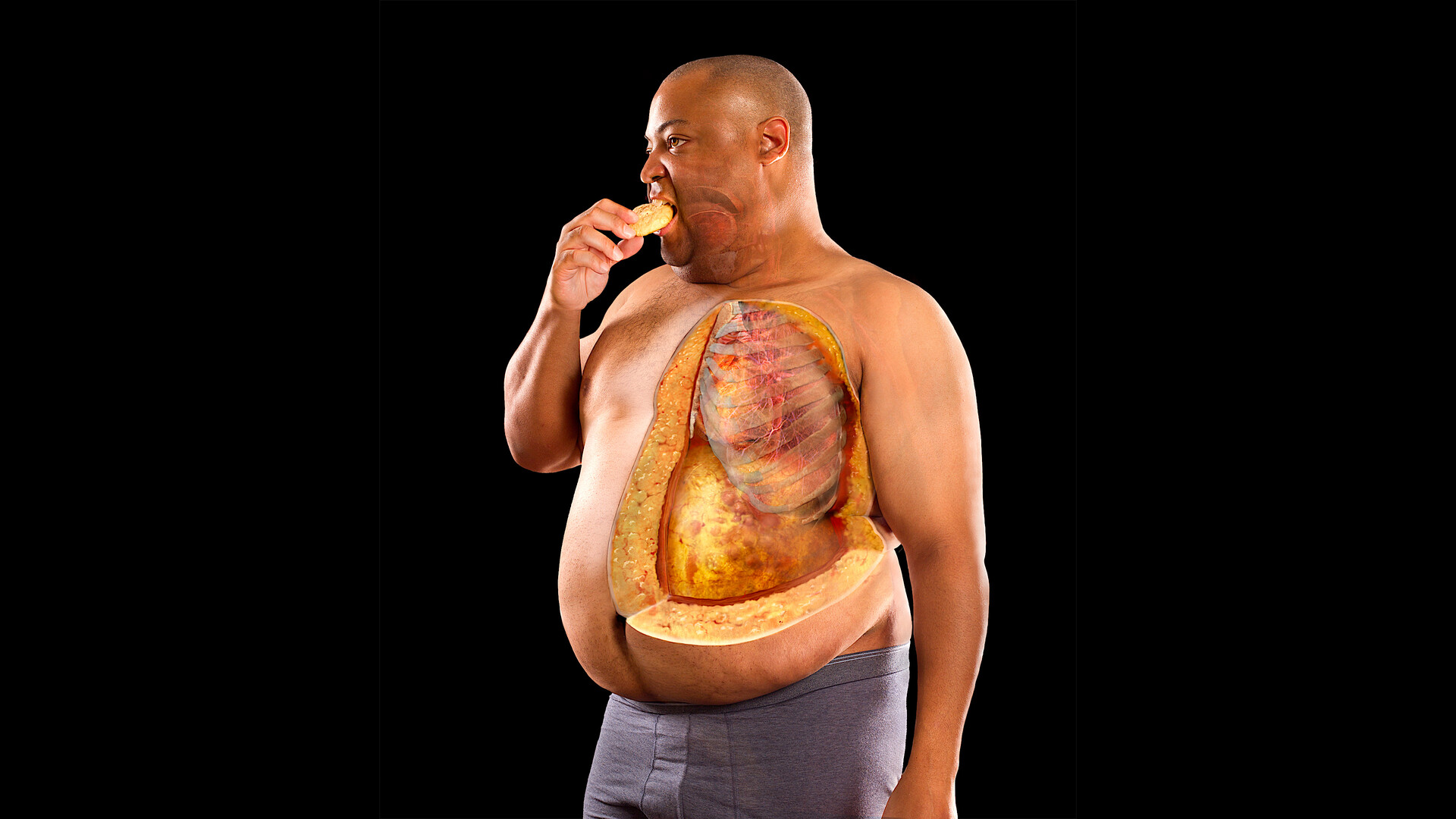
 The Obesity Prevention Source article from Harvard T.H. Chan School of Public Health discusses the role of genetics in obesity. It highlights that while genes do play a part in determining susceptibility to obesity, they are not the sole determinant. The article explains that there are rare forms of obesity caused by mutations in single genes, but more common forms of obesity are influenced by multiple genes and environmental factors.  Some environmental factors listed include the amounts of places in which people weren't previously able to get food before are everywhere now like gas stations and pharmacies, also the decreased amount of time people, especially young children spend outside nowadays.  The interaction between genes and the environment, such as diet and physical activity, is crucial. Research indicates that while certain gene variants may increase the risk of obesity, a healthy lifestyle can counteract these effects. The article emphasizes the importance of understanding genetic contributions to obesity while also addressing environmental factors to prevent and treat obesity effectively.

I found this article rather interesting, because nowadays many influencers involved in nutrition and fitness love to claim that genetics is the biggest factor when it comes to maintaining body health and no matter what most of us do, our genetics will never allow a certain body type. While this is true to some very little extent, I think this article shows that incorporating certain habits into our daily lives is so much more effective than blaming our problems on genes passed down. To quote the article, "Genes may co-determine who becomes obese, but our environment determines how many become obese". I really like this statement because it allows for no excuses in regards to people who feel they are destined for failure due to their genes. 


Sources

1. https://www.hsph.harvard.edu/obesity-prevention-source/obesity-causes/genes-and-obesity/

2. https://www.nature.com/articles/s41576-021-00414-z

Tuesday, April 9, 2019

Harvard Does it Again: Unlocking the Genetics Behind Regeneration

If there is one thing everyone knows about the folks at Harvard, it is that they are are really smart. They have managed to prove that once again, as a study conducted at Harvard University has made a key discovery to unlocking the secret of regeneration in certain animals. As most of us know, certain animals like salamanders or starfish can regenerate their leg or even entire body if necessary. The results of this Harvard study claim that there is a noncoding master control gene, called Early Growth Response (EGR) that turns key genes on and off to initiate regeneration. This study was performed on three-banded panther worms, shown below, which are capable of almost complete regeneration. The EGR flips on the switches in coding regions and stimulates a change in shape of the genome, allowing previously inaccessible genes and areas on the DNA to be turned on for regeneration. This EGR gene is necessary for regeneration to occur, as it cannot happen without this EGR turning on other necessary genes. However, just the presence of the gene alone does not lead to regenerative abilities, as human beings possess the EGR gene but, obviously, cannot regenerate our limbs. This is thought to be because EGR turns on different genes in humans and essentially serves a completely different purpose.


Although this new information cannot be applied to regeneration in humans at the moment, I still believe this is a great scientific breakthrough. I found it interesting that the key to regeneration was actually in the introns of the worm DNA, as we have always been told that the purpose of these intron sequences that do not code for anything and are not expressed is unknown. Knowing how big a role these introns play in something as complex and crucial as regeneration may lead to more discoveries regarding introns in humans and other organisms. Furthermore, while we may never be able to regenerate entire limbs, this discovery may aid us in our research on organ regeneration or the regeneration of other smaller things. This may allow us to better combat cancer and reverse organ damage and brain damage. One other really interesting fact that I took away from this research was that the genome is more of a dynamic shape than a set one, as different areas and sections of DNA can be exposed or hidden depending on the presence of EGR.

Monday, July 31, 2017

Harvard Experts Claim Genetics may have a role in Uddanam kidney disease


A recent article about a Harvard study conducted in Uddanam India, seems to conclude that there is a genetic predisposition to a type of kidney disease or nephropathy. The study examined over 200 participants from that region of India, as well as tested water and other samples in the area. The reasoning behind this is that woman who were previously married in Uddanam and moved elsewhere seemed to develop a kidney disease with no known etiology. The hypothesis seems to point to a possible genetic component to the disease isolated to that town in India. The Harvard team seems to also thing that more research is necessary to definitely conclude that this is the case and not just a coincidence.

Related Article: http://timesofindia.indiatimes.com/city/visakhapatnam/harvard-team-visits-uddanam-hoping-to-find-cure-for-kidney-disease/articleshow/59825907.cms

Tuesday, February 7, 2017

How Tall Will We BE?!!

      What dark Force makes people different sizes?

Why is Kevin Hart short and Shaq so tall?


As a 5 foot 8 inch man I stand rather short.  For many years I’ve wondered what evil gene could have caused this unfair discrepancy in height.  Turns out scientists just discovered about 83 evil genes that may be responsible for these transgressions against me.  They were identified by scientists who worked at the Broad Institute at MIT and Harvard.  These dedicated scientists examined genetic information from more than 700,000 people.  The data had been taken from the Genetic Investigation of Anthropometric Traits(GIANT).  However these 83 traits are rare markers only found in about 5.5% of the population.  The researchers had already found about 700 other traits responsible for height! I'm too far gone, for this information to help but maybe in the future through genetic information we could manipulate these genes to make the human race taller.  Obviously this would have "ethical implications," but through changing of the school curriculums we can have a generation of children raised without ethical concerns.

DNA The Culprit


This information was taken from the Huffington post
For more information on DNA search here

Saturday, November 29, 2014

Is There a Potential Cure for HIV?

It all started with the “Berlin Patient” in 2007. Timothy Brown was cured of HIV when given the stem cells of another patient who was naturally immune to the disease. When this happened two companies, Sangoma and Calimmune, took the opportunity to attempt to recreate the natural immunity to HIV in a lab. This natural immunity occurs because of a gene mutation on the CCR5 gene which is located on CD4 T-cells. When this gene is disable HIV cannot attack the T-cells.


Sangamo was the first to attempt the recreation in 2009. Lead by Carl June from the University of Pennsylvania, a team of researchers and doctors removed CD4 T-cells from patients with HIV. The study then focused on disabling the CCR5 gene alleles and then returning the modified cells to the patient. It was stated that this did no harm to the patients and the altered genes had a half-life of 48 day, which is expected because “…T-cells are not permanent residents of the body”. In fact, several of the patients in this study even exhibited a decline in their HIV levels.

The next company to attempt to recreate the natural immunity to HIV is Calimmune. In 2013 a team led by David Baltimore and Irvin Chen decided to take a different approach to solve the task at hand. Instead of focusing their work on T-cells, they decided to take advantage of blood stem cells. This approach is different because blood stem cells, unlike T-cells, are permanent residents in the body. During this study patients were “given back both their own T cells, and longer-lived HSCs [blood stem cells], both with the CCR5 gene disabled using hairpin RNAs delivered by a lentivirus.” By doing this they hope that these blood stem cells can continue to produce T-cells with disabled CCR5 gene alleles throughout a patient’s lifetime.

Despite the fact that neither of these studies have conclusive clinical trials yet, Harvard University has decided to be next in the search for a cure for HIV. Their approach will include new CRISPR/Cas technology which has already proven effective in mice. It was stated that Harvard may even apply for clinical trial approval in five years.


Tuesday, November 18, 2014

Using Genetic 'editing' stem cells to combat HIV/AIDS.

        Harvard Stem Cell Institute researchers are currently developing a new technique to try and fight HIV/AIDS. The technique is genetically editing a persons cells to block HIV from entering and destroying a persons immune system. This is the first group to publish a report using CRISPR Cas technology to "edit relevant genes out of cells collected directly from people. The people behind this research are Chad Cowan and Derrick Rossi associate professors in Harvard's Department of Stem Cell and Regenerative Biology.
       HIV targets T cells in the blood based immune system. It enters the system through a gene receptor called CCR5. Once the HIV has entered the system it kills and replicates all of the host cells. Leaving the immune system prey to a host of infectious virus and diseases. Cowan and Rossi are using the CRISPR gene-editing technology "Cowan and Rossi teams knocked the CCR5 receptor out of blood stem cells that they showed give rise to differentiated blood cells that did not have CCR5. In theory, such gene-edited stem cells could be introduced into HIV patients via bone marrow transplantation, the procedure used to transplant blood stem cells into leukemia patients, to give rise to HIV-resistant immune systems."
      The reason why this research has arrived is because it is relatively close to the technique that cured Timothy Ray Brown of HIV. Brown is considered to be the only person who has been cured from HIV. Brown got a bone marrow transplant from someone with a rare genetic defect that left the person free of the CCR5 receptor. After six years of these transplants he is considered to be cured of HIV. The technique that Cowan and Rossi are using is close to this technique except it uses the persons own cells, instead of trying to find a rare bone marrow donator who does not have the CCR5 receptor.
      Although the researchers think this technique could be used on humans in less then five years, they realize the battle they still face. They have listed three cautions of the research. The first the researchers realize they could run into unexpected complications. The also know that the HIV/AIDS community is flooded with "cures" that don't actually cure anything. The third the researchers know that there could be an issue trying to make this applicable in areas where the epidemic has hit the hardest. Overall, I think this technique could be the first step to eventually help fight or possibly cure HIV/AIDS.

Original Article
http://www.medicalnewstoday.com/releases/285077.php 
Related Article
http://news.sciencemag.org/health/2014/09/how-did-berlin-patient-rid-himself-hiv

Sunday, April 21, 2013

Bio-engineered kidney successfully transplanted into lab specimen

As explained in Nature Medicine, on April 14th, scientists were able to rid a kidney of its original cells, repopulate it with stem cells, and show that it is now a fully functioning kidney that is able to produce urine by transplanting it into a rat. The original protein building blocks and outlines of a kidney are now known to hold the template that is needed to produce a new, functioning kidney. The discovery of this process may one aid in the alleviation of the shortening of the organ donor wait list, specifically, the kidney; in the presence of the kidney scaffolding, scientist hope that this process will be able to translate to humans. Currently, candidates for kidney transplants greatly outnumber the amount of possible donors.

At Harvard Medical School, scientist Harald Ott and his colleagues used rat cadavers as donors for the kidney building blocks. The kidneys were cleaned with a detergent that stripped the organ of its cells, while leaving the extracellular matrix intact. Afterwards, the donor kidneys were flooded with neonatal kidney cells that were able to grow into fully functioning, adult kidney cells. After the maturation of the cells, the kidney was able to become fully-functioning; once it functioned, researchers were able to then transplant the functioning organ into rats that had a kidney removed. The kidney then became fully functioning in the rat with the missing kidney. This is incredibly news in hopes that this technology can be performed in humans.