Showing posts with label Worms. Show all posts

Sunday, April 25, 2021

Can The Blind See Blue

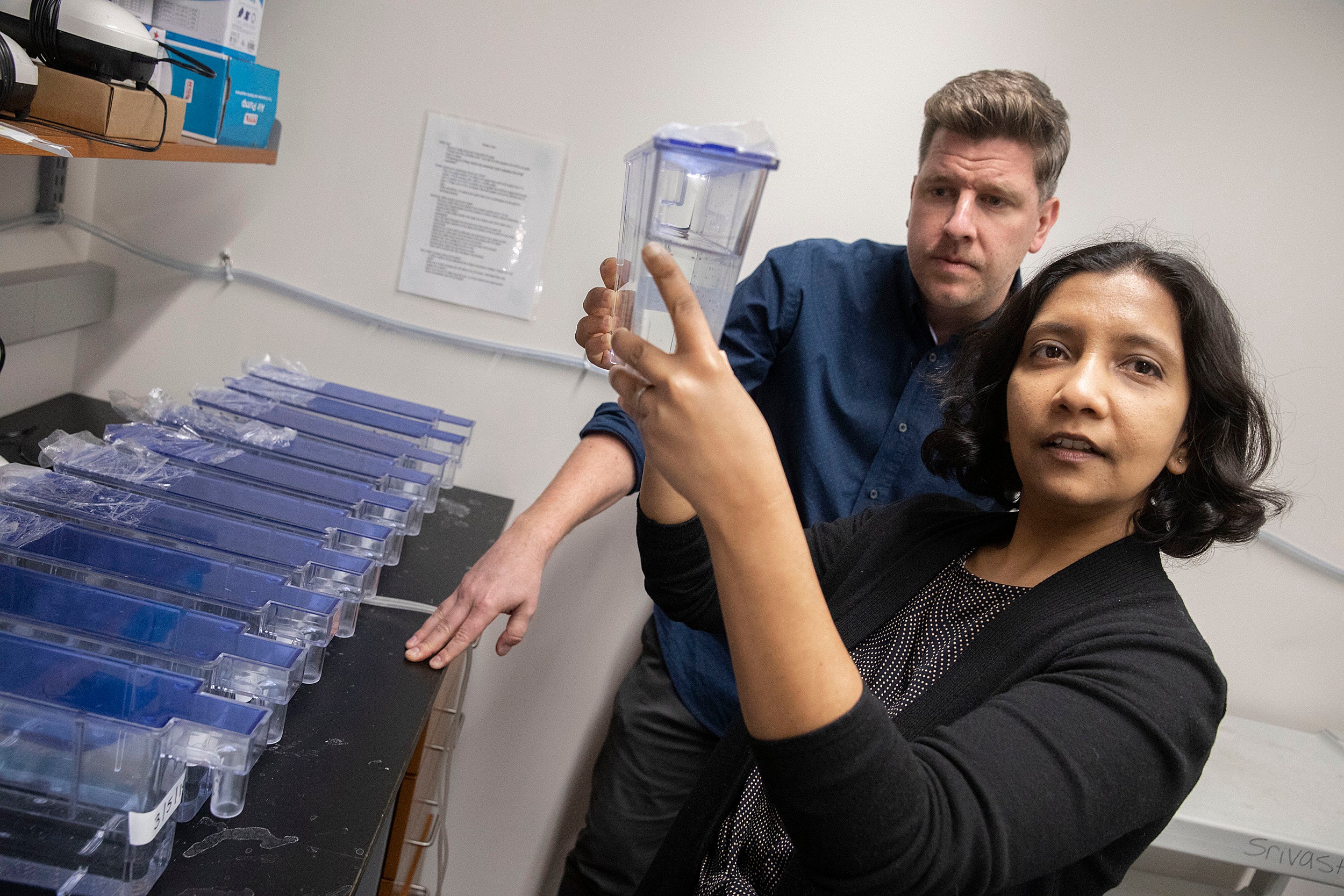
 How Do Blind Worms See the Color Blue?In an experiment, the blind roundworm C. elegans did not try to wriggle away from a beige version of the P. aeruginosa bacterium, which can kill it and is usually colored bright blue.

    In an article from The New York Times, an author named Veronique Greenwoodwrites about how blind worms can see the color blue. One of the first things he mentions is how in a lab experiment the researchers place worms on top of different microbe species to see if the worms will devour the toxic species or if they will move away to eat the safe species for dinner. One of the microbe species that blind worms know are toxic is pseudomonas aeruginosa; scientists know that the worms know it is dangerous because they slither away furiously.

    The main researcher in this working theory was Dipon Ghosh, a graduate student from Yale University in Cellular and Molecular Physiology. One of his thoughts that lead him to think that worms could see blue was that pseudomonas aeruginosa is a bright blue shade. A way that he proved this hypothesis was that he conducted an experiment at The Massachusetts Institute of Technology using worms, patches of pseudomonas aeruginosa, and lights on a light switch. When he turned off the lights and placed the worms on the pseudomonas aeruginosa patches. Once he did this he could sense his hypothesis had some traction because when the lights were off the worm's reaction time to move away from the toxic microbes was much slower. 

    As more research was conducted Dipon Ghosh found out that the lifespan of a worm can be affected by light and that is where the next hypothesis formed. As the article continues and more experiments are performed researchers realized that worms do not move away because pseudomonas aeruginosa is toxic, they move away because of the bright light that it omits. The article "How Do Blind Worms See the Color Blue" was very interesting and something I have never heard about, when I saw it I had to jump on the opportunity to read it. 


Article: How Do Blind Worms See the Color Blue?


About Light Affecting A Worms Life Span: How Light and Heat Affect Worms


Tuesday, April 9, 2019

Harvard Does it Again: Unlocking the Genetics Behind Regeneration

If there is one thing everyone knows about the folks at Harvard, it is that they are are really smart. They have managed to prove that once again, as a study conducted at Harvard University has made a key discovery to unlocking the secret of regeneration in certain animals. As most of us know, certain animals like salamanders or starfish can regenerate their leg or even entire body if necessary. The results of this Harvard study claim that there is a noncoding master control gene, called Early Growth Response (EGR) that turns key genes on and off to initiate regeneration. This study was performed on three-banded panther worms, shown below, which are capable of almost complete regeneration. The EGR flips on the switches in coding regions and stimulates a change in shape of the genome, allowing previously inaccessible genes and areas on the DNA to be turned on for regeneration. This EGR gene is necessary for regeneration to occur, as it cannot happen without this EGR turning on other necessary genes. However, just the presence of the gene alone does not lead to regenerative abilities, as human beings possess the EGR gene but, obviously, cannot regenerate our limbs. This is thought to be because EGR turns on different genes in humans and essentially serves a completely different purpose.


Although this new information cannot be applied to regeneration in humans at the moment, I still believe this is a great scientific breakthrough. I found it interesting that the key to regeneration was actually in the introns of the worm DNA, as we have always been told that the purpose of these intron sequences that do not code for anything and are not expressed is unknown. Knowing how big a role these introns play in something as complex and crucial as regeneration may lead to more discoveries regarding introns in humans and other organisms. Furthermore, while we may never be able to regenerate entire limbs, this discovery may aid us in our research on organ regeneration or the regeneration of other smaller things. This may allow us to better combat cancer and reverse organ damage and brain damage. One other really interesting fact that I took away from this research was that the genome is more of a dynamic shape than a set one, as different areas and sections of DNA can be exposed or hidden depending on the presence of EGR.

Thursday, March 21, 2019

The Genetics of Regeneration

An article in the Harvard Gazette discusses the genetic aspects of regeneration in several different types of organisms. Several researches discovered the DNA switches that activated the regeneration, and found that the biggest factor in this was EGR, or early growth response. It sort of acted as a main control for regeneration, they found that while it wasn’t the only part of the DNA that impacted regeneration if it was not present then regeneration didn’t happen. Essentially EGR is in the non coding portion of the genome, and what it does is tell the coding section of the genome to turn on or off. This results in regeneration occuring in a specific section of the worm. Also in the process of doing this the researchers had also completely sequenced the genome of a three-banded panther worm, which is important as this worm is becoming the new model system for studying regeneration.

I think that this article is rather interesting because while several organisms go through regeneration we done actually know a whole lot about the specific process. Also the fact that there is one main genetic factor to regeneration is also rather fascinating, and that we have this same EGR but are unable to regenerate is also pretty interesting.    

Monday, December 11, 2017

RNA Polymerase III and Its Effect On Lifespan

According to an article posted in Nature, the enzyme RNA Polymerase III has an effect on lifespan. This enzyme that is used to create tRNA and 5s rRNA  has been reduced in in several animal species such as fruit flies and certain worms. In the experiments conducted the life span of the test animals outlived the control groups. this is due to the researchers inhibiting Target of rapamycin kinase complex 1 to reduce the levels of RNA Polymerase III, in most tests the TORC1 was inhibited in just the gut of several worms and just that was enough to lengthen their lifespan.  the long lifespan in this case is associated with the slower and reduced protein synthesis, and also lower proteostatic stress.

Some articles are sensationalizing this discovery as being able to lengthen the lifespans of humans or other mammals, yet testing on mice hasn't taken place and there is no proof that this treatment will have similar results without any major side effects, despite all of this it does sound very promising.
link 1

Wednesday, November 25, 2015

Bioelectrical Connections Key in Understanding Development

Biologists at Tufts University have successfully induced worms to grow heads and even brains of other species of worms without changing their genome. The previous dogma surrounding development was that an individuals genomic code was the only thing responsible for large scale anatomy. Without altering the worms genome, researchers were able to stimulate anatomic changes by simply interrupting the connections of electrical synapses at gap junctions. This goes against the current understanding of the chromosomes role in development. Interestingly, the closer the two species of worms were related evolutionarily, the easier it was for the researchers to induce change to modify them to become more like one another.

This new information can be used to help doctors treat babies with birth defects as well as help fix injuries more efficiently. One day, an individual might simply be able to undergo electrical therapy to make the body experience changes to heal and fix structures that were previously damaged. This is new and exciting research that would be very beneficial to many people.
G. dorotocephala, the worm used in this study

Tuesday, November 24, 2015


You Share 70% of Your Genes with This Slimy Worm

Many of us do not realize how much we may have in common with some creatures that are found in the deep blue sea. After researchers observed the sequenced genomes from two marine worm species, it had been suggested that humans and acorn worms may be distant cousins. When analyzing the genes from two acorn worm species, it was discovered that acorn worms share about 14,000 genes with humans, comprising approximately 70 percent of the human genome. Not only do these genes exist in humans, but also in deuterostomes such as sea stars, cephalopods, and various other animals with backbones. The 570 year old acorn worms are able to help scientists understand how genes that first appeared almost hundreds of millions of years ago control the development of different, but related physical features across animal species. Additionally, after the sequencing of the worms' genomes, scientists found 8,716 gene families in the acorn worms that are shared across all deuterostomes. There was one unique family that contained a gene cluster that was linked to feeding and breathing in acorn worms, and scientists were interested because acorn worms have special slits that they use for feeding and allow water to pass through the worm's mouth, but pass it's digestive tracts. It was found that these genes could possibly be linked to gill development and even these genes could play a role in the development of the pharynx. I believe it is truly amazing that we can have a large amount genes connected to a worm found in the sea. I still think more research should be done  before we get so excited to call acorn worm our cousin, but the breakthroughs we are capable of in this generation is riveting.

Link to this article:

Link to alternate article:
http://www.dispatchreview.com/slimy-marine-worm-shares-70-of-your-genes/2249/

Saturday, November 7, 2015

Gene May Prompt Male-to-Male Attraction in Worms


       The article talks about the recent discovery of  a new mutated gene in the nematode known as Caenorhabditis elegans.  Most of the species are females capable of asexual reproduction as they can create their own sperm and males are a rare occurrence.  however, it has been observed that males are starting to shows signs of  mutated gene known as plep-1 that causes the sexual attraction of other males.  This due to excretory pores that form due to the mutation. This is bad for males for if they try to copulate, this causes the pore to get plugged which result in shorter lifespan.

        I was interested in this article because it talks about an animal and I have always been interested animals.  I find it very interesting this occurs because if the female population was unable to self fertilize, it would be extremely likely this mutation would cause this species to go extinct. 

Article is Here

Tuesday, April 7, 2015

Use of Worms Helps With Coding of the Human Alcoholism Gene

      In today's society, the use of alcohol to soothes ones nerves and calm them down is prevalent. Some people are actually susceptible to being dependent on alcohol. Alcoholics cannot set limits to their drinking. Geneticists and experts on addiction have a goal of being able to test whether or not a persons genetic makeup puts them at a risk for becoming alcohol dependent. Scientists have not been able to identify a single gene that makes people dependent on alcohol, but they do agree that it is a mixture of environmental factors and genetic makeup. This could explain why alcoholism runs in families. Research done at Virginia Commonwealth University has led to the discovery of a genetic variation in germs, that influenced alcohol tolerance. The study involved researchers giving worms ethanol and observing them when they were in a state of intoxication. Particularly, the scientists paid close attention to the worms' locomotion. Variations in locomotion were dependent the activity of or, lack of, the protein complex called 'switching defective/sucrose non-fermenting' or SWI/SNF. This complex is found in every animal. The results showed that this gene made worms more tolerant to the ethanol than other worms. The precise nature of how the protein influences alcohol dependence isn't clearly understood. But, one thing of significance to the SWI/SNF protein is that it influences how DNA is wrapped, which also can influence other genes. 

     In this day and age, understanding the effects and how to prevent alcohol dependence is important to many peoples well-being. Excessive drinking is common on college campuses and many young adults are loosing their lives over it. Understanding this gene and how it influences an individuals drinking habit could go a long way in saving someones life. Pharmacological treatments do exist today for this issue, but they are widely ineffective. This raises the significance of this research as a possible viable medicine could result from it.

Link1: http://www.insidescience.org/content/drunken-worms-could-help-decode-alcoholism-genetics/2741
Link2: http://www.pnas.org/content/112/10/3032.full.pdf

Wednesday, April 1, 2015

Understanding the body's response to worms and allergies

When the body is affected by parasitic worms or allergens, the body has specialized cells that protect the body from harm.  In this study, dendritic cells were studied when exposed to worms or lung allergens.  When the body is exposed to these certain environments, the dendritic cells send signals to turn on inflammation.  Inflammation can lead to very serious and maybe deadly reactions to the body.  During this experiment, it was found that a protein, Mbd2, was used for in the dendritic cells to turn on inflammation.  This information can be used to treat inflammation specifically for lung irritants and parasitic worms.
http://www.sciencedaily.com/releases/2015/04/150424085001.htm
As an EMT, this was an exciting article to read.  When people suffer allergic reactions, the biggest concern, as an EMT, is to make sure the patient can breath because allergic reactions can cause inflammation of the throat.  Perhaps with this newly found information, a more effective anti inflammatory can be made so that patients suffering from an allergic reaction can keep an open airway.

Friday, March 13, 2015

Worms against cancer.


According to this article, scientists in Wyoming have discovered several genes within nematode worms that they believe could assist in the battle against cancer. David S. Fay, Ph.D. and his colleagues used these worms to study a gene ("LIN-35") that is similar to one found in human cancers ("pRb"). In human cancers, this gene is tumor suppressor protein that is inactive, allowing for the cell growth and spread. While studying the LIN-53 gene in the worms, the researchers deactivated other genes in the genome and found that some were able to reverse the defects caused by the deactivated LIN-53. Because of this, they believe these genes could be used as targets for anti-cancer drugs and therapies. This article also comes with the suggestion of a companion piece as an educational resource for genetic students. 

This seems like a good article to look into, as the studies help in something that has affected everyone in one way or another. By looking at these genes, scientists have another possibility at stopping the cell growth and spreading of cancer. Personally, my grandfather died this last Christmas day due to a long battle with Leukemia and my grandmother died ten years previously, also on Christmas, so I think any possible advancements toward the end of cancer is a good thing.

Saturday, October 25, 2014

FLY GENOME COULD HELP US IMPROVE HEALTH AND OUR ENVIRONMENT


The house fly's (Musca domestica) genome (691 Mb) has been sequenced and researched by numerous scientists to conclude that it can be used to aid humans with "toxic and disease causing environments." Musca domestica's ability to decompose waste and carry hundreds of human diseases like typhoid, tuberculosis and worms, make them important to study: sequencing their genome can promote human health and perhaps also allow us to live in toxic environments.


Scientists sequenced the genomes of six female houseflies to compare them to the Drosophila melanogaster genome (123 Mb) to find that certain genes were only in a house fly. The house fly had more diverse immune genes and contained unique detoxification genes compared to the fruit flies.


I believe that sequencing the genomes of house flies will be very important and helpful to scientists when developing new treatments and/or vaccines for humans. Perhaps humans may be immune to such diseases house flies are immune to one day. The detoxification genes in house flies that help break down waste will also aid us in improving the environment and handle human waste. Even though house flies are a nuisance, they may have more of a positive effect than a negative.

Article:
http://www.medicalnewstoday.com/releases/283867.php
Related Article:

Friday, February 22, 2013

Scientists Use Worms to Unearth Cancer Drug Targets

In August of 2012, Science Daily posted that a new discovery done by Wyoming scientists that could have an impact on how we try and treat cancer.  Using small nematode worms, several genes were discovered that may be potential drug target for cancer.  Inhibiting these gene could reverse some key characteristics in cancer cells.
Cancer is a leading cause of death worldwide," said David S. Fay, Ph.D., a researcher involved in the work from the Molecular Biology Department at the University of Wyoming in Laramie. "We hope that by carrying out basic genetic research on one of the most widely implicated human cancer genes, that we can contribute to the arsenal of diverse therapeutic approaches used to treat and cure many types of cancer.

Dr. Fay and his colleagues used a strain of nematode worms that carried a mutation in a gene similar to one that is inactivated in many human cancers. This gene is thought to carry out tumor progression, cell growth, and survival.  The researchers systematically inactivated other individual genes in the genome of the mutant gene in the worms.  As they deactivated various genes, scientists identified those that led to a reversal of defects caused by the loss of the mutant gene, suggesting that they could be used as targets for anti-cancer therapies.  Here is some more information about Dr. Fay's.