Showing posts with label "Regenerations". Show all posts

Monday, November 17, 2025

Golden apple snail may give insight on human eye regeneration

    Researchers studied the Golden apple snail which has eyes similar to cameras. It has structures like lens, retina and cornea similar to human eyes. These snails are resilient and very invasive in lots of parts of the world. Its regeneration ability is important to research because their eyes are so similar to human eyes. They found that when the snails' eye is removed it takes about a month to fully regenerate. This includes reconnecting to the brain and restoring vision, that part takes a little longer than a few months. 

    The regeneration process happens in phases. Wound healing, which is the first 24 hours, then unspecialized cells migrate, proliferate, and specialize into eye tissues. Over a few weeks the new eyes mature and then become useable. 

      In relation to humans the PAX6 gene, which is crucial for eye development is also essential in these snails, Using CRISPR-Cas9 the PAX6 gene was disabled in snail embryos. When both copies were inactive snails developed without eyes to show how important this gene is. 

    These snails are important to study and do research on because they share key genes with humans. They could be used as a model organism to study eye regeneration. The next steps in research they're taking are to test whether PAX6 also plays a role in regenerating the eye not just in the eye's initial development. The goal is to map out the snail's regeneration program then relates it to human eyes to see if regeneration is at all possible.

    Sources: 
Saey, T. H. (2025, August 6). This snail may hold a secret to human eye regeneration. Science Newshttps://www.sciencenews.org/article/snail-human-eye-regeneration

This Snail’s Eyes Grow Back: Could They Help Humans do the Same? (2025, August 14). UC Davis. https://www.ucdavis.edu/news/snails-eyes-grow-back-could-they-help-humans-do-same


Monday, November 11, 2019

Tadpoles ability to regenerate

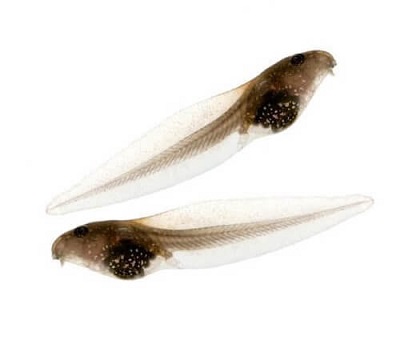
Tadpoles are known for their regenerative abilities however it was observed that this ability was lost when researchers blocked off the gene that was responsible for the tadpoles' regenerative ability. The group of researcher's looked for gene that coded for regeneration in African clawed frogs, specifically gene found in cold-blooded animals then warm-blooded ones. Naming the found gene c-Answer they then either overexpressed or blocked this gene in tadpoles. The results showed that enhancing the gene let tadpoles generate lost tails earlier compare to normal tadpoles, advanced brain growth and larger eyes. When the gene was blocked the tadpoles could no longer regenerate.

See the source image


There was an interesting remark that the researcher, Daria Korotkova, made. They suggested that the trade off for being warm-blooded was the lost of regenerative genes. They suggested warm-blooded species once had these genes until it disappeared due to mutations. Imagine if this suggestion was true! If it was we might be able to figure out mutations happened in the past that caused this lost of regenerative genes


Links:
https://www.sciencedaily.com/releases/2019/10/191023172116.htm

Sunday, November 10, 2019

Cell in Zebrafish that contributes to heart regeneration


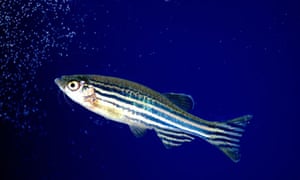
Zebrafish is known for their ability to regenerate heart cells. After a heart injury their heart cells, cardiomyocytes, are able to divide and instead of scaring new cardiac muscle is formed. Researchers have found that there's a specific subset of cardiomyocytes within the zebrafish that enhances their regenerative ability.  This subset of cardiomyocytes was marked by the sox10 gene. The researchers next step is "find out whether the absence of such sox10 cell population in mammals could explain why their heart does not generate well"(Mercader 2019).

Image result for zebrafish"

Sox10 gene is critical in the formation of tissue and organs. If the presence of this gene is the reason why vertebrates like Zebrafish can have such amazing regenerative ability maybe we can find a way to incorporate the gene in humans.


Links
https://www.cell.com/cell-reports/fulltext/S2211-1247(19)31229-X?
https://www.sciencedaily.com/releases/2019/10/191023121838.htm


https://www.sciencedaily.com/releases/2019/10/191023121838.htm

Thursday, March 21, 2019

The Genetics of Regeneration

An article in the Harvard Gazette discusses the genetic aspects of regeneration in several different types of organisms. Several researches discovered the DNA switches that activated the regeneration, and found that the biggest factor in this was EGR, or early growth response. It sort of acted as a main control for regeneration, they found that while it wasn’t the only part of the DNA that impacted regeneration if it was not present then regeneration didn’t happen. Essentially EGR is in the non coding portion of the genome, and what it does is tell the coding section of the genome to turn on or off. This results in regeneration occuring in a specific section of the worm. Also in the process of doing this the researchers had also completely sequenced the genome of a three-banded panther worm, which is important as this worm is becoming the new model system for studying regeneration.

I think that this article is rather interesting because while several organisms go through regeneration we done actually know a whole lot about the specific process. Also the fact that there is one main genetic factor to regeneration is also rather fascinating, and that we have this same EGR but are unable to regenerate is also pretty interesting.    

Thursday, January 31, 2019

Axolotl Regeneration and Mapping Their DNA

Axolotl are small amphibians from Mexico who have extraordinary regenerative abilities. These creatures are able to regrow just about any body part, even up to half of the brain. Aside from cutting off the head, an exact replica of anything else will be regrown. Scientists around the world are attempting to completely map the DNA of this organism in hopes to provide advances in human regenerative medicine. Dr. Melissa Keinath describes that the axolotl genome is ten times larger than that of the human genome. The New York Times reports that "Dr. Keinath and her colleagues mapped more than 100,000 pieces of DNA onto chromosomes". Because DNA sequences that are physically close together on chromosomes are commonly inherited together, the researchers could use linkage mapping to organize the axolotl DNA. Additionally, the scientists were able to identify DNA exclusive to axolotl by crossing them with tiger salamanders. Knowing how DNA is positioned "allows you to start thinking about functions and how genes are related," scientist Dr. Voss explains. After understanding the relationships between the DNA position and gene function in the axolotl, scientists can observe whether the same relationships are seen in humans. 


The research on axolotl is interesting because if we can understand the genes and their functions behind axolotl regeneration, maybe a similar technique can be applied to human medicine. Studying the axolotl DNA may also reveal more about epigenetics and if deactivating certain genes results in excellent regenerative abilities. Furthermore, the physical location of where DNA is located and how it affects the genes can be analogous to humans. 

Sunday, March 18, 2018

Stem Cell Therapy


 The Potential of stem cells in the treatment of traumatic brain injuries

Image result for TBI

Traumatic brain injury (TBI) is a global public health concern, with limited treatment options available. In the U.S alone, between 3.2 -5.3 million people suffer long-term cognitive impairment as a result of TBI. When an individual has sustained a heavy blow to the head it could lead to long-term deficits involving sensory-motor and memory functions. However, the brain harbors neural stem cells that it uses to self-repair itself after damages have been sustained. Unfortunately, these neural stem cells are limited and if the impact to the head was strong it would result in a chronic injury. Therefore the brain would not be able to have a full recovery which would result in future health problems for an individual. As of today, many scientists have begun working with stem cells in hopes of finding a treatment for TBI.
Embryonic and Induced Pluripotent stem cells have acquired a lot of population due to there plasticity and ability to differentiate into any lineage in the nervous central system. Embryonic stem cells (ES) are obtained from fetal or embryonic brains and are strongly considered for neural transplantation because when implanted into a recipients brain these cells can differentiate, migrate, and make innervation to aid the damaged brain to recover. Induced pluripotent stem cells (iPSCs) are obtained from patients themselves and have the potential for autologous transplantation and avoiding ethical and graft rejection concerns. Induced pluripotent stem cells have allowed scientists to explore manipulating this highly plastic population. These somatic cell-derived iPSCs can provide large quantities of pluripotent cells that have high plasticity generating cells for all three germ layers including neurons and glial cells.
These unique properties of Embryonic and Induced pluripotent stem cells have raised hope that many neurological diseases including TBI might be cured or treated.

  Image result for embryonic stem cells

https://www.ncbi.nlm.nih.gov/pubmed/29372464

https://jamanetwork.com/journals/jamaneurology/fullarticle/795390